CCA: Fish of Honduras: Ken Davis

November 9th, 2008

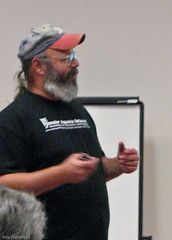
Ken DavisThe Capital Cichlid Association’s November meeting brought in Ken Davis from Atlanta, Georgia, to speak about his collecting experiences in Honduras with Rusty Wessel. Ken has been president of the Atlanta Area Aquarium Association, owned a retail fish store, wholesale distributor, and fish hatchery, so it was great to hear the adventures of an expert through the Central American country. The presentation was more or less a slide-show of various species of fish (and other critters) that he found during his trip. I’m going to share a few of the species that most interested me.

Of course, one of the most famous fish from Honduras that has recently spread throughout the hobby has been the Honduran Red Point. Interestingly enough, this fish has already been selectively bred to look very little like its native counterpart. Below is a picture of how the Red Points look in the wild; note the vivid coloration on the body. Apparently, many breeders have been trying to get a blue body on this fish, to the detriment of the other colors, even some of the red.
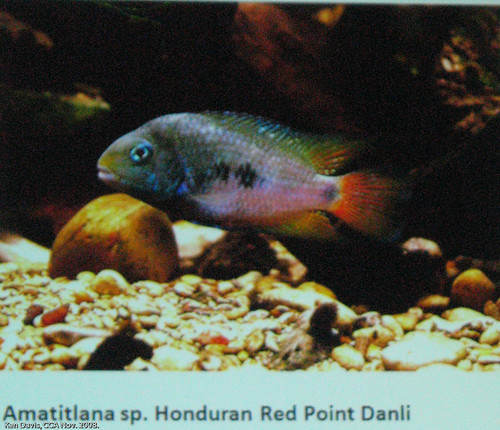
Amatitlana sp. Honduran Red Point Danli

Ken told sad story about the beautiful undescribed Parachromis species of fish seen below. He was staying at a local hotel, and while waiting for all of his comrades to wake up, he and some others took a short hike to a small lagoon nearby just to see what was there. To their delight, they managed to catch one of these fish, which they have never found anywhere else in the country. They subsequently caught a total of 7 fish, and are currently breeding them. Unfortunately, on a later trip, they went back to the location, and all of the forest surrounding the lagoon had been cut down for new development, and the water itself was covered with an oil slick. Nothing living remained in the water, so it’s possible that the fish they previously pulled are the only surviving of the species. Let’s hope they can thrive in captivity.
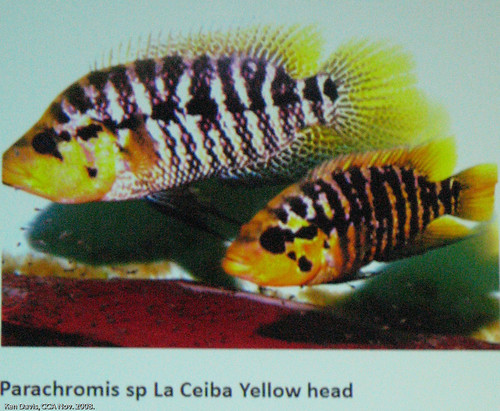
Parachromis sp. 'La Ceiba Yellow head'


One of the things that I enjoyed about Ken’s talk is that he didn’t confine it solely to cichlids. While I love cichlids, I’m also interested in the complete ecosystem of any given place. In addition to several cichlids that fit this description, Honduras is home to one of the world nastiest livebearers, the Belonesox belizanus. Just look at the teeth of these guys. They can get up to about a foot long, and Ken says they’re great fish to have in your fishroom when you need to cull a group of fry.
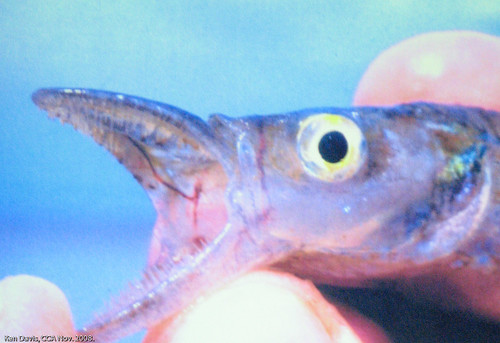
Belonesox belizanus

There are also a large number of invertebrates to be found in Honduras. Ken found (and feasted on) several freshwater crabs and prawns, but in amoungst the roots of creekside trees, he also came across these inch-long purple shrimp. He’s tried unsuccessfully to bring them back to the States, but he hopes to have success sometime in the future, as he sees a great place for them in the hobby. I agree!
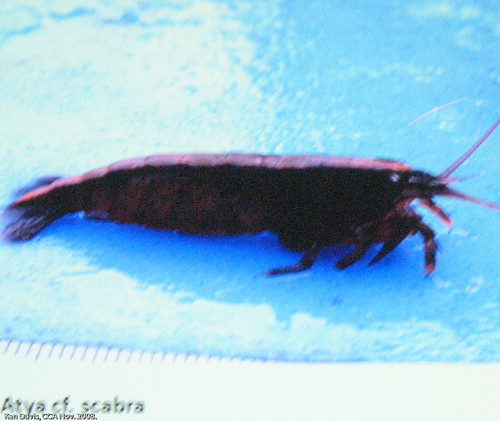
Purple Freshwater Shrimp

Finally, I asked Ken what the habitat was like as far as aquatic plants go. He said that 99% of the places he collected were rocky bottomed streams or rivers that contained zero plant life. The only exception was a small section of private property that the owners invited him to that wasn’t fished commercially or otherwise. I’m sure that there are a number of interesting plants available, but I imagine they might be hard to come by. Overall, Ken highly recommends Honduras as a place to visit. He says the people are incredibly friendly, and the accomodations aren’t bad. Maybe someday I’ll be able to visit there.

Note: All pictures of species were taken during Ken Davis’ presentation, and belong completely to him.

Business Broker

50G – New Tank & Hardscape

November 5th, 2008

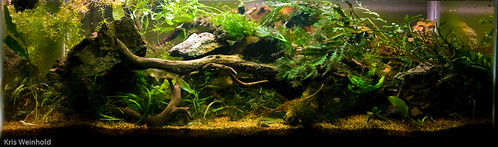
I mentioned last week how I’ve been tearing down a few of my smaller tanks in order to consolidate them into a single larger aquarium. Well, I’ve begun setting up a new 50G breeder tank. The nice thing about a 50G aquarium is that it is as tall as it is deep, giving it very nice dimensions for creating an aquascape. I still don’t have a light fixture for this tank yet, so up to now, all I’ve been able to setup is the hardscape.

50G - Hardscape

Using a huge manzanita root ball on the left, my goal was to create the look of a log or tree that’s fallen into the water and has sat there for awhile. The limbs have settled in between rocks, and only the larger ones remain undecayed. That’s the premise so far. I’ve had a difficult time trying to decide what plants I’m going to use in this tank, and exactly where they’re going to go. I’ll likely use a bunch of smaller leaf’d plants, such as various rotalas, but I still haven’t figured out how they’re supposed to fit with this hardscape. I think my biggest stumbling block right now is more about where to position the negative space (unoccupied area), rather than cramming plants throughout the entire thing. I’d love to hear feedback on the hardscape itself, as well as, any ideas for planting.

Business Broker

Enjoying Fall

November 3rd, 2008

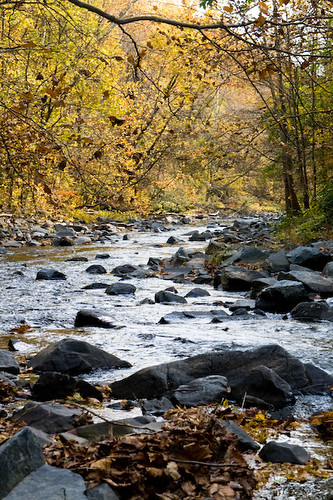
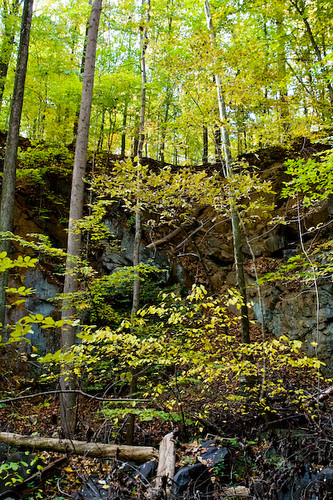
Autumn is a wonderful time of year in Maryland. It may not be known for the spectacular leaf colors that New England is, but they are brilliant nevertheless. This weekend, my wife and I took a walk along the Little and Middle Patuxent Rivers with our two dogs to enjoy the season. I’ve talked about this area a number of times on the blog, but there’s something new and different every time we’re out in the forest.

Little Patuxent in Fall

Along the water’s edge, I was hopping some rocks with the dogs, and looked down to see an freshwater Asiatic clam in a part of the river that I’d looked for them before, but never found them. I didn’t see many fish out and about this time, however, but I suspect that’s due to the declining temperatures.

Changing Colors

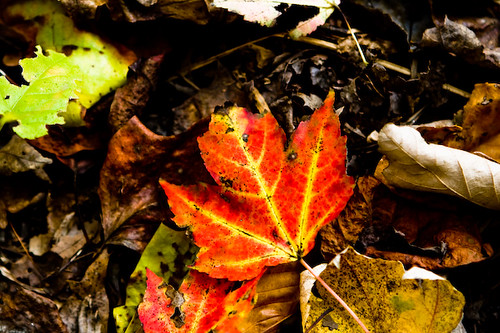
Of course, the main reason we were out was to see the leaves. There were stunning bright orange and red leaves lining the trees, and littering the forest floor. I’m pretty sure that this is the peak for the leaves this year in our area, as the trees all around exhibit a full spectrum of color.

Old Quarry

We also took a different trail this time on our hike to an old quarry. It’s now in the process of being reclaimed by the forest, but you can see above how the hillside was mined for rock. There were a few leftover rusting pipes coming from the water, that I assume were used to transport water to the quarry. Overall, a nice relaxing hike before heading back to work on Monday.

Business Broker

Odd n Ends

October 29th, 2008

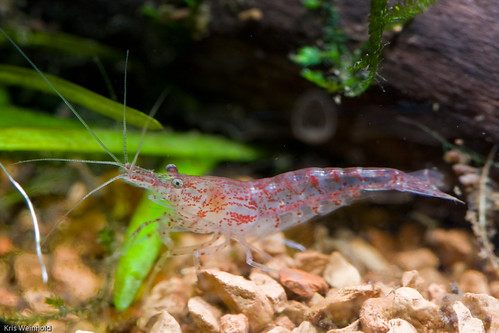
The GWAPA meeting that I hosted has come and gone, and the weather outside has turned downright chilly, so it was time for me to tear down the pond for the year. I brought the Crinum americana indoors, as well, as a number of the other plants that had spent the last few months basking in the open sun. I also managed to net out about 4 dozen cherry shrimp from the bottom of the pond.

Cherry Shrimp

In addition to some outside maintenance, I’ve also been working to break down a few of my smaller tanks in hope that I can replace them with a larger “farm tank” to grow out a number of exotic plants that I’ve been acquiring recently. To that end, with the Jewel cichlids off to a new home, my 20H is completely empty. I piled all of the wood/rocks from that tank into my 20L quarantine tank.

20L - Odds n Ends

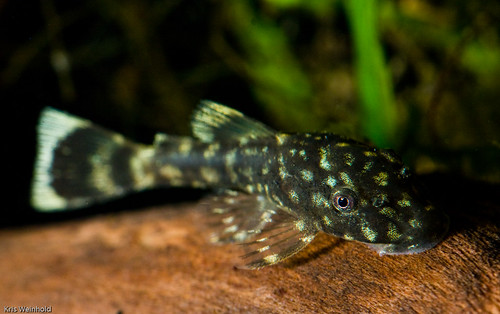
This suits me just fine because I had recently put 20 juevenille bristlenosed plecos from the Catfish Convention Auction into this tank. These plecos are adoring the algae-ridden wood that was in the 20H.

Bristlenosed Pleco

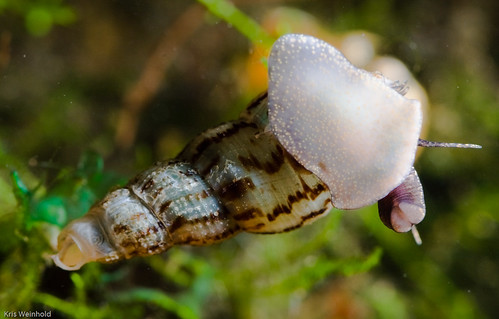
In addition to the plecos, that 20L now contains 3 I. werneri that I’ve been unable to fish out to move to my 75G, and a large number of trumpet snails that retreat to the substrate during the day, and emerge each evening.

Trumpet Snail

I’ve also torn down both of my 2.5G tanks that I had used for my first wormstrate/soil experiment. All that’s left is the 20L and two 10Gs, which I’ll need to consolidate at some point. I’m thinking of getting a 50 breeder, or similarly sized tank for my farm tank. Of course, we’ll see what deal comes along.

Business Broker

GWAPA: October Meeting at My Place

October 26th, 2008

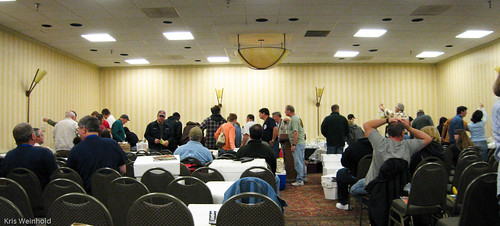
My wife and I hosted GWAPA’s October meeting at our home. We had around 30 folks show up on a very rainy day in Maryland for a meeting about photographing your planted aquarium. I did my best to give a talk structured after this post, and hopefully the other members came away with a little bit more knowledge than when they arrived about how to get a semi-decent picture of their tank.

We also asked for nominations for the 2009 board of directors. It looks like the board will remain largely the same, with just the recording secretary slot being new. The auction wasn’t as large as some of them have been lately, but a number of relatively new plants to the hobby showed up at this meeting. A new Glossostigma, Lindernia, and Rotala all made an appearance. Hopefully they’ll soon make their rounds to more and more folks.

75G - 10/22/2008

After the meeting was over, I fished out my Jewel cichlids, and sent them to a good home with another member who already keeps some Jewels. They were wonderfully personable fish, but were too aggressive to keep with much else. In the end, I plan to tear down a couple of my smaller tanks, so I needed to find a home for them. All in all, a great meeting!

Business Broker

75G – Cleaned Up

October 22nd, 2008

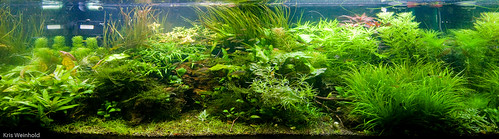
As promised, here is a picture of my 75G after some trimming and cleaning up. I didn’t end up changing the aquascape very much, but that will hopefully come before too long. I have changed the fauna in this tank, however. I managed to fish out about 15 Corydoras paleatus, which I sold in the catfish convention auction.

75G - 10/22/2008

75G - Click picture for larger image.

I replaced them with about 60 Threadfin Rainbowfish (Iriatherina werneri) that I had kept in quarantine for the last few weeks. I also intend to fish out the Goo Obo Gudgeons from my 54G tank to turn this into more of an Australian/New Guinea themed tank. My hope is that the Gudgeons will breed without the Corydoras in there to disturb their eggs. We’ll see! Let me know if you have any suggestions for the aquascape.

Business Broker

CO2 Dump!

October 20th, 2008

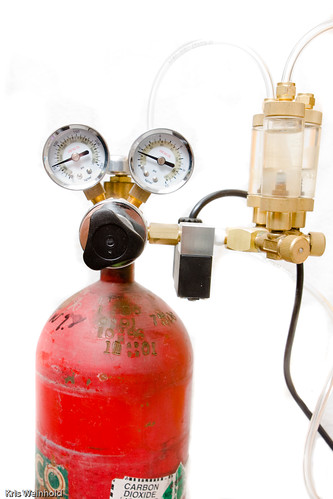
CO2 Canister & RegulatorAfter the catfish convention auction, I came home and started acclimating the new bristlenose plecos that I got. I putting them in a 20L quarantine tank, and when I turned around I noticed that none of the sunfish or killies that usually swarm the front of the tank were there. Eventually, I spotted a few of the sunnies dug into the Ranalisma rostrata, and a few others swimming awkwardly at the water surface.

Immediately, I knew what had happened; the CO2 tank ran out, and dumped a ton of CO2 into the aquarium all at once. Right away, I pulled out my Python hose, and did a 50% water change. I also borrowed an air pump from another tank, and threw an airstone into the 40G. At that point, all I could do is wait and hope that I wasn’t too late.

I’m happy to report that despite some really dire looking fish, nearly all of the fish survived as of today. I only have one sunfish confirmed dead, and all killies are accounted for. I was lucky.

So, now the question is what can I do to prevent this from happening again? Well, two things come to mind:

1. I could add a pH controller to control the solenoid on my CO2 tank. If the tank suddenly started dumping, the pH controller would shut off the flow of CO2 once the pH dropped below a certain level. Unfortunately, this is not the cheapest solution.

2. I could attach a low-pressure regulator to the regulator I currently have. This would detect the low pressure that causes a CO2 dump, and vent that gas to the room, instead of the aquarium. The downside to this is that I already have a 3-way manifold on my regulator, which is pretty heavy. I’m not confident that the low-pressure regulator could support that weight.

So, I’m not sure what I’m going to do. At this point, I should have at least 6 months to decide before this could happen again. It’s not even a guarantee that it will happen again. That said, I don’t want to take any chances. Does anyone else have any alternative suggestions for what I could do to prevent this from happening in the future?

Business Broker

Catfish Convention Auction

October 19th, 2008

After an extremely busy couple of days preparing for and attending a family wedding, I managed to carve out some time to attend the All-Aquarium Catfish Convention auction. I was very pleased to be able to catch up with Dr. Devon Graham, who runs and operates Margarita Tours, which is the company I traveled to the Peruvian Amazon with in August 2007. In addition, from everyone I talked to, it sounds like the convention itself was a tremendous success. I’m very proud of GWAPA participating on Friday night with a workshop about planted-tank-friendly catfish, and representing with a beautiful informational display table. That was all made possible by the work of some very dedicated members.

The auction was huge, consisting of 10 lots of items. I brought 15 bags of plants and fish, and I suspect everyone else did similarly because there could be no less than 1000 items there. Plants, catfish, killies, cichlids, tanks, tools, equipment, it was all present. My only buy of the day was a fantastic grab, pulling 20 Bristlenosed Pleco juveniles for only $14. I have no idea what I’m going to do with all of those if they reach adulthood, but I’ll enjoy raising them up, possibly breeding them, and passing them onto other aquarists. I’d love to hear what everyone else in attendance came away with.

Business Broker

Rotala ramosior

October 14th, 2008

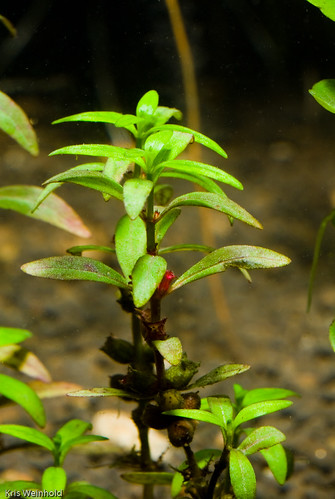
While at the reservoir last week, I spotted countless stems of Rotala ramosior growing emersed all throughout the dried lake bed. Out in the full sun, the plants were all a deep red color, with many flower buds along their stems. The flowers of Rotala ramosior, often called Tooth-Cup or Lowland Rotala, are small white flowers, that grow in large numbers along the stem.

Rotala ramosior

Within a day or two of putting a few stems in my 40G aquarium, the plants began converting to submersed form, throwing out new green leaves. They also began side-shooting, forming side stems from the main trunk, also with green leaves. The leaves of Rotala ramosior have a very distinct vein down the center of the leaf, from tip to stem. The other veins are not nearly as prominent as the main central one.

Rotala ramosior

Being native to over 90% of the states in the U.S., it’s amazing that Rotala ramosior is not more common in the hobby. It grows well, creates a nice bush like most Rotala species, and is attractive. I’m looking forward to growing it out further, and adding it to my collection.

Business Broker

75G – In Need of Attention

October 11th, 2008

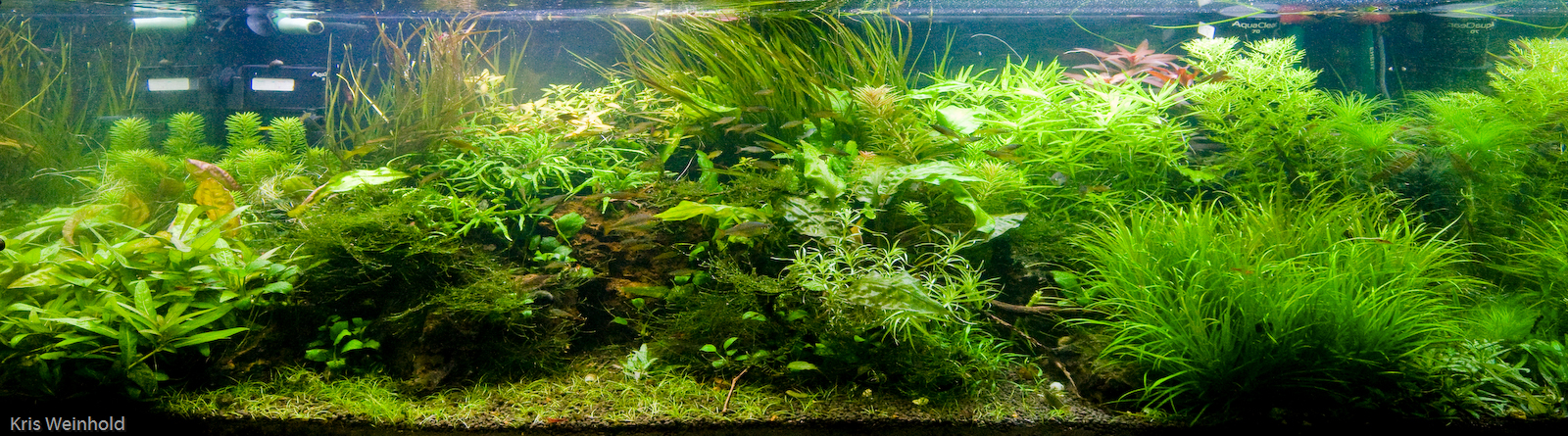
I’ve been quite busy this week with a number of non-aquarium related things going on, so it’s no surprise that I haven’t been able to post, or tend my aquariums as much as I would normally like to. I have continued to dose my 75G every morning, however, and when I do that, without much attention, it soon turns into this overgrown jungle.

75G - Needs a Trim!

Click for larger image

The Stargrass, in particular, in the back right/middle has completely taken over the area, shading out everything in front of it. Fortunately, all I have are a bunch of crypts, anubias, and other non-light-hungry plants there. I hope to be able to clean up this tank a bit this weekend, so that it’s back in tip-top shape in a week or two. If I’m really ambitious, I might change up the aquascape a little bit because I’ve been wanting to do that for awhile. We’ll see. I’ll post an updated picture once I have it back to a more presentable state.

Business Broker

« Previous Entries   Next Entries »