Choosing the Right Aquarium

January 23rd, 2009

Starting a planted aquarium can seem like a daunting task. Most hobbyists start out small, gradually learning by trial and error what works and what doesn’t, and piece together information from books and websites until they finally either succeed or get frustrated and leave the hobby forever. In this series of posts, I’m going to attempt to outline the most important aspects of setting up a planted aquarium. Hopefully this will become a valuable resource to anyone new to the hobby, or experienced fish-keepers who are looking to setup a planted aquarium.
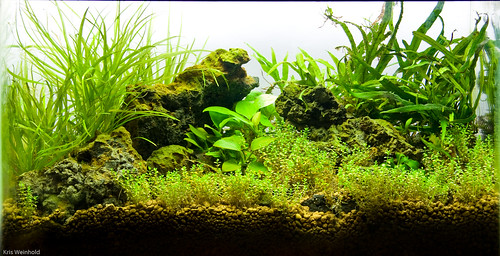
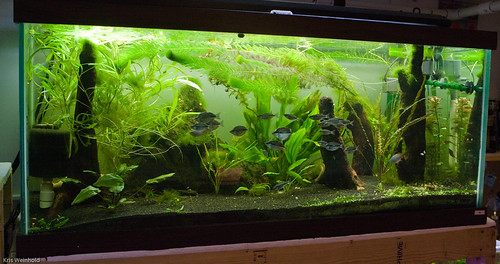
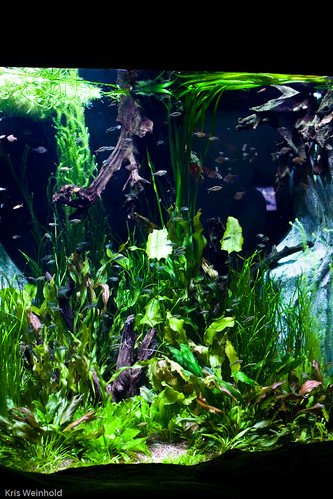
2.5G - 08-31-2008

Perhaps an understatement, the actual physical aquarium is very important to a planted aquarium. The dimensions will impact the type of aquascape that you can implement, the design can influence its integration into your room, and the features can determine how equipment will function within the aquarium.

Dimensions

In general, larger aquariums (40+ gallons) are easier to upkeep than smaller aquariums. In addition to having the space to fit all sizes of plants, larger aquariums are not as prone to wild swings in water chemistry. Of course, larger aquariums have higher costs/space requirements than smaller setups, so if these things are issues, try not to start with anything smaller than 10-20 gallons. Nano aquariums are very much in style right now, but they’re more difficult to maintain, so I would recommend that beginners save those for another time.

Once you have selected the general volume of your aquarium, it is important to consider the actual dimensions. While any aquarium can be aquascaped, there are certain dimensions that are especially easy to work with. In general, aquariums with near equal ratios of depth and height are considered great aquascaping tanks. Some excellent aquarium sizes are 20L (30 x 12 x 12), 50G (36 x 18 x 18), and 75G (48 x 18 x 20). There are good reasons for this. For example, a popularly sold aquarium size is the 55G (48 x 13 x 20) tank. While the width and height are nice, the tank is only 13″ deep, making it extremely difficult to fit a complete foreground, midground, and background that transition smoothly between one another. In this case, I’d recommend getting a 75G because the extra 5″ of depth you gain are invaluable when aquascaping. Try to avoid extremely tall tanks, as you may need to purchase more intense (and expensive) lighting to adequately light from top to bottom. That said, I prefer an aquarium at least 16″ tall so that the stem plants have room to grow and branch toward the surface. I consider the perfect planted aquarium, the 50G aquarium, as it is not so wide that it is difficult to provide a coherent aquascape from left to right, and has sufficient depth and height to design a nicely proportioned aquascape.

Design & Stand

Finished AmanoScape at AGA 2008A very important thing to establish up front is whether or not you want your planted aquarium to be a centerpiece that is integrated into the design elements of the rest of the room. Planted aquariums have a potential to really light up a room, and provide that wow factor when people enter. If this is your intention, you may wish to consider a rimless aquarium, which is a tank without the plastic trim along the top and bottom, and without the visible silicon lines along every seam. In addition, the stand that you place your tank on can impact the impression that your planted aquarium conveys. The cheapest possible stand is probably cinder blocks with plywood, which can have a fairly modern look to it. There are a number of nicely finished wood stands available, and I’ve seen some very well done DIY stands using cabinet doors and hardware over-top of a 2×4 support structure. All-in-all, make sure not to look past the design aesthetic of the tank and stand when planning your planted aquarium.

Aquarium Features

There are many different types of aquariums, and while all can be used for planted aquariums, some are more suitable than others. When choosing between an acrylic or glass aquarium, I prefer glass. The reason is that your planted aquarium will inevitably get algae on the glass that will need to be removed. While it’s possible to scratch a glass tank, it’s much easier to do so with acrylic. In addition, the clarity of many of the glass tanks are unsurpassed by acrylic, especially in the corners where distortion is often present. That said, acrylic does have advantages in weight and strength for large aquariums, but if given the choice, I choose glass.
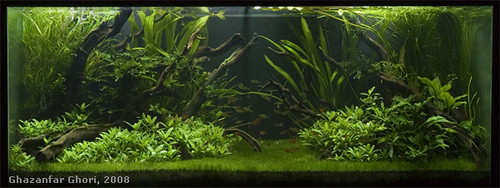
Ghazanfar Ghori’s 215G with Hidden Overflows

Additionally, some aquariums come outfitted with overflows, standpipes, bulkheads, etc… These items are often required if you plumb your aquarium into your house’s drain or water supply, or if you intend to place the tank in the center of your room, and do not want visible hoses or cords on one side of the tank. However, if you do not intend to do any of these things, and you do not plan to use this same aquarium for a reef-tank later in its life, I would recommend avoiding them. These features take up space within the aquarium itself, and are usually not that attractive. This means that when aquascaping you will want to try and cover them up as best you can with tall plants, which could limit your options.

Summary

While it’s possible to simply run out to your local aquarium store and buy whatever aquarium they have in stock, some forethought about the matter is definitely required to ensure a successfully designed planted aquarium. Of course, there are an infinite number of possibilities that could work, but the most common principles have been outlined in this article. Good luck shopping!
Business Broker

Rescaping By Commitee

January 2nd, 2009

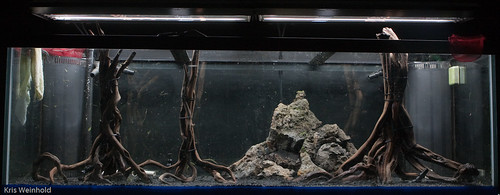
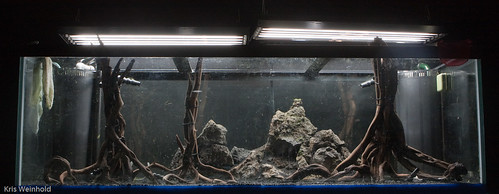
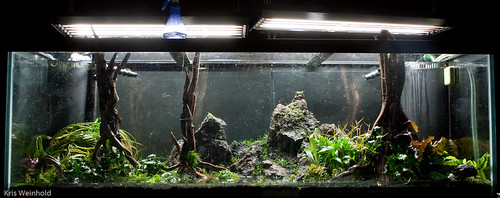
Earlier in the week, one of our fellow GWAPA members, Dave Williams, invited a few people over to rescape his large 180G aquarium. With a tank this large, a little bit of help to plant can save a huge amount of time. By the time we arrived, Dave had done all of the prep work required, so we could start directly with the hardscape. He already had a vision in his head about the final aquascape, which was to bundle branches of wood together to form “trees,” and hopefully provide enough perspective with plants to have the effect of standing in the forest, with a mountain off in the background.

Dave's 180G Rescape

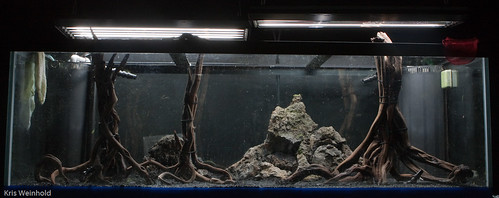
So, we got started by placing the trees in the tank, and then using several pieces of porous mossy rock to build up our mountain. After we did this, we realized that the mountain looked a little bit out of place, being the only rock in the tank.

Dave's 180G Rescape

So, we added a complementary mountain to the left of it. After several opinions were tossed around, we all decided that we didn’t like the separate mountain ranges, and would rather put a smaller peak in part of a larger mountain range. We were also trying to envision which pieces of the background would end up visible once the tank was planted. Ultimately, we ended up with what you see below.

Dave's 180G Rescape

Now, it was time to begin planting the tank. We added just enough water to allow for the plants to stick, and went to town. In the mountain itself, we wedged Cryptocoryne parva into any crack we could. The foreground consisted of hairgrass and a dwarf Lilaeopsis species. Anubias, Cryptocoryne crispatula var. ‘Balansae’, Cryptocoryne walkeri, Pogostemon helferi, among others made it into the tank.

Dave's 180G Rescape

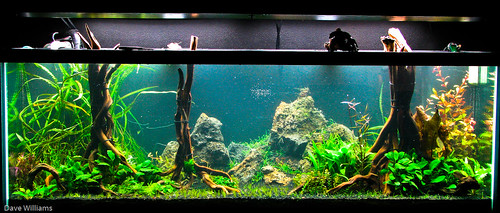
Now it was time to fill the tank with water. As you can imagine, it takes quite awhile to fill a tank with 180 gallons of water slowly enough not to disturb the plants. Dave sent a picture of how the tank looks with the water in it.

Dave's 180G

As you can tell, plenty of growing needs to happen to really fill in a tank this size, but I’m very interested to see how this aquascape shapes up once it reaches maturity. I also recommend scaping with other people. It’s great to hear instant feedback on your original hardscape and plant selection ideas, so that you can make any minor adjustments before you finish.

Business Broker

Walking Thru the Woods

December 30th, 2008

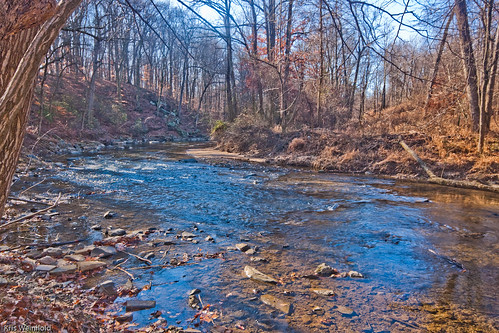
Firstly, I hope everyone had a nice holiday, and continue to enjoy life as we move into 2009. Yesterday, my wife, dogs, and I took a hike through some trails near our house which I have documented several times previously on this site. These trails wind in-between the Little and Middle Patuxent Rivers, with one segment shown below.

Middle Patuxent River

Of course, the weather is far too cold for any aquatic vegetation to be present in the water now, but as you can see the rocky floor of the river is not especially good to support plant life anyhow. I have seen Potamegeton in here previously, however.

Clear Water, Rocky Bottom

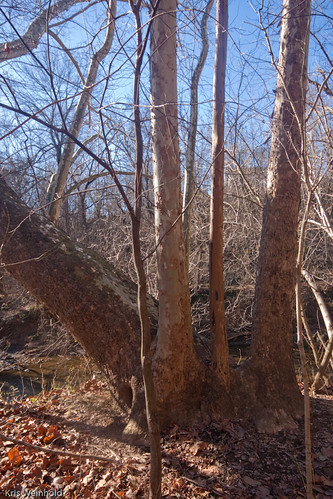
With all of the leaves fallen, you could see far more of the forest than normal. While this did make us a little bit more aware of otherwise unseen homes and roads, we also had the opportunity to see some really neat trees that we would have missed at other times of the year.

Neat Tree

And of course, our dogs took full advantage of the more open space, running wild in the few secluded areas that we let them off the lease. Bella, in particular, our black lab and weimaraner mix was racing around too quickly to get a clear picture.

Bella Running Crazy

Below is another set of trees that I found particularly interesting. I haven’t a clue whether this could be one of them, but I’m certainly reminded of the old Indian marker trees that are present through Appalachia and surrounding forests.

Neat Tree

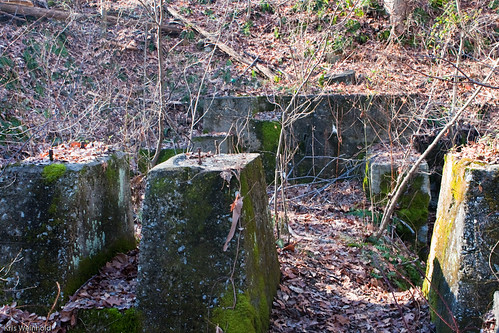
Along those same lines, it’s always thoughtful to remember that although some of these wilderness areas look pristine and untouched, that we’re only a part of a long line of people who have walked the land. In this case, old bridge remnants lay moss covered as memories of some old road that passed overhead.

Old Bridge Supports

I guess it’s true that eventually, the forest will fully reclaim these structures. All the while, I’ll enjoy walking and exploring the forests and waterways near our house.

Business Broker

Rotala sp. ‘Araguaia’

December 16th, 2008

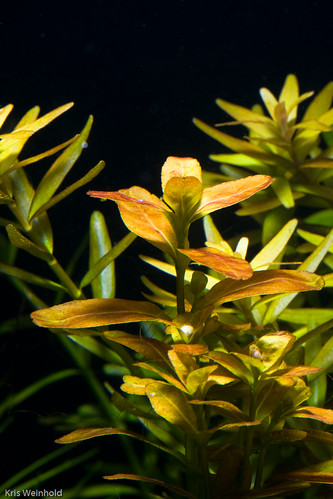
Rotala sp. ‘Araguaia’ is one of the plants that my wife brought back for me from Aqua Forest Aquarium in San Francisco, CA.

Rotala sp. 'Araguaia'

It’s one of the nicest new plants I’ve seen enter the hobby in a long time, as it has an oblong leaf shape that turns a pumpkin orange color. In addition, it branches readily, creating a nice bushy effect without too much effort. I haven’t found this plant to be very demanding at all.

It grew in my wormstrate substrate without any additional dosing, besides CO2, but definitely grows faster and a little bit larger in my 50G with high light, CO2, and added fertilizers. I got good coloration in both conditions.

Unlike species like Rotala sp. ‘Green Narrow’, this variety grows vertically, which provides a nice contrast to the aforementioned plant.

Right now, the source of this plant is unknown, despite being named as Araguaia.’We’re in the process of trying to flower and ID it properly, but that can be a long and laborious process.

All in all, I don’t have any complaints about Rotala sp. ‘Araguaia’. Therefore, I can recommend this plant to most people as something different from the more common Rotala rotundifolia. Currently, most stores in the U.S. don’t have it, but it’s available online from hobbyists on sites like aquaticplantcentral.com.

Business Broker

GWAPA: Holiday Potluck!

December 8th, 2008

GWAPA closed 2008 with a holiday potluck at a member’s house in Reston, VA. The club combines the November and December meetings since it’s hard for people to make two meetings during the holiday season. While the meeting was mostly a social, we did conduct a little bit of club business, electing the board of directors for 2009. I will continue on as president of GWAPA next year, so I’ll soon have to buckle down and work with the other board members to assemble a great schedule for the upcoming year.

Michael’s house was a great place to hold our final meeting because he was a basement full of tanks, which we eagerly perused. Michael has been to the Peruvian Amazon a couple times with the same company that I traveled with, and he has actually brought back hundreds of fish that he personally collected there.

Michael's Fishroom

It was great to look through all of the tanks at the wild South American fish, including piranha, pencilfish, cichlids, characins, catfish, and more. He also had some tanks with other species, such as his rainbowfish aquarium below.

Michael's Rainbowfish Tank

Finally, we had a huge auction, which took us over an hour to complete. There were 144 bags of plants, fish, shrimp, etc. in the auction, with variety that rivaled the auction at the AGA Convention last month. It was a nice close to a great year in the club.


Business Broker

Marine Aquascaping by Jnicho

December 1st, 2008

This is something a little bit different, as this post is authored by Jnicho from The Reef Tank Online Community. Jeff has been keeping aquariums for 25 years, and maintains a beautifully aquascaped reef tank. Read more about Jeff’s background here.

My general thoughts on aquascaping are pretty simple and can be summed up in two general categories.  First, less is more.  Second, keep it natural.

Let’s take a more in depth look at these concepts.  First, keeping it natural is pretty cut and dry.  I like for my tanks to mimic the natural environment of their inhabitants.  To each his own I suppose, but you will never find a cheesy sunken ship, Chinese pagoda or no fishing sign in any of my tanks.  Beyond that, in reef aquaria it’s important to use items made of materials naturally found on the reef or in the ocean.  Other materials often have compounds in them that can cause problems or even kill livestock.

For many years in the reef hobby it was believed that you needed 1 ½ – 2 pounds of live rock per gallon of tank size.  If you were going to cram that much rock into most tanks you didn’t have many options on how you could do it.  The generally accepted approach was to build a strong base of larger rocks on the bottom with smaller rocks on top.  In most cases what you ended up with was a solid wall of rocks across the entire width of the aquarium.

Since the rock work was often leaned against the back pane of the tank, this created a sloped look.  It didn’t yield an especially natural look, and especially once you started to place corals on it, it become what I’ve best heard described as “the fruit stand look”.  These days it’s been found that adequate biological filtration can be achieved using far less rock, giving much greater options on how it can be arranged.

As an example my 125-gallon reef tank has no more than 90 pounds of live rock in it, and maintains undetectable levels of the “bad” stuff. Live rock selection is an entire topic of its own so I won’t get too involved with that here, but I would like to point out that light, very porous rock is the key in using a smaller amount.

There are some different approaches to preparing the tank before you start aquascaping depending on whether you have a substrate or a bare bottom, you want to use rock lifts, etc.  I view these more as a choice of husbandry styles; so again, I’m not going to discuss them in depth here.  For what it’s worth, I personally choose a moderately deep bed of fine sand and no type of rock lifts or supports in my own tanks.

So, here is what I view as the benefits of this approach.  First and most simply, I think using less rock looks better and more natural in most cases.  It allows for more natural placement of corals and other livestock, and allows more swimming area for fish.  When placing and arranging rock work in the tank, I look for three things.

  1. Does it look aesthetically pleasing?
  2. Is it open, leaving as much space as possible?
  3. Is it secure?

OK, so item one is pretty straightforward.  When you look at the tank does the rockwork look natural and pleasing to your eye?  One thing I find really helpful when setting up a tank is to look at lots of pictures of other tanks or even pictures of natural reefs.  Save the ones that you think look nice so that you can identify a general trend of what you seem to like. Some people may actually like the “fruit stand” look; others may like the look of a trench, while still others may want to try to create a biotope that recreates a specific part of the reef.

I find that randomness often helps achieve the goal of looking natural.  Use a variety of sizes and shapes of rock. Also create as many open caves and nooks between the rocks as possible (this also tends to make a more natural environment for fish and other animals).  Try to avoid horizontal or vertical lines.  Nature seldom runs in straight lines.  Horizontal “shelves” or “bridges” are a pet peeve of mine.  Under the right circumstances they can look cool.  More often than not they end up looking unnatural, especial if used to display corals as if they were in a store for sale.  Randomness is also important when placing corals.  Varying the amount of space between specimens tends to yield a more natural look.

Item two, keeping it open.  Some of this goes back to looking natural.  Natural reefs are made up of areas of rock densely populated by corals and other animals but also areas of open water and sand (one reason I choose to employ a sand substrate in my tanks).  Beyond that though I try to make sure my rock work is open so as to not create places where detritus and other things can get caught and build up.  This depends also on having an adequate amount of, and properly placed, flow, but in general keeping rock work as open as possible will keep “gunk” suspended in the water column longer giving it a better chance of being filtered out.  Fish also seem to like the open rock work.  I love to watch my fish zip around the tank, darting in and out of the various caves and nooks and crannies in the rocks.

Lastly is the matter of security.  One of the problems in the “olden days” of trying to get huge amounts of rock stacked in a tank, were the inevitable rock slides.  At best they caused a few scratches on the glass (or acrylic), and at worst a cracked and/or leaking tank!  It’s much easier to stack a smaller amount of rock securely.  Personally, I choose to fit my rocks together like a puzzle, placing them in such a way that they support each other securely without the need for additional supports.

Sometimes this means making some minor modifications with a hammer and chisel.  Some people choose to epoxy rocks together, but I don’t especially like to turn them into large unwieldy chunks.  Another method, which I do like and works well, is to drill holes in the rocks and “string” them together so they are less likely to topple.  I’ve seen this done with acrylic rod, but the most ingenious (and cost effective) method I’ve seen is to use those white PVC driveway reflectors (minus the reflector of course).  One nice thing about this method (especially in a larger tank) is the ability to create interesting freestanding (i.e. not requiring support against the back of the tank) areas of rock work.

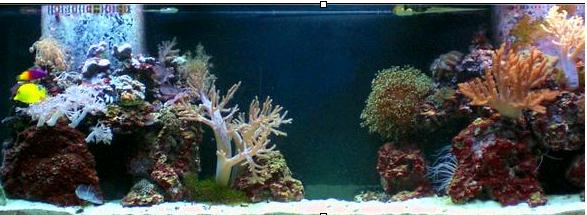
As the old saying goes, a picture is worth a thousand words.  So to sum up I offer this shot (top of post) of my 125-gallon reef.  The tank has only been setup for a few months so it’s far from a finished product, but it does a fairly good job of illustrating my thoughts about aquascaping.

Business Broker

AGA 2008: Georgia Aquarium Field Trip

November 23rd, 2008

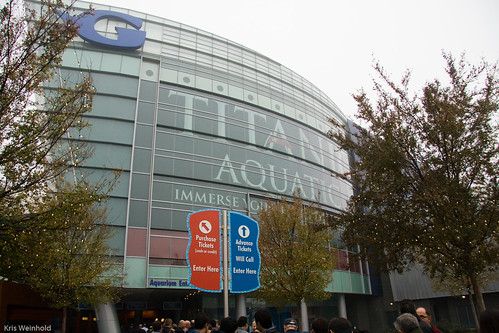
The 2008 Aquatic Gardener’s Association Convention started with a field trip to the Georgia Aquarium, which was conveniently just a few blocks away from the convention hotel. We all assembled in the lobby of the hotel, and created a mob of people filling the street toward the aquarium. It was a great way to meet up with folks that you haven’t seen since the last convention.

George Aquarium

The aquarium is rather new in Georgia, and that shows through in the cleanliness and general niceness of the tanks and facilities. The building has a central cafe/atrium area with wings heading off in different directions. We were first guided into their river wing because they had the planted aquarium staff there to answer any questions we had about those tanks.

Fish

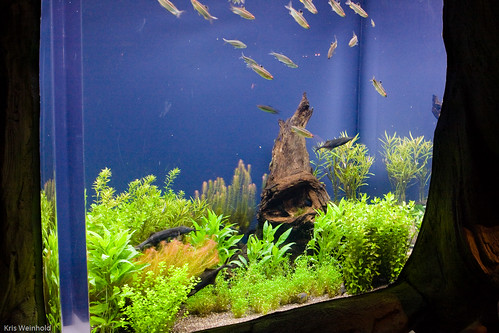
The planted tanks that they had were nice tanks. They wouldn’t place highly in an aquascaping contest, but they’re well designed, and accomplish feats that most of us don’t usually attempt. By that, I mean that some of these tanks must have been 5-6 feet tall, and yet they still managed to adequately light them to the floor.

Planted Tank

In addition, I asked one of the staff how they trimmed their plants in such a deep tank, and they said that they literally put on a wetsuit, and dive into the tank. If it was such a rigmarole for me to trim my tanks, I don’t think they’d ever get attention!

Planted Tank

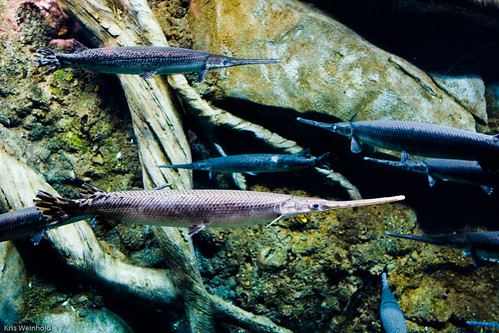
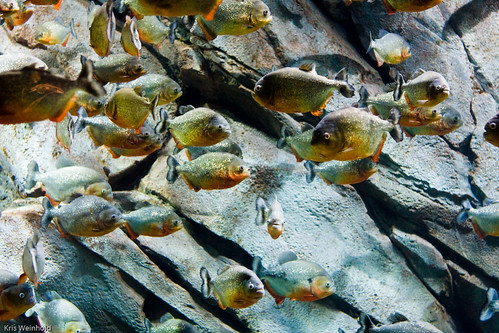
In addition to the planted tanks, they had a fair number of other freshwater tanks, including a large river tank with huge catfish, an African rift lake tank, a piranha tank, and several others. I would have liked to see more freshwater stuff at the aquarium, in comparison to the marine sections, but the things they had were nicely done.

Piranhas

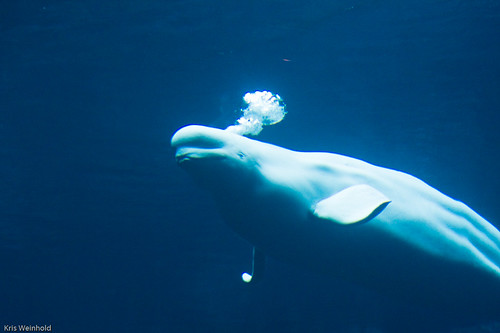
One of the cooler attractions at the aquarium was their beluga whale pool. I counted four whales playfully swimming back and forth, clearly recognizing the humans on the other side of the glass. It’s always amazing to watch humongous creatures maneuver so gracefully and with such ease underwater.

Beluga Whale

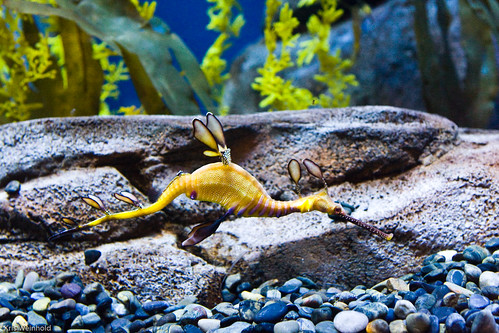
And of course, they had a sea dragon exhibit. These odd-ball creatures don’t seem to move around much, but they’re fun to watch just due to their unique appearance.

Sea Dragon

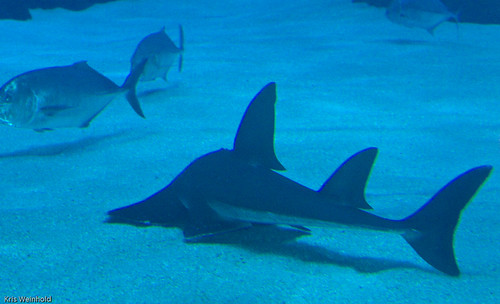
I would be completely negligent if I didn’t show a picture of a guitarfish (below), for which this blog is *not* named after, but a coincidence that was nice to discover. Although they kind of look like a shark, they’re actually in the ray family, and cruise along the bottom searching for small crustaceans to eat.

Guitarfish

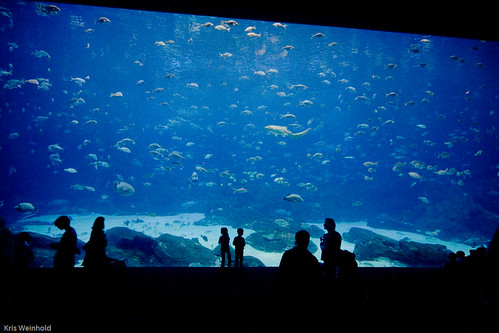
The most impressive display at the Georgia Aquarium is their huge tank, which I believe is the largest aquarium in the world. They had large informational cards that you could take listing most of the species in the aquarium, so that you could find and identify the various fish in the tank. I could have sat in front of this glass all day long.

Huge Tank!

In fact, I believe that they several events in this room with the aquarium as a backdrop, and they even allow you to sleep over in some cases, where you can fall asleep watching the fishes. Obviously, there were countless other exhibits throughout the aquarium, but two of my favorites, which most public aquariums seem to have these days, were the eels/worms, and then the jellyfish below.

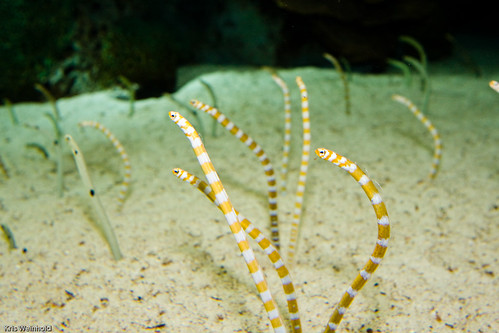
Eels

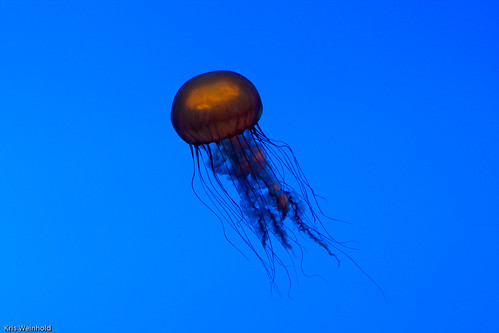
It’s just so neat to watch both of these creatures flow in the current, just waiting for food to come their way. The jellyfish, especially, are beautiful with the blue backdrop, and their orange and reddish colors.

Jellyfish

I would recommend the Georgia Aquarium to anyone who’s in Atlanta and needs something to see. It’s definitely got a lot of offer, and is worth the price of admission. That huge tank is worth it by itself.

Business Broker

CCA: Fish of Honduras: Ken Davis

November 9th, 2008

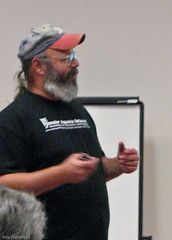
Ken DavisThe Capital Cichlid Association’s November meeting brought in Ken Davis from Atlanta, Georgia, to speak about his collecting experiences in Honduras with Rusty Wessel. Ken has been president of the Atlanta Area Aquarium Association, owned a retail fish store, wholesale distributor, and fish hatchery, so it was great to hear the adventures of an expert through the Central American country. The presentation was more or less a slide-show of various species of fish (and other critters) that he found during his trip. I’m going to share a few of the species that most interested me.

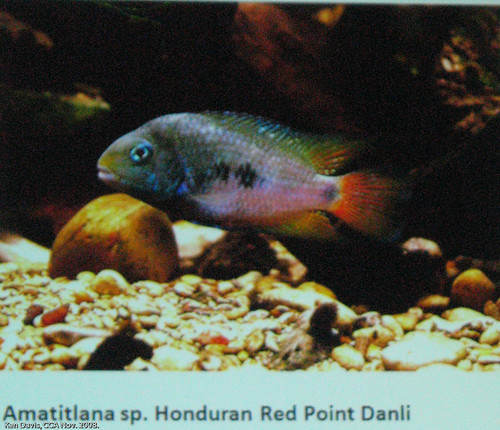
Of course, one of the most famous fish from Honduras that has recently spread throughout the hobby has been the Honduran Red Point. Interestingly enough, this fish has already been selectively bred to look very little like its native counterpart. Below is a picture of how the Red Points look in the wild; note the vivid coloration on the body. Apparently, many breeders have been trying to get a blue body on this fish, to the detriment of the other colors, even some of the red.

Amatitlana sp. Honduran Red Point Danli

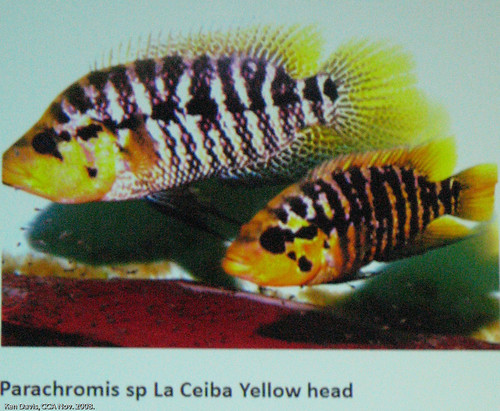
Ken told sad story about the beautiful undescribed Parachromis species of fish seen below. He was staying at a local hotel, and while waiting for all of his comrades to wake up, he and some others took a short hike to a small lagoon nearby just to see what was there. To their delight, they managed to catch one of these fish, which they have never found anywhere else in the country. They subsequently caught a total of 7 fish, and are currently breeding them. Unfortunately, on a later trip, they went back to the location, and all of the forest surrounding the lagoon had been cut down for new development, and the water itself was covered with an oil slick. Nothing living remained in the water, so it’s possible that the fish they previously pulled are the only surviving of the species. Let’s hope they can thrive in captivity.

Parachromis sp. 'La Ceiba Yellow head'


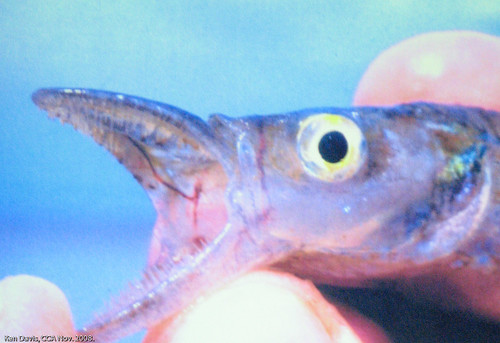
One of the things that I enjoyed about Ken’s talk is that he didn’t confine it solely to cichlids. While I love cichlids, I’m also interested in the complete ecosystem of any given place. In addition to several cichlids that fit this description, Honduras is home to one of the world nastiest livebearers, the Belonesox belizanus. Just look at the teeth of these guys. They can get up to about a foot long, and Ken says they’re great fish to have in your fishroom when you need to cull a group of fry.

Belonesox belizanus

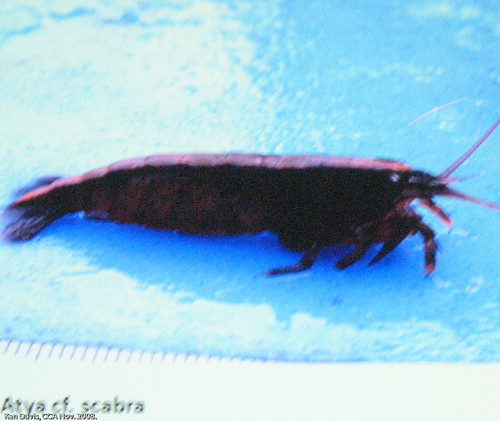
There are also a large number of invertebrates to be found in Honduras. Ken found (and feasted on) several freshwater crabs and prawns, but in amoungst the roots of creekside trees, he also came across these inch-long purple shrimp. He’s tried unsuccessfully to bring them back to the States, but he hopes to have success sometime in the future, as he sees a great place for them in the hobby. I agree!

Purple Freshwater Shrimp

Finally, I asked Ken what the habitat was like as far as aquatic plants go. He said that 99% of the places he collected were rocky bottomed streams or rivers that contained zero plant life. The only exception was a small section of private property that the owners invited him to that wasn’t fished commercially or otherwise. I’m sure that there are a number of interesting plants available, but I imagine they might be hard to come by. Overall, Ken highly recommends Honduras as a place to visit. He says the people are incredibly friendly, and the accomodations aren’t bad. Maybe someday I’ll be able to visit there.

Note: All pictures of species were taken during Ken Davis’ presentation, and belong completely to him.

Business Broker

GWAPA – September Meeting

September 29th, 2008

On Saturday, GWAPA had another packed meeting at Kevin’s house in Silver Spring, MD. This month, over thirty folks showed up to hear about soil substrates in the planted aquarium. One of our members, Sean, is the originator of the soil substrate recipe that so many people are starting to use in the hobby. It was popularized by AaronT and others on Aquatic Plant Central, and we got to hear the soil method straight from the source.

In addition, we had another large auction — just look at all the bags of plants! I came away with a few things, such as Polygonum sp. ‘Porto Vehlo’ and Rotala verticillaris, and sold off a few things myself. We also debuted GWAPA’s new logo design, which you can see above.

All-in-all, it was another great meeting!
Business Broker

CCA – Dick Au on Discus Basics – Sept. 2008

September 15th, 2008

The Capital Cichlid Association was back after their summer break on Saturday with a huge meeting, featuring Dick Au, author and expert on discus. With many cichlid-o-philes from all

over the east coast region attending, there were at least 84 people in attendance. This month also had the largest auction I’ve ever seen at one of their meetings.

Dick Au gave a fantastic talk, dumbing down the basics of keeping Discus, so that I left that meeting feeling like they might not be as much trouble as their reputation suggests. He went through the entire lifecycle of how to choose your discus, who to buy them from, how to keep them, breed them, raise the fry, and so on. He stressed that the most important thing whenever keeping discus is to make sure you get quality discus from the start, otherwise, you’re just asking for trouble down the line. He suggested avoiding chain or general purpose pet stores, but fish stores who maintain significant stock of discus year-round should be okay because they need to know how to care for them to keep their stock healthy.

Even so, he suggests that you always ask the store owner to feed them in the store before buying, so that you can make sure they have a good apetite. Without that, there’s likely something wrong with them. Of course, breeders of discus who maintain quality strains  are great sources as well.

One of the things that he mentioned which surprised me was that he didn’t neccessarily recommend keeping them in planted tanks. Not that it can’t be done well, but he said it’s much harder to maintain proper water quality without being able to vacuum up uneaten food, like you can in a bare-bottom tank.

That said, Dick did mention that discus have been raised in captivity long enough that most are quite adaptable to a wide range of water conditions, contrary to their wild counterparts. As long as your water doesn’t have significantly high pH, he recommends using tap water for water changes, verses mixing your own RO water because he believes the water conditions stay more stable that way. Additionally, while temperatures between 80 and 84 degrees are ideal, most discus will do just fine in slightly lower or slight warmer temps. This is good if you do want to keep them with plants. He discused far many more topics, but most of them are covered in detail in his two books.

Overall, this was a fantastic meeting!

Business Broker

« Previous Entries   Next Entries »