February 27th, 2008
At the last GWAPA meeting, I gave a presentation called Algae in the Planted Aquarium. While preparing for the presentation, I had to gather a lot of information from a number of different sources on the Internet. I’ve decided to declare this week Algae Week, and share that gathered information by posting about two types of algae each day. This is the third installment featuring Brown (Diatoms) and Staghorn Algae.
Staghorn (Compsopogon sp.)
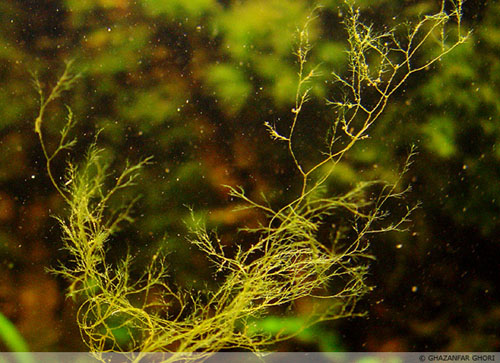
Staghorn algae is aptly named as its branching resembles the antlers of a stag’s horns. They are coarse, branching strands that commonly attach to plant leaves and equipment. The strands can appear white, grey, or green in coloration.
Causes:
- Nutrient Imbalance – Strive for the following nutrient levels: N (10-20ppm), P (0.5-2ppm), K (10-20ppm), Ca (10-30ppm), Mg (2-5ppm), Fe (.1ppm).
- Low CO2 – Strive for 20-30ppm concentration of CO2, as permitted by fauna.
Cures:
- Manual removal – Use toothbrush to remove as much as possible.
- Water change – Maintain weekly/bi-weekly water change schedule.
- Increase CO2 – This will stimulate plant growth, which should help the plants out-compete the algae for resources.
- Bleach treatment – Dip affected items/hardy plants into a bleach/water solution using a 1:20 ratio of bleach to water. Before putting them back into the tank, make sure the item is free of any bleach odor.
- Maintain proper macro (NPK) dosing scheme
Note:
- Most fish/inverts will not eat staghorn algae.
Brown Algae (Diatoms)
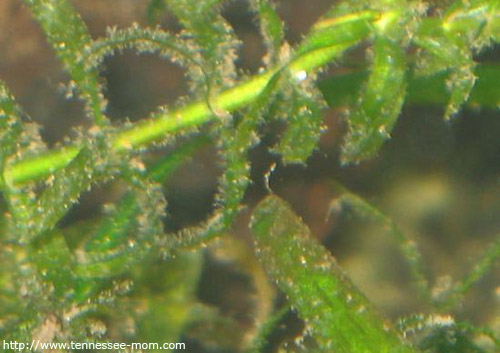
Brown Algae, or diatoms, often present themselves as a brown, muddy, muck that covers plant leaves and hardscape items. It is rare to be seen in a fully established aquarium.
Causes:
- Newly setup tank – Aquariums that have just been setup seem to be prone to diatom algae.
- Excess nutrients – Silica in particular appears to be a trigger. Contact your water utility company for a report detailing silica concentrations in your water supply.
- Possibly old bulbs – Sometimes, old bulbs can encourage the conditions for diatom algae.
Cure:
- Time – Allow it to use up the excess silica, and it will often disappear on its own.
- Manual removal – Siphon/scrape diatoms manually for quick removal.
- Algae Crew – Otocinclus and Nerite snails are fantastic at clearing a tank of diatoms. They help with other sorts of algae as well.
Sources:
Aquatic Plant Central – Algae Finder
AquaticScape
Posted in Algae | 5 Comments »
February 26th, 2008
At the last GWAPA meeting, I gave a presentation called Algae in the Planted Aquarium. While preparing for the presentation, I had to gather a lot of information from a number of different sources on the Internet. I’ve decided to declare this week Algae Week, and share that gathered information by posting about two types of algae each day. This is the second installment featuring Blue-Green (BGA) and Green Spot Algae.
Blue Green (Cyanobacteria)
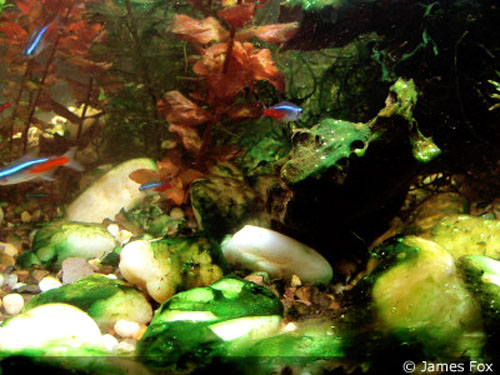
While often referred to by aquarists as an algae, Blue Green Algae (BGA) is in fact a bacterial slime that can easily coat everything in your tank. Appearing as either a green, black, or purple coating, BGA is perhaps best known for the unique earthy smell that it has when pulled from the tank. As a nitrogen-fixing bacteria, it will fully deplete your water column of any available nitrogen.
Causes:
- Low nitrates – Usually present when all of the nitrogen/nitrate has been removed from the water column. While this is a triggering condition, it is also exacerbated by the bacteria itself using any remaining nitrogen.
- High organics – Overfeeding, or excess organic matter in the tank can trigger BGA.
- Old light bulbs – Sometimes present when light bulbs are no longer emitting usable light. This may be more of a matter of your plants no longer being able to out-compete the bacteria.
- Poor water circulation – Circulation is key in a planted aquarium so that no “dead spots” are present where nutrients have been used up locally, but fresh ones are not being recirculated throughout.
Cures:
- Increase nitrates – Dose nitrates until the concentration reaches ~5ppm.
- Add fast growing plants – this helps to out-compete the algae for resources.
- Blackout – BGA cannot survive without light.
- Excel/H202 treatment – Use a syringe to spot treat problem areas. Then manually remove dead patches.
- Erythromycin – use antibiotics at half dosage to kill the bacteria. Mardel Labs’ Maracyn contains erythromycin and has been used effectively without harming most plants.
Green Spot (Choleochaete orbicularis)
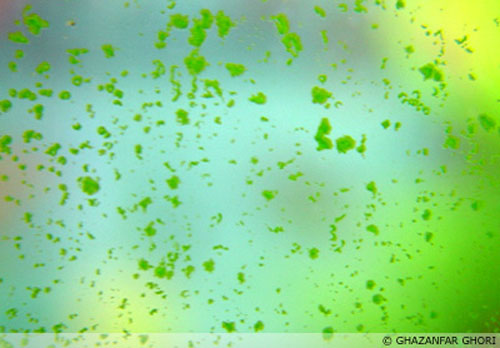
Green spot algae is very commonly seen on the glass of tanks when there hasn’t been a water change in awhile, or when an inadequate fertilization scheme has been conducted. GSA also appears on long lasting leaves, such as Java Fern, Anubias, and Bolbitus.
Cause:
- Low phosphate (PO4) levels – almost exclusively caused when phosphate levels are depleted.
Cure:
- Scrap glass – Use a razor blade to most easily remove from the glass.
- Dose Phosphates – Dose PO4 to a concentration of 0.5-2.0ppm.
- Nerite Snails – Nerite snails can help you remove green spot from leaves, as well as, the glass.
Sources:
Aquatic Plant Central – Algae Finder
AquaticScape
Posted in Algae | 12 Comments »
February 25th, 2008
At the last GWAPA meeting, I gave a presentation called Algae in the Planted Aquarium. While preparing for the presentation, I had to gather a lot of information from a number of different sources on the Internet. I’ve decided to declare this week Algae Week, and share that gathered information by posting about two types of algae each day. By the end of the week, I’ll have covered the most common types of algae encountered, along with suggestions on how to cure your tank. So off we go…
Green Water (Euglaena)
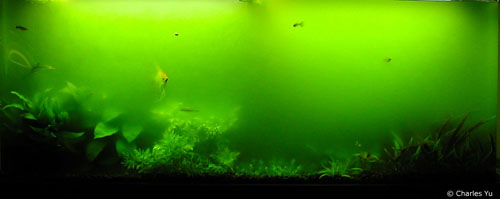
Green water is free floating single-celled euglenoid protists. It contains chlorophyll a and b, plus carotenoids, giving them their green coloration, but they are not plants. With over 40 genera of Euglenoids and over 1000 species, this form of algae is one of the most abundant forms of life on the planet, and is an essential part of the food chain. Unfortunately, aquarists don’t want it in their tanks.
Cause:
- Initial Setup – Usually present shortly after an aquarium is initially setup, prior to the full establishment of the microorganisms (free-swimming plankton that feed upon it).
- Nutrient Imbalance – Strive for the following nutrient levels: N (10-20ppm), P (0.5-2ppm), K (10-20ppm), Ca (10-30ppm), Mg (2-5ppm), Fe (.1ppm).
- Medication – if the medicine affects the biofilter of the tank.
Cure :
There are a number of cures for green water:
- Blackout – leave the lights out, and block out any ambient light from the tank for 5 days. Your plants have reserves that the algae does not, so they will survive, but may look a little ratty for a week or so.
- Diatom/Micron Filter – fine particle filters can clear the water.
- UV Sterilizer – zaps the algae with ultraviolet light, clearing the water. Some reports say that UV light also affects nutrients in the water column.
- Flocculants – Clumps small particles together, allowing your mechanical filtration to remove them from the water. i.e. AquaClear
- Daphnia – Placed in a breeder net, the daphia will consume the algae.
- Small Water Changes – do small (5-10%) water changes, every day until clear.
Notes:
- Avoid large water changes, as that prevents microorganisms from establishing themselves.
- In addition to the cures, make sure to identify and eliminate the source of the problem, or it may return.
Black Brush/Beard (Rhodophyta)
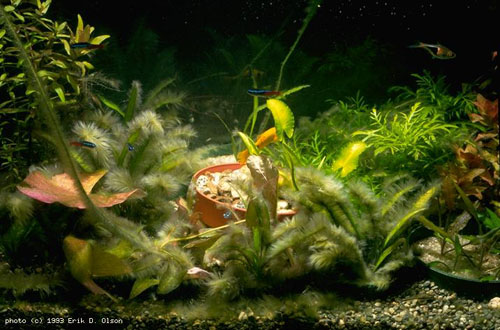
Black brush, or BBA, algae can be one of a number of specific genera of “red” algae in the Rhodophyta family. Most of the algae in this family are actually marine, but a few freshwater species exist that particularly target our planted aquariums. This algae may be black, brown, red, or green in coloration, and can quickly coat your plants and hardscape if not kept in check.
Cause:
- Nutrient Imbalance – potentially excess N, P, Fe. Strive for the following nutrient levels: N (10-20ppm), P (0.5-2ppm), K (10-20ppm), Ca (10-30ppm), Mg (2-5ppm), Fe (.1ppm).
- Low pH – Neil Frank observes that African Rift tanks never have BBA. It’s believed that BBA thrives in acidic environments, which is unfortunately what most plants prefer.
Cure:
- Increase CO2 – This will stimulate plant growth, which should help the plants out-compete the algae for resources.
- Excel/H202 treatment – Use a syringe to spot treat problem areas. Then manually remove when BBA turns grey/white.
- Manual removal – Use toothbrush to remove as much as possible.
- Bleach treatment – Dip affected hardscape items/hardy plants in a bleach/water solution using a 1:20 ratio of bleach to water. Before putting them back into the tank, make sure the item is free of bleach odor.
- Maintain proper water change/dosing schedule – weekly / bi-weekly changes.
- Algae Crew – Siamese Algae Eaters (SAE) and Amano shrimp are known to eat this algae.
- Copper (not recommended) – There are commercial algaecides containing copper that will kill BBA, but they will mostly likely also kill your plants.
Sources:
Aquatic Plant Central – Algae Finder
AquaticScape
The Skeptical Aquarist
Posted in Algae | 4 Comments »
February 24th, 2008
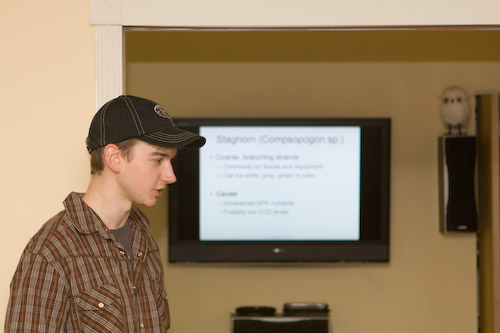
Yesterday, GWAPA held their February meeting down in Vienna, VA at Rick & Mary’s home. I had been preparing for this meeting for the last couple weeks because I gave the meeting’s presentation on Algae in the Planted Aquarium. I thought the presentation was pretty well received, and I hope the members in attendance felt the same way.
Rick and Mary had two tanks on display, a 75G and an ADA cube, both which were planted very nicely. In my haste, I forgot to get pictures of their tanks, but the 75G is a nice jungle-style, open-top tank with Bacopa monnieri and Ludwigia repens growing emersed out of the top of the tank. This tank was also outfitted with a neat pH/temperature monitor, and automatic water changing system. Mary’s ADA tank was recently planted in the Amano style, with white sand creating a path from front to back, and was well on its way to becoming a fantastic scape.
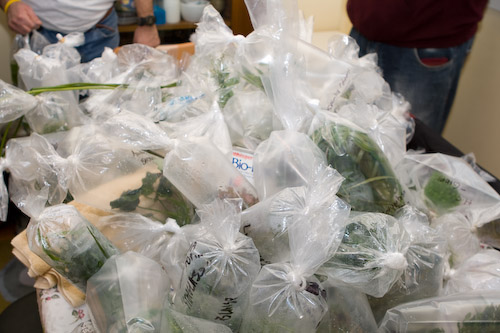
The meeting set a GWAPA record for attendance with 39 people showing up. With many of them bringing items for auction, the auction was huge with over 130 items for sale, including many plants that are very rare in the hobby. I managed to come away with Ludwigia arculata, Goo obo gudgeons, Lagenandra thwaitsii, Eleocharis parvula, and Limnophila aquatica. The gudgeons are F1’s, bred by a club member, and will go in my 54G with my other rainbowfish. I’m still figuring out where all the plants should go.
More pictures/info about the meeting available on GWAPA’s website.
Posted in Algae, GWAPA | Comments Off on GWAPA – February 2008 Meeting
September 21st, 2007
Ever since I setup this tank, I’ve been fighting terrible algae throughout. The wood constantly recovered itself with new hair and black brush algae. I would scrub it off with a toothbrush every couple of days, and back it would come.

I’ve had thread algae, staghorn, BGA, you name it in here. I’ve always been adding CO2, but it must not have been enough to thwart off the black brush algae. I finally resorted to chemicals, by overdosing Seachem Excel by several times the normal recommended amount. Combining that an extensive cleaning of both the glass and ornaments, and adding a hang-on Mag filter for more circulation I think the tide is finally turning. I’ve also added in more plants to out-compete the algae for nutrients. Hopefully I’ll soon be able to work on the aquascape without worrying about algae ruining everything.
Posted in 20G High Tank Log, Algae | 5 Comments »