Jewel Cichlids – All Grown Up

January 31st, 2008

Remember back in the summer when I brought home the wild Jewel cichlids from Florida, and they immediately spawned? The fry were so tiny back then.

Jewel Cichlid Male with Fry

Now, only about 6-7 months later, the then fry, are now nearly as large as the adults. What may be even more amazing is that the two parents are living peacefully with their 2 remaining children in a 20H. I gave the other fry away when they were only an inch or two.
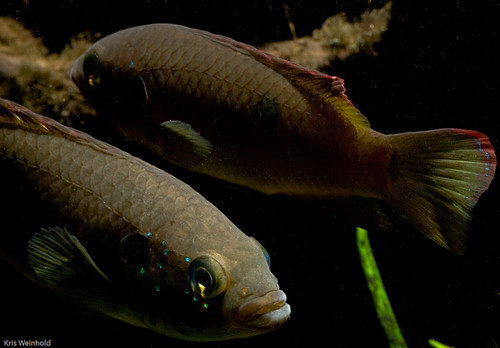
Jewel Cichlid

While not quite as large or colorful as their parents, they are starting to look fairly decent. The “jewels” are becoming more visible and intense on their face, and their body is staying a nice dark cobalt color.

Jewel Cichlid

I imagine that they won’t ever look as good as their dominant parents until they move on to a tank of their own. I’m trying to maintain the peace by regularly feeding them large meals of blackworms, spectrum, or the occasional feeder guppy. They’re voracious eaters, but don’t seem to fight each other for food.

Jewel Cichlid

When we went on our short weekend trip for four days, I didn’t line up a special feeding regimen, however, and they didn’t beat each other up, so I must assume that they’ve worked out a living arrangement amongst themselves. Hopefully that’ll last for a long time. I imagine that if they ever spawn again, trouble might result. Until then, they’re a fun, and personable group of fish that seem to recognize me, and watch me from the right corner of the tank, whenever I’m in the room.


Business Broker

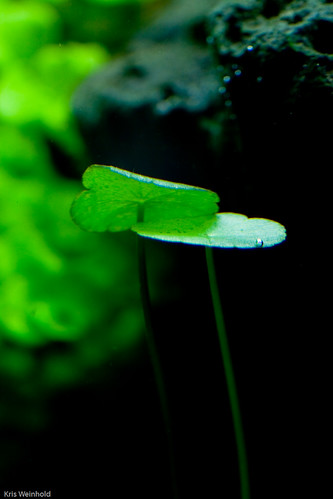
Hydrocotle sp.

January 21st, 2008

Back in June 2007, a few GWAPA members went down to Florida to see what kinds of plants/fish we could find for our aquariums. One plant that was absolutely everywhere was a Hydrocotle species that mixed into the grass of people’s lawns, and existed in virtually every roadside ditch we visited. I grabbed a small amount, expecting it to completely take over my tank.

Hydrocotle sp.

I couldn’t have been more wrong. This small plant has been living in my 40G tank for over 6 months, while only throwing up a single new stem. Recently, I upgraded my lighting to a 2x96W setup from AHSupply and I’ve noticed that the Hydrocotle sp. has started to grow, sending up a new stem and leaf in just the last week. Right now, the stems are approximately 6 inches tall, which is slightly taller than I’d prefer them. I’ll be sure to post if it evens out, and becomes a nice accent plant in my aquascape.

Business Broker

Bacopa monnieri from Florida

September 12th, 2007

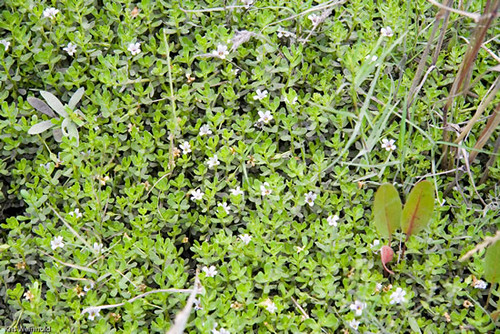
In June, when I went down to Florida with a few other GWAPA members, Bacopa monnieri was one of the plants that seemed to be everywhere, from the rest area drainage ditch when we entered the state, to the canals of Miami down south. Most of the time, we found it emersed and flowering like this picture below.

Bacopa monnieri Flowering

Despite its abundance, I honestly didn’t know I grabbed any until after I got my plants home, and found a single stem in among some of the other things I brought back. I decided to plant it, and see how it would turn out. A few months later, it bushed up very nicely, and is one of the few plants that I collected that I think I’ll try to incorporate into my next scape. It provides a really bright green color to the tank, which I like. Below is an isolated picture of a stem or two. I believe that Bacopa monnieri is quite common in hobby, but if you haven’t tried it yet, give it a whirl. It doesn’t seem to be a demanding plant, so it should do well in most planted tanks.


Business Broker

Florida Jewels Make Babies

June 28th, 2007

I recently spent a long weekend at the beach, and when I returned home, two of the Jewel Cichlids that I had collected while in Florida had paired up, spawned, and were now rearing a some cloud of fry. Before I left, two of the four fish were obviously pairing up. They started showing magnificent coloration, guarded a cave under a large manzanita root, and were making life hell for the other two Jewels in the 20G high that they were in.

Jewel Cichlid Male with Fry

I spent the better part of 3 evenings before I left attempting to fish out the two other Jewel cichlids. I successfully netted one of them, and he now occupies a tank by himself. The other one was far too quick for me, but unfortunately, not quick enough for the pair, as when I returned, they had sealed the loner’s fate. Having the tank to themselves, the male and female take turns guarding their fry. But they still have no qualms leaving their babies when I feed them black worms, as they nearly jump from the water to snatch the worms.

Jewel Cichlid Female with Fry

It’s nearly impossible to count how many fry are present, but extrapolating from what I was able to count, I’d estimate that I have 100-150. If even half of that number survive, I’m going to be flooding the market with some very pretty Jewel Cichlids at CCA meetings later this year. So far, I’ve been relatively satisfied with their interactions with plants in the tank. A few sprigs of Blyxa japonica have been uprooted, but those were right next to their spawning site. Otherwise, they haven’t caused too much damage.

Jewel Cichlid Male with Fry

Business Broker

Florida Trip – Florida Aquatic Nurseries (Day 5)

June 20th, 2007

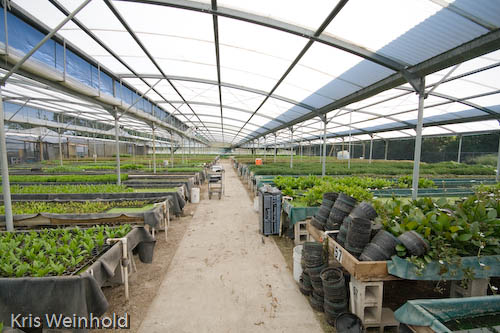
Monday, our last full day in Florida, we had an appointment with the owner of Florida Aquatic Nurseries (FAN) for a personalized tour through their facilities. FAN is probably the largest grower and wholesaler of aquatic and pond plants for the entire United States. Chances are, if you see a potted plant at your local fish store, it originated from these guys. Their 5 and 10 acre facilities are really quite impressive. Below you can see how most of the aquatic plants are grown hydroponically in their greenhouses. The plants sit in large tubs of water that are constantly circulated throughout the bins.

A Florida Aquatic Nursery Greenhouse

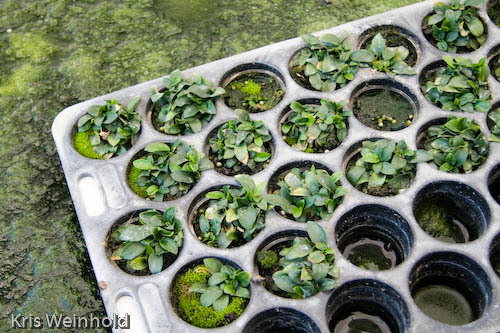
Other plants are grown individually in pots like the Anubias barterii var. nana ‘petite’ shown below. Nearly all of the plants are flowering throughout the greenhouse, so we saw flowers for crypts, sword plants, various hygrophilia, ludwigia, hydrocotle, you name it.

Anubias barterii var. nana 'petite'

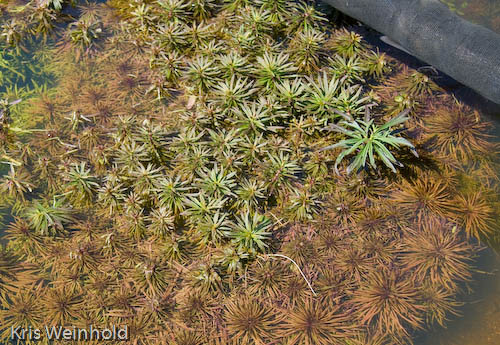
Outside of their greenhouses, they have countless numbers of large concrete ponds where they grow more aquatic plants, this time, mostly submerged. These ponds are packed with stem plants, all bright red and orange from the intense Florida sun. Take note of the Ludwigia inclinata var. verticillata ”Cuba” below. They have a fairly large work force at hand, constantly monitoring all of the plants, and taking cuttings from the large ponds to sell.

Ludwigia sp. 'Cuba'

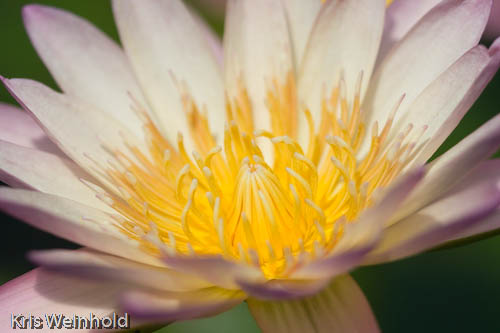
We were quite surprised at the sheer number of popular plants FAN is growing that rarely seem to show up in our local stores. Everything from nana ‘petite’ to HC to downoi were there. I’m not sure if the distributors aren’t stocking these plants, or if the local stores only carry bread and butter plants, but it’s a shame to know that these things aren’t widely distributed. Beyond aquarium plants, there were countless water lilies in bloom throughout the nursery. Beautiful!

Lotus Flower

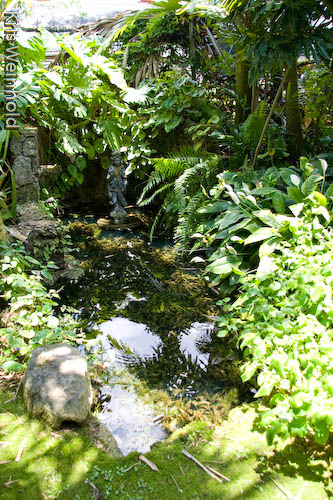
Our last stop before heading home was an orchid nursery that supposedly stocked some rare crypts that were given to them by the late Robert Gasser, a pioneer grower of Cryptocoryne species. We called the owner of the nursery, and he agreed to show us around. Not a crypt guy himself, the owner didn’t know many of the species that were spread throughout his nursery, but we did end up purchasing a pot or two of what we believe is Cryptocoryne cordata var. zonata. Beyond the exotic types, he had Crypt. wendtii growing in his ponds, one shown below.

Orchid Nursery Crypt Pond

I have to say that this trip was unlike any other that I’ve been on. It was very free-form in nature, and had surprises at every waterway, nursery, or ditch that we stopped at. Hopefully, GWAPA members will make this trek down I-95 an annual or semi-annual occurrence!

Business Broker

« Previous Entries