Amazon Trip: Collecting Fish

August 17th, 2007

Yesterday, I just got back from Peru, where my wife and I spent about 2 weeks – 1 week in the Amazon rainforest, and another in the Andes. We went on a “photography tour” with Margarita Tours, which is an excellent company that I would highly recommend. Our photography leader, Dr. David Schleser, also leads subsequent fish collecting trips, and when he learned of my interest, he scheduled a sample fish collecting expedition to let me see what the week-long expedition is like.

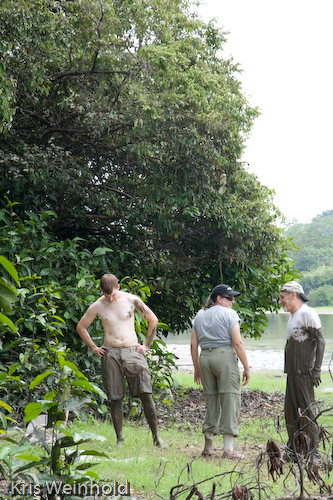
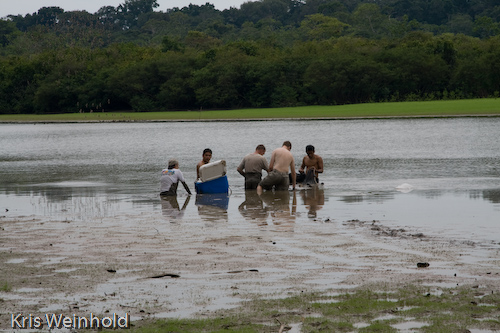
Waist Deep in Mud, collecting fish

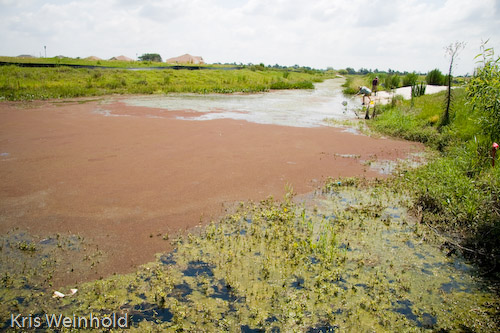
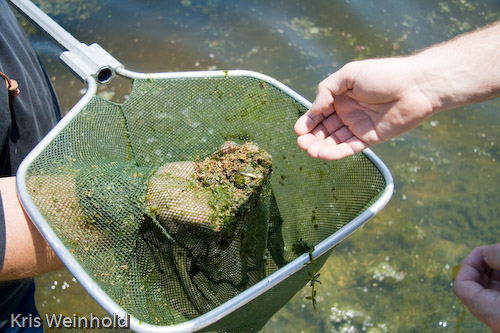
I must say, that collecting in the Amazon is a little bit different than our Florida collecting trip. Take away the boat ramps and add a lot of mud; like waist deep mud. On the plus side, in a single seine attempt, we probably pulled out 20 different species of fish, including some beautiful angelfish, and even a red-bellied piranha. There were plenty of catfish, who spines invariably poked your hands, and got tied up in the nets. There appeared to be a few different types of characins too.

Boy we were muddy!

This is really the only aquarium-related part of my trip, but as I gather together some of my pictures, I think I will deviate from the aquarium theme, and just post some of my rainforest experiences that I think will have a broader appeal. Keep posted for more soon.


Business Broker

Collecting Plants in Maryland

July 9th, 2007

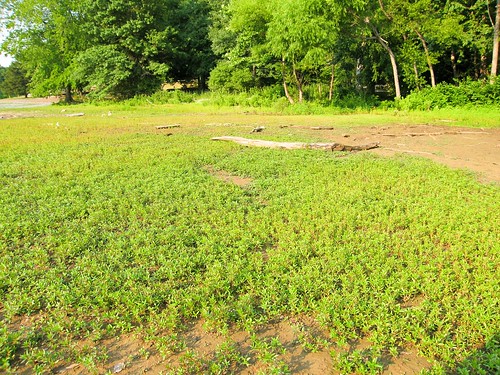
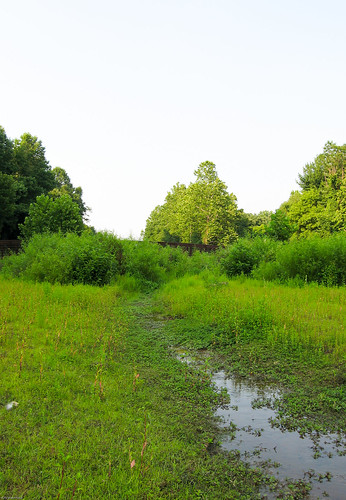
This past weekend, Aaron from GWAPA and I decided to go on a small collecting trip at a reservoir about 30 minutes away. It was a warm, humid day, but we braved the heat and found some really interesting stuff. Like my Florida trip, the water levels were well below their normal levels, exposing most of the aquatic foliage to the air and sunlight. Most of the species that we found had to be able to grow emersed from the water. A striking example is this field of emersed Rotala ramosior.

Field of Rotala Ramosior

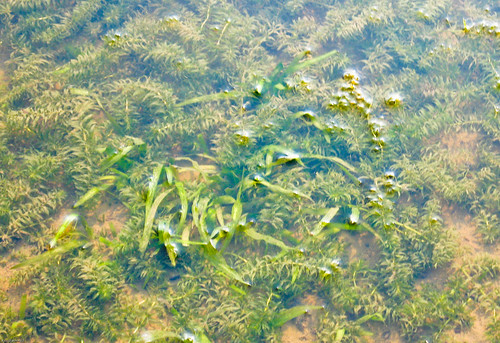
One of the few exceptions was this little gem that we found in amongst a huge patch of Hydrilla. We believe it’s some form of native Sagittaria or Vallisneria. None of the leaves that we found were much longer than 4-5 inches, so we have high hopes that we’ll experience the same thing in our tanks. The crinkled, or slightly spiraling leafs could have a very nice mid-ground potential is they stay that size.

Some kind of Val or Sagiteria
There was no shortage of Polygonum available around this reservoir. We found at least two distinct species, although I didn’t take any as I don’t find many of this species appealing in an aquascape. As you can see, there was lots of nice driftwood available too, but we didn’t take any of that either. In fact, the few pieces that we were interested in were tree stumps where the water had carved out amazing crevices throughout the root system. Unfortunately, those roots were still very much planted in the ground!

Lots of Polygonum

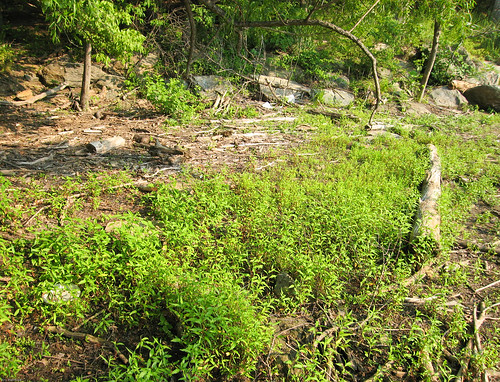
Below is just another example of where we were finding plants. In among a ton of tiny toads, there was more Ludwigia palustris than anyone would ever want. Rotala ramosior was also mixed in with other non-aquatic plants.

Lots of Ludwigia palustris and Rotala ramosior

Business Broker

Florida Trip – Florida Aquatic Nurseries (Day 5)

June 20th, 2007

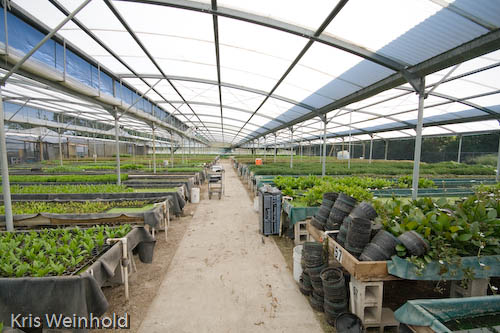
Monday, our last full day in Florida, we had an appointment with the owner of Florida Aquatic Nurseries (FAN) for a personalized tour through their facilities. FAN is probably the largest grower and wholesaler of aquatic and pond plants for the entire United States. Chances are, if you see a potted plant at your local fish store, it originated from these guys. Their 5 and 10 acre facilities are really quite impressive. Below you can see how most of the aquatic plants are grown hydroponically in their greenhouses. The plants sit in large tubs of water that are constantly circulated throughout the bins.

A Florida Aquatic Nursery Greenhouse

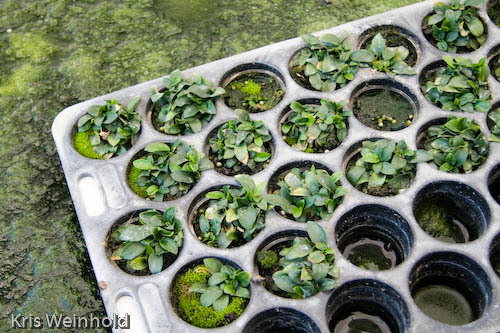
Other plants are grown individually in pots like the Anubias barterii var. nana ‘petite’ shown below. Nearly all of the plants are flowering throughout the greenhouse, so we saw flowers for crypts, sword plants, various hygrophilia, ludwigia, hydrocotle, you name it.

Anubias barterii var. nana 'petite'

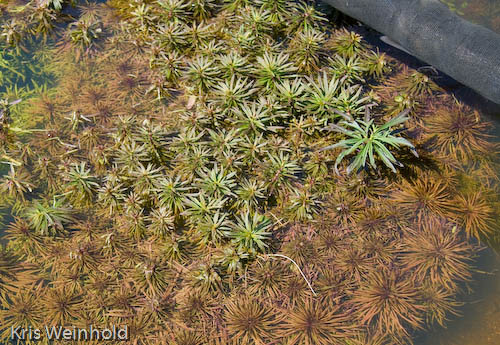
Outside of their greenhouses, they have countless numbers of large concrete ponds where they grow more aquatic plants, this time, mostly submerged. These ponds are packed with stem plants, all bright red and orange from the intense Florida sun. Take note of the Ludwigia inclinata var. verticillata ”Cuba” below. They have a fairly large work force at hand, constantly monitoring all of the plants, and taking cuttings from the large ponds to sell.

Ludwigia sp. 'Cuba'

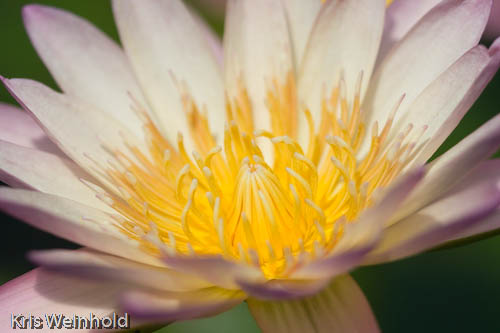
We were quite surprised at the sheer number of popular plants FAN is growing that rarely seem to show up in our local stores. Everything from nana ‘petite’ to HC to downoi were there. I’m not sure if the distributors aren’t stocking these plants, or if the local stores only carry bread and butter plants, but it’s a shame to know that these things aren’t widely distributed. Beyond aquarium plants, there were countless water lilies in bloom throughout the nursery. Beautiful!

Lotus Flower

Our last stop before heading home was an orchid nursery that supposedly stocked some rare crypts that were given to them by the late Robert Gasser, a pioneer grower of Cryptocoryne species. We called the owner of the nursery, and he agreed to show us around. Not a crypt guy himself, the owner didn’t know many of the species that were spread throughout his nursery, but we did end up purchasing a pot or two of what we believe is Cryptocoryne cordata var. zonata. Beyond the exotic types, he had Crypt. wendtii growing in his ponds, one shown below.

Orchid Nursery Crypt Pond

I have to say that this trip was unlike any other that I’ve been on. It was very free-form in nature, and had surprises at every waterway, nursery, or ditch that we stopped at. Hopefully, GWAPA members will make this trek down I-95 an annual or semi-annual occurrence!

Business Broker

Florida Trip – Around Miami (Day 4)

June 17th, 2007

We woke up Sunday, ready for a full day of collecting around the Miami around. In Miami, canals crisscross the entire area, allowing us plenty of accessible collecting spots via public boat ramps. In addition, due to the large population density, many non-native fishes have made their way (unfortunately for the habitat, fortunately for us) into the waterways. At our first stop, we found a boat ramp behind a fairly large shopping complex. Walking down the canal banks, we didn’t see a any signs of life outside of a few clumps of Hygrophila polysperma and Cabomba. There were more office chairs and discarded garbage in the canal then we saw fish.
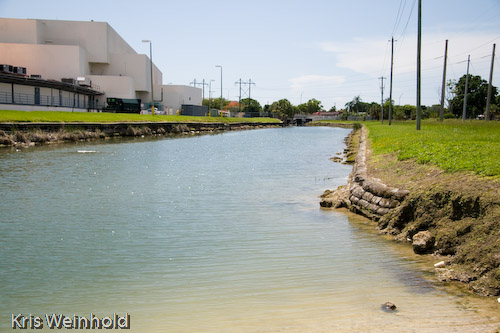
Canal in Miami

We decided to cast our nets into the polysperma anyways, and to our surprise, we found 4-5 small cichlids! There seemed to be two types present, 1 type with vertical bars that are probably juvenile Mayan cichlids, and the other, a much more colorful Jewel cichlid (shown below.) What was originally a very bleak looking habitat suddenly came to life. As we continually pull more of these cichlids from the water, we start to see some larger fish take interest in our activities. Peacock bass start coming in to feast as we startled the smaller fish from their protective plant mats. We continue netting fish for several hours, before deciding to grab some lunch and move on to our next location.
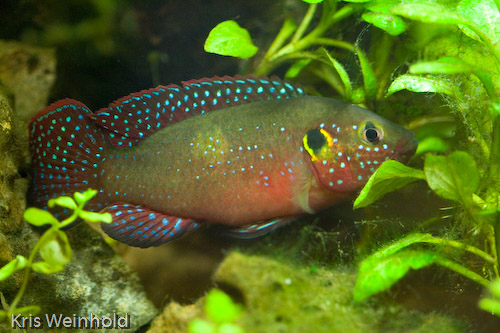
Jewel Cichlid

A few miles away, we located another canal system with public access to the waterways. Unfortunately, this dock was much more frequented by jet skis and motor boats, so we decided to investigate a more seclusive pond right next to the canal. A few of us are looking down in the pool, seeing the usual batch of mosquito fish swimming around, when a couple of plants take our eye. First, floating on the surface is a very frilly plant, that upon closer investigation is a carnivorous badderwort. Well, I have to try that one out, and while I’m gathering a few small fronds of that, I notice another plant with elongated brown and yellowish leaves. Immediately, I get excited that I had found a bed of crypts! So, I pull a couple out, and take them to Ghazanfar. “Nope, they’re not crypts,” he says, but instead appear to be some sort of an Aponogeton. In this pool, none of the Aponogeton are taller than7-8 inches. I’m really hoping that they intend to stay that height because every other species that I’ve tried tends to grow multiple feet in length.
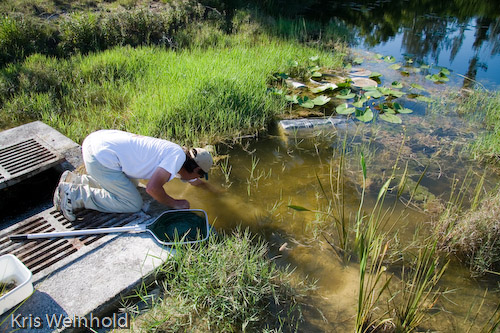
Investigating a pool

Meanwhile, a few other folks had started dipping their nets in the canal, now free of jet skiers. More great fish start showing up in our nets, including a very pretty variety of sunfish (shown below), some shiners/minnows with really nice red on their tails, two varieties of darters, and a new color strain of Jewel cichlids. The Jewels in this canal are much redder in coloration, while in the first canal, they were more turquoise. After being out under the sun for a number of hours, we all decided that it was time to cool off back at the hotel.
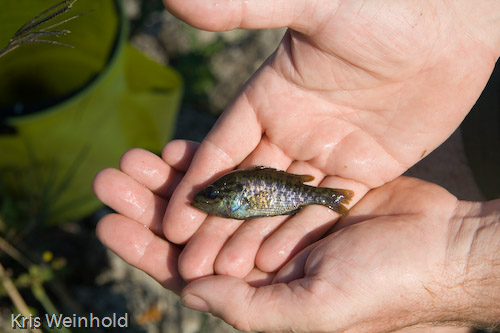
Sunfish in hand

Business Broker

Florida Trip – Day 3

June 14th, 2007

Day 3: Somewhere outside of Tampa

First Collection Site for the Day

We spent the night in Tampa on Friday, spending some time with Michael’s cousin, who treated us to some homemade ice cream. That provided exactly the fuel we needed to get up and going on Saturday, hitting lots of collection ditches across the state. Our first collection site happens to be outside of Tampa near where a few fish farms used to be located. Our thinking is this: where fish farms used to be, leftover exotic fish must have escaped via flooding or hurricane into the local waterways. We’re driving around and pass over a small stream-fed canal, where we come to a sudden stop to get out. As you can see above, it’s not the prettiest site, but as we’ll soon learn, sometimes the least promising looking pools can yield the best results.

What's in the net this time?

We dip in our nets, and find a plethora of different species. Of course, we pull out more than our fair share of gambusias (mosquito fish), but we also end up with some blue-fin killies, Heterandria formosa, and grass shrimp. In addition to that, we see a very large gar and a group of bass and sunfish. All-in-all, a very nice catch on the fish side. Unfortunately, there weren’t many interesting plants to speak of. That will soon change.

Parrots Feather

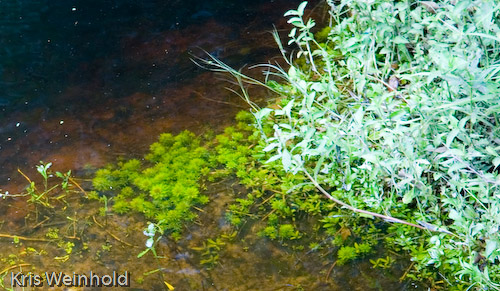
We get back in the car, head out toward Zolfo Springs, in the middle of the state, and along the way end up on a bridge overlooking the Little Manatee River. We look down at some beautiful patches of bright green plants along the edge of the river. Ghazanfar and I identify some of the plants as the common bacopa monnieri, hydrocotle, and hygrophilia polysperma, but one other plant is hard to identify from above. Of course, at the possibility that we might have discovered a new stem plant, we descend down the steep and heavily overgrown riverbank to take a closer look. What do we find? Well, the extremely exotic *cough* Parrot Feather. Nevertheless, we sample a few stems and head on our way.

Gator!

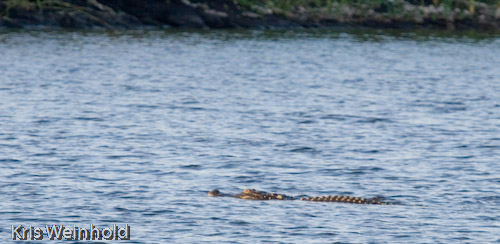
Continuing to drive across the state, we see signs for Lake Okeechobee, spot a boat dock, and pull over. On a previous GWAPA trip, three years ago, our members pulled pounds of grass shrimp from vegetation along the banks of this very same canal. This time, not only was the water very low, but it was also completely free of any vegetation. We later learn that the state is treating the water with herbicide to try and contain some invasive species of plants. It seems that it’s killing more than just the invasive types. In any case, our stop was not totally uneventful because off in the distance, one of our members spot two humps, the head and back, of an alligator swimming down the channel. Check that one off my list — See an alligator in Florida, DONE!

Business Broker

« Previous Entries   Next Entries »