This summer I decided to try my hand at some outdoor water gardening. My problem, of course, was that I didn’t have a pond outside, and we don’t have a lot of space in the backyard to make one. So, we came up with the idea of building something a little bit different — a small raised brick pond.
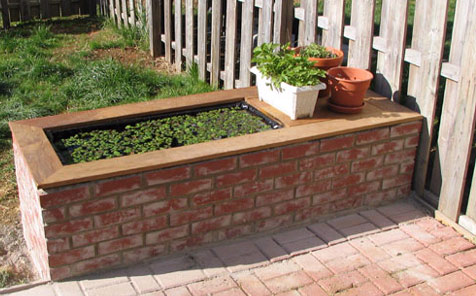
(Photo immediately after construction – May 2006)
Since construction, our “pond” has gone through a number of phases. One of my experiments for this project was to see if I could get away with keeping the pond healthy without your typical pond filtration. I found out that while I could get away without filtration, I couldn’t get away with a lack of circulation. Within a few weeks of filling the pond, the surface was pretty much covered in blue-green-algae (BGA). I decided it was time to invest in a pump to move the water around. The obstacle, was that I didn’t want to go to the trouble of extending our outdoor electrical circuit over to the pond. So, I found a solar-powered pump instead, which has worked out beautifully.
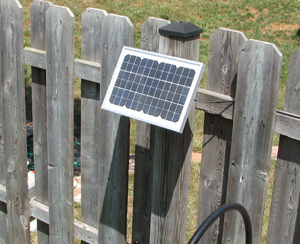 The pump circulates approximately 170l/h, which is just about perfect for the 65-75 gallons of water in our pond. As you can see, the panel itself is not too large, and doesn’t take away from the overall view of the backyard.
Now, with the algae under control, I introduced a number of plant species from my aquariums. I added heteranthera zosterifolia, sagittaria subulata, limnophila aromatica, hygrophila polysperma, hydrocotyle leucocephala, phyllanthus fluitans, frogbite, and echinodorus quadricostatus. Additionally, I added about 2 dozen Endlers livebearers fish, some cherry shrimp, and plenty of common pond snails.
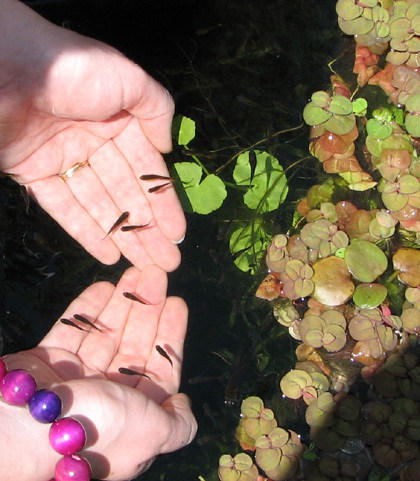
As expected, the Endler population has exploded. From the 2 dozen initial fish, I estimate there to be no less than 200 fish currently in the pond. They’re quite active fish, and do not shy away if you put your hand in the water. In fact, they will readily swim up and nibble on your arm hairs, if you let them.
This fall, I hope to drain the pond for the winter and sell off or give away most of the Endlers and plants. It’s been a really enjoyable project that’s enhanced the look of our backyard. Additionally, it’s become a gathering spot for our two cats to amuse themselves, and for our dog’s a drinking trough. (Regardless of how much we discourage them.)
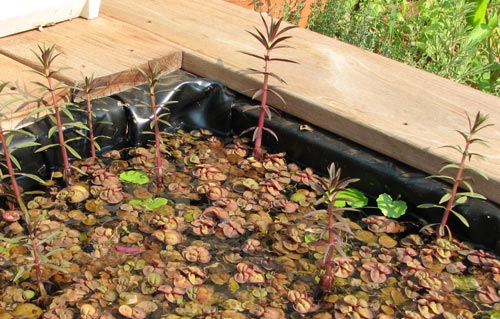
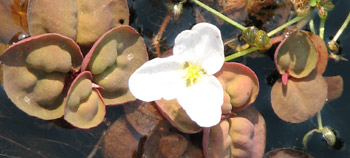 Finally, I snapped some pictures of a sagittaria subulata flower, and the limnophila aromatica, which has started growing emersed. Did you know that in some asian countries, l. aromatica is used as an herb in cooking? I hope it flowers too!
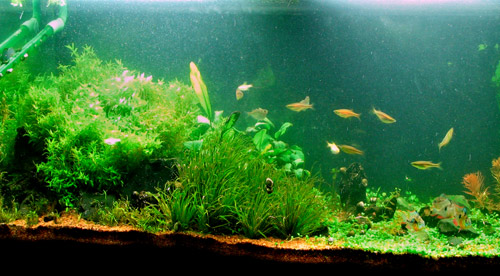
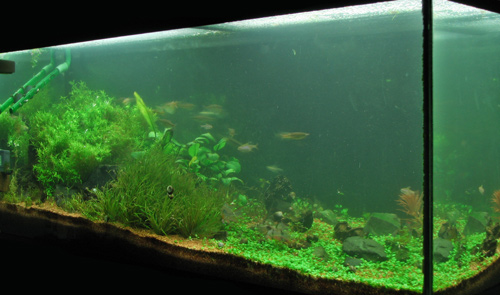
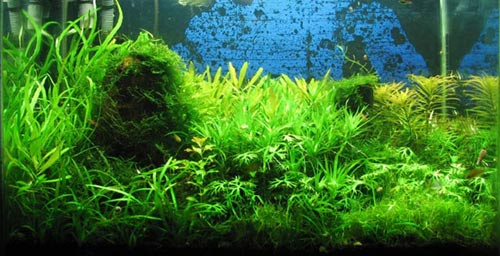
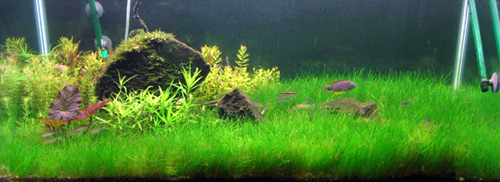 This is my first attempt at an iwagumi scape. A breeding population of apistogramma panduro are the main occupants in this tank. Most of the aquarium is covered by eleocharis acicularis, with more stargrass, rotala macrandra “green”, limnophila aromatica, and nymphea “red lotus” occupying the back left.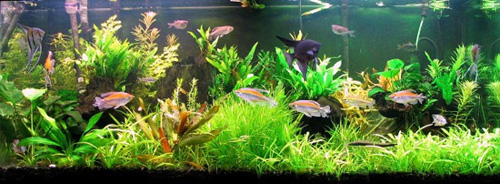
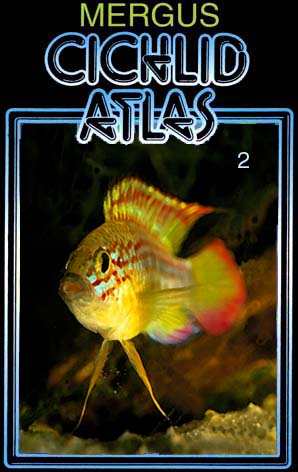 Many years in the making, Dr. Uwe Romer has volume two of is Cichlid Atlas series out! The book is currently available in the UK, but I don’t think it arrives in the U.S. until later this year. I ordered the UK version of this book upon release, and must say that it’s an excellent follow-up to volume 1. Like the first book, the multitude of information contained in this book is a little bit overwealming at first. But, after sitting down with it for a little while, it’s amazing how much useful information is contained.