July 13th, 2007
My small brick pond has been progressing quite nicely this summer. I’ve added quite a few plants than I didn’t have last summer including Pogostemon yatabeanus, Riccia fluitans, Pogostemon stellata var. ‘broad-leaf,’ and a few native Polygonum, Ludwigia, and Lysamachia species that I’ve collected locally. Endlers and cherry shrimp are the main occupants of the pond this year again.
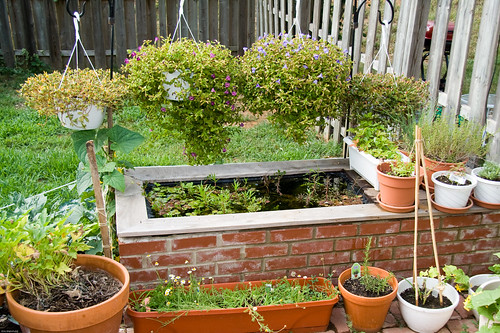
I’ve got frogbite growing quite well, with extensive root systems forming below the increasingly large pads on the surface. I’m hoping that they’ll soon transform into large plants resembling water hyacinths. Hydrocotle is growing nicely, both above and below the surface. The most prolific grower so far this year is definitely the Pogostemon yatabeanus, which seems to thrive regardless of fertilization or water current.
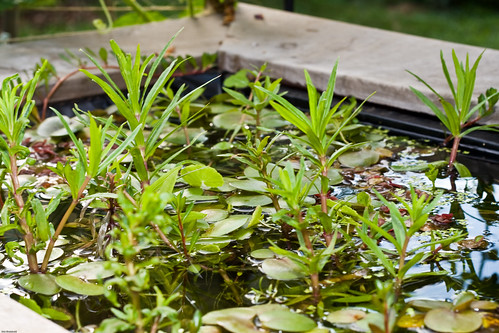
The solar pump is still operating, but is opposed by the large mass of plant matter occupying most of the water surface. Nevertheless, while some algae is present, the water is very clear, and by and large, the plants are doing well. Now, I’m just waiting for the sun to induce some of these plants to start flowering. I may start dosing extra phosphate to try and encourage the same thing. No doubt, the Endlers are producing plenty of ammonia to feed the plants.
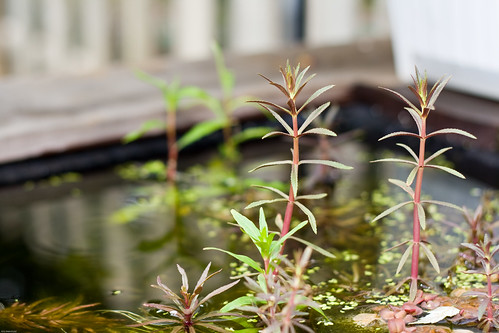
I’ve only dosed a small amount of PMDD fertilizer roughly once a week, instead topping off the water in the pond a few times each week. The pond seems to have attracted a fair number of wasps and yellow jackets this year, which I haven’t yet been able to explain. Fortunately, none of these bugs have bothered much with me yet. As usual, birds enjoy bathing in the pond, and stealing the occasional Endler. So, for me it’s provided a great center of attraction for me to watch plants grow, birds play, and insects bugger about.
Posted in Raised Brick Pond | 3 Comments »
July 11th, 2007
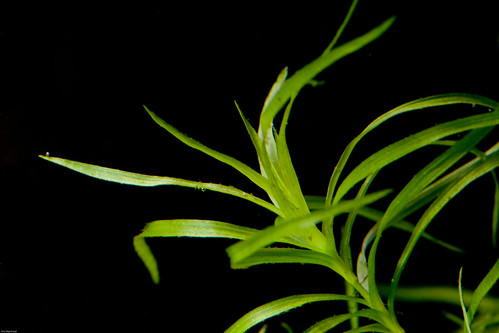
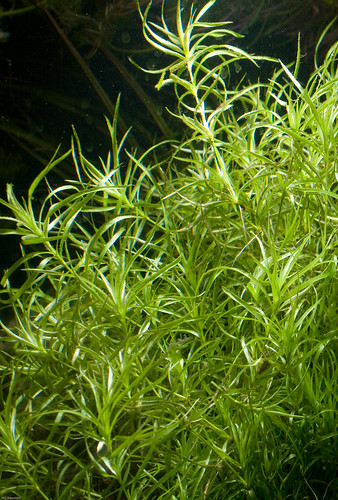 I bought a small number of stems of Eriocaulaceae sp. ‘Type 2’ at a GWAPA auction a few months ago. This Eriocaulaceae doesn’t look much like many of the other Eriocaulon (pipewort) species that are tearing through the hobby. While the plant looks like a regular stem plant, it really does seem to populate by a form of horizontal runner, where vertical stems grow from the base runner. That said, the plant does bush up quite nicely, and give a very similar effect to that of Stargrass (Hetheranthea zosterifolia), except that it doesn’t seem to grow as prolifically.
Because of its growth by runners, the plant doesn’t shoot to the water’s surface like most other stem plants, which is great for someone like me, who often tires of trimming. I do want to note that while I say that Eriocaulaceae sp. ‘Type 2’ extends by runners, it has most definitely not been as pervasive (invasive really) as something like Sagittaria or Vallisenaria that are known to start popping up all throughout your tank. The Eriocaulaceae runners all stay above the substrate.
If you can get your hands on this plant, I definitely would recommend experimenting with it, as it has lots of aquascaping potential.
Posted in Plant Profiles | 1 Comment »
July 9th, 2007
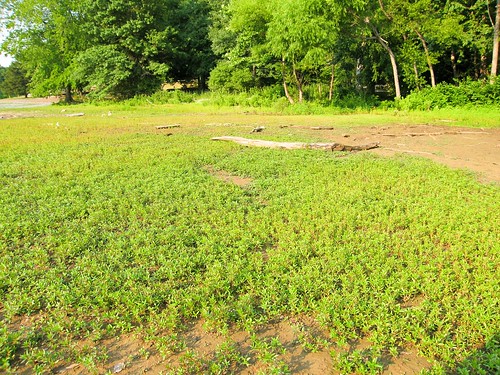
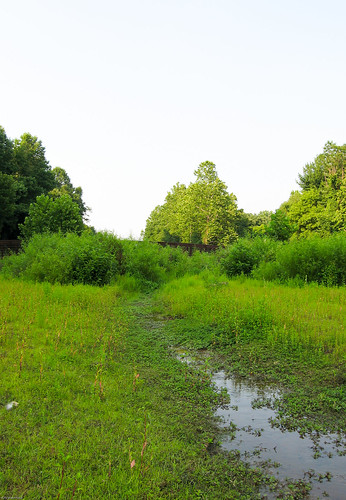
This past weekend, Aaron from GWAPA and I decided to go on a small collecting trip at a reservoir about 30 minutes away. It was a warm, humid day, but we braved the heat and found some really interesting stuff. Like my Florida trip, the water levels were well below their normal levels, exposing most of the aquatic foliage to the air and sunlight. Most of the species that we found had to be able to grow emersed from the water. A striking example is this field of emersed Rotala ramosior.
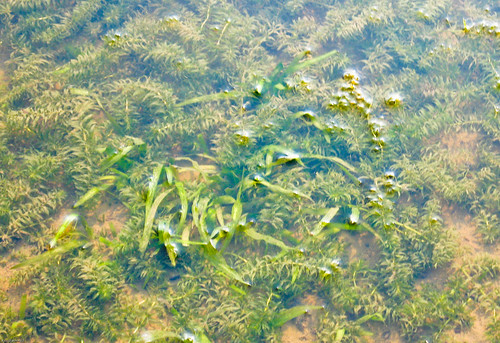
One of the few exceptions was this little gem that we found in amongst a huge patch of Hydrilla. We believe it’s some form of native Sagittaria or Vallisneria. None of the leaves that we found were much longer than 4-5 inches, so we have high hopes that we’ll experience the same thing in our tanks. The crinkled, or slightly spiraling leafs could have a very nice mid-ground potential is they stay that size.
There was no shortage of Polygonum available around this reservoir. We found at least two distinct species, although I didn’t take any as I don’t find many of this species appealing in an aquascape. As you can see, there was lots of nice driftwood available too, but we didn’t take any of that either. In fact, the few pieces that we were interested in were tree stumps where the water had carved out amazing crevices throughout the root system. Unfortunately, those roots were still very much planted in the ground!
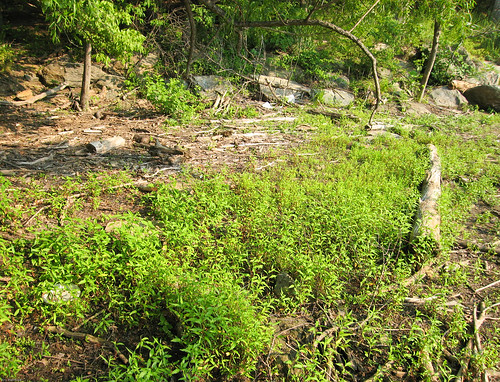
Below is just another example of where we were finding plants. In among a ton of tiny toads, there was more Ludwigia palustris than anyone would ever want. Rotala ramosior was also mixed in with other non-aquatic plants.
Posted in Collecting, Maryland Habitats | 2 Comments »
July 5th, 2007
Here’s an updated shot of the 2.5G aquascape I’m working on for the GWAPA contest. The foreground is finally starting to fill in a little bit, and I like the squirrelly look of it, but I’m not that impressed by the Blyxa japonica in the back right. It looks too contrived I think. I may just opt to pull it out entirely, but any other suggestions would be appreciated.

Posted in 2.5G Tank Log | 2 Comments »
June 28th, 2007
I recently spent a long weekend at the beach, and when I returned home, two of the Jewel Cichlids that I had collected while in Florida had paired up, spawned, and were now rearing a some cloud of fry. Before I left, two of the four fish were obviously pairing up. They started showing magnificent coloration, guarded a cave under a large manzanita root, and were making life hell for the other two Jewels in the 20G high that they were in.

I spent the better part of 3 evenings before I left attempting to fish out the two other Jewel cichlids. I successfully netted one of them, and he now occupies a tank by himself. The other one was far too quick for me, but unfortunately, not quick enough for the pair, as when I returned, they had sealed the loner’s fate. Having the tank to themselves, the male and female take turns guarding their fry. But they still have no qualms leaving their babies when I feed them black worms, as they nearly jump from the water to snatch the worms.

It’s nearly impossible to count how many fry are present, but extrapolating from what I was able to count, I’d estimate that I have 100-150. If even half of that number survive, I’m going to be flooding the market with some very pretty Jewel Cichlids at CCA meetings later this year. So far, I’ve been relatively satisfied with their interactions with plants in the tank. A few sprigs of Blyxa japonica have been uprooted, but those were right next to their spawning site. Otherwise, they haven’t caused too much damage.

Posted in 20G High Tank Log, Fish Fry, Florida | 10 Comments »