AGA 2009 Contest Results Released!

November 26th, 2009

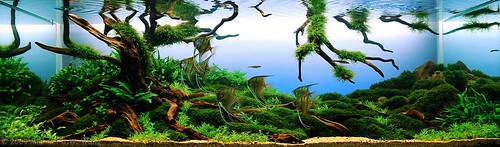
The results of the Aquatic Gardener’s Association’s 2009 Aquascaping Contest have been released. Michael G.W. Wong’s tank below one 1st place in the Large category, and took Best in Show. The folks from Hong Kong have really been cleaning up the aquascaping contests lately. The contest itself has a number of fantastic entries, including ones that didn’t win any prizes.

2009 AGA Contest Best in Show

I’d suggest you click over to the AGA’s website to view all of this years’ entries:

http://showcase.aquatic-gardeners.org/2009.cgi


Business Broker

Joshua Tree National Park

November 23rd, 2009

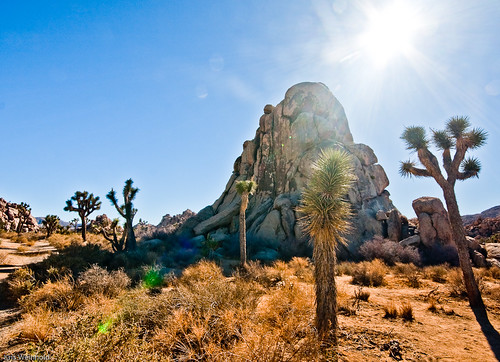
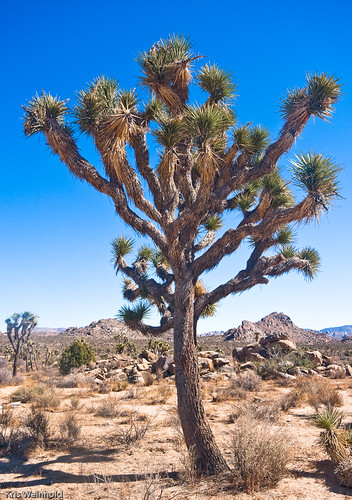
During our trip in California we spent a day in Joshua Tree National Park. This wonderful desert park is named after the tree below, which got its named from 19th century Mormon settlers who thought the tree looked like the Biblical character, Joshua, who raised his ends up to the sky in prayer.

Joshua Tree National Park

In addition to the very interesting trees, which are actually in the lily family, the park is home to some absolutely incredible rock formations. As such, we saw quite a few rock climbers trying to conquer the rocks.

Joshua Tree National Park

Inside of the park there is no water or gas stations, so you need to fill up before entering, and carry in anything you would need. Remember that this really is a desert, and the sun was definitely out, even though we were there during some of the cooler months.

Joshua Tree National Park

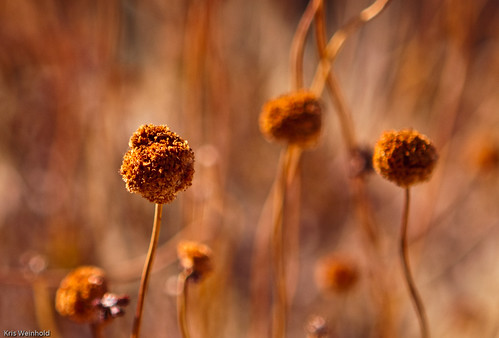
Just because it’s a desert doesn’t mean that there wasn’t plenty of life. The park is home to several different varieties of wildflowers, and of course, cacti and also succulents were present throughout.

Joshua Tree National Park

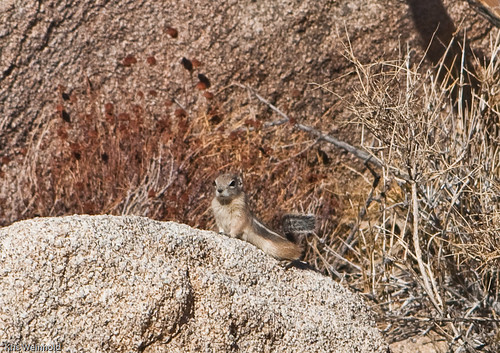
In addition, little squirrels and chipmunks were all over the place. You could see some of their holes dug out in the hard sun beaten earth.

Joshua Tree National Park

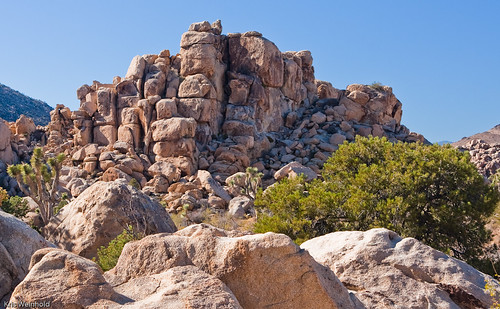
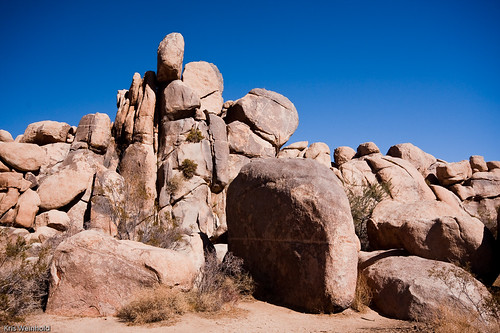
It’s really amazing that some of the rock formations were naturally formed. Take the one below (which would make a fantastic aquascape btw). How in the world did some of those gigantic boulders just happen to rest atop of the mass of other humongous boulders?

Joshua Tree National Park

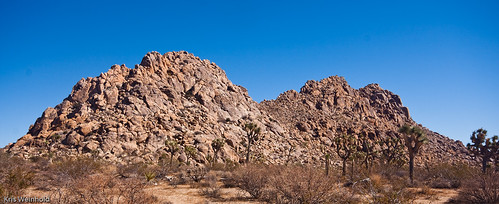
Then of course, there were the larger “rock piles” that were just as striking. Again, if we could find an aquatic plant that looks like a Joshua Tree, this would be a great scene to try to replicate in an aquascape.

Joshua Tree National Park

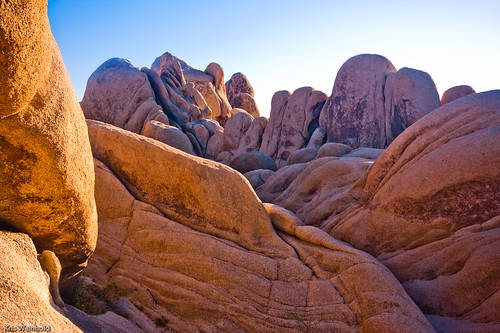
The rock formations weren’t all boulder piles, however, as deeper into the park we came across these more water-shaped formations. We hiked a short distance to see a naturally formed arch, but I thought the rounded rocks were more impressive than the arch.

Joshua Tree National Park

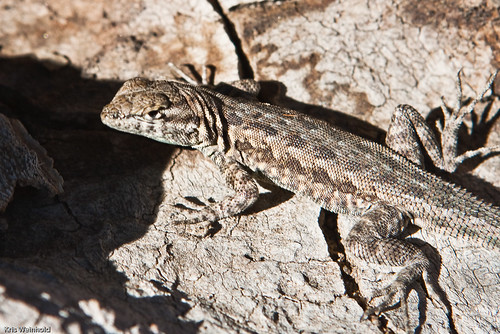
During our hike, we would hear rustling in bushes as we walked by, and every time it was one of these lizards scurrying through. I was perfectly okay with this, however, as I wasn’t necessarily hoping to come across a rattlesnake.

Joshua Tree National Park

Proof that this desert has been traveled for centuries past is visible on several rocks in the form of Petroglyphs, inscribed by prehistoric Native Americans.

Joshua Tree National Park

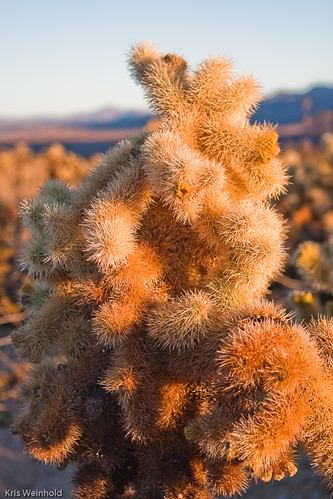
Once we crossed out of the Mojave Desert, and into the Colorado Desert, the Joshua Tree ceased to grow, and were replaced by acres of these very spiny cacti. The Mojave Desert is slightly wetter than the Colorado Desert, which is why the Joshua Tree is able to survive in that area.

Joshua Tree National Park

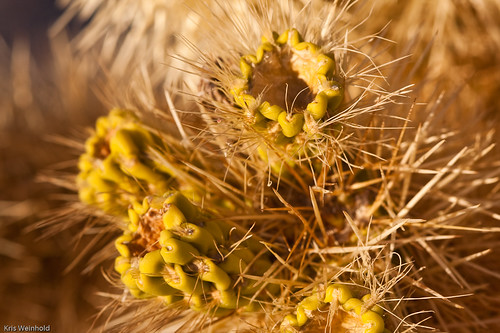
Nevertheless, these cacti are still interesting to look at, exhibiting nice yellow flowers, which were also covered in spines.

Joshua Tree National Park

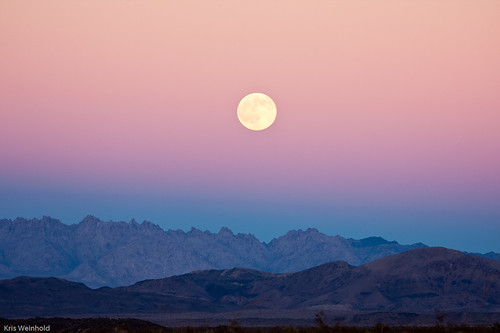
As we were driving the last 10-20 miles out of the park to the south, the sun was setting on our right, and on our left the moon was rising. We stopped the car, and enjoyed this beautiful scene below. All the while, bats starting flying overhead, and we eventually headed out of the park and to our hotel.

Joshua Tree National Park

We have lot of other pictures on Flickr here, if you’re interested…

Business Broker

San Diego Zoo – Photo Set

November 15th, 2009

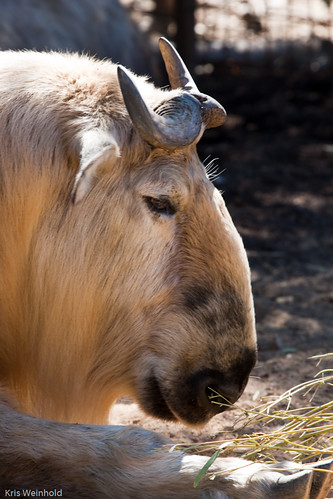
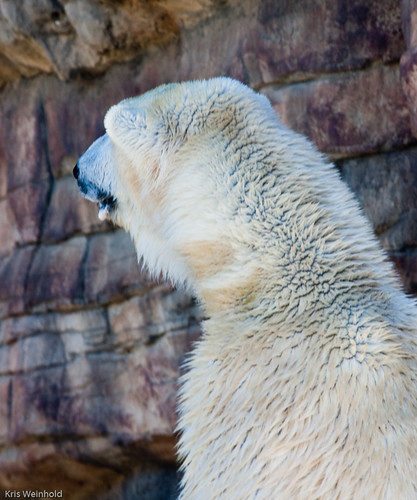
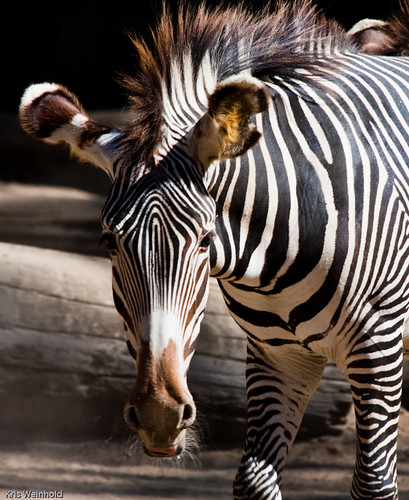
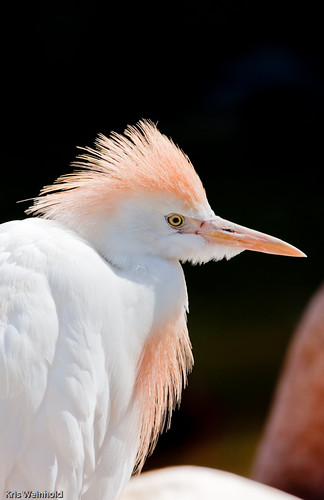
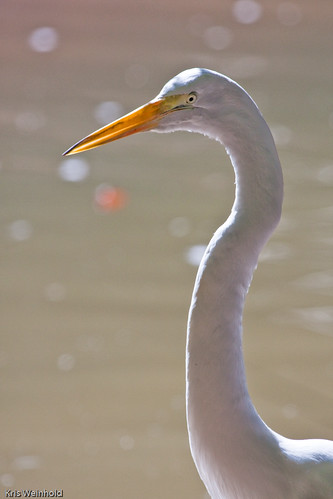
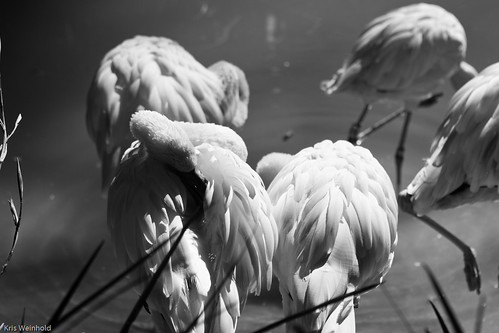
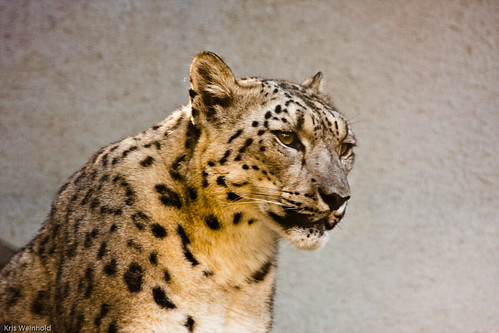
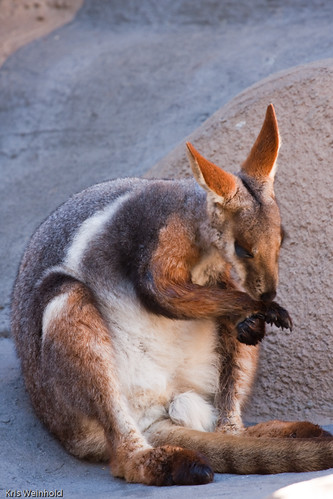
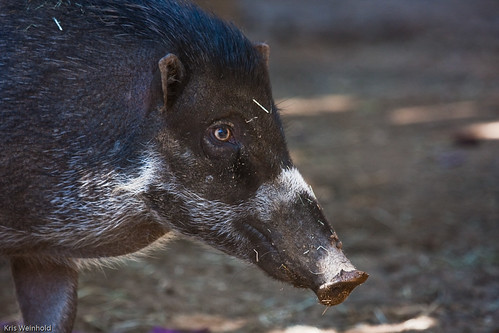
I was fortunate to be able to spend the past couple weeks in California, and while I was there my wife and I visited the San Diego Zoo. I’ve always heard wonderful things about the zoo in San Diego, and after visiting, I have to say that it is a top-notch zoo and deserves every accolade that it receives. The variety is incredible, with lots of pathways with more creatures than you could possibly visit in a single day. Unfortunately, that’s all the time we had to spend there, but nevertheless I took hundreds of pictures. I wanted to share a few of them with you below:

San Diego Zoo

Gorilla

.

San Diego Zoo

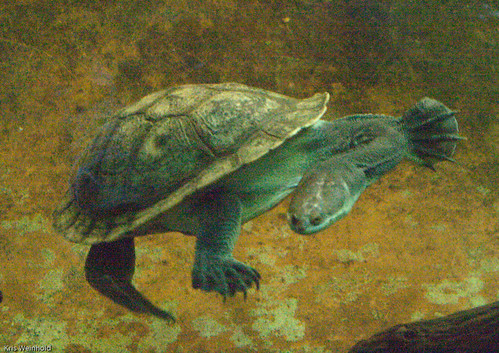
Turtle

.

San Diego Zoo

Giraffe

.

San Diego Zoo

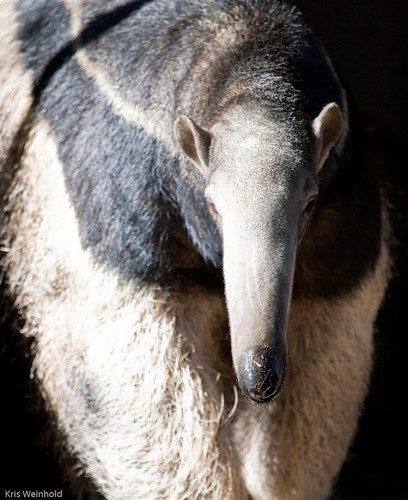
Ant Eater

.

San Diego Zoo

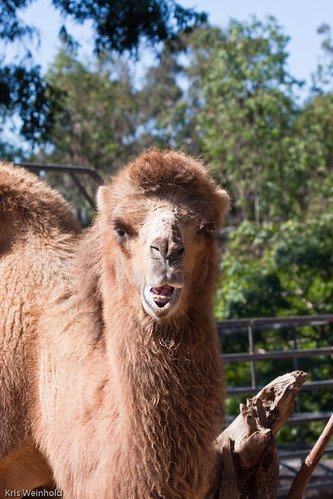
Camel

.

San Diego Zoo

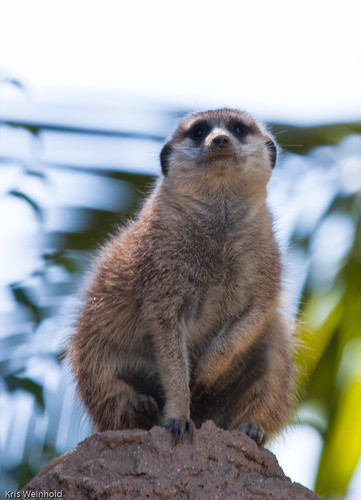
Meerkat

.

San Diego Zoo

Elephant

.

San Diego Zoo

San Diego Zoo

Polar Bear

.

San Diego Zoo

Zebra

.

San Diego Zoo

San Diego Zoo

San Diego Zoo

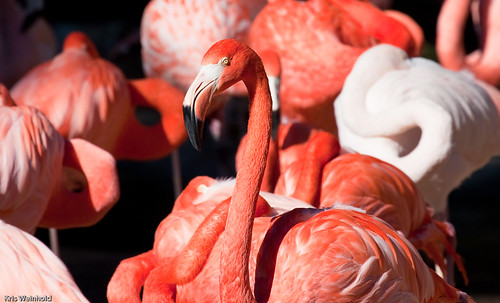
Flamingo

.

San Diego Zoo

Panda Bear

.

San Diego Zoo

Snow Leopard

.

San Diego Zoo

San Diego Zoo

San Diego Zoo

Boar

.

San Diego Zoo

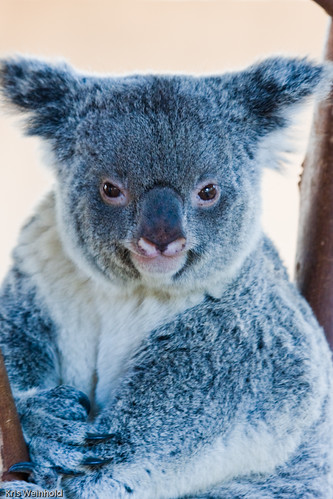
Koala Bear

.

San Diego Zoo

Koala Bear

.

San Diego Zoo

Flamingo

Business Broker

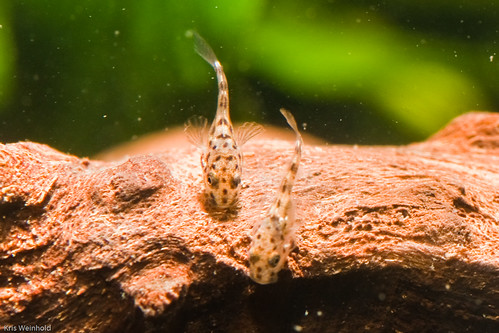
Pelvicachromis pulcher ‘Super Red’ Fry

November 9th, 2009

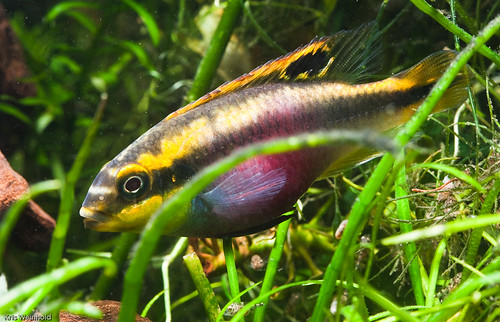
A few months ago, I picked up a nice looking trio of Pelvicachromis pulcher ‘Super Red’ adults hoping that they would be ready to spawn quickly. I was very pleased when I noticed that they had done so about a week ago! I set them up on my 40G farm tank, but for awhile they didn’t really seem all that interested in each other.

Pelvicachromis pulcher 'Super Red' Female

Then I realized, that being a farm tank, it didn’t have a single piece of wood or rock in it. I rectified that by making a small cave out of some porous mossy rock, and shortly thereafter, two of the fish paired off and took up residence in that cave. It wasn’t long until the female sequestered herself, and then shortly thereafter a swarm of fry emerged with the parents.

Pelvicachromis pulcher 'Super Red' Male

The parents escorted the fry throughout the tank, allowing them to feed on detritus on the substrate, and small organisms on the plant leaves. In addition, I used some frozen foods to supplement both the fry and parents diets, as the frozen cubes thaw and have a fine mist of brine shrimp pieces for the fry to graze on. I could visibly see the bellies of the fry bulging with food, so that always a good sign that they’re getting enough to eat.

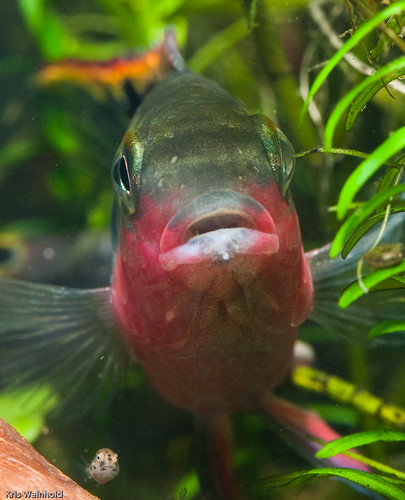
Pelvicachromis pulcher 'Super Red' Fry

Hopefully, the fry will continue to grow up fast, and I’ll have a small colony in the 40G. I’ve tried keeping these fish in the past, but for one reason or another, I’ve always lost the females before they would breed. I guess a male and a female fish don’t always pair up.

Pelvicachromis pulcher 'Super Red' Fry

The fry don’t have any of the color on them that the parents exhibit, so I’m looking forward to seeing that develop as they get bigger. Once they’re big enough for blackworms, they should grow like crazy. (I hope). Comments welcome!

Business Broker

Riparium Supply Review

October 29th, 2009

About two months ago, Riparium Supply (http://www.ripariumsupply.com) sent me a sample pack of their product line so that I could try them out and talk about my experience. I also received some plants to help get me started in the right direction. Fortunately, I had an empty 20G high aquarium and canister filter sitting around for me to use in this experiment. I’m going to go through my experience, but first let me introduce the Riparium Supply product line.
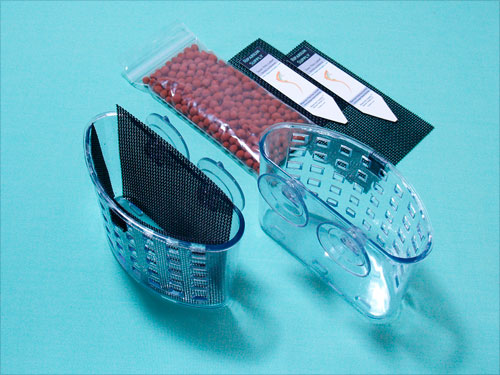
Large Hanging Planter

The core piece of equipment in a Riparium are these plastic hanging planters. They are designed to hold substrate and plants in place while adhering to the glass in your aquarium. Simply add some of their clay pebbles in the container, followed by your substrate of choice, plant the plant, and fill the rest of the way with substrate.
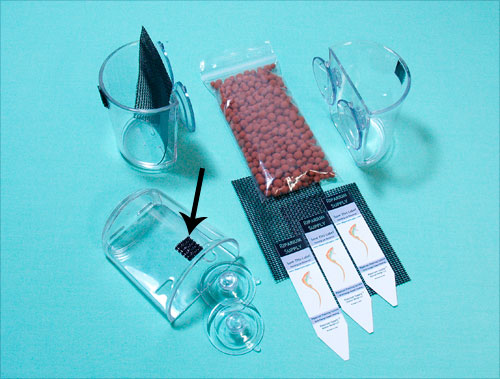
Smaller Hanging Planter

There are two sizes of hanging planters; smaller ones for medium sized plants, and larger ones for plants with heftier root systems. Both planters also have Velcro-like strips on them, called mushroom-head fasteners, which are used to connect to the floating trellis product.
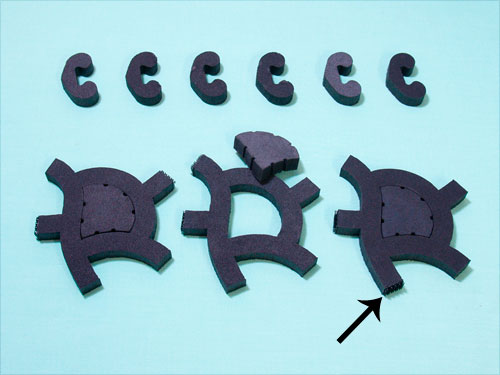
Trellis Raft

The floating trellises are pieces of foam designed with an insert in the middle. The concept is to position a number of emersed stem plants in the hole, then insert the middle part to lock them in place. The smaller foam pieces attach to the ends of the trellis to add extra buoyancy for large mats of plants. The mushroom-head-fasteners on the trellis lock into the hanging planters so that they don’t float around. Now, let me go through my setup of the past two months…
Riparium

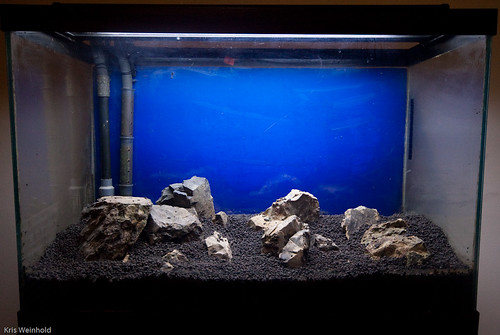
I started by adding a little bit of hardscape that would be totally submersed. The difference between a paludarium and a Riparium is that “the terrestrial portions of paludariums are built up with rocks, driftwood or synthetic materials. In ripariums, on the other hand, the land area is only implied: the above water portion is rendered solely with live plants.” To comply with the concept, I made sure that none of the rocks would come out of the water.
Riparium

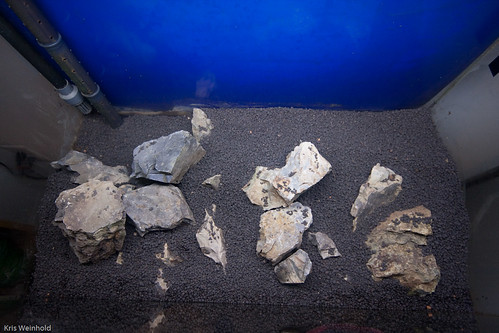
I had to alter the outflow of my filter using some extra tubing that I had lying around so that it would reach further down into the aquarium. I ended up using an Eheim spray bay positioned vertically to spray out both above and below the water surface. I also built out an area in the back left which had less substrate in it so that the filter intake would reach low into the aquarium for best filtration and circulation.
Riparium

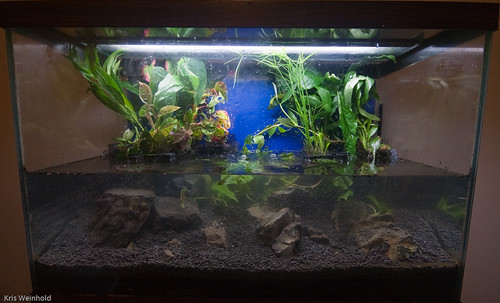
I planted the plants I had in the hanging planters, and used the floating trellises to suspend a few stem plants that I had. The planters were fabulous to work with, with great instructions on how to fill them to properly secure the plants. The suction cups have held without any issues for the two months they’ve been attached. I suspect that over time, I may need to replace those cups, but that’s not a big deal. The floating trellises, on the other hand, were somewhat difficult to work with. I found it hard to hold several stems in place without them shifting around before being able to lock them in place with the foam insert. I think if it were up to me, I would continue to use the hanging planters, but just plant the stem plants into the substrate of the Riparium, and let them grow emersed naturally.
Riparium

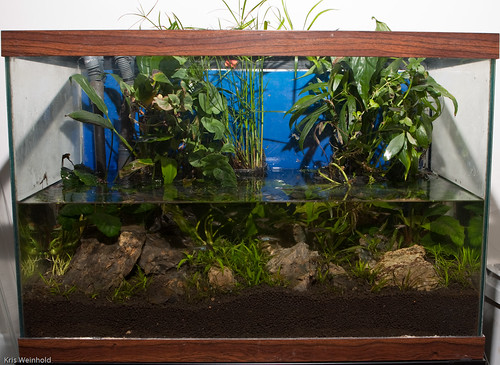
After two months, my Riparium is shown above. I’ve found that I’m not as good scaping a Riparium as a regular aquarium, but I’m sure I would improve with more practice. Also, I’ve been running the tank with a light sitting on the top of the tank. I think you really need to suspend the light so that the plants have room to grow up and out of the tank. I currently have zebra danios and some rainbow darters in this tank, and they’re doing quite well. The foreground still needs to fill in, but that’ll take time since it’s a fairly low-light environment.

In conclusion, I definitely recommend the Riparium Supply Hanging Planters. Both sizes are fantastic, and I think they could even be used creatively in a traditional aquascape. For the Riparium, they work great. As mentioned, I recognize the purpose of the trellis, and they do work as designed, but it takes some work to configure them initially. The owner,  Hydrophyte, has been very responsive to any questions I’ve had, and so I’m sure he would provide similar service to any of his customers. Pricing for each item is reasonable at under $15, with a recommended setup for my 20H costing about $50 to get started. At that price, I think it’s well worth the money to try something different in one of your aquariums. Give them a try!

UPDATE: I initially focused solely on the difficult usability of using the floating trellises to secure stems in a Riparium. In addition, they can provide support for stems planted in the hanging planter that would not otherwise stand upright on their own. Using the trellises in this manner eliminates the problem I described, as the stems purely creep along the trellis. The trellises also help to obscure the hanging planters, especially once plants have grown in, and provide a planting medium for plants whose roots cannot be planted because they require the extra oxygen present when sitting in open aquarium water. Therefore, used in these ways, the trellises can be an integral part of creating a successful Riparium.
Business Broker

« Previous Entries   Next Entries »