Zebra Danio: Oldie But Goodie

October 27th, 2009

The Zebra Danio is one of the fish that has been in the hobby forever. They are commercially bred and are available for sale in virtually every pet store, commonly being one of the first fish people keep when entering the hobby. For this reason, they are easily overlooked by more seasoned hobbyists when choosing inhabitants for their aquarium. This spring, the temperatures outside were still chilly, but I was beginning to see mosquito larvae outside in my pond. I went to my favorite fish store, and asked the owner what he suggested for a reasonably cold-tolerant fish that would provide mosquito protection, and he suggested the Zebra Danio.
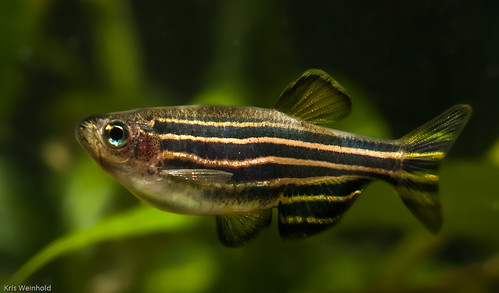
Zebra Danio

For all of the reasons I mentioned above, I was hesitant, but the price was right (less than $.99/fish) so I came home with a dozen fish. They cleared out the mosquito larvae problem nearly overnight, and were quite active in the pond. Also, outside in the full sun, I noticed far more colors than their typical brown and tan zebra stripes. Flashes of blue or green iridescence showed up, as well as, yellow on the tops of their fins. Before long, I noticed lots of small fry swimming outside in the pond. My dozen fish had easily tripled, if not more.
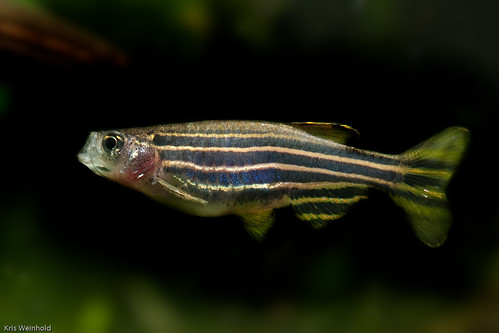
Zebra Danio

When fall came, and the nighttime temperatures began to decline again, I brought the danios inside and placed them in a riparium/terrarium setup that I have going. I thought they would like the extra water flow I have in that particular aquarium, and so far they don’t seem to have any complaints. They are probably the best schoolers and most active fish I’ve kept in a planted aquarium. They might stress more calm/docile tank mates, but they are fun to watch as they never stop schooling from one side of the tank to the other. If you’re looking for an inexpensive schooling fish for your planted aquarium, you really can’t go wrong with the Zebra Danio.
Business Broker

Aquafest 2009 – Aquascaping Challenge!

October 19th, 2009

I haven’t posted in a long time, largely because I’ve been incredibly busy preparing for Aquafest 2009 in Laurel, MD. As president of GWAPA, one of the three clubs hosting the convention, there was plenty to do, but after a blur of a weekend, I think the convention was a success. Thanks to all of the sponsors, attendees, and volunteers who helped us pull it off! The main event that I was responsible for was the aquascaping challenge between Jason Baliban, our speaker, and Jeff Ucciardo, GWAPA’s vice president.

Aquascaping Challenge

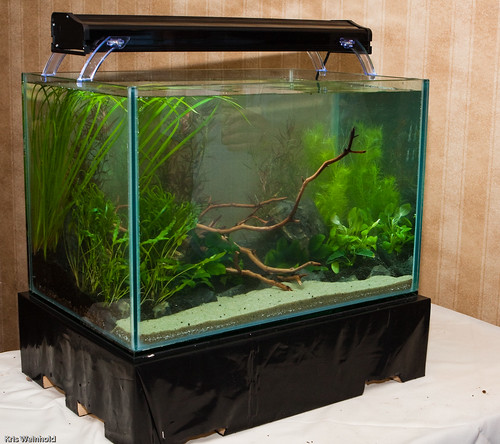
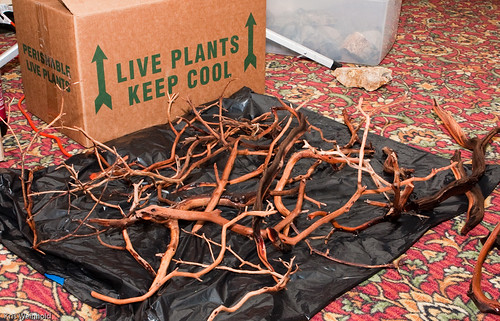
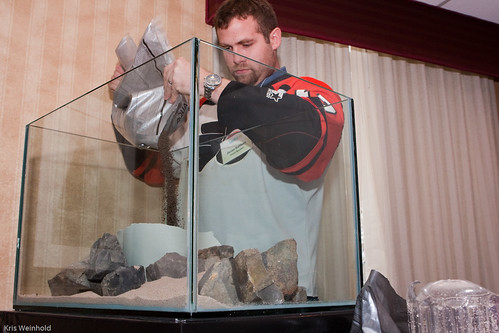
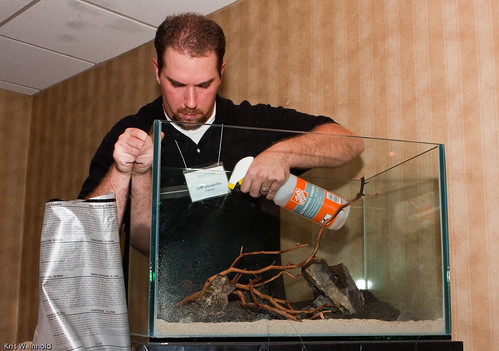
We spent the hour prior to the event sorting a mass of materials into two equal piles so that Jeff and Jason would start on a completely level playing field. Above is some of the manzanita wood that we got from Manzanita.com to use in the scapes. Jason got off to a quick start, putting in the white pool filter sand, developing a hardscape, and topping it off with some Aquasoil.

Aquascaping Challenge

Jeff took a little bit of time to plan his scape, but was right behind Jason once he got his hardscape placed. Jason chose to extend the white sand all the way from front to back, while Jeff kept the sand confined to the foreground. Both competitors divided the tank into two mounds, one larger than the other.

Aquascaping Challenge

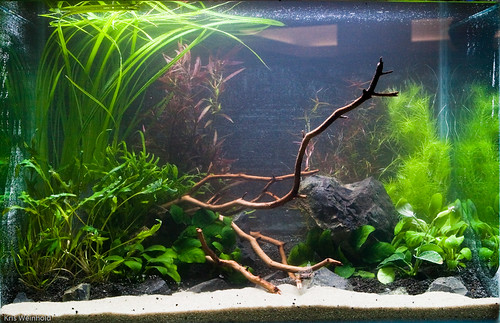
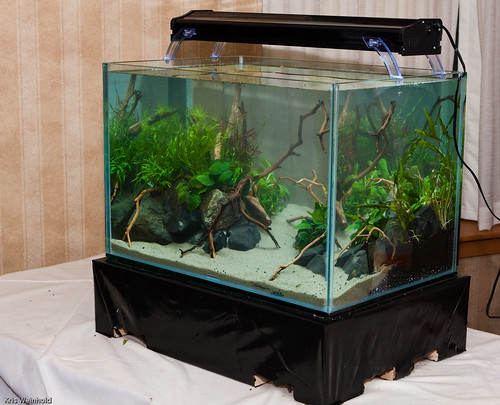
In the end, both Jason and Jeff finished before the hour was up, which is quite impressive given the amount of time I usually spend working on an aquascape. Below is Jason’s finished scape from the side. The judges liked the rockwork in his scape, as well as the use of manzanita to provide flow to the layout.

Jason Baliban's Scape

However, the judges thought he could have filled in the scape with more plants than he did, but recognized that it should fill in nicely once it grows in. The tanks themselves are very nice, being a first look at Aquarium Design Group’s own line of rimless aquariums. They are 24″x16″x16″ and Catalina Aquarium donated a pair of HO-T5 lights to go with them.

Jason Baliban's Scape

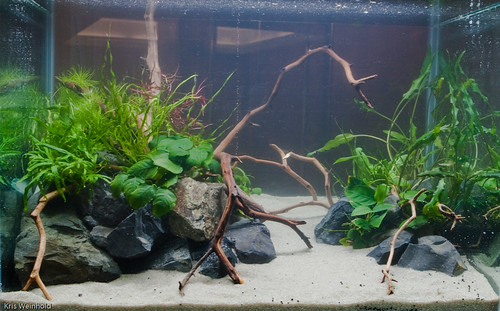
Jeff’s finished aquascape is below, and as you can see, he did a very nice job filling in the scape with plants from the get-go. The judges took off points for his hardscape saying that it got lost in the plants.

Jeff Ucciardo's Scape

They also wondered why he didn’t extend the white sand front to back between the two mounds. Ultimately, we ended up being able to exhibit two very nice scapes, especially considering that they were completed in an hours’ time frame. The judges gave a slight nod to Jason’s scape, but explained to the audience what they liked and disliked about each.

Jeff Ucciardo's Scape

Also, during the whole hour, I gave a mini presentation about Aquascaping in general. We wanted to avoid folks from getting bored while the planting was going on, so I fielded a number of questions keeping the competitors from having to. Our A/V team also did a great job projecting the two tanks live onto two large screens so that everyone could see what was going on. Overall, the event was a success!

Business Broker

Raised Brick Pond – Ready for Winter

October 4th, 2009

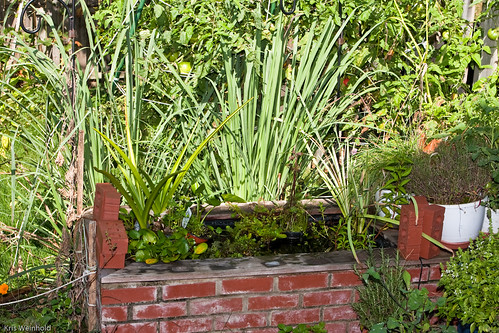
Yesterday, I spent a large part of the afternoon preparing my raised brick pond for winter. Below is a picture of what it looked like right before I began. To prepare the pond for winter, I sorted through all of the plants, composting the extras, and bringing a few inside to overwinter in an emersed setup. I also had to drain the water down to about 2 inches in order to fish out all of the zebra danios, which would definitely not survive the declining temperatures.

Raised Brick Pond - October 2009

In the spring I added a dozen danios, and yesterday I pulled out about 4 dozen fish of all sizes from fry to adult. They’re going to overwinter in a terrarium setup inside, which they should love due to the waterfall current I have in there. Hopefully they won’t continue to breed in there because I really was only hoping to use them as mosquito control — not as a fish I really wanted to keep in large numbers.

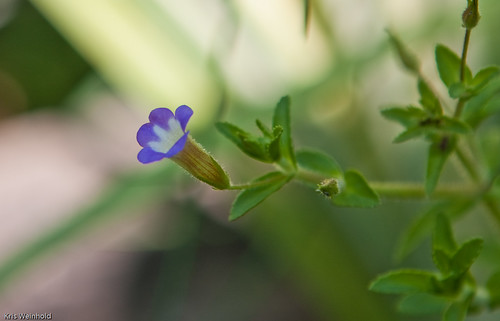
Hyptis sp.

Hyptis sp. Growing Emersed

One of the goals I had at the beginning of the summer was to flower as many plants as I could outside. In that respect, I had a number of successes including: Ludwigia repens x arcuata, Bacopa sp. ‘Araguaia’, Rotala sp. ‘Sunset’, Staurogyne sp. ‘Bihar’, Bacopa monnieri, Limnophila sp. ‘Wavy’, and a few others I’m sure I’m forgetting. There were a few that I wasn’t able to flower, but hopefully they’ll send up flowers in the emersed setup over the winter.

Limnophila sp. Flower

Limnophila sp. 'Wavy' Flower

Finally, I closed the season with four frogs making my pond their home. They weren’t happy about me draining the pond, but hopefully they still have a few weeks to go down the street to the runoff pond where they can overwinter in the mud. My pond is almost entirely above ground, so if they stayed in there, they would surely freeze solid, which wouldn’t be good. Next time I build a pond, I’ll definitely dig deep down to keep a refuge place for fish so that I can keep some natives out there year round.

Business Broker

Nannacara anomala Babies!

October 1st, 2009

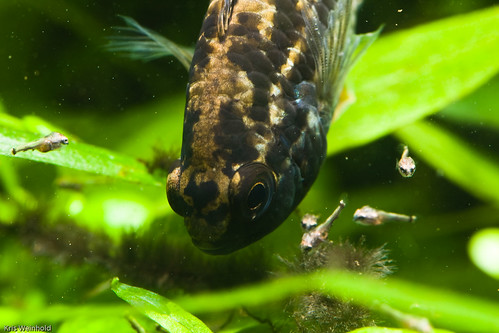
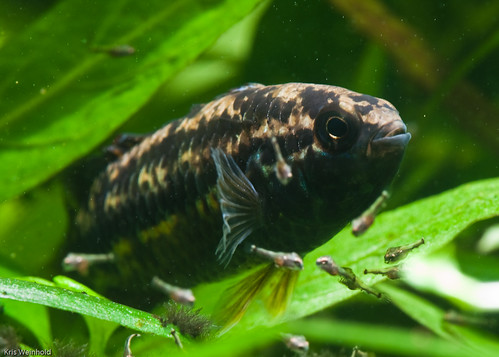
I went to feed the fish in my 75G this evening, and to my delight, one of my three Nannacara anomala females (I have a male and 3 females) were guarding a swarm of fry in the front right of the tank. Fortunately, this is the perfect place to take pictures, despite the dirty glass.

Nannacara anomala mom & fry!

I’m wondering if the other females are also holding fry because the male was staying in another territory with another female, and wouldn’t come out in the open for a picture. Two of the three females are in breeding coloration, which is a predominantly black body with yellow highlights. Their normal coloration is mostly a drab yellow.

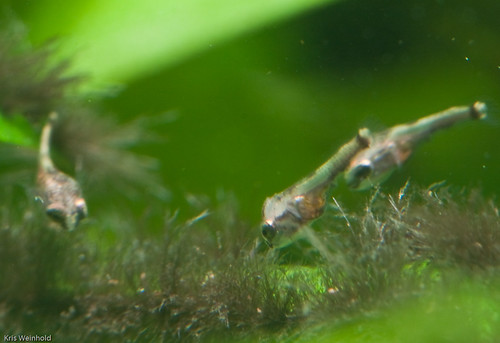
Nannacara anomala fry!

The fry were grazing on tiny micro-particles in the beard algae. (Yes I have a little bit of beard algae.) I dissolved a small amount of frozen brine shrimp, which floated down toward them. Being frozen, there were plenty of other smaller particles that the fry were able to fit in their tiny mouths. The female (and other fish) took care of the larger brine shrimp.

Nannacara anomala mom & fry!

These Nannacara anomala are incredibly entertaining fish to watch. The females all have their territories, and the male glides back and forth between them without any commotion. If a female strays too far from her territory, a bordering female makes sure to chase her away, flaring fins and nipping. Fortunately, there’s plenty of room in the 75G for them to occupy without any major damage. Now, I need to focus on rising up these fry!

Business Broker

75G – 1.5 Months In

September 21st, 2009

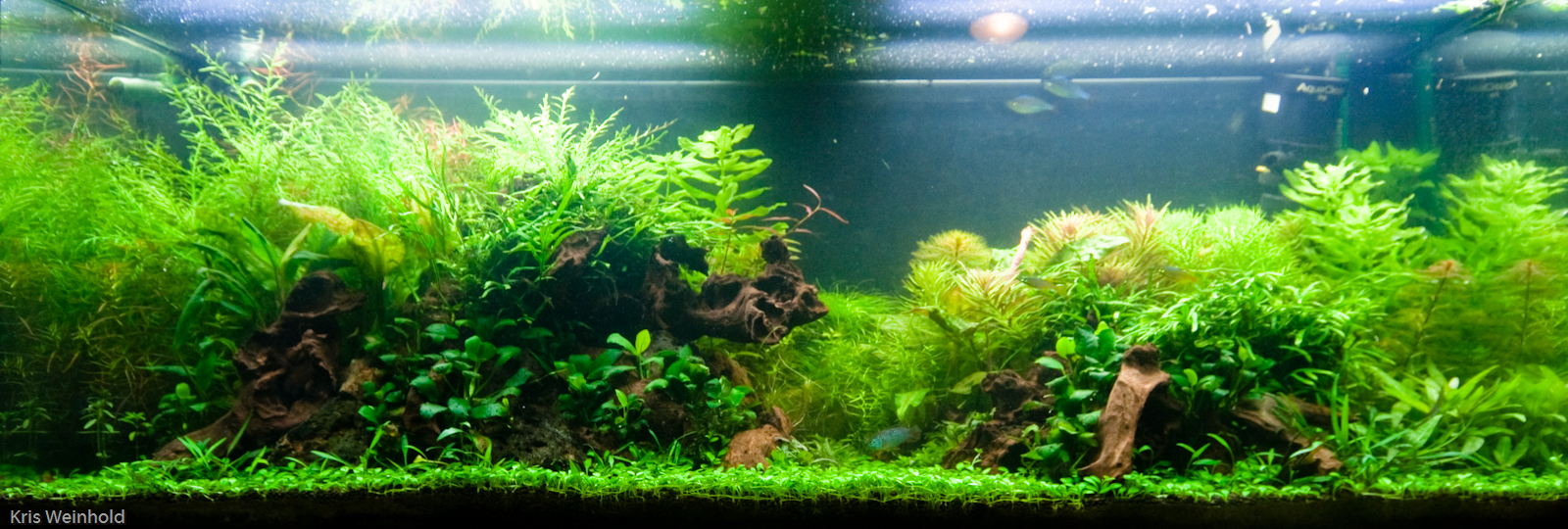
It’s been about a month and a half since I rescape my 75G aquarium. As you can see, the plants are all grown in pretty well across the board. The Glossostigma elatinoides in the foreground has reached critical mass, and has carpeted 95% of the area in front. It won’t be long before it has fully filled out. The background plants are all growing very nicely, as well, but I still need to yank some of the some between the two mounds to make them more distinct. (Sometimes, I have a problem holding onto plants I like, even though they’re cluttering an aquascape.)

75G - Aquascape at 1.5 Months

75G - Click for larger image

I could probably stand to add a few more fish to this aquarium that would occupy the upper regions of the water. I have catfish and cichlids in there, which occupy the lower regions, but only a few remaining rainbowfish swim freely up above. The easy solution would be to add all of the zebra danios which have been breeding outside in my pond now that the weather is getting a bit cooler. We’ll see if that happens or not, as I don’t want them picking off any Nannacara anomala fry should the parents breed. Comments/critiques welcome!

Business Broker

« Previous Entries   Next Entries »