2.5G – A Few Corrections
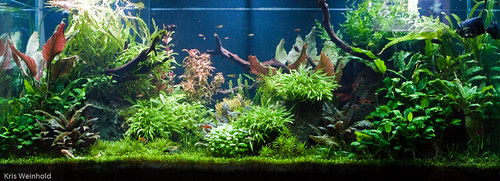
May 3rd, 2009After looking at the last aquascape, and sleeping on it overnight, I decided to change a few of the rocks in front. Let me know what you think…
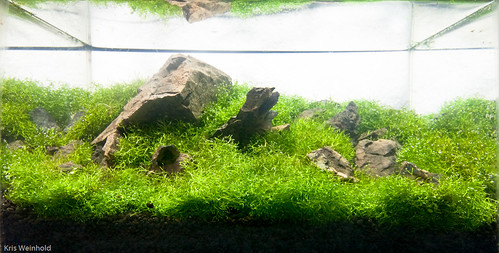
After looking at the last aquascape, and sleeping on it overnight, I decided to change a few of the rocks in front. Let me know what you think…
GWAPA’s 2.5G aquascaping contest is well underway, and I wanted to try my hand at a riccia rockscape as it would be quick to put together, and would hopefully get me used to working inside this small of an aquarium. So, I looked through my “rock box” for some smallish pieces of rock, built up a slope, and then covered the whole substrate with Riccia fluitans, which I had been growing out for months in my 75G for this very purpose.
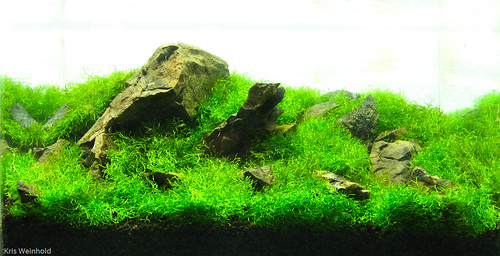
What do you think of the result? It really couldn’t be any easier of an “instant-scape,” as the look is virtually complete immediately after planting. Now only that, but Riccia is a floating plant, so it’s unlikely that all pieces will stay down on the substrate forever, making this a very short-term aquascape.
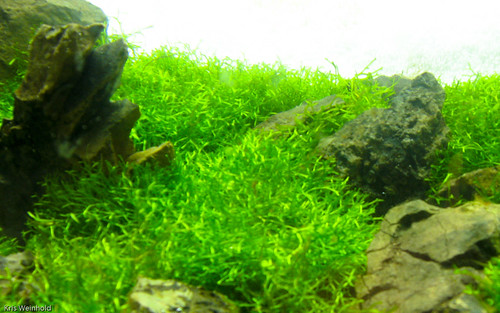
While others have used hairnets, fishing line, string, and other implements to keep the Riccia inplace, I started with large mats of Riccia, so all I needed to do was hold down the center with strategitically placed rocks. That’s the benefit of growing it as floating mats in another tank first, before trying to use it as a foreground plant — the mats are already tightly interlocked. Comments/critiques welcome!
GWAPA’s April meeting was at Ghazanfar Ghori’s house in Virginia. Ghazanfar has been GWAPA’s president several times, and is probably our club’s best known member due to his wonderful aquascaping ability. He currently maintains two tanks, an ADA 90-P and a 215G .
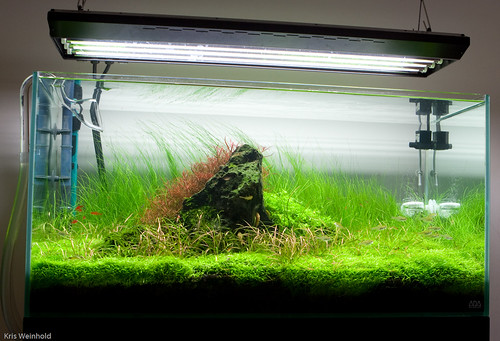
This was quite an eventful meeting for GWAPA, with several things going on. For starters, we officially kicked off our 2.5G aquascaping contest by handing out all of the equipment. After the meeting, I did some rock collectiing with a couple other members to try and prepare for the contest. We also had a large group order arrive in time for the meeting, in which I got another 20 Amano shrimp to hopefully help me quell an algae problem in my 40G tank.
For our topic, Ghazanfar talked about growing aquatic plants emersed. He has an extensive Cryptocoryne collection, of which most are grown emersed. If interested in crypts, definitely check out his blog: Kryptocoryne. During his presentation, he showed how to successfully grow the plants emersed, and what should be done to transition plants from submerged form to emersed form.
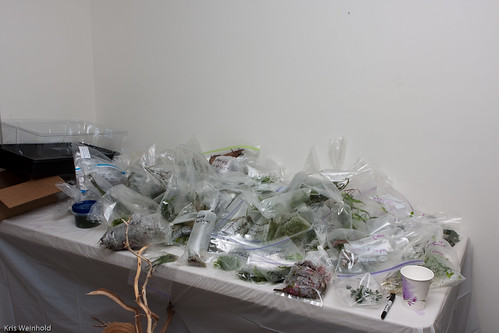
Finally, after the talk, we held another large auction. I came away with a few plants that I may use in my 2.5G tank, and in my pond. All in all, another great meeting!
On Saturday, me and my friend, Cavan, took a trip up above Baltimore to Maryland Aquatic Nurseries, a wholesaler of aquatic and wetland plants, who also has retail hours on Saturdays. I had been there before, but recently I have become more interested in native plants that may be suitable in the aquarium. After looking through their stocklist online, Cavan and I decided it was worth the drive up their for a local “collecting” trip.
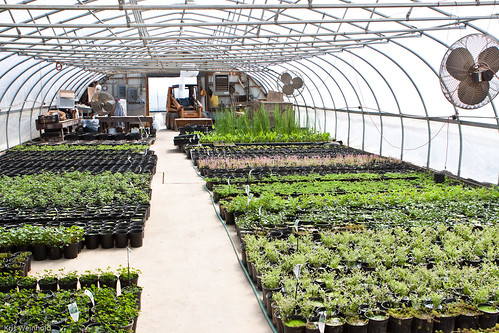
We were lucky to go before the true start of the pond season, as one of their staff members was gracious enough to spend a good 45 minutes helping us find the plants we were after. Sometimes, this even included “weeds” that were growing in the same pots as something else they were selling. Normally, they would just discard these contaminants, so we were happy to take them off their hands.
They fit at least a dozen greenhouses, with 4-5 being walkable, and the rest being flooded with water, having pots sitting in them. We started through the walkable greenhouses, searching for plants on their stocklist, as well as, keeping an eye out for a suitable weed. When we ended up in the back flooded greenhouses, Cavan took off his shoes so that he could wade (ankle deep) to see what was growing in there. While the temperature outside was quite comfortable, those flooded greenhouses were like saunas, and were quite uncomfortable to spend too much time in. That didn’t stop gambusia and tadpoles from thriving in them, however (in addition to the plants).
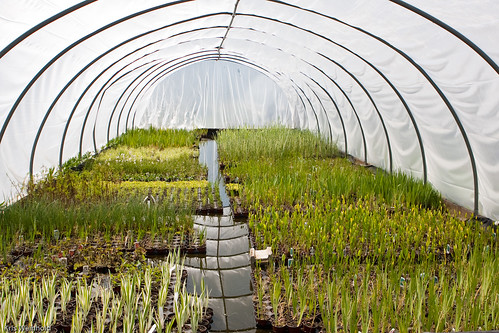
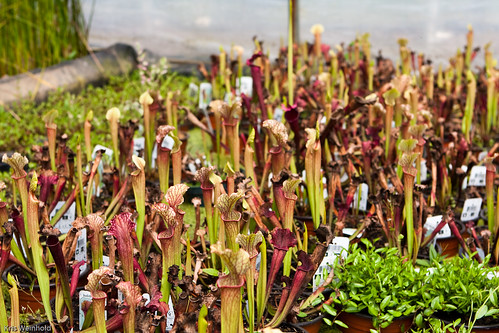
It was quite apparent that lilies and lotuses are such popular pond plants, as they fully occupied several of their greenhouses. In addition to pond plants, the nursery also has a number of bog plants, including several different types of pitcher plants.
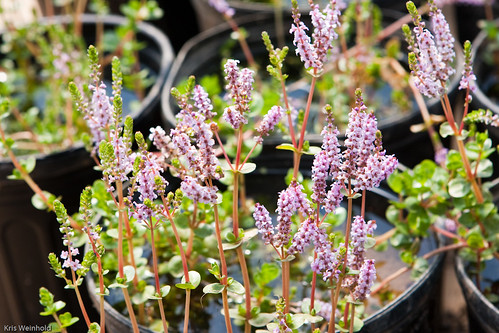
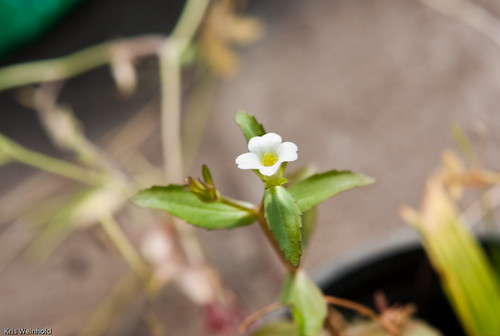
We ended up coming away with more plants than we could fit into our tanks. Several of the plants we bought in pots, such as Mentha aquatica and Ranunculus flammula, while others were weeds, including Potamegetons and this Gratiola virginiana.
Now the fun part begins. I’ve planted all of plants we got throughout my aquariums, and will evaluate whether or not they’ll grow submersed for long periods of time at our normal aquarium temperatures. After that, we’ll have to assess whether they are desirable for aquascaping. I’d like to encourage everyone to check out their pond centers to think outside of box about what plants should be grown in your aquarium. Chances are, you’ll find something interesting that you’d never otherwise find in the aquarium hobby.
This past weekend I flew down to Houston to attend Houston Plant Fest, a planted-aquarium weekend put on by the Nature Aquarium Society of Houston (NASH). The event kicked off on Thursday evening at Houston Aquarium Warehouse, a local fish store and importer who caters much of his store to the planted aquarium hobby.
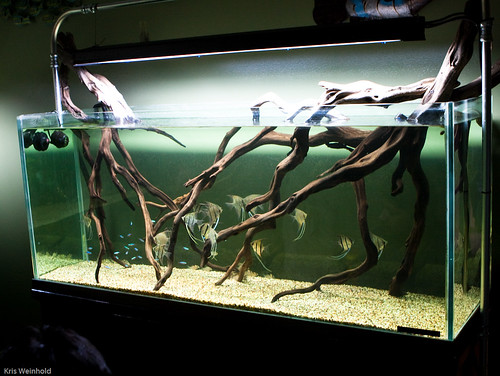
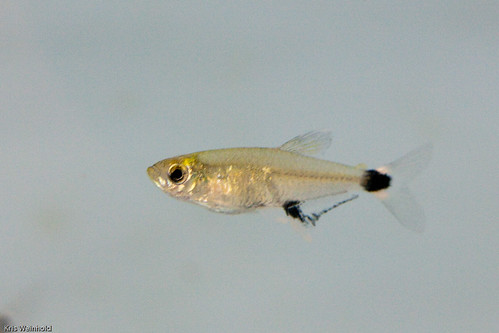
Daniel, the owner of the store, brings in many smaller fish which are perfect for an aquascape where you don’t want the fish to overpower the environment around it. I saw some of these Paraguayensis Tetras (Aphyocharax paraguayensis) and had to buy a small school for my 50G aquarium. It was simple enough to get them back home in my checked luggage without any loses.
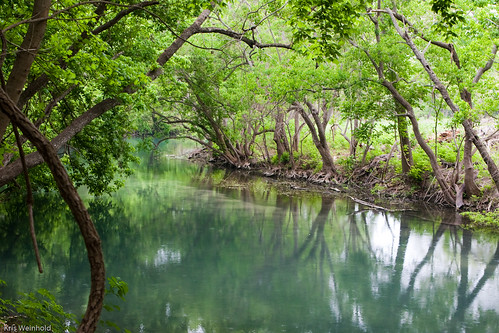
On Friday morning, two vans arrived near our hotel at 5:00am to take us on a 3 hour trip to the San Macros River. The river runs through the middle of the college town, where huge stands of Hygrophila polysperma, eel grass, Hydrocotyle, Cabomba, Ludwigia repens, and Texas wild rice all live. It was bittersweet to see Texas wild rice in its own remaining habitat, as development along the water has brought it to endangered status. Clearly, we didn’t collect any of this.
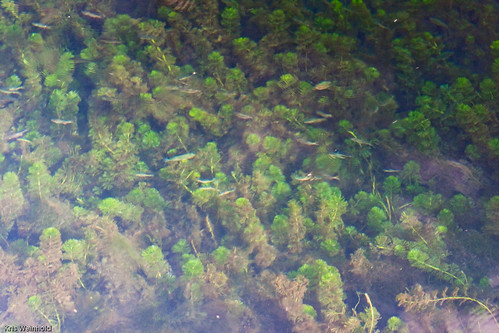
In some areas of the river, Cryptocoryne beckettii is purported to grow, but we didn’t see any during our trip. As an introduced exotic, the local government has been very dedicated to trying to eradicate it so it does not further diminish the Texas wild rice population.
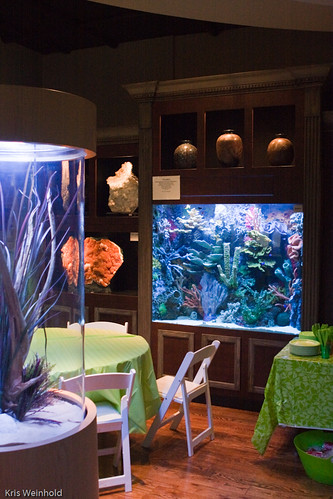
That evening, we all returned to Houston to gather at The Fish Gallery in town to eat and appreciate their beautiful gallery of aquariums. They also have a retail store attached to the gallery in which they tailor to the higher-end aquarist.
On Saturday, we all filed into Aquaruim Design Group’s gallery for an aquascaping presentation by Mike Senske. Mike and Jeff Senske are long time hobbyists, and are well known for their beautiful aquascapes in the ADA and AGA aquascaping competitions. ADG is one of the few stores in the U.S. that carries and distributes ADA aquariums and products, so the Houston folks are quite fortunate to have them in their backyard.
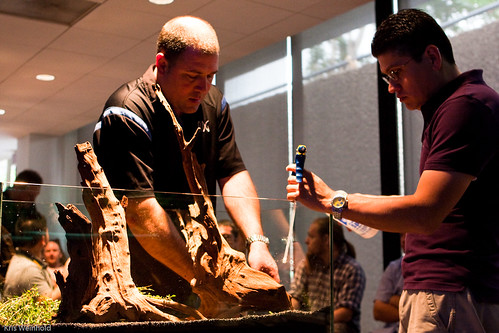
Mike aquascaped an ADA 90P aquarium, which will now be displayed in their conference room. The scape was a wood-based scape using two beautiful pieces of driftwood that they found locally. They filled in the rest of the scape with plants easily available in stores. Overall, it was a good presentation.
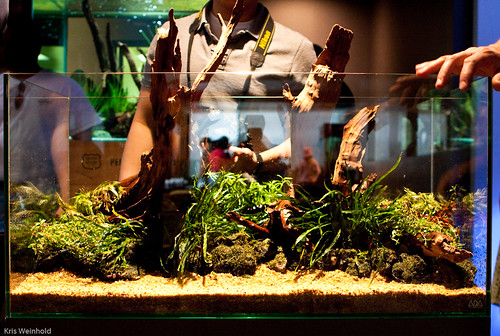
From there, we went to one of the NASH member’s homes to enjoy some Texas-style BBQ, and just talked plants for the remainder of the evening. Sunday, we all had flights to catch. It was a great weekend spent with fellow hobbyists. These little excursions really help to keep the hobby fresh, and energize me to try different things in my aquariums. Thanks for a great weekend Houston!