U.S. Botanical Gardens Production Facility

April 7th, 2009

After our tissue culture workshop on Saturday, one of the attendees offered to take a few of us on a tour of the U.S. Botanical Gardens Production Facility where she volunteers. I have been to the U.S. Botanical Conservatory downtown in the city, but the production facility is a set of more than a dozen greenhouses which support the conservatory and other federal initiatives.
Greenhouse

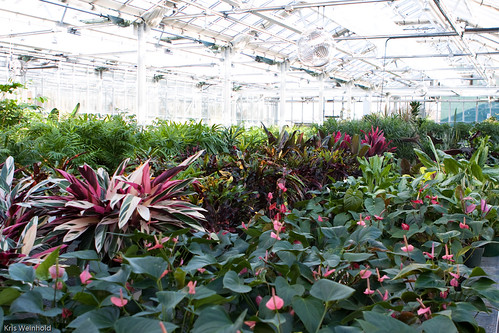
Simply put, this tour was a plant geek’s heaven! The size of the greenhouses are tremendous, and the vast quantity and variety is probably beyond compare in the country. The only thing I noticed they were missing was a large aquatic plant section, but that’s more than forgivable.
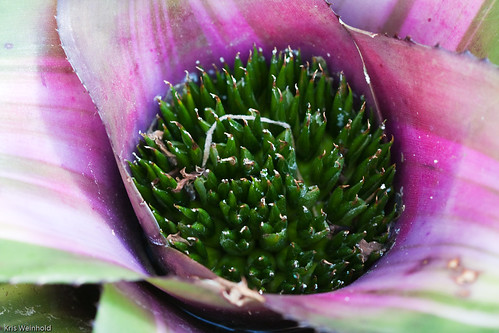
Flower

They had one greenhouse entirely dedicated to houseplants. Why would a place like this waste space on plants you can pickup in any hardware store or garden center? They provide a service to congressman who need plants for their offices. Each office is allowed to pick out up to six plants per year. If they kill more than that, they’ll have to get their own plants!
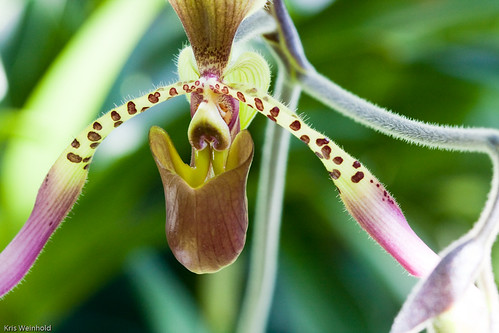
Orchid

Just like at the conservatory downtown, the premier greenhouse at the production facility is their orchid room. I’m not someone who knows a lot about orchids, but some of the other members in my group were pretty bowled over by the species they saw in this room. One of the volunteers told us that this facility is one of two in the country that is legally permitted to grow out restricted orchids if they are confiscated by growers or poachers possessing them illegally.
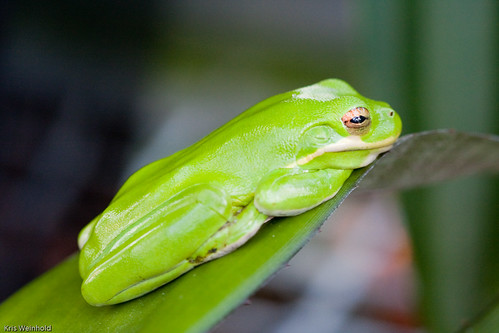
Tree Frog

The facility does have to use pesticides to control pests from taking over their greenhouses. They mentioned that they often see the notorious D.C. cockroach, which is several inches in length. Aphids, bacteria, funcus, and others give them trouble just like in any garden. Of course, some favorable intruders take up residence as well, such as the common tree frog above.
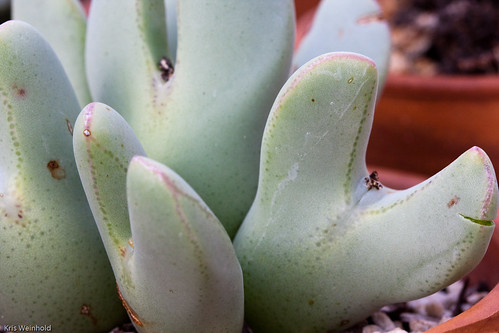
Succulent

One of their other greenhouses consisted entirely of succulents and cacti. Of all of the areas, this greenhouse by far had the most bizarre looking plants. These cacti were so specialized to their environment, that they looked other-worldly. Some looked like rocks, plastic, wax, etc. Really neat plants!
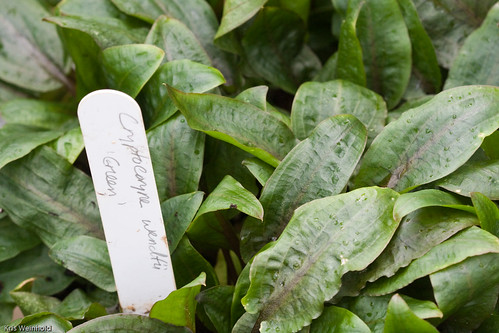
Crypt wendtii emersed

Of course, I did finally find a few aquatic plants. I remembered that they had some Cryptocoryne in the gardens downtown, so I knew that they must have some in the greenhouses. Sure enough, we found several pots of lush Cryptocoryne wendtii, both red and green varieties. We also saw some Anubias species, and a couple of other water plants.
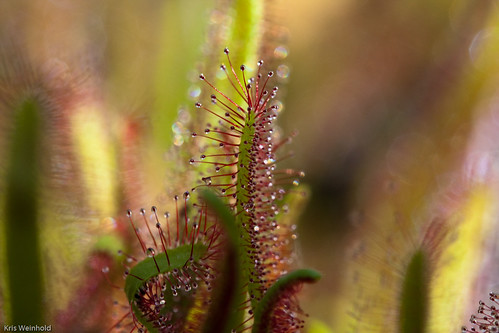
Sundew

Another greenhouse had bog plants, including many varieties of sundews (shown above), venus flytraps, pitcher plants, etc. With so many carnivorous plants in one place, I did wonder if they have to add flies to the greenhouse, or if they artificially feed them. Unfortunately, I never got to ask that question.
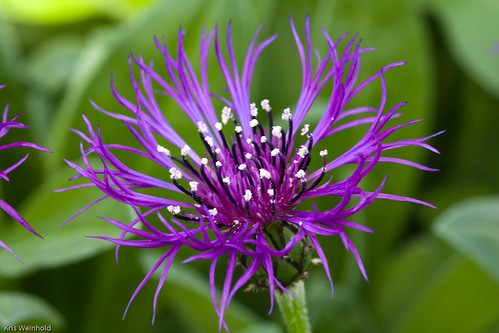
Flower

We noticed in one of the other greenhouses that the majority of the plants had either purple leaves or flowers. Before we could ask, our volunteer explained that purple is Michelle Obama’s favorite color. Therefore, for an upcoming event involving past and present First Lady’s, they are preparing a slew of purple plants to transplant into the White House garden, and other beds.
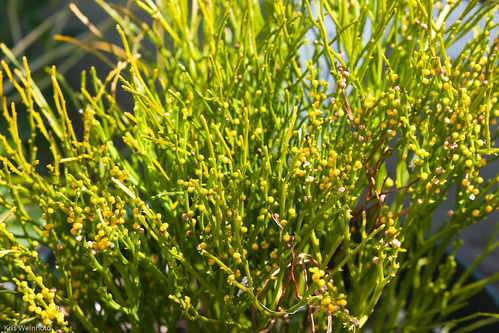
Plant

The shear variety of plants in this facility was astounding. I took far more pictures than I can narrate in a single post. Therefore, the rest of my post is made up purely of some other pictures I took there. I hope you enjoy them as much as I enjoyed my visit of the U.S. Botanical Gardens Production Facility.
Read the rest of this entry »


Business Broker

Tissue Culture Workshop

April 5th, 2009

On Saturday, I attended a local workshop on doing tissue culture in your home. The workshop was organized by a local GWAPA member, but was conducted by Dr. Carol M. Stiff of Kitchen Culture Kits, Inc. The nice thing about her workshop was that she custom-tailored it to have an emphasis specifiBAPcally on culturing aquatic plants, in addition, to things like orchids, house plants, and more. You may be asking why tissue culture is at all relevant to the aquatic plant hobby. There are, in fact, a number of reasons:

  1. To propagate large quantities of otherwise slow to grow species.
  2. To propagate rarer species so that more hobbyists can try them.
  3. To preserve plants for long periods of time without keeping them growing in an aquarium or emersed setup.
  4. To discover new variants that may popup when using various growth hormones.
  5. To clone identical copies of those variants if they popup.
  6. Just for the fun of trying something new.

Since cloning has such a high-tech connotation, let me walk you through some pictures from Saturday which demonstrate how feasible it is to do tissue culture in your home.

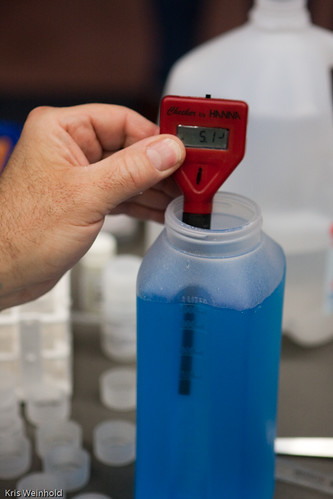
Tissue Culture: Preparing Solution

First, you need to mix up the sterile solutions from which the plant cuttings will be suspended and gain their nutrition. These solutions contain some trace and macro nutrients, sugar, plant hormones, and agar as a thickening agent. The pH should be adjusted using vinegar and baking soda to between 5.5 and 6.0 degrees.

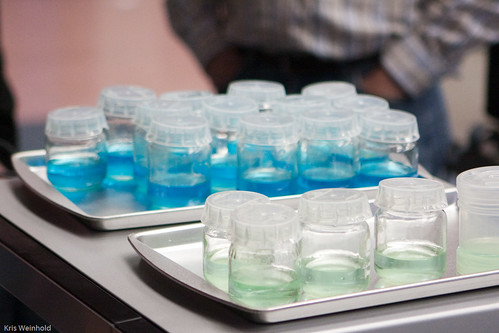
Tissue Culture: Filled Jars

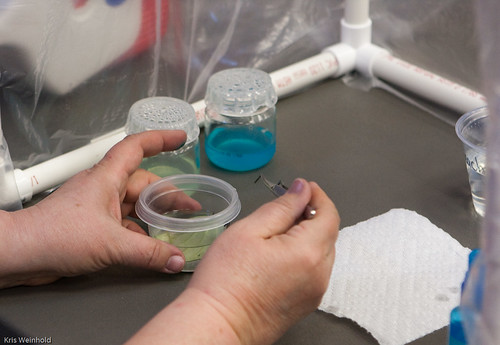
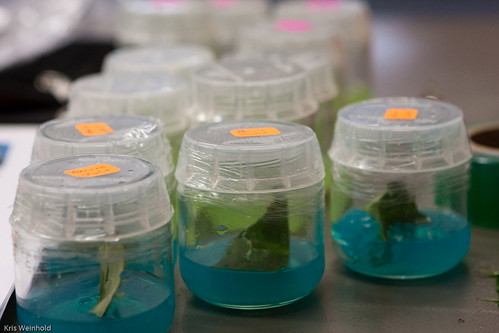
Put 3 tablespoons into suitable jars, and sterilize them in a pressure cooker or microwave to ensure that no bacteria or fungus could contaminate your mini-environment. By the way, food coloring is used to visually seperate solutions with slightly difference ratios of ingredients. For example, some plants do better with 1ml/L BAP hormone (blue jars), while others do just fine with none (green).

Tissue Culture: Inserting into Jar

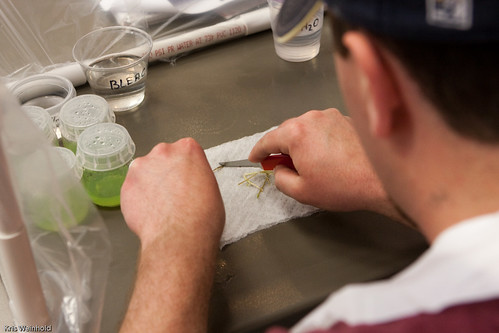
In make-shift sterile hoods made from PVC pipe and garbage bags, we sprayed down the area with isopropyl alcohol. The plant cuttings themselves are sterilized in alcohol, then bleach, and rinsed in water. From there, we further dissected the plants into smaller pieces, suitable for culturing.

Tissue Culture: Preparing the Specimen

In the end, we placed the sections of plant into the agar-filled jars, sealed the jars with plastic wrap, and labeled them. At home, I’ve placed the jars under modest light, and will soon find out if I’ve been successful or not.

Tissue Culture: Finished Jars

We cultured Proserpinaca palustris, Staurogyne sp. ‘Porto Vehlo’, two types of orchids, an African violet leaf, and a few other plants that attendees had brought to try. Overall, it was a very enlightening class, and I hope to try some of the techniques we learned on my own.

Business Broker

54G – Two Months

April 2nd, 2009

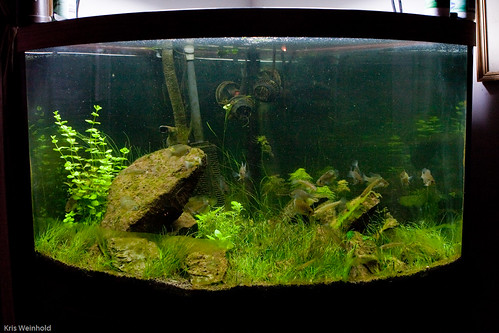
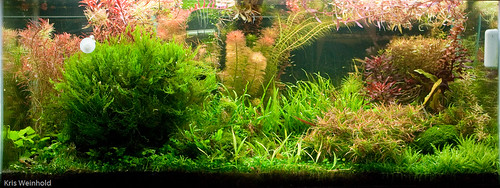
It’s been roughly two months since I converted my 54G aquarium into a native plants/fish tank, and thus far it’s been a bit of a bumpy road, with a few bright spots here and there. I’ve been having some algae issues due to very high nitrate levels leeching out from the ADA Aquasoil. I’ve never had problems like this before with Aquasoil, so I’ll give it the benefit of the doubt for now.

54G

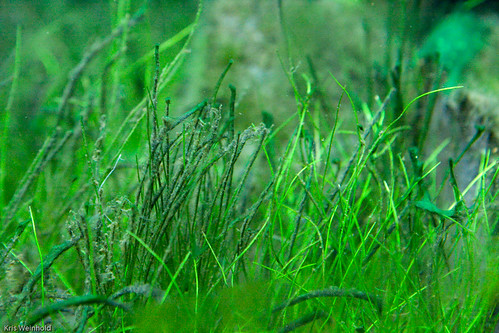
Despite having a bit of algae, the hairgrass is really starting to carpet the aquarium. The rocks are pretty well coated in fuzz algae, but I’ve recently started dosing more macros (N/P), and it has improved a little bit. Right now, I’m seeing better plant growth than I’ve seen in awhile, so I’m confident that given a little more time, I’ll be algae free.

Hairgrass with Algae

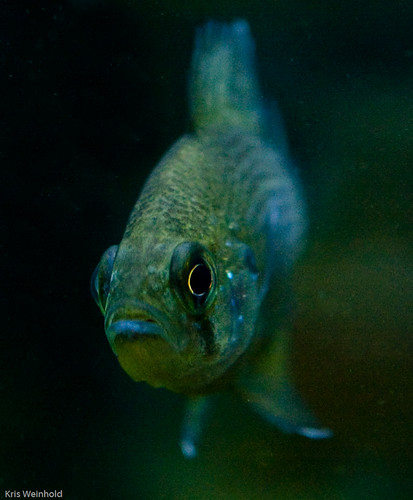
All of the bluespotted sunfish and banded killifish are in the aquarium now. They’re an interesting group of fish. Sometimes, I’ll look in the tank and it’ll look like an overcrowded zoo. Other times, I’ll look and not a single fish is visible, as they’ve blended themselves in-between rocks or in the hairgrass. I don’t see anyone getting beat up, so I think I’m okay in terms of fish load.

Bluespotted Sunfish

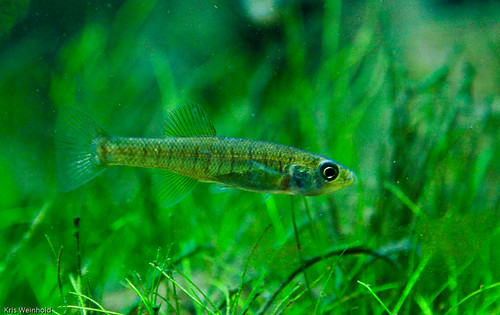
The killifish seem to especially like to dart in and out of the hairgrass. They’re also the fish that are more likely to accept commercial pellets, whereas the sunfish are hit or miss with anything but live blackworms. (About half of the sunfish will eat pellets, but not vigorously like commercially raised fish.)

Banded Killifish

Overall, I’m happy with the direction of this aquascape, but I am looking forward to warmer weather so that I can go out and collect a few of the plants I ultimately want to feature in this tank. Comments/critiques welcome!

Business Broker

GWAPA: March 2009

March 30th, 2009

On Saturday, GWAPA held their March meeting at Dave’s house. Dave, also known as ingg on the plant forums, has a basement full of beautiful tanks, and has previously been featured on the APC Tank of the Month. The topic for this meeting was a series of DIY demonstrations, showing how to setup a yeast CO2 system, a duckweed surface cleaner, and a nano-tank auto-top off system. Since GWAPA will be starting our 2.5G aquascaping contest next month, the auto-top off system was of particular interest to me. Hopefully I’ll be able to build of these in the near future.

Dave's 75G

Dave's 75G

The duckweed surface cleaner is a clever idea involving a powerhead and the top half of a soda/water bottle. Attaching the lip of the bottle to the intake of the powerhead, the powerhead creates a vacuum to suck anything on the surface down into a vortex formed in the bottle. If you put some filter floss in the bottle, all of the duckweed/trimmings will get stuck there, and you’ll have a clean surface. Pretty neat, huh?

Dave's 30G

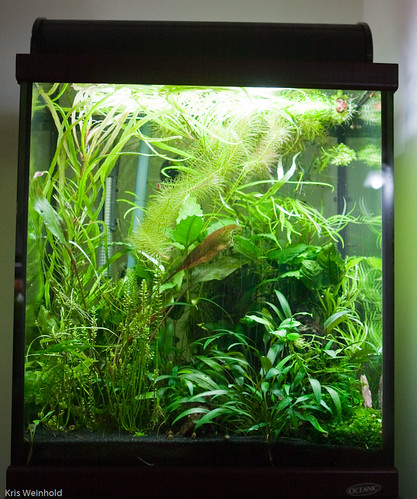
Dave's Oceanic 30G

And of course, we had another huge auction with over 100 bags of plants present. I came away with some nice stuff including Cryptocoryne usteriana x walkerii, Lilaeopsis sp., Rotala sp. ‘Sunset’, and a couple others. GWAPA is pretty lucky to have some rare plants available in every auction. Overall, it was another fun meeting on a rainy Saturday in Maryland.

Business Broker

L279 Pleco Fry!

March 25th, 2009

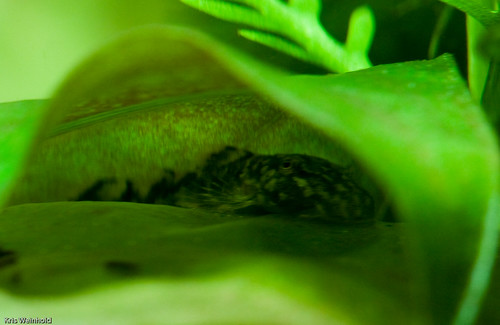
I was sitting and enjoying my 75G aquarium this week, when I noticed a tiny little pleco sitting on one of my Cryptocoryne pontederiifolia leaves. Back when I converted my 54G aquarium to a native-themed aquarium, I moved all of the Ancistrus sp. ‘L279’ plecos from there into my 75G, where I already had a few. I had been hoping that they would breed for a couple years, but I guess the new mix of fish finally produced what I was after.

Ancistrus sp. 'L279' Fry

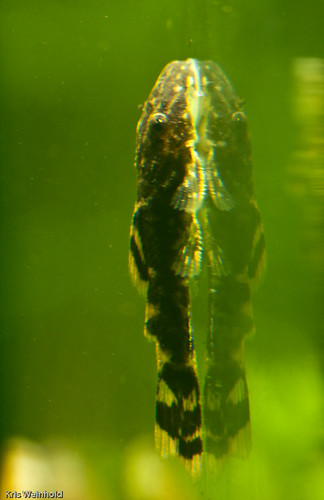
After spotting the one, I looked extra closely throughout the tank, and found at least 3 seperate individuals. They must have been in there for a little while because they’re all about the size of an Otocinclus right now, and actually look quite similar to one since their bristles haven’t yet started to grow on their faces. I hope all of these fry will grow up and start a little colony, as the L279 plecos are fairly hard to come by.

Ancistrus sp. 'L279' Fry

It’s really these little discoveries that make the aquarium hobby worthwhile for me. I spend so much time planted, trimming, feeding the fish, cleaning the tank, etc, that every once in awhile it is nice to find something come about that I wasn’t expecting.

Business Broker

« Previous Entries   Next Entries »