GWAPA – June 2008 – Bob Bock – Sunfish

June 28th, 2008

GWAPAAt GWAPA’s June 2008 meeting, we invited Bob Bock, past president of the North American Native Fishes Association, to speak about native sunfish. While this doesn’t sound much like a “plant topic,” we asked Bob to be sure to let us know which fish throughout his presentation would be suitable for a nicely aquascaped tank. Otherwise, since many American aquarists are unfamiliar with fishes in their backyard waterways, we felt it was a beneficial topic regardless.

Bob Bock

The theme of Bob’s presentation consisted of comparing how sunfish, though unrelated to cichlids, exhibit rather similar behaviors. They are both intelligent fishes, care for their young, feed by sight, and are widely distributed throughout their areas. Conversely, sunfish have far fewer species, are solely predatory in diet, and don’t exist below some portions of Mexico. Bob then proceeded to discuss in detail many of the species within the Lepomis genus of sunfish.
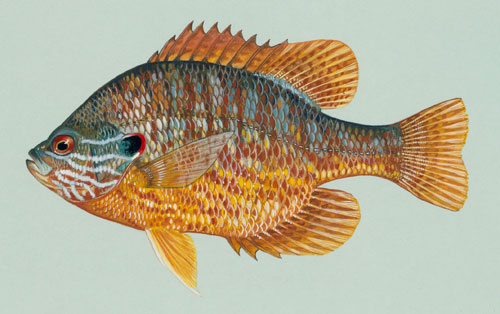
Pumpkinseed - Lepomis gibbosus

One of the species that I had been looking forward to hear about was the Pumpkinseed sunfish, or Lepomis gibbosus. A beautiful fish (shown above), it is unfortunately not very well suited for a planted aquarium because it grows a tad bit too large, and uproots plants to nest. It can also be quite agressive, and thus would require much larger tank sizes.
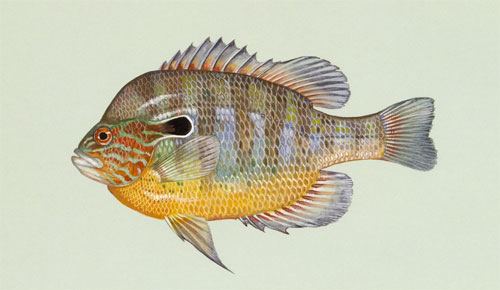
Longear sunfish - Lepomis megalotis

A better suggestion might be the Longear sunfish (above), which is a medium-sized sunfish, just as beautiful, and can be kept more managebly in aquariums. Bob also mentioned how Longear males develop a lump on their heads with age similar to the flowerhorn cichlid.
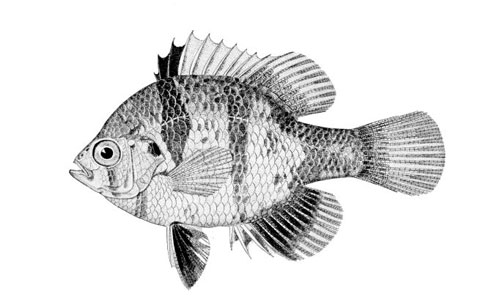
Blackbanded Sunfish - Enneacanthus chaetodon

Bob also mentioned another nice aquarium dwarf sunfish called the Blackbanded Sunfish, or Enneacanthus chaetodon, which he keeps several. Unfortunately for me, these are protected fish, and Bob had to obtain a permit to collect and breed them. Nevertheless, I very much enjoyed the presentation today, and hope to sometime collect and keep a few species of native fishes.
Business Broker

Ocean City Weekend

June 26th, 2008

Last weekend, my family took our annual trip across the state for a long weekend at Ocean City, MD. Along the way, my wife and I tried to get in as many nature-related things that we could because, well, we love the outdoors!

Pocomoke River

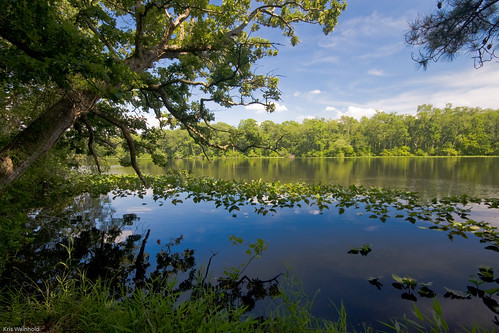
On the way over, we detoured near Salisbury, MD to do some hiking and biking at Pocomoke River State Park. I’ve never been to this park before, but as soon as we pulled up we knew we found a great place to spend an afternoon. The river itself was covered with lily pads, a few of them just starting to send up yellow flower buds.

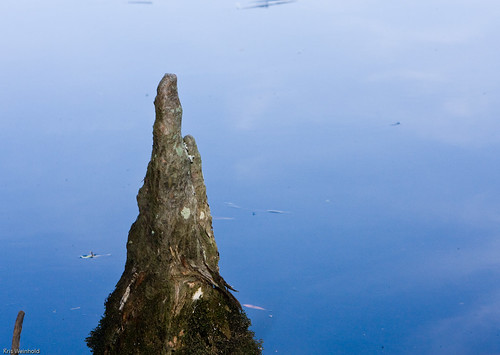
Bald Cyprus Knee

In addition, the parks contains some of the northern most bald cyrus trees on the east coast. I know that there are ones a tad further north in Delaware, but the sign said this is their northern limit. Nevertheless, I always enjoy checking out the various knees that pop up from the water.

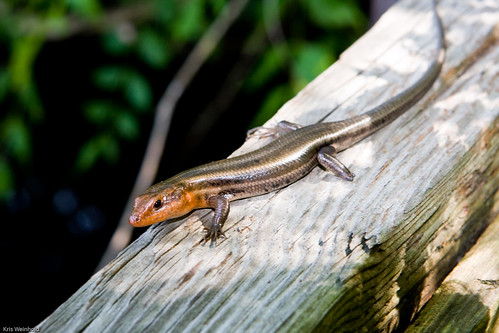
Footless Lizard

The only downside of our trip there were more mosquitoes and deer ticks than we would have cared for. I suppose that would explain why we saw so many lizards and toads on the trails.

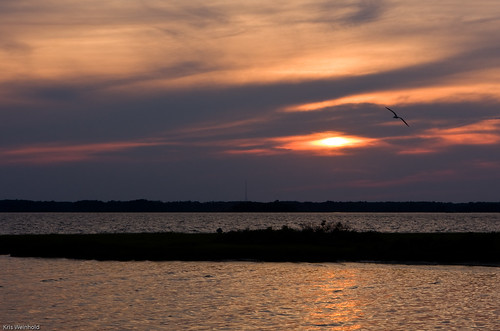
Sunset Over Bay

Once in Ocean City, one of my favorite pasttimes is crabbing for Maryland Blue Crabs using twine and chicken necks. The crabs are definitely down in recent years, so while the crabbing wasn’t fantastic, the sunset definitely was!

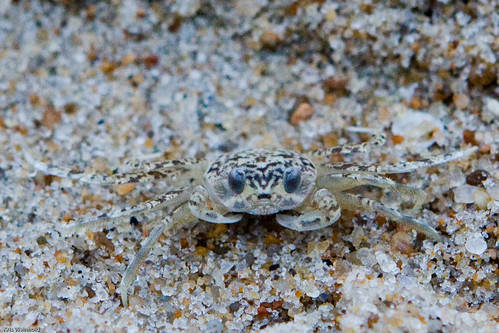
Sand Crab

Walking along the beach, we came across another kind of crab, scurrying quite invisibly across the sand. This guy (above) was no more than 2-3 inches across, but ran like lightning. I’m glad I got him to standstill long enough for a photo.

Assateague Island Horse

Finally, we spent another day clamming on Assateague Island, and came home with our legal limit of clams for quite the feast of fresh steamed clams, fried clamstrips, and New England clam chowder. One of the unique things about Assateague Island is that it is home to a wild colony of horses leftover of several shipwrecks a few centuries ago. (This story is disputed, saying that the horses came from early barrier island settlers, but shipwrecks sound more exciting.) The horses have adapted to the harsh environment of the island and thrive, having to be thinned down to 150 during the famous channel swim to Chincoteague every year.

We had a great little excursion, but I’m now ready to get back to focusing on my aquariums at home.

Business Broker

Cape Breton Island

June 24th, 2008

Before our trip, everyone we talked to told us, “make sure you schedule enough time on Cape Breton Island.” Some folks told us that we could spend our entire two weeks there. We ended up spending 4-5 days there, and probably could have spent much longer.

Cape Breton

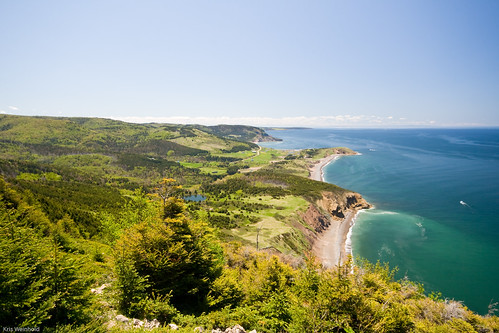
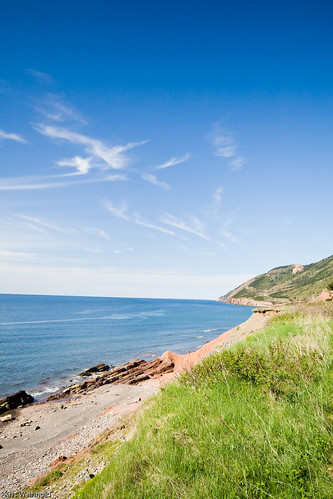
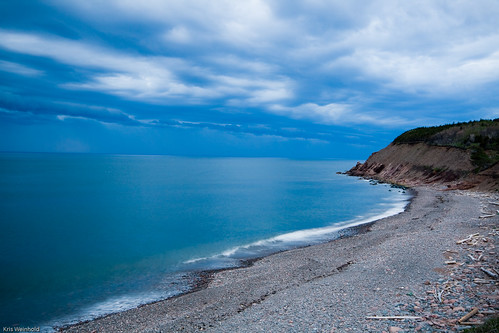
We drove over the bridge, and headed toward Mabou, which is about 30 minutes from the National Park. Mabou, itself is a small, but cute town, and has plenty of hiking trails. Not only that, but we found out that just about every town along the coast, has absolutely gorgeous views of the ocean.

Cape Breton

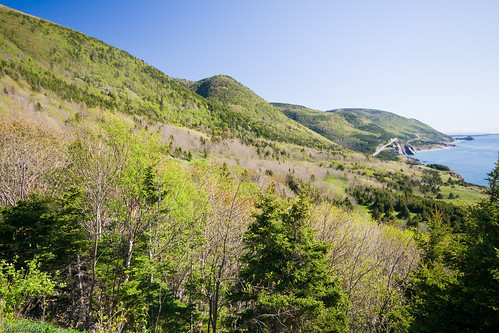
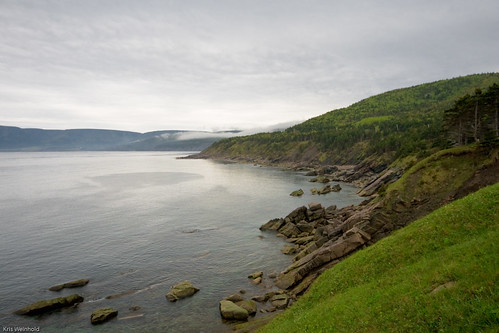
Not only that, but the landscape itself is different from the rest of Nova Scotia because it is highlands, with huge cliffs, falling off into the sea. The rolling hills themselves are forested, or are at least covered with greenery.

Cape Breton

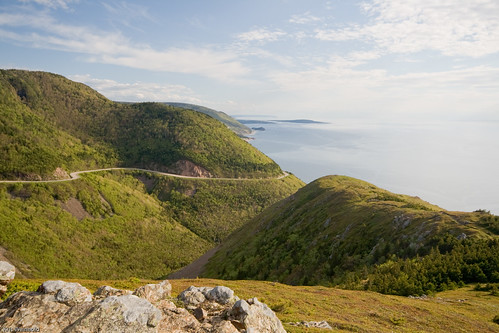
Once you make it to the start of the famous Cabot Trail, you soon after enter the park. The first day, we went straight to the also famous, Skyline Trail, which leads you to the top of the mountain, which has a view that pictures can’t describe. (I tried below.)

Cape Breton

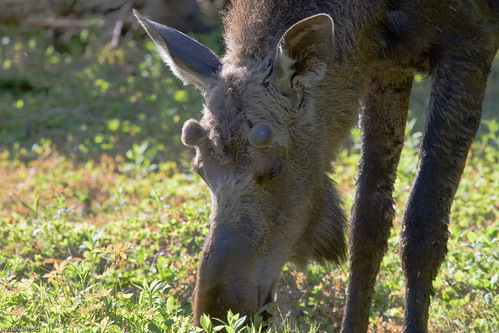
Much to our satisfaction, along the trail we first saw numberous piles of moose poo, and then finally came upon this young male moose. All of the park literature about moose states that you should keep your distance, and wait for the moose to continue on its way. Well, we came upon the moose, pulled out the telephoto lens, and got our snapshots. Waited 5 minutes. Waited 10 minutes. Apparently, we had intruded on this moose’s dinner hour, and he had no plans to cut it short. Eventually, we had to go around him and continue on our way.

Moose

As night drew close, we decided to spend the night in the park, camping under our small backpacking tent. The campsite was right on the water, giving us a beautiful night sky. Had we been there a couple months later, we would have had a good chance of seeing whales out in the distance, but instead we got to watch some birds dive bombing the water for fish.

Cape Breton

We hiked a few more trails in the park, encountering a black bear, several carnivorous plants, and a moose cow and calf. We eventually left the park to make our way around the rest of the island. One day, we drove to Meat Cove, a town in no-mans-land at the top of the island. We read that whales are frequently sighted up there. We didn’t see any whales, but we got the great shot below.

Cape Breton

We continued around the rest of the island, stopping at many places to take more photos, and eat a lot of fantastic seafood. I hope to get back up to Nova Scotia sometime in the future to spend even more time up on Cape Breton Island.

Business Broker

Algae Disaster!

June 22nd, 2008

Admittedly, I’ve been milking my Nova Scotia pictures for all the blog posts I can get out of them. Let me fill you in on why that is. Exhibit A (for algae), see below:

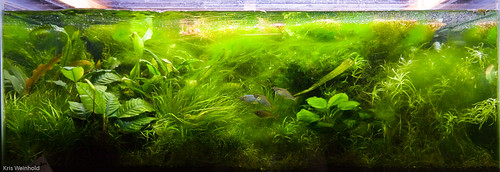
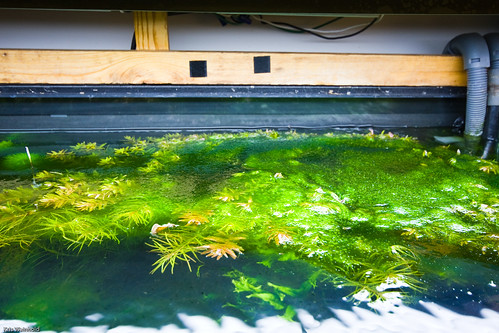
Algae Filled 40G

Apparently, it was a bad decision for my to hang some house plants above my tank. At the time, I figured that they would help with high humidity levels, and add a nice accent to the room. Well, what I didn’t realize is that the hanging baskets leaked. I instructed my “tank watcher” to water the plants while I was away in Nova Scotia. Well, apparently, much of that water dripped through the fertilizer laden pots, and straight into my 40G tank.

Algae on the surface

Multiply that by 2 weeks worth of time, lots of light and additional dosing, and I came home to algae soup. I literally filled a quart container with just algae. I did a huge water change, and am still pulling quite a bit of algae from the tank. I’ll probably end up just tearing the whole thing down, and redoing it. It’s time for a new aquascape anyways! At least the fish don’t seem to be affected by the algae bloom.

Business Broker

Kejimkujik: Seaside Adjunct National Park

June 20th, 2008

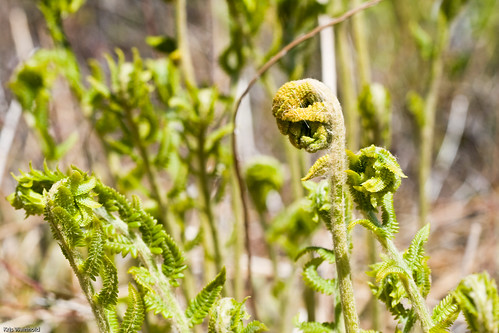
Kejimkujik Seaside Adjunct National Park has one of the most diverse landscapes I’ve ever seen on a 2-3 hour trail. You start out the trail loop in low brush with carnivorous plants mixed in among the bushes. Also among the bushes are “fiddleheads.” which are an edible native fern.

Fiddleheads

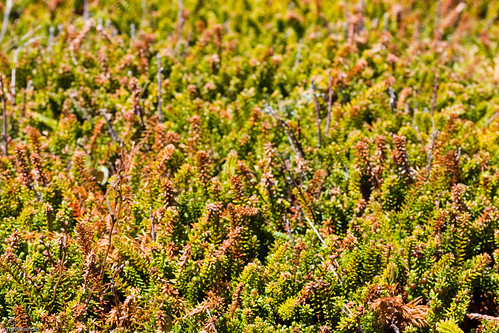
Unfortunately, I never had the opportunity to try any, but I understand some local restaurants do serve them as apetizers. As you wind your way toward the sea, the brush turns into the low lying ground cover you see below.

Keji Seaside Adjunct Brush

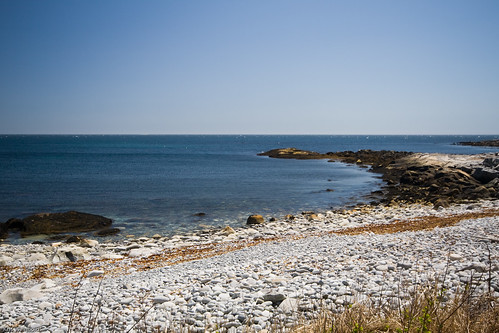
Eventually, the ground cover gives way to huge piles of “river rocks” that had been turned over by the sea for years, and deposited in piles along the beach. It’s actually quite difficult to walk on these rocks, and every step you imagine your foot slipping and ankle turning over. Also, with every step you see little black spiders (or maybe crabs) scurry into the rocks out of view.

Keji Seaside Adjunct

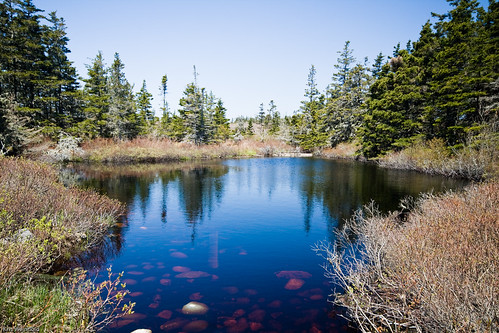
After walking along the beach for some time, you eventually come across one of the barrier lakes of trapped sea water, forming the marsh below. Bushes surround the water, and pine trees surround those.

Keji Seaside Adjunct

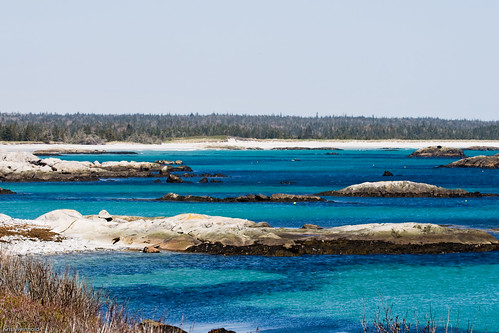
Continuing threw the trees and brush, you eventually hit the sea again, but this coastline looks entirely different from the last. The water is interspersed turquoise and navy, and the beaches are a fine white sand. It looks like you could be in the Caribbean, but I assure you the water is not Caribbean in temperature!

Keji Seaside Adjunct

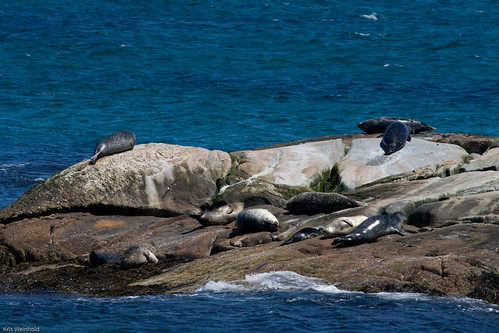
As if the landscape isn’t interesting enough, seals are just offshore, lounging on the rocks. From shore, you can hearing them grunting and calling for each other. On land, they don’t move very gracefully, shimmying their way around.

Seals at Keji Seaside Adjunct

But in the water, they dart around with precision. According to an information board, two types of seals are present in the park; harbor seals and gray seals. From memory, I believe the harbor seals are rarer, black, and a bit larger.

Seals at Keji Seaside Adjunct

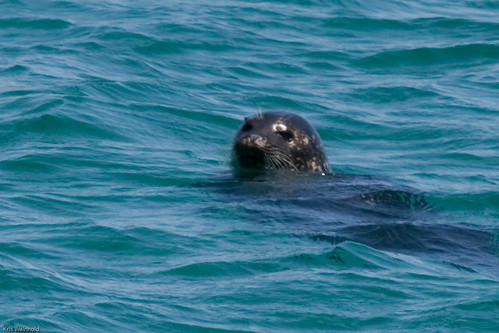
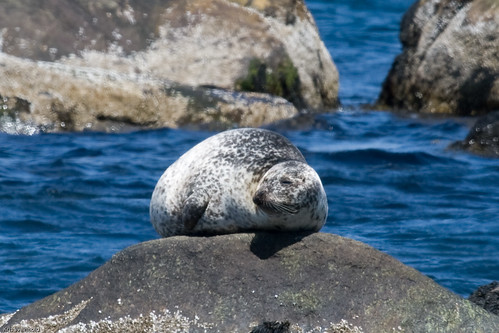
The gray seals are grey with black markings on their body and are more commonly seen. This seal below is a grey seal. Their faces really do look like dogs, but I understand that they can be quite mean. It was also interesting to hear some local politics about seals. Under environmental protection, seal hunting is a big no-no, and thus their numbers have increased. Apparently, so much so, that the seals have impacted fisherman by following their boats, and disrupting their fishing activities. We heard some local fisherman complaining that nothing will ever be done about the seals because they’re cute and have won the hearts of environmentalists.

Seals at Keji Seaside Adjunct

I don’t know enough about the situation to have an opinion about the politics, but I do agree — they’re cute! We continued back along the trail loop, and found ourselves back among carnivorous plants and brush. I highly recommend this park.

Business Broker

« Previous Entries   Next Entries »