Pond and Garden Update

June 17th, 2008
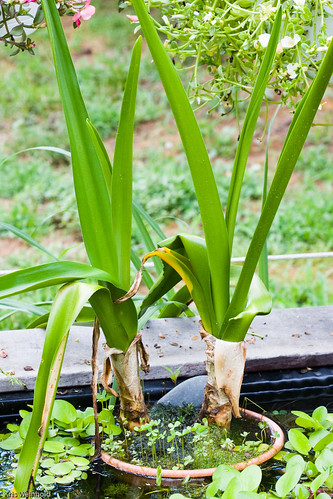
CrinumI haven’t officially planted my raised brick pond yet, but somehow I’ve managed to just about completely fill it up. About a month ago, I tossed out a whole bin of clippings from my aquariums into the pond to stay damp until I could get around to planting them. Well, with the exception of the crinum pot, I never got around to planting anything. Instead, a number of stems have started growing up out of the water, anchored by the frogbite roots, which are getting thicker every day.

So far, the most prolific stem plants are Ludwigia arculata x repens, Limnophila aquatica, and Rotala sp. ‘Nanjenshan.’ Otherwise, some Didiplis diandra is still around as well.

I’ve only partially stocked the pond with a few Endlers thus far. I’m hoping to put out the rest of my Endlers before long. To this point, I have just enough to discourage mosquitoes from taking residence in the water. The frogs still haven’t managed to find the pond yet — something I hope happens soon because I love taking pictures of those guys.
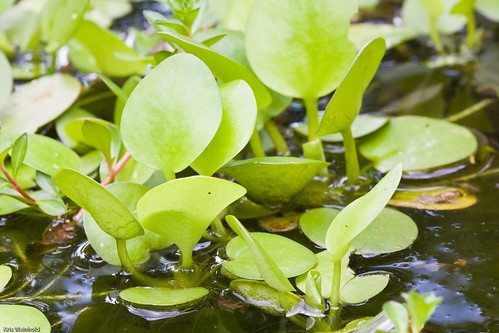
Frogbite

The frogbite is starting to send its leaves up out of the water. I have some water lettuce floating in the pond as well, but only a few small pieces. I’m hoping to have more of that this year than frogbite, just for a change of pace from last year.
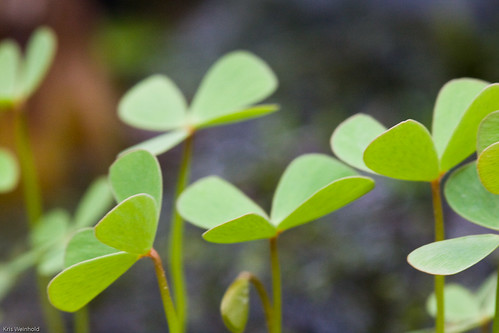
Marsilea quadrifolia

One of the interesting things that I have going this year is Marsilea quadrifolia growing emersed in the same pot as my crinum. What’s interesting is how delicate the four-leaf-clovers are right now. I have a pot of this same plant growing immersed inside, but the leaves are much darker, thicker, and waxier. Outside, it doesn’t look much different than the clover you seen growing in your lawn.
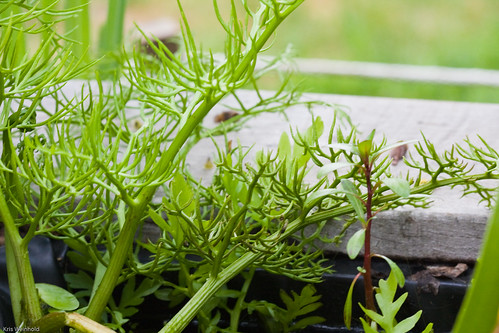
Water sprite

Another change from last year is some water sprite that I threw in there. Within a week, it was already growing up out of the water, despite not being planted in any container. I wasn’t planning on growing water sprite, but the price was right at one of the club auctions, so I decided to give it a try.
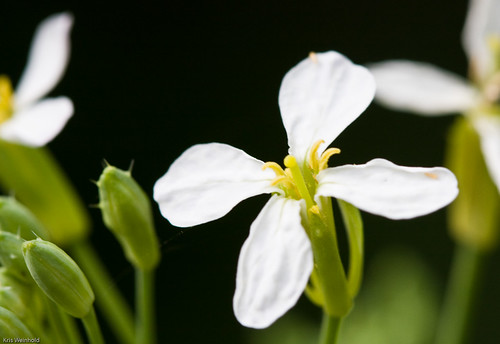
Radish Flower

Otherwise in the garden, flowers are starting to bloom. White icicle radishes just produced flowers this week. I’ve never grown root vegetables before, so hopefully it’s not a problem to let them flower. Any expert root-vegetable gardeners out there? The radishes themselves don’t seem big enough to pick yet. (I pulled a couple already in anticipation.)
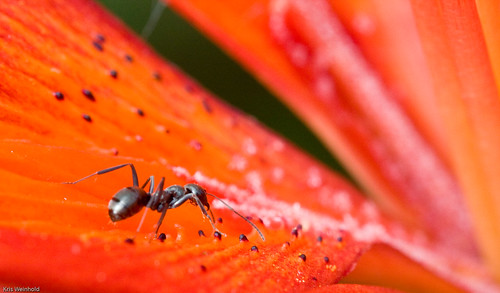
Ant Lily Marching

Also, the lilies are in full bloom and a beautiful bright orange! I love this picture above of an ant traveling down one of the flower petals toward the center of the flower.
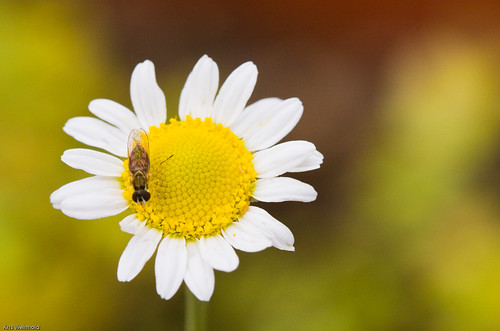
Bee on Chamomile Flower

My chamomile pot overwintered last year, and has quite a few flowers right now. I think I’ll actually have enough to harvest for tea this season. The bees seem quite drawn to these flowers.

Bella

And of course, whenever I’m out in the garden, Bella, one of our dogs who is obsessed with everything outdoors is always by my side.
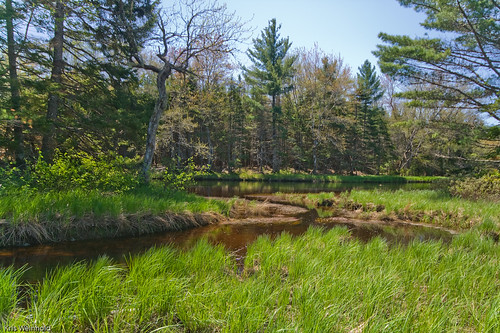
Business Broker

Kejimkujik National Park

June 17th, 2008

Kejimkujik National Park, or Keji, is the only inland national park in the Canadian Maritimes. Leftover from glacier activity, a large lake was cut out of the landscape, with surrounding rivers and marshes flowing into it. The water here is quite acidic because most of the surrounding rock is inert, exuding very little mineral content into the water. This produces beautiful, dark (almost black in some places) water through many of the waterways.

Marsh at Kejimkujik National Park

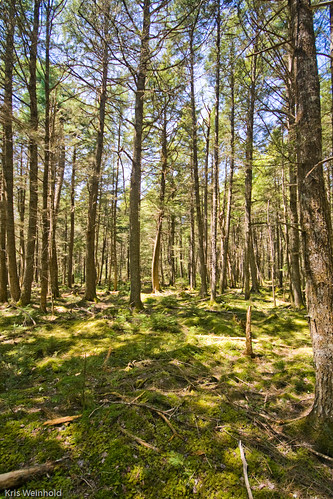
The park is also home to much forest, including a stand of 300 year old Hemlocks, untouched by early logging operations. The Hemlocks are magnificient trees, which largely create their own habitat by shading out the forest below, preventing little else from growing except for mosses, ferns, lichens, and of course, more Hemlock trees.

Hemlocks

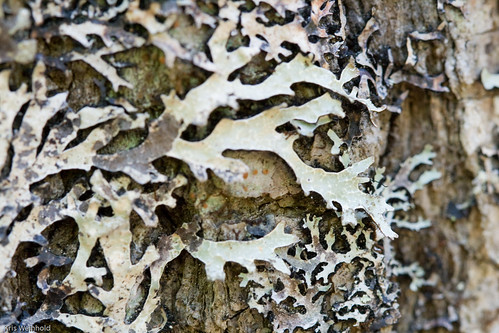
We noted a very percular pattern in this area where very few of the Hemlock trees had any mosses on them, but they did contain plenty of lichens. Oddly, if a rare maple stood a few feet away, it would be covered in moss, as was the ground.

Lichens

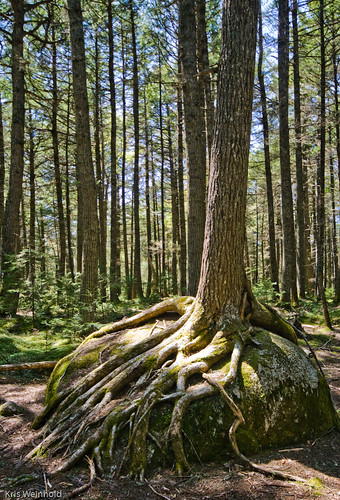
The trees themselves would grow out of anything we could attach themselves to, with this tree (below) being a prime example of this feat. Unfortunately, this particular tree is in danger of falling due to too many tourists climbing on it’s roots.

Hemlock

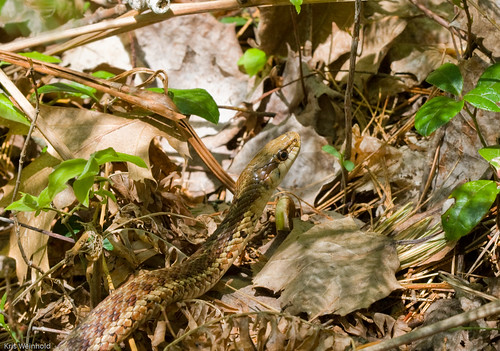
Of course, Keji is full of wildlife. I managed to startle both myself and this snake sunning itself in the path. We saw frogs, trout, squirrels, and plenty of birds during our visit. Moose and black bear are supposed to be there too, but we didn’t happen upon any.

Snake

Business Broker

Cape Split Trail, Nova Scotia

June 15th, 2008

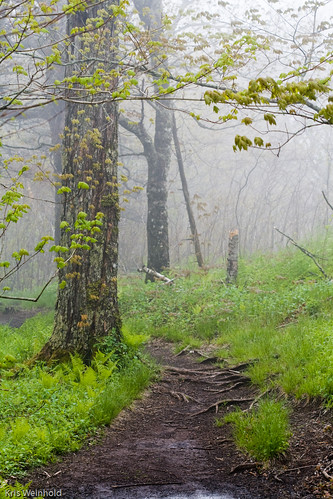
One of the best hiking trails in Nova Scotia outside of Cape Breton Island is a 16km trails called the Cape Split trail. This 4-5 hour hike takes you through a beautiful forest ending at a tremendous overlook into the Bay of Fundy, where you can witness one of the most amazing tidal bores in the world.

Cape Split Trail, Nova Scotia

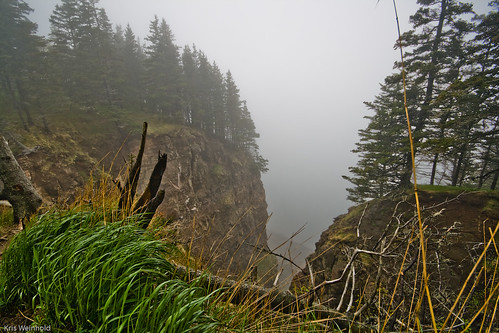
Unfortunately for us, we went on a rainy, misty day, so the end of our hike wasn’t nearly as impressive as the hike itself. You can just barely make out the water in the picture below due to the mist being so heavy. Even so, it was quite the feeling standing up on these tall cliffs without any railing or barrier keeping you from falling down below. (I don’t care for heights if you couldn’t tell.)

Cape Split Trail, Nova Scotia

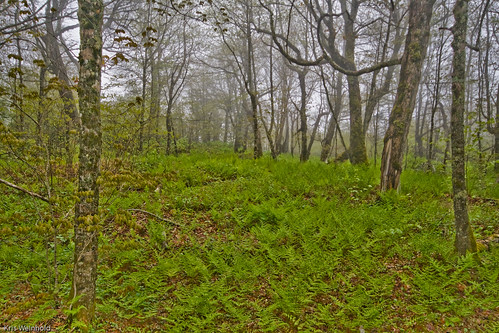
The trail itself takes you through a beautiful forest, where most of the forest floor is covered with ferns. Fields of ferns fill in any openings between the trees, and lichens and mosses find their home on the trees themselves.

Cape Split Trail, Nova Scotia

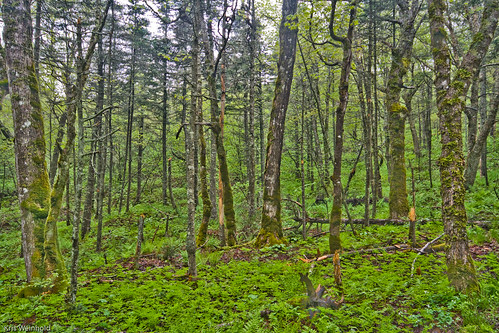
Hardwoods dominate much of this forest, even though pines are present in some areas. The air throughout the trail smells “forest fresh,” partly from the misty sea breeze, and partly from the smell of the forest itself.

Cape Split Trail, Nova Scotia

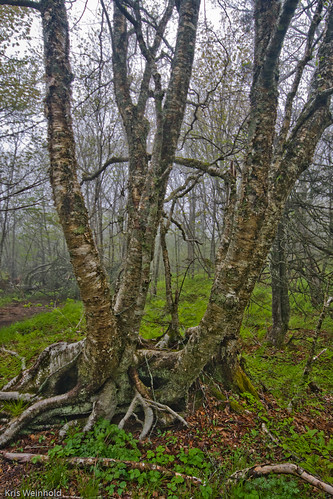
Many of the trees had very unique and tangled looking root systems, and looked like multiple trees were growing from the same trunk.

Cape Split Trail, Nova Scotia

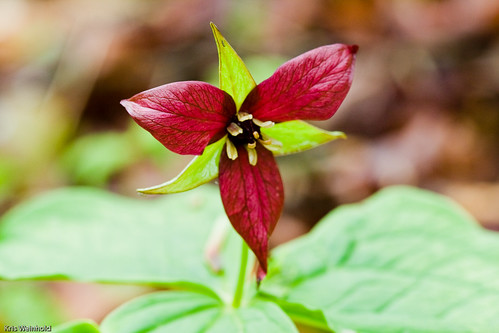
Along much of the trail, Purple Trillium, Trillium erectum, was flowering adding a little bit of color to the forest floor. This flower is not found west of Digby, nor has it been seen east of Pictou County, but it was quite abundant along the Cape Split trail.

Purple Trillium (Trillium erectum)

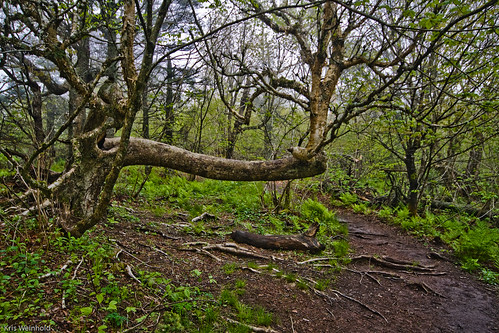
Finally, my favorite unique tree of the hike was this one below. It reminded me of the trees that Native Americans used to shape to serve as markers throughout their wooded territory.

Cape Split Trail, Nova Scotia

After 16km, we were quite hungry, so we packed up, and headed on to find some fresh Digby scallops!


Business Broker

CCA – June Meeting – Steve Edie

June 14th, 2008

Capital Cichlid AssociationToday was the Capital Cichlid Association’s last meeting for the summer. They take July and August off every year to give the board members a break, and to allow members to go on vacation without missing out on anything. In June, Steve Edie from the Missouri Aquarium Society and American Cichlid Association came to speak about Lake Tanganyikan Cichlids.

Not being very knowledgeable about African Lake cichlids, I was quite interested in attending Steve’s presentation. Lake Tanganyika is a huge rift lake the covers over 12,850 square miles, is nearly a mile deep in some places, and encompasses over 1200 miles of coastline. Since evaporation is the primary source of water leaving the lake, mineral content is incredibly high which causes a pH of 8.6-9.3 degrees and 12-14 degree GH. Despite these harsh conditions, over 500 species of fish inhabit the lake, half of them being cichlids. Steve discussed a whole variety of the different types of cichlids found in the lake, but I can’t possibly reproduce all of that information here.

To keep these fish in your aquarium, Steve recommends a minimum tank size of 29G, with 55G being a more appropriate starting point. For substrate, he suggests any calcium based material such as dolomite, crushed coral, and/or sand. Rocks are essential, but leave out the driftwood because the wood’s tannins will lower the pH of the water. Not many plants will survive in this environment, but anubias, java fern, val, and even an amazon sword may survive. Steve doesn’t add any buffers/salt to his water unless he is importing a wild specimen that isn’t used to standard tap water.  He mentions that most of the cichlids are carnivorous or at least omnivorous in this lake, so be sure to feed your fish food with a high protein content.

I don’t know when I’ll actually get around to keeping any Lake Tanganyikan cichlids, but after hearing Steve’s presentation, I’m inspired to try them eventually.

Business Broker

Nova Scotia Birds

June 12th, 2008

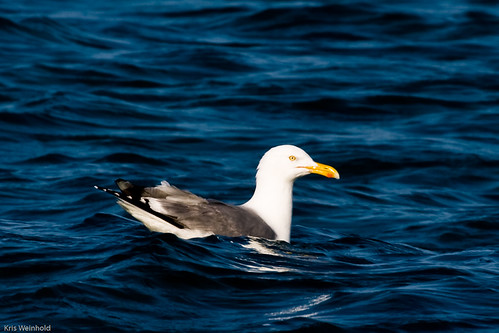
Being a maritime province, Nova Scotia is home to quite a few seabirds that sustain themselves, like the people, largely from the surrounding sea. There are many rare birds that migrate to the area, but then of course they also have the common seagull. Whether on land.

Seagull

On sea.

Seagull

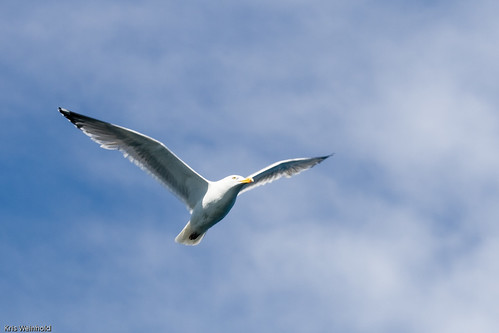
Or in flight, the seagulls are almost always nearby. Being used to people, they have learned to follow fishing boats to capitalize on the fish that they bring up. While we were on a whale watching tour, we had a permanent group of seagulls following us around because the same boat also does a daily deep sea fishing expedition.

Seagull

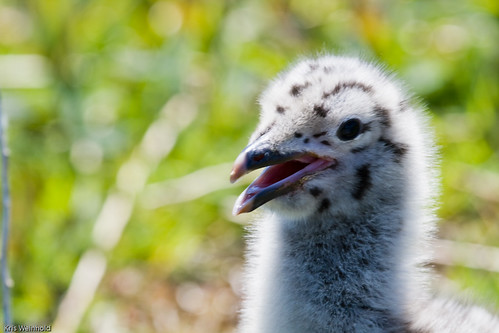
Despite being kind of nasty and obnoxious adults, the baby seagulls are adorable. With their fluffy down, they’re as soft as can be. Watch out handling them, however, as pooping is their first defense!

Baby Seagull

We had the wonderful fortune of getting in contact with a birder who cares for a series of small islands off of the coast of Pubnico that houses a small colony of rare rosette terns. He graciously took us out on his boat to get a glimpse of some of these islands, and the birds surrounding them.

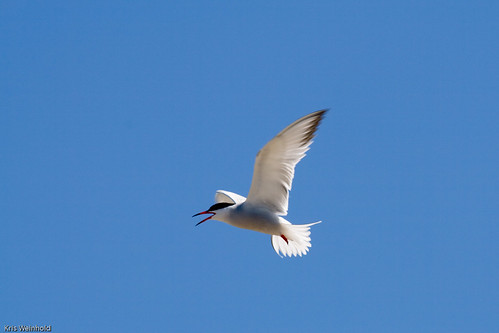
Tern

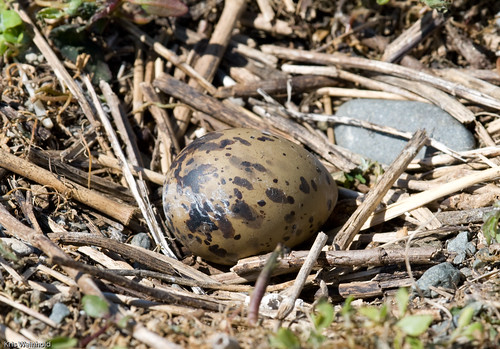
We didn’t see many of the rosette terns, and the ones we did were too fast for my camera, but this is a more common tern (above) in flight. We counted several eggs on the island, and took note of any that had been preyed upon by crows, owls, or voles.

Tern Egg

We also found a number of Common Eider eggs, in downy feather nests. The feathers kept the eggs at an incredibly warm temperature. Our caretaker covered these eggs up to help avoid them from being easy pickings for the afore mentioned predators.

Eider Eggs

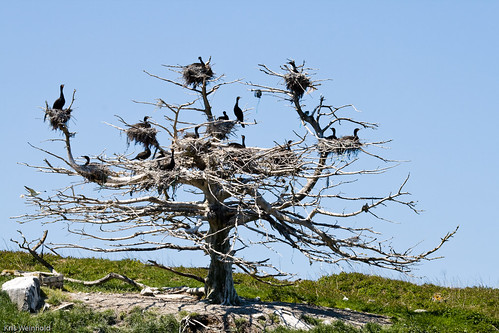
One of the more distinct looking birds we saw was the Cormorant, which nests in colonies along cliffs or in trees as shown below. They actually end up killing a lot of the trees because their excrement is so potent.

Cormorants Nesting

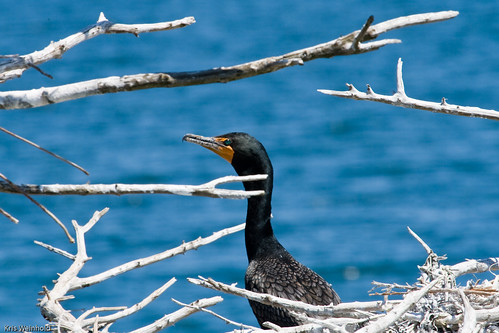
As you get closer to the tree the birds inevitably fly away, but I was able to get this shot of one before they did so. They’re actually quite pretty!

Cormorant

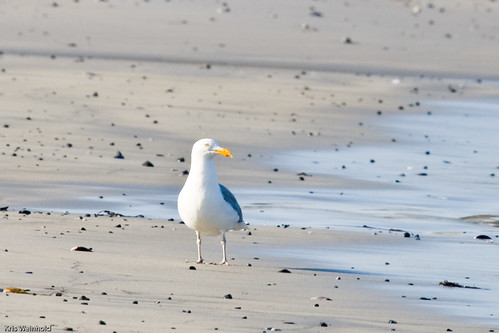
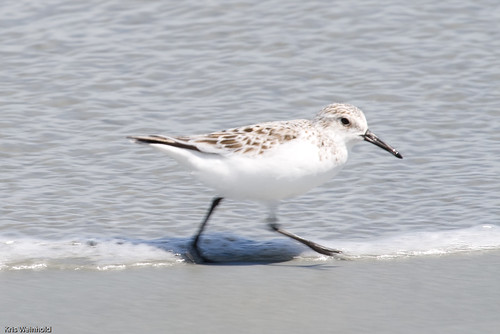
And of course, we saw plenty of other birds like this guy who was scavenging the surf for small crustaceans. We had a fun time following this bird, trying to photograph him, as he constantly scurried away from us whenever we got within 20 feet.

Bird

We saw countless other birds other than what I’ve shown below, but I hope you’ve enjoyed the few pictures that I’ve posted up here. Not being a knowledgeable birder myself, I’m sure I saw a ton of species that were lost on me, but I can confidently recommend Nova Scotia to anyone looking for some quality bird watching.

Business Broker

« Previous Entries   Next Entries »