Eleocharis sp. ‘Japan’

April 15th, 2008

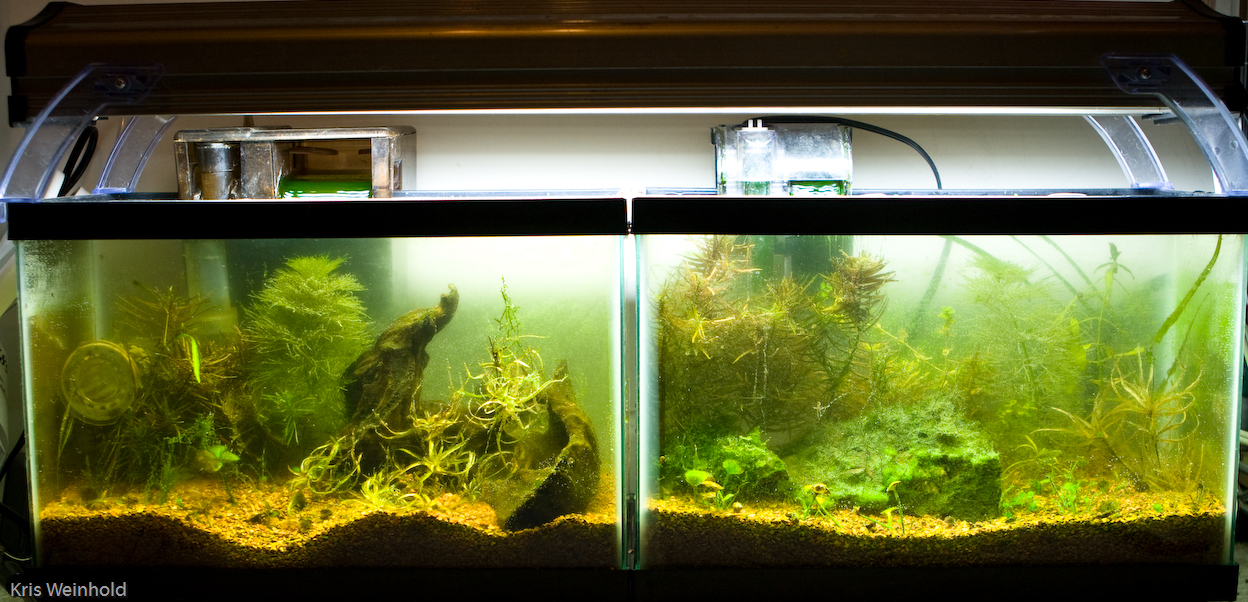
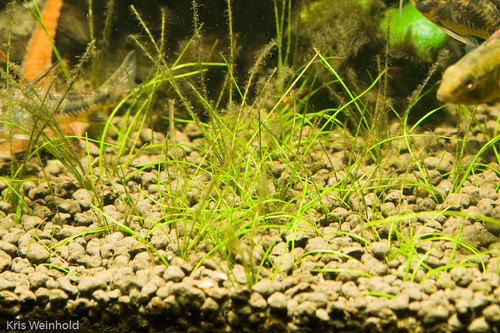
I have recently replanted the foreground of my 75G aquarium with a new dwarf hairgrass that I came across called Eleocharis sp. ‘Japan.’ I ordered four pots of this plant in a GWAPA group order, and noticed that it looked just like any other hairgrass when it arrived. The reason for this is that the potted plants were grown emersed, and didn’t exhibit the unique behavior that is present in the submersed form.

Eleocharis sp. 'Japan'

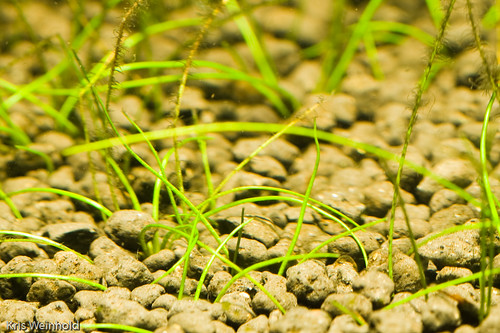
Submersed, Eleocharis sp. ‘Japan’ curls downward toward the substrate, creating an effect not present with regular hairgrass. You can see in the picture below how all of the new submersed growth is doing exactly that. Otherwise, this plant grows just as you would expect; it spreads by runners throughout the substrate. It took a little while to get going after I first planted it, but it is now finally starting to take off. I’m hoping that it will cover the entire foreground in another month or two.

Eleocharis sp. 'Japan'

I will post an update once it has filled in, but I’m expecting this to be a very nice, and unique, addition to my 75G aquascape.


Business Broker

CCA – Dan Woodland – April 2008

April 13th, 2008

Capital Cichlid AssociationApril’s CCA meeting featured Dan Woodland from the Ohio Cichlid Association, speaking about his experience setting up a Low Cost, High Tech Fish Room. Dan also chronicled many of his fish collecting experiences all over the world, and gave us a virtual tour (via powerpoint) of his fish room, introducing many of the species he keeps.

Like many hobbyists, Dan started his “fish room” in an adhoc nature, adding equipment as needed, and eventually ending up with an unwieldy set of tanks, wires, lights, etc… When he decided to add an addition to his house, he instantly had an empty basement room to build his fish room. With the luxury of building a brand new fish room from scratch, Dan made sure that the cinder block walls were fully sealed, drains were pre-planned, electricity sources were adequate, and the water supply was sufficient.

With the basic room intact, everything from filtration to climate control needed to be sorted out. Being an avid collector, Dan decided to isolate every tank using a dedicated canister filter, in order to avoid introducing a wild disease into his entire system. The room is heated to about 74 degrees, which has the effect of keeping the tanks a bit cooler, but the benefits of that are that the fish grow slower, requiring less food, and more importantly, the fish room is pleasant to work in.

His water supply was setup to automatically condition and change out the water, doing small water changes twice daily. Using an ion exchanger, Dan removes heavy metals from his water, and an RO filter produces soft water for some tanks, while extruding harder waste water which he uses for his African cichlid tanks. A mechanical thermostatic mixing valve mixes his hot and cold water lines, producing water that is the proper 72-78 degrees for his tanks. To feed water into the tanks, he uses pressure compensating drippers used in irrigation to guarantee a constant GPH output, regardless of the input water pressure. This means that for each tank, he can directly control how much water is changed each day, dependent on the size of the tank.
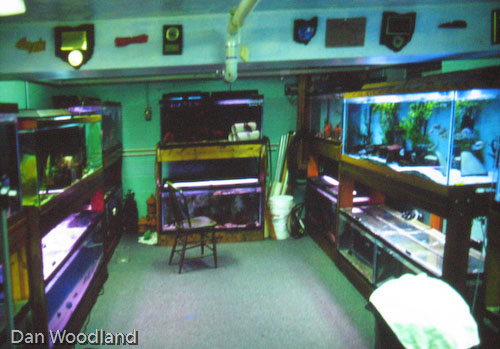
Don's finished fish room

While the title of this talk included the “low cost” slogan, I believe that is probably relative to other more elaborate fish rooms that some hobbyists have. Although, Dan did not give a final cost, he did say that his entire fish room was built using proceeds from selling fish he had raised. I presume that the cost of his home additions was not included in this amount, however. Nevertheless, it was fascinating to see how other folks manage to maintain large numbers of tanks, and what effort goes into setting that up.
Business Broker

Wormstrate/Soil – 4 Weeks

April 10th, 2008

About a month ago, I setup two side-by-side 2.5G tanks with the purpose of comparing  substrates based on mineralized top soil and worm castings.  After about a month, I must say that I’m a bit disappointed. I was hoping that at least one of the tanks would have taken off, but thus far they’re both kind of sad looking.

Wormstrate/Soil Experiment

I’m unsure whether this has more to do with inconsistencies on my behalf, or whether or not there’s something with the substrates themselves. On the left, the soil tank has the best growth in Limnophila aquatica, but the wormstrate tank has better growth from the Didiplis diandre. Both tanks are experiencing algae on the glass, probably due to a lack of water changes, and inconsistent dosing of Seachem Excel for a carbon source. The Eriocaulicae sp. ‘Type 2’ seems to be melting away in both tanks, which may indicate that it is not a heavy root feeding plant.

I’m going to keep the experiment going for a few more months. I know that both methods are proven methods, so I just need to be a bit more consistent with this experiment, and see if that makes any difference. I also added some extra cherry shrimp to the tanks, and so far they’ve survived — a good sign! More updates next month.

Business Broker

Lagenandra meeboldii sp. ‘pink’

April 5th, 2008

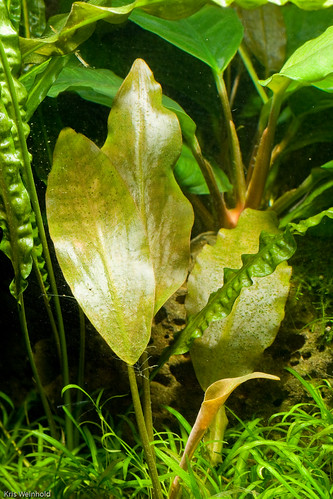
Lagenandra’s are often an overlooked plant that fits in very nicely in a cryptocoryne and anubias themed tank. I think of them like a cross between the two infact as they have a root system and rhizome like a crypt, but the leaf shape of an anubias. Lagenandra meeboldii sp. ‘pink’ is a beautiful bronze colored plant that supposedly will get to 12-14″ tall, but so for me, it’s stayed between 6-8″.

Lagenandra meeboldii sp. 'pink'

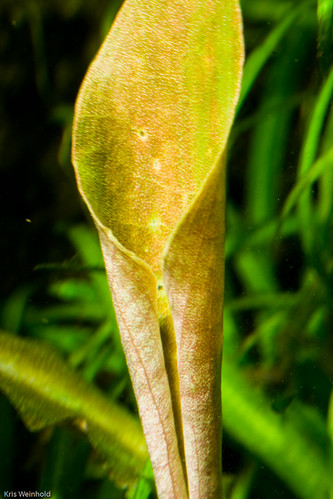
Initially, the plant grew pretty slowly, but I think it just takes a little while for the root system to get established. The leaves can melt, just like crypts, when being introduced to a new tank. Just leave them alone for a little bit, and eventually new leaves will fill in. The leaves themselves unfold from inside out, like the picture below, before forming the flat adult leaves.

Lagenandra meeboldii sp. 'pink'

I believe this plant is still quite rare in the hobby, but if you have the opportunity to grow Lagenandra meeboldii sp. ‘pink’ , or any Lagenandra, be sure to try it out.

Business Broker

Sprouting Seeds

April 3rd, 2008

It’s almost one of my favorite times of the year — gardening time. Yes, of course, I garden aquatically all year round, but seldom am I able to actually serve any of my aquatic plants to guests for dinner. Each year, our backyard garden has grown a little bit, stealing grass from our dog’s domain.

Seeds Sprouting

It’s kind of how many aquarists (myself included) start with one tank, and soon have so many fish and plants packed into one, that they decide to expand to 2 tanks, and before they know it, they’ve got aquariums spread throughout the house.

Seeds Sprouting

For our garden seeds this year, we came across a wonderful non-profit organization called the Seed Savers Exchange. Their mission is to promote the use of heirloom varieties of vegetables in gardens so that these plants are not lost to the myopic selection of seeds that agribusiness generally makes available in big box stores. I believe this fuels the gardener’s version of collectoritis as they offer purple carrots, yellow tomatoes, tons of potatoes, native american vegetables, and on and on.

Seeds Sprouting

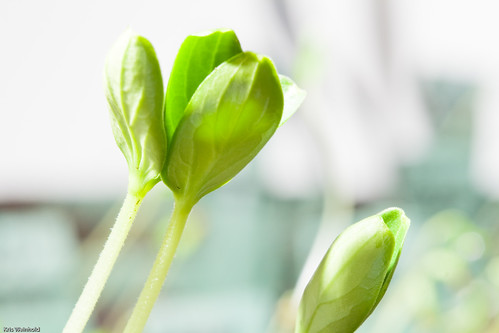
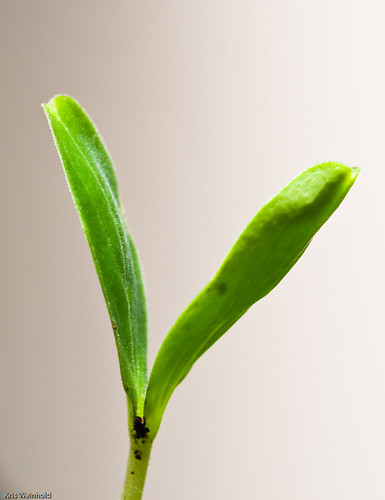
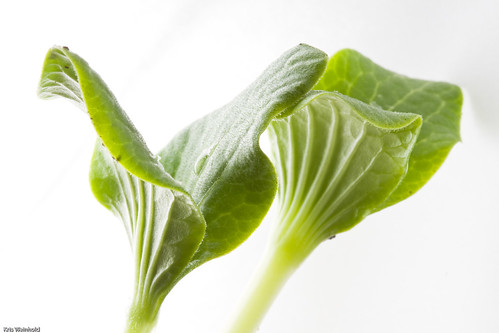
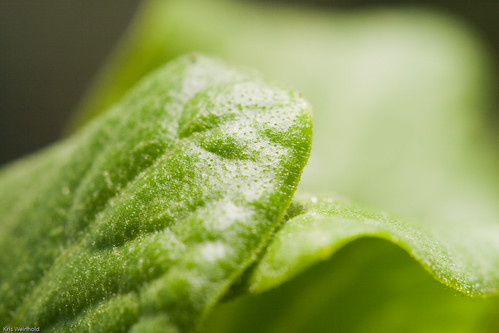
A few days ago, we planted the seeds in a seed-starting dome, and today I noticed that a number of seeds have sprouted into little plants. The various squash varieties have been the most prolific, but our tomatoes and cucumbers are also on their way. Only the various varieties of peppers we planted have yet to break the surface, but that’s to be expected.

Seeds Sprouting

I’m a bit new to starting plants from seed as most of our windowsills are too small for flats, and our dogs and cats are too nosy for other areas. This flat is sitting next to one of my aquariums with a strip light over top. I hope it’s enough light. I can’t wait until it’ll be warm enough (about a month) to transplant these guys. Is anyone else suffering from garden fever?

Business Broker

« Previous Entries   Next Entries »