Red Lizard Catfish

September 20th, 2007

The Red Lizard Catfish, or Hemiloricaria sp. ‘Red’ (L10a), is my new favorite catfish. It’s a whiptail catfish, but stays much smaller than your typical whiptail. This fish tops out around 4 inches in length, making them a wonderful catfish for all but the smallest of tanks. I bought three of these fish last fall at the Catfish Convention from a vendor out of Erie, PA.

Red Lizard Catfish

Native to the Rio Tocantins in Brazil, I thought that these fish would fit in nicely with my Apistogramma cacatuoides. They’re very active fish, constantly scurrying along the rocks, glass, and substrate looking for something to eat. They’re not aggressive at all, and the cichlids don’t seem to bother them, even when the cichlids are spawning. I’m really hoping that some vendors at AquaFest 2007 will have more of these so that I can stock several more in my tanks. I haven’t tried breeding them yet, but it has been done, so if I do get more, I may dedicate a small tank to that purpose.

Red Lizard Catfish


Business Broker

Apistogramma cacatuoides

September 19th, 2007

I’ve kept Apistogramma cacatuoides for some time now in my 75G tank. I started with a trio of the ‘triple red’ color morph. After a few successful spawns, my brilliant male died of seemingly unknown causes. My local fish store had just gotten in wild A. cacatuoides so I decided to try one with my ‘triple red’ females. Before long they spawned, and I now have a small breeding colony of at least 12-15 fish in my 75G community tank.

Apistogramma cacatuoides male

It’s really been fascinating to watch how the triple-red coloration has mixed with the wild male’s drab color. Some of the males, like the one above, only retain a tiny bit of orange on their dorsal fin. Others, have darker bodies, with more pronounced color in their dorsals. (below)

Apistogramma cacatuoides male
Then, some of them have orange blotches on their tail fins. It’s quite possible that this one below is actually a female, but you can see the coloration nevertheless.

Apistogramma cacatuoides male

The black and orange checkerboard pattern is starting to show up on this male’s tail fin, and there’s more orange on the dorsal fin, with slightly more color on the bottommost fins.

Apistogramma cacatuoides

Finally, I also have 1-2 nice specimens where the tail and dorsal fins are totally checkered with orange and black. This fish very much approximates the original male that I started with.

Apistogramma cacatuoides male

The females themselves are not ugly fish, but are very similar to other female apistogramma. I’m fortunate to constantly enjoy the breeding coloration of at least one pair of fish at any given time. I’m amazed by the small crevices these females fit themselves into in the rocks. They’ve located hollow areas in rocks that I never knew had hollow areas.

Apistogramma cacatuoides female

I’ve also found that these are not shy fish. Unlike some other apistos that I’ve kept, they come right up to the tank when I approach, and usually stare me down until I feed them. They’re not terribly aggressive fish, even when breeding. They’ll definitely try to defend their territory, but most of the time, I see 5-6 hanging around the same area. I’ve always liked dwarf cichlids because they give you the ability to keep colonies of a single species in a modest-sized aquarium. The behavior patterns definitely change in this situation, and that’s interesting to note.

Apistogramma cacatuoides female

If you haven’t kept cichlids before, Apistogramma cacatuoides is an excellent beginner cichlid. They’re easily obtained from most fish stores, will readily breed in most water, and exhibit all of the same behaviors that people love from cichlids.

Business Broker

Patapsco Valley State Park

September 18th, 2007

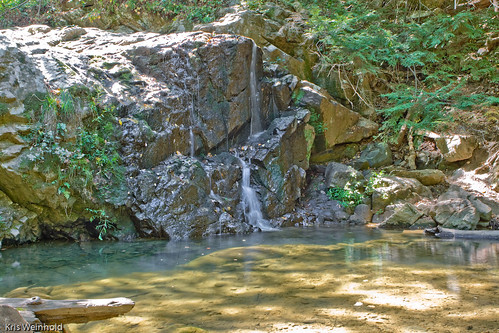
This weekend, my wife and I took a short hike through a very small section of Patapsco Valley State Park in Elkridge, Maryland. I had seen a few pictures on Flickr showing a beautiful cascading waterfall off of one of their trails. We decided to go and try to get some pictures of our own. Unfortunately, the low water levels created a much less impressive waterfall, but we still had a great, relaxing, time visiting the park.
Patapsco Valley State Park Waterfall

We were happy to find a number of smaller waterfalls up and down the area from the main falls. In many ways, I found the smaller waterfalls more interesting than the main one. One thing I did notice is that the pools underneath the waterfalls contained very little wildlife besides some common water bugs.
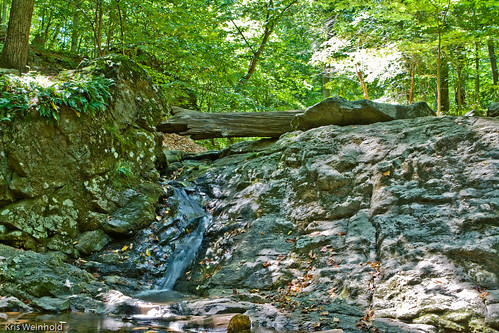
Patapsco Valley State Park Waterfall

Upstream, however, was a different case. In areas with more vegetation on the banks, we spotted several large schools of fish, newts, and frogs hopping from the banks into the water on our arrival.
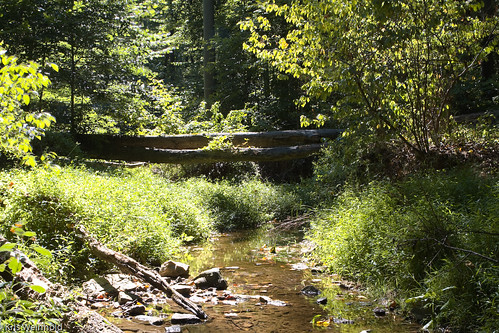
Patapsco Valley State Park Stream

The creek itself was quite barren of plant life, containing only a rocky/sandy substrate. The small fish, which I believe could be blacknose dace, persistently tried to take cover in the shadows under rocks, but their shear numbers made that a laughable endeavor.
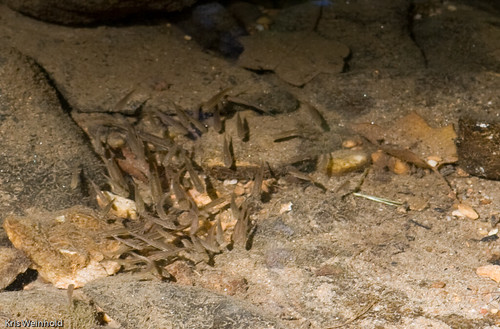
Patapsco Valley State Park Fish

Throughout the watershed, I spotted a large number of Polygonum-looking plants, but none of them submersed. I suspect this is due to the shady habitat of the forest, the fast-moving current in the streams, and the barren rocky substrate in the water.
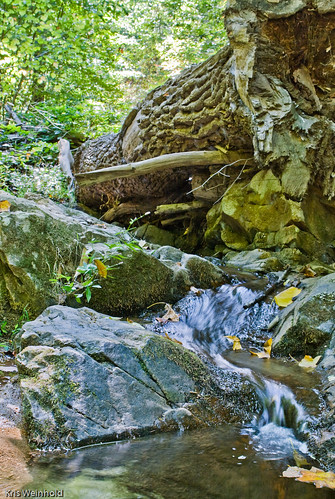
Patapsco Valley State Park Waterfall

The forest itself is quite beautiful, with huge moss-covered rocks providing the stronghold for trees to take root along the waterside. I was happy to see that the trails themselves were not littered with significant garbage or human impact, detracting from the natural setting.
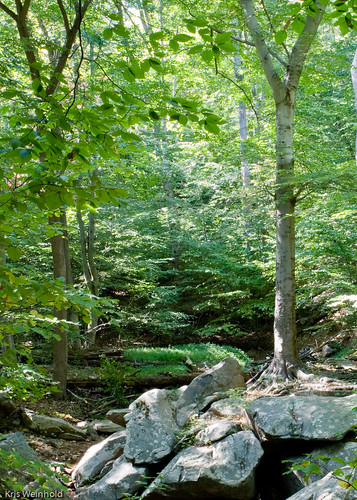
Patapsco Valley State Park Scene

Besides the already mentioned wildlife, we spotted several butterflies, spiders, and even some whitetail deer. One tree branch (below) was covered a cotton-like substance, that upon closer inspection turned out to be some sort of insect larvae/pupa. If anyone can identify these guys, I’d be grateful.
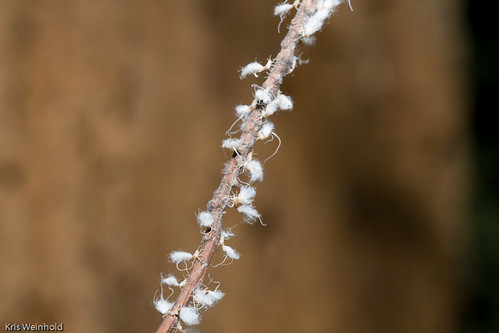
Some Sort of Larvae

Patapsco Valley State Park is a large area of land stuck right in the middle of overdeveloped areas of Baltimore and Howard counties. We really only experienced a very small section of the park. I’m sure we could spend an entire summer hiking through all of the trails without seeing everything there. I hope to do some more exploring of the trails, and most of all, hope to get some more waterfall pictures when the water levels are more impressive.
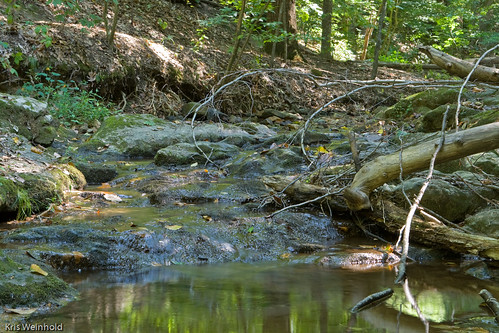
Patapsco Valley State Park Waterfall

Business Broker

Pogostemon yatabeanus Flowers!

September 16th, 2007

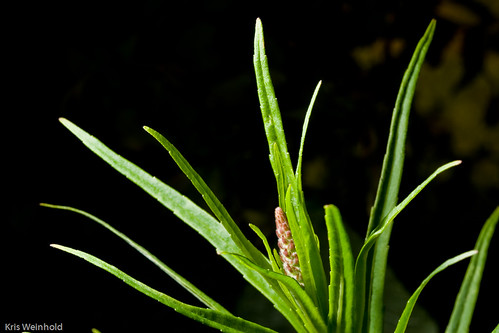
You may think that lately this has been a flower blog, but I guess it’s just that time of year because today, I noticed several stalks of the Pogostemon yatabeanus have produced flowers. I’ll admit that this is the plant I’ve most anticipated seeing flower because these stems were the first to eagerly shoot above the surface in emersed growth this past spring.

Pogostemon yatabeanus Flower

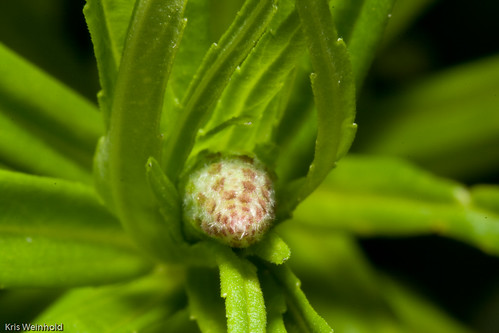
Each P. yatabeanus seems to produce a single flower, coming directly out of the top of the plant. The flower itself looks very much like that of an anubias flower, except that it has purple sections alternating throughout. I suspect that those purple sections will eventually become seeds.

Pogostemon yatabeanus Flower

Currently, the flowers are all still mostly hidden by surrounding leaves. I’ll be sure to post new pictures if it grows into anything more than a larger version of what’s in this post.

Pogostemon yatabeanus Flower

Business Broker

Phyllanthus fluitans Flower

September 14th, 2007

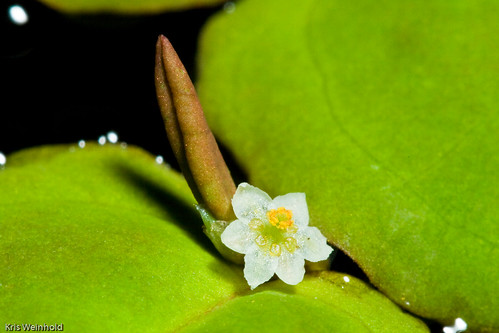
I’ve been keeping Phyllanthus fluitans since I obtained it from the 2004 AGA convention’s silent auction in Washington, DC. This has been the nitrate sucker in my 54G, giving gradually increasing shade to my anubias and crypts in that tank. I say “gradually increasing shade” because at every water change I compost all but a handful of the floating plant, and by the next water change two weeks later it’s usually covering the water surface.

Phyllanthus fluitans

Ever since I started mixing 10,000K and 6400K bulbs over that tank, the Phyllanthus fluitans has started flowering. I decided to pull out my Kenko 68mm extension tubes with my 100mm macro lense to try and get a good close-up shot. This flower is only 1-2mm across in diameter.

Phyllanthus fluitans


Business Broker

« Previous Entries   Next Entries »