2.5G – September Update

September 6th, 2007

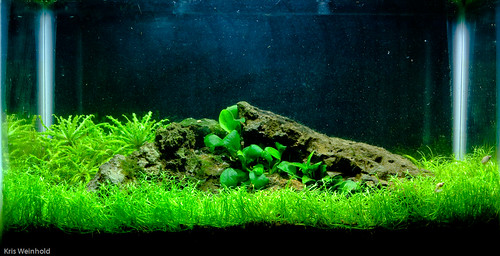
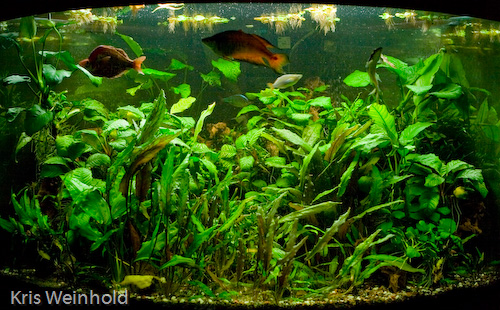
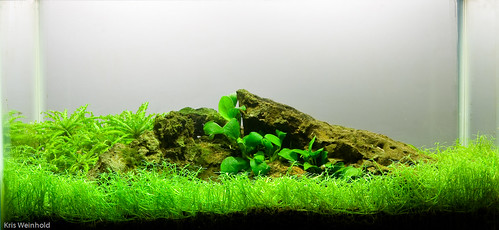
GWAPA is nearing the end of its 2.5G aquascaping contest with all entries due by October 1st. I’m cautiously pleased with how mine is progressing. I’ve added in some more anubias barteri var. ‘nana’ and anubias barteri var. ‘petite’ to the crevice between the rocks. I’ve been picking riccia fluitans from the crasula helmsii in the foreground. I’m not entirely sure how it got in there, but it seems to be doing well — too much so. You generally think that riccia is a bright green colored plant, but this crasula in the foreground puts it to shame; the riccia looks dark green in comparison. There’s also a little bit of fissidens sp. moss growing on a few of the rocks. Ideally, I’d like that to cover most of the rock’s surface, but unfortunately, I don’t think that’ll happen by October 1st.

2.5G - White Background

Since this is a photo contest, I’ve been experimenting with a couple different backgrounds for this tank. Here are two that I took a day apart, where the only difference is that one is a white background, and the other black. Comments welcome!

2.5G - 9/4/2007


Business Broker

Frogbit Flowers!

September 4th, 2007

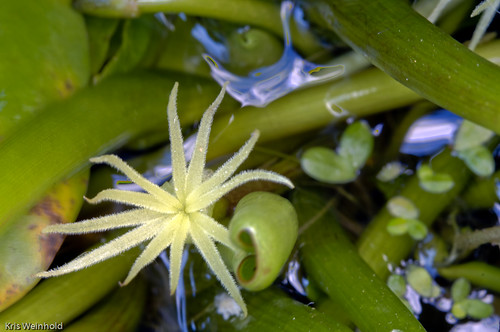
I’ve been wondering for some time whether my frogbit (Limnobium laevigatum) would flower in the pond, since it’s virtually taken over the entire pond surface, and even has leaves towering above some of the stem plants. This weekend, I was sitting down by the pond, and started thumbing through the thicket of leaves, looking for our resident frogs, and I started noticing quite a few of these pretty little yellowish hairy flowers just above the water’s surface. As I looked closer, I noticed them all throughout the pond.

Frogbit Flower (Limnobium laevigatum)
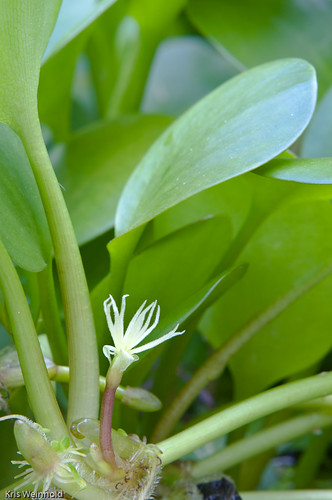
It appears that the frogbit has been flowering for some time under the cover of it’s own leaves, unbeknownst to me. As you can see, the flower itself extends on a short stalk, directly from each nod. The stalk itself is only about an inch tall, and flower not much bigger. I lifted this particular plant out of the water slightly to be able to get a better picture. I suppose the next step is to see if any seed pods develop. I haven’t seen any yet. Not that this plants needs any seeds; it’s prolific enough of a grower for my liking.

Frogbite Flower

Business Broker

Suitland Bog Trip

September 1st, 2007

While some folks may be preparing for Labor Day BBQ’s, eight members of GWAPA went on a ranger-guided tour of the Suitland bog in Suitland, MD. The ranger explained how it is an active job maintaining the bog to preserve many of the native species from being crowded out. Honeysuckle is a huge invasive problem for them, over-coming many of the native forest plants such as the Lady Slipper orchid or Spotted Wintergreen, a variegated creeping plant.
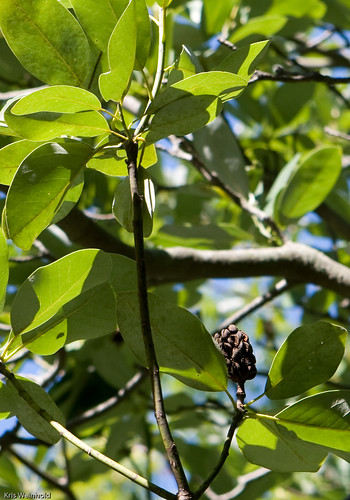
Magnolia

In the bog itself, magnolia trees are slowly starting to shade out some of the other native plants. The rangers work with volunteers to prevent too many magnolia and poison sumac trees from stealing light from the plants below. Even so, human development surrounding the bog is an ever-increasing issue that could impact the bog in the future, despite initial environmental studies that find little threat.
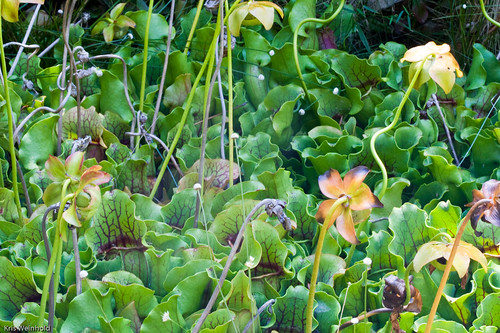
Pitcher Plants (Sarracenia purpurea)

With water sources for the bog being several hundred feet away, it’s not hard to see how someone putting down lime on their lawn, could eventually alter the pH of the bog water itself. If that happened, it would be a terrible shame, as the plants here are truly gorgeous.
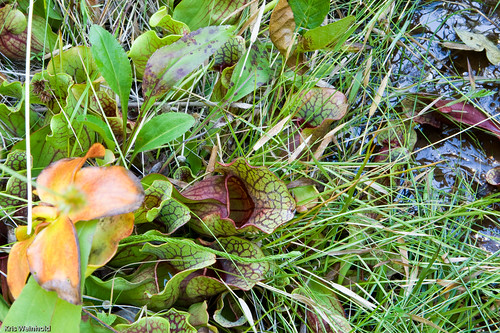
Pitcher Plants (Sarracenia purpurea)

The Northern Pitcher-Plants (Sarracenia purpurea) vary quite significantly from plant-to-plant, in terms of their purple veining, but as you can see, they’re all quite nice. The green and orange stalks rising above the plants are its’ flowers.
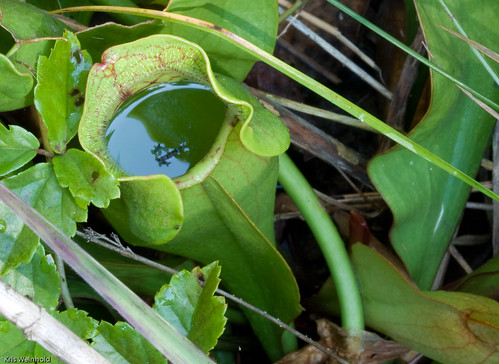
Pitcher Plant filled with water (Sarracenia purpurea)

The pitchers themselves were mostly filled with water due to recent rains. As you can see above, this particular pitcher has successfully lured in its prey. There are many different species of plants growing in amongst the pitcher plants. Various reeds, including Ten-Angled Pipewort (Eriocaulon decangulare), which is another rare Maryland native.
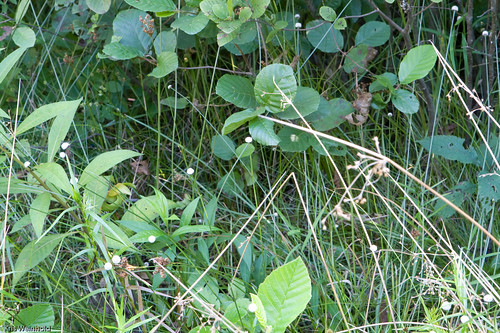
Eriocaulon decangulare

The seed nodules on this Eriocaulon’s flower are quite small, as you can see below. Since it flowers from July thru August, there were flower stalks to be found everywhere throughout the bog.
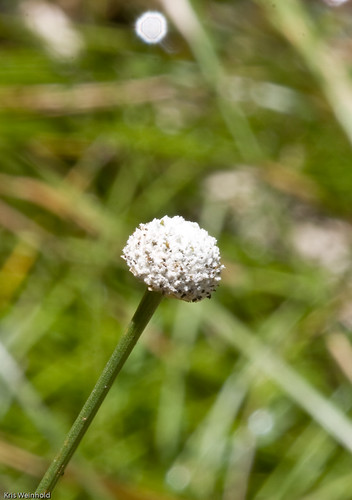
Eriocaulon decangulare flower

Another reed found in the bog is the Twisted Spikerush (Eleocharis tortilis), seen below. I suspect that this plant probably would grow in our aquariums, but would be much taller than the dwarf hairgrass we’re used to growing from the same genus. In any case, being a protected plant in Maryland, I suspect we’ll never get the change to try.
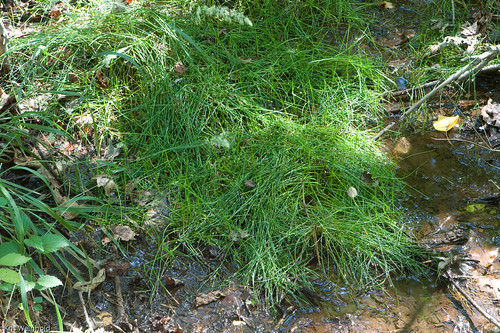
Twisted Spikerush - Eleocharis tortilis

The pitcher plants were not the only carnivorous plant in this particular bog. There was also the Spatulate-leaved Sundew (Drosera intermedia) shown below which is a small sundew plant that lures and traps small insects with sticky dew found on each hairy leaf. Unfortunately, the water source feeding the part of the bog that these are found is slowly declining, so the future of this particular plant here is uncertain. Another type of sundew, the Thread-leaved Sundew (Drosera filiformis) was reportedly here as well, but there have been no recent sightings of this species.
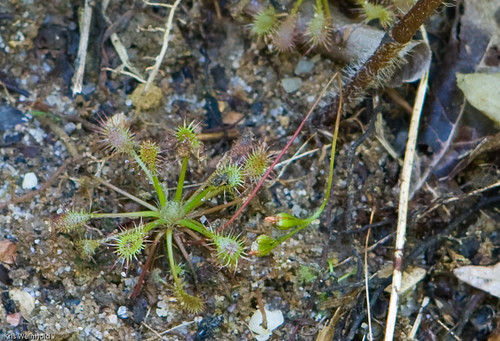
Spatulate-leaved Sundew (Drosera intermedia)

There are many other rare species of plants at the Suitland Bog. This Red Milkweed (Asclepias rubra) below is considered a very rare plant in Maryland. Nevertheless, it is a very beautiful plant that I hope endures. (Note: A commenter has mentioned that this picture below is not  Asclepias rubra. This plant is listed on the brochure for the bog, and was pointed out to us by our ranger. Perhaps I have the photo mixed up.)
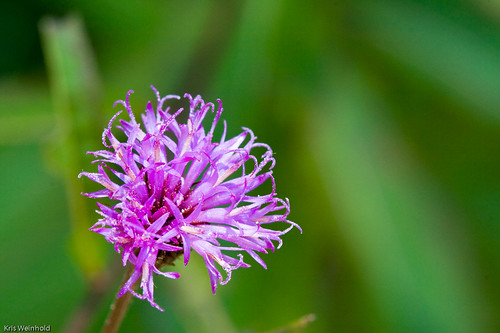
Red Milkweed Flower (Asclepias rubra)
Finally, the ranger mentioned a number of other bogs throughout Maryland. He mentioned another one in College Park that is on Pepco land, and has recently been mowed right over, probably non-intensionally by a maintenance worker. In this regard, it’s important for more citizens to know what precious things are growing right in their backyards, and to realize the impact they can have in protecting them by treating their own land with proper care. Most state’s natural resource departments are under-funded, but that doesn’t mean that they don’t have tremendous sites to visit and appreciate. Additionally, they are always looking for volunteers to help pull out invasive species, and perform general maintenance on their sites. I hope you’ve enjoyed my account of our Suitland Bog tour.
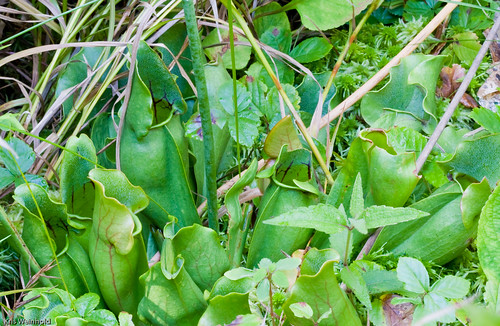
Pitcher Plants (Sarracenia purpurea)

Business Broker

Middle Patuxent River Scenes

August 31st, 2007

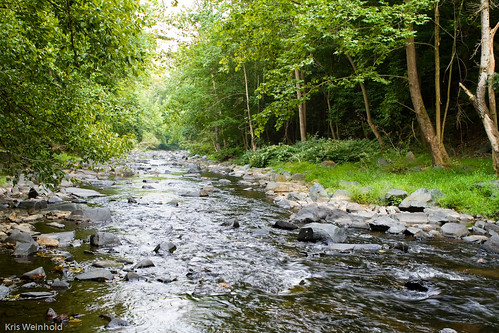
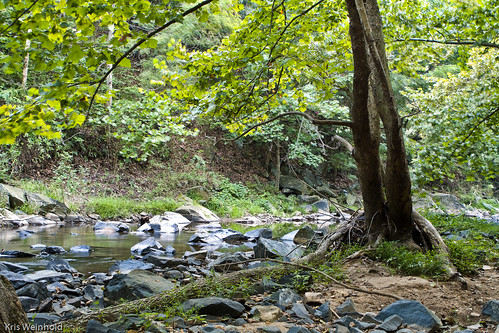
After work today, I decided to take the dogs on some trails near my house that follow along the Middle Patuxent River. I like these trails because they’re not paved, and once you get on them, you rarely see anyone else along the way. You can still hear some of the traffic from the major highways surrounding the area, but for the most part, you have the illusion that you’re lost in nature.

Middle Patuxent River

Today, I was fortunate to see 6-7 deer out on the trails. They didn’t stick around long enough for me to take their picture, but they are quite magnificent creatures, especially the males with their large antlers. I’m not sure what the true rating of cleanliness for this river is, but I’m often encouraged when I see several frogs, water bugs, and freshwater asiatic clams in the riverbed. Of course, the clams themselves are introduced, but that’s for someone else to worry about.

Middle Patuxent River

The aquatic vegetation is not very rich in this waterway. I suspect that is due to a combination of too much shade, and too little still water to allow plants to get rooted. I have spotted what appears to be a species of Polygonum, both in the water and along the banks, but little else of interest. Nevertheless, it really is a beautiful river that I enjoy visiting. I hope you enjoy the pictures as well.

Middle Patuxent River

Business Broker

54G – Updated Photo

August 30th, 2007

I wanted to post an updated picture of my 54G, anubias, java fern, and crypt tank. I’ve really let this tank go wild, partly because I like that look in some tanks, but largely because I’m gearing up to really downgrade the maintenance requirements for some of my tanks. That means that I’m going to go back to tanks that are largely free of stem plants requiring frequent trimming. So, at the past few GWAPA meetings, I’ve tried to stock up on crypts, and guess where they’ve been going to grow out?

54G - August 29th, 2007

The anubias in this tank may not be pristine, but they’re actually looking pretty good. I have four separate plants flowering right now, so that’s never a bad sign. Just as a reminder, this tank does not use CO2 (infact I run an airstone), and I only occasionally add a few milliliters of my own PMDD mix of trace, K, and P. I figure the fish provide enough N. Finally, it’s a corner, rounded front tank, so the pictures never truly reflect how it looks. The curve in the glass seems to distort the picture, removing a lot of the depth that’s in the tank. Comments are welcome.

Business Broker

« Previous Entries   Next Entries »