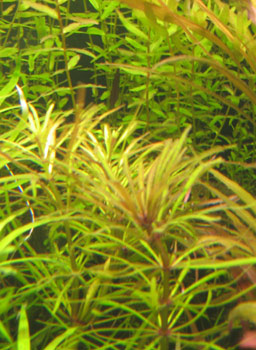
Low-tech 54G – Updated Photo

January 15th, 2007

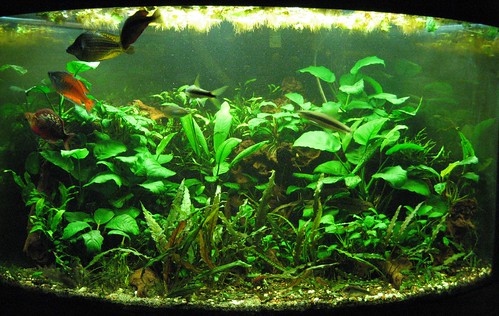
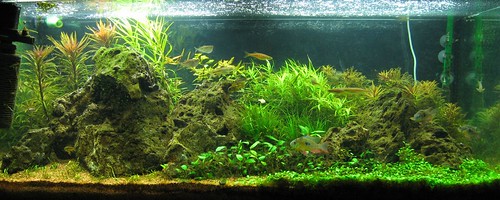
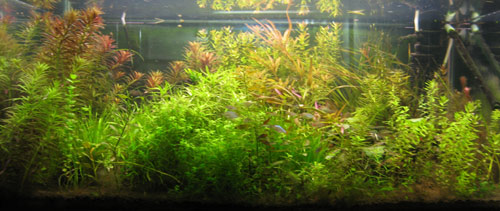
I had my camera and tripod out last night, so I decided to snap a picture of my 54G corner tank. This scape doesn’t change too much, but that’s a good thing. As a reminder, there’s no CO2 on this tank, and the light is mostly deflected some the Phyllanthus Fluitans floating on the surface. I have an Eheim Liquidoser on top of the tank that dumps in a few milliliters of PMDD every day, but otherwise I don’t supplement this tank with anything more than fish food.

54G - 1-08-2007


Business Broker

In-Line Hydor Heater Review

January 12th, 2007

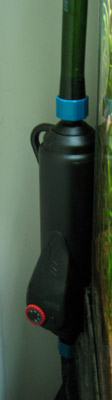
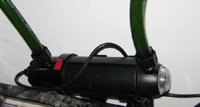
Hydor In-Line HeaterEven though it doesn’t feel much like it in Maryland this year, it’s winter time, and that means that my basement gets pretty chilly. Over the summer, I had previously pulled out a standard submerisible heater in favor of removing as much equipment as possible from my tank. I didn’t want to add my old heater back in, so I decided to try out Hydor’s in-line heater, which hooks right on your canister filter’s out-take line.

Installation couldn’t be simpler with this unit. Out of the box, there’s zero assembly to do. All you do is splice your filter’s output line, connect either end of the line to the heater’s barbs, and plug it in. The temperature is easily set using the red dial. Boom, you’re done.

Since installation, I’ve heard a few “clicks” here and there. That occurs when the heater turns on or off and isn’t audible unless you’re right next to the tank. Otherwise, it’s easy to forget that the heater is even there. The temperature of the water has been kept very stable, so it’s been doing exact what I bought it to do. I’d recommend to anyone with a canister filter who wants to avoid making an in-tank heater part of their aquascape.

Business Broker

75G – New scape with Ca Rock

January 11th, 2007

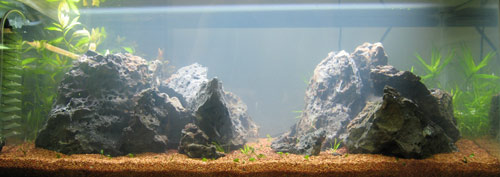
I used some time-off after Christmas to do quite a bit of maintenance on my tanks. In addition to adding the U.V. sterilizer, I also took this opportunity to rescape the tank, in an effort to hopefully clear up what had been a pretty nasty algae outbreak. When Ghazanfar, Rob, and I spent an afternoon breaking up our prized California rock, I had set one large piece aside, specifically for use in my 75G. That rock is the large rock one the left, and weighs a considerable amount.

75G - 1-08-2007

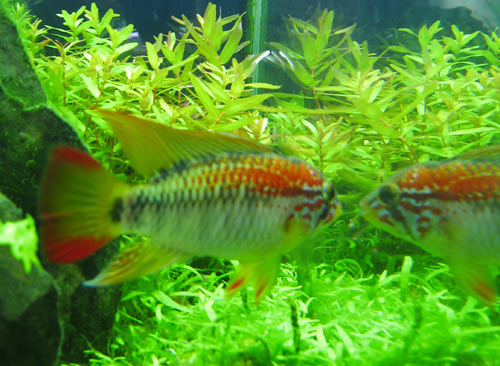
What I didn’t realize until after I put it in the tank, in that the rock has a natural cave in it, that’s just about perfect sized for a female apistogramma, but not quite large enough for the male. In essense, it’s the perfect size, and within a day of rescaping, one of the female A. cacatuoides took up residence.

So, besides the hardscape, I left the glosso intact on the right side of the tank before my previous scape. I repurposed the anubias baterii nana in front of the rocks in the middle, and replanted the utricularia on the left side. I’m a little curious to see if the U.V. sterilizer will have any effect on the growth rate of the utricularia. Finally, for the background, I went up to what has become a plant farm of my 40G, and trimmed out a variety of stems that I thought went together. From left to right: Pogostemon stellata ‘broadleaf’, Pogostemon sp., ludwigia repens ‘narrow-leaf’, Heteranthera zosterifolia, Blyxa japonica, and Limnophilia aromatica.

Business Broker

Got a UV Sterilizer: Turbo-Twist 9X

January 9th, 2007

Coral-life Turbo Twist

Thanks to some extra Christmas money, I decided to go ahead and get a U.V. Sterilizer for my 75G tank. I’ve been having a rash of green water, and a case of “something’s not right” situations in this tank for the past year, so I guess you could consider this my last resort.

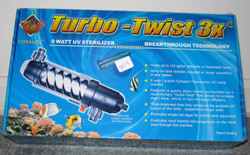
After doing a fair amount of research on the web, I decided to go with Corallife’s Turbo-Twist Sterilizer. Turbo-Twist 9W BoxIt seems to be a pretty popular product, and the price was right on Amazon.com. Setting the unit up was very easy using the instructions provided. Basically, you start by just unscrewing the one end to install the bulb. After that, you twist the middle section until the two barbs face in the direction that you need to connect to your filter. Finally, splice the output line of your filter, and connect either end of the line to the input and output barbs of the sterilizer. You’re done, once you plug it in.

I was a little bit worried about the sterilizer affecting the flow-rate of my filter, but so far that hasn’t proven to be a problem. And that’s having a CO2 diffuser and in-line heater running on the filter with it. Of course, that why I bought an over-sized filter, Eheim 2028, for my 75G in the first place.

Twelve hours after hooking up the U.V. sterilizer, my tank appeared fairly cloudy, with a white, milky hue. I presume that consistuted a mass bacteria/bad thing die off after being zapped by the U.V. rays. By the second day, the water cleared, and it’s looked clearer than I can remember in recent history. I’m not entirely sure whether I’ll leave it running 24/7, or will turn it off to save the bulb-life a little bit, but I’m glad to know that I have a last resort available to rectify any extra difficult problems with my water column.

Business Broker

Apisto Viejita, in New Home

December 29th, 2006

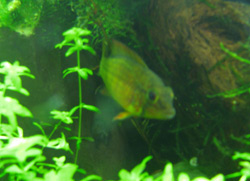
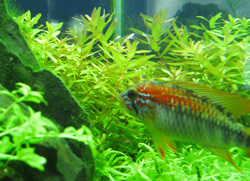
Last night, I moved my Apistogramma viejita ‘Rio Meta’ pair in the 20G High tank I’ve been preparing for them. The aquascape in this tank is still developing, as is the algae, but at this point, I’m more interested in getting these beautiful fish to breed. I’ve snapped a few pictures of the viejita’s in their new home…
Apistogramma Viejita Male, 12/29/2006
The male’s checking himself and his new digs out.

Apistogramma Viejita Female, 12/29/2006
A. viejita female
Apistogramma Veijita Male
A. viejita male
Business Broker

20G High – Turning the corner…

December 19th, 2006

It’s been a few weeks since I last posted a picture of this tank, so here’s where it’s at. I make no apologies for the powerhead or diffuser in my “progress pictures,” so do your best to look past them. The utricularia graminifolia is starting to fill in after I plucked out at least a hundred trumpet snails that kept uprooting it. I’ve trimmed the didiplis diandra at least twice since the last picture, so it is starting to form a nice bush in the middle/right. New additions are the rotala macrandra ‘green’ and pogostemon stellata in the right and left sides of the didiplis diandra, respectively.

I was having quite the time controlling algae in this tank, but after sticking to a rather strict SeaChem product-line dosing regimen, including overdosing Excel, I seem to have that under control. The 10 of so cherry shrimp I added from my over-populated cherry shrimp tank haven’t done any harm in that regard either. I estimate that I’m probably about a week away from adding the apistogramma viejita pair that will eventually occupy this tank. I want the utricularia to be pretty much established before I add them. In the meantime, they’ve been enjoying a copious diet of blackworms, spectrum pellets, and veggie flake to ready them for some baby-making, er, I mean spawning.

Business Broker

1st Scape with California Rock

December 10th, 2006

Last night, I had the opportunity to attempt my first aquascape with the new “mossy porous rock” from California. I found out something new about this rock that I hadn’t realized previously; the rock has so much character, and so many seams, that it’s easy to combine multiple rocks next to one and another, without exposing hard seam lines between them. So, I tried to take advantage of this fact by doing the vastly overdone “two mounds of either side with a path down the middle” scape that you see below:

20G Long, December 10, 2006

Of course, this is the first time I’ve attempted such a scape, so I’m still learning what works and what doesn’t. I didn’t have all of the fine leaved stems plants that I wanted to use on hand, so for now, hygrophila polysperma, rotala indica ‘red,’ and heteranthera zosterifolia will have to suffice as background plants. In the front, I have marsilia quadrifolia, and ranalisma rostrata.

It’s still a little bit cloudy from moving around the Soilmaster Select that was in here. The only fauna in this tank right now are 4 apistogramma borelli.They seem to love the cover that the rocks give them, perhaps a little bit too much. For that reason, I think I need to add a few dither fish, but I don’t want anything that will pick off borelli fry. Suggestions? It’s still a little bit cloudy from moving around the Soilmaster Select that was in here. The only fauna in this tank right now are 4 They seem to love the cover that the rocks give them, perhaps a little bit too much. For that reason, I think I need to add a few dither fish, but I don’t want anything that will pick off borelli fry. Suggestions?

It’s still a little bit cloudy from moving around the Soilmaster Select that was in here. The only fauna in this tank right now are 4 They seem to love the cover that the rocks give them, perhaps a little bit too much. For that reason, I think I need to add a few dither fish, but I don’t want anything that will pick off borelli fry. Suggestions?

Business Broker

Fixing All-glass PC Strip with AHSupply Kit

December 4th, 2006

It must have happened sometime while I was at the AGA Convention, but when I got home, I noticed that something in my 75G wasn’t quite right. Of course, it took me a week to realize that one of my two All-Glass 2x55W PC light strips was no longer working. Per the suggestion of a few GWAPA folks, I tried cleaning the end caps and connections, but that didn’t work. It seems that my ballast just plain died. I had recently replaced the 2 bulbs and I didn’t really want to jump ship to a T5 fixture, so I decided that my best course of action was to repair the unit I have. I’ve ordered bulbs from ahsupply.com for a long time, but have never actually tried one of their “bright kits” with the renowned MIRO4 reflectors. This was my chance!

Since my existing light strip was already setup for power compact lamps, it is larger than their standard single-tube fluorescent fixture. This means that I’ll continue to have enough room for the ballast inside of my strip, instead of having to mount it on the outside, like many folks have to do. Plus, their is already enough ventilation in the top of the unit to avoid having to install any fans or vent covers.

So, my first course of action was to take the strip apart. Easily enough, the unit is a two piece design. The plastic outer case is attached to the aluminum reflector, and everything else is screwed to that. So, to remove the reflector, all you have to do is pop out 8 of these little plastic pegs. Of course, I managed to break half of them, but I finally got them out.

Once opened, the ballast is wired to the on/off switch on the back of the case. Simply remove the three wire nuts, and unscrew the ground wire from the reflector.

Then, you should be able to pull the reflector away from the case, and work on it. Pretty much unscrew and remove everything from the reflector: the ballast, end caps, bulb clips, etc. Once you have just the reflector, you can begin figuring out where to put all of your new AHSupply pieces. The end caps that come with the bright kit are far better insulted than the ones from all-glass. To use them, I ended up drilling a few more holes in the reflector to feed the wires in a way that better held the end caps in place. Additionally, the ballast itself is shorter than the all-glass one, so you will have to drill new holes to mount this as well. Finally, place the new MIRO reflectors so that they line up nicely with the endcaps, and drill holes through the new reflectors and into the old reflector. Basically, I just mounted the new reflector over top of the old. It was easier to do it this way because the old reflector already mounted into the plastic case perfectly, so I didn’t have to construct any new mounts to attach the new reflectors to the case.

Now, tie down the wires using the wire clamps supplied in the bright kit and wire the new ballast to the end caps and light switch per the instructions from AHSupply. (Great instructions, btw!)

We’re just about done here. Don’t forget (like I did originally) to reattach the ground wire.
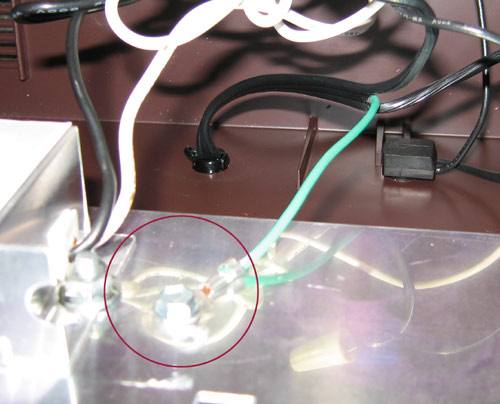
Ground Wire

Finally, put the old reflector, with all the new parts attached to it, back into the case,
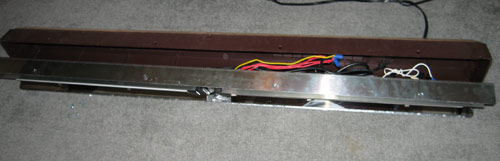
Close it up
reinsert the plugs that securely hold it in place,
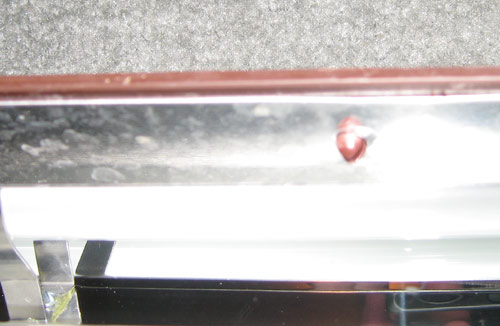
Insert the plugs. Locking them in place

and you’re done!

Finished Fixture

Finished Fixture (shot 2)

Business Broker

20G – Beginning of New Aquascape

December 3rd, 2006

After looking at a mess of algae and java moss for far too long, I decided to tear down this tank, and give it a new aquascape. The wood is a wonderful piece of bogwood for apistogramma breeding because it is completely hollow, and has multiple entrances and exits through it’s core. The slate was collected locally before the October meeting down in Virginia, and the substrate is ADA aquasoil.

The plants are ludwigia repens var. ‘narrow leaf’ (back left, didiplis diandra (back right), baby tears (mid ground), and utricularia graminifolia in the foreground. I do have one restrictions that may somewhat limit this aquascape:

  • Make sure there are enough nooks and cranies for the apistogramma viejitas that I’m going to attempt to breed in this tank. (Hence the bogwood, even though it may not be the perfect center piece)

One other thing to note. We all know that aquasoil grows plants like crazy. Well, apparently, it grows trumpet snails too. I have some of the largest trumpet snails I’ve ever seen in this tank. I’m trying to pull them all out since they’re disturbing the utricularia that I’ve so carefully planted.

Business Broker

40G Tank: Stem Jungle!

November 29th, 2006

40G - 11/29/2006

Pogostemon stellatusSomehow, without me realizing it, my 40G tank has turned into more of a farm tank, than an aquascape. There’s a little bit of everything in this tank right now, most of it doing surprisingly well!
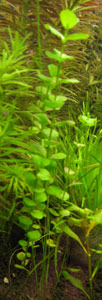
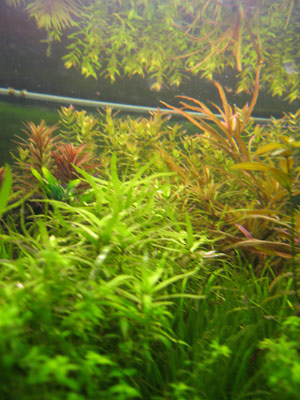
This is part of the problem when you have a tank with ADA aquasoil in it. You know that just about anything will grow in it! Therefore, when I see a plant I’m interested in trying, but don’t have room for in my normal aquascapes, where does it go? Well, of course, in the 40G, where the amazonia will keep it alive until I do find room for it! The only problem I ever have in this tank is occasional blue-green algae, when I don’t dose enough nitrates. As you can imagine, all of these stem plants suck up some nutrients! I’m currently only dosing SeaChem products in this tank because they work well, and don’t cost that much to maintain a 40G tank. I pretty much follow their recommended dosing chart as far as frequency of dosing goes, but I dose more than they recommend of everything. To the right is the pogostemon stellatus from Jeff in GWAPA (bigstick120 online) that’s waiting for the right aquascape to go in. The time will come soon I hope!

A couple native collections

40G, stemsSo what’s in here? I’ve got the usual plants, such as limnophilia aromatica, baby tears, didiplis diandra, stargrass, blyxa japonica, blyxa albertii, rotala magenta, and rotala pusilla.
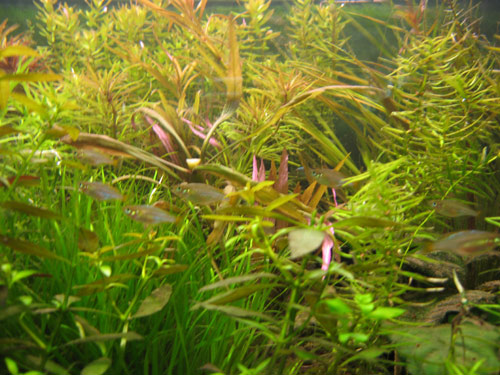
A few more exotic ones like ludwigia cuba, ludwigia pantanal cuba, cyperus helferii, and rotala macrandra var. ‘green.’ Don’t forget pogostemon stellatus, and pogostemon stellatus ‘broad leaf.’

Not to mention a few ground-cover plants that are not getting near the light they require! Then, I have a few plants that I’ve collected locally, including creeping jenny, ludwigia palustrus, and an eleocharis species.

With all of these plants, I rarely see my beautiful apistogramma panduro fish that I love so much. Fortunately, the dwarf neon rainbowfish juveniles that I picked up at the catfish convention seem very much at home in this tank. They’re always racing around the tank, from end to end, darting in-between plants and rocks as they go. I think they like it in there!

Praecox Dwarf Rainbowfish

Business Broker

« Previous Entries   Next Entries »