Helping a Friend Rescape

September 1st, 2009

This weekend, myself and another GWAPA member helped a third GWAPA member, Paul, rescape his 90G aquarium. Paul has been in the club for awhile, but wanted to make an earnest foray into the high-tech world of aquascaping. He has a nice T5 fixture on order, CO2 rigged up, and replaced his old gravel mixture with several bags of Eco-Complete.
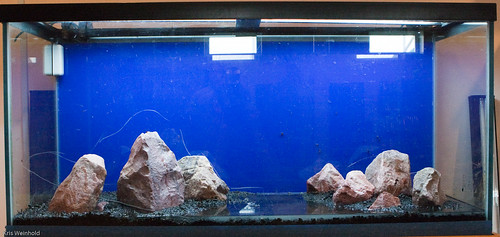
Paul's 90G - Rockscape

It took us longer than you would think to place eight rocks in the aquarium. We added a rock, stood back and looked, gave directions to the person closest to the tank to move a rock a little to the right or left, and ultimately ended up with the rockscape you see above. You can see a little bit of crayon on the front of the glass because we drew a very minor sketch on the tank beforehand. The crayon wipes right off.
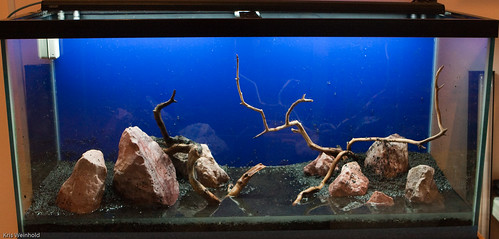
Paul's 90G - Hardscape

After setting our rockscape, we added another two bags of Eco-Complete to mound up on both sides. Then, we added in a few manzanita branches that Paul wanted to use in the scape. After doing this, we were ready to start scaping. We wanted to to keep a relatively simple plant arrangement for the time-being, so we used a number of lower-maintenance plants, with a couple stems thrown in.
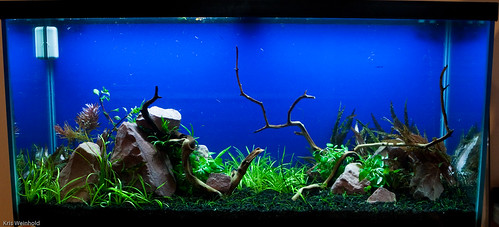
Paul's 90G - Aquascape Just Planted

We used Sagittaria subulata and a short Lilaeopsis species in the foreground, with Lobelia cardinalis and Crytocoryne wendtii in the midground, and on the right side background. There’s Echinodorus sp. ‘Vesuvius’ and Ludwigia inclinata var. verticillata ‘Cuba’ in the left background. Overall, I think we were all pretty happy with the scape. Obviously, it needs to do a lot of growing in, but it should fill out nicely. It’s definitely a lot of fun to aquascape with other people!
Business Broker

54G – Haircut or No Haircut?

August 26th, 2009

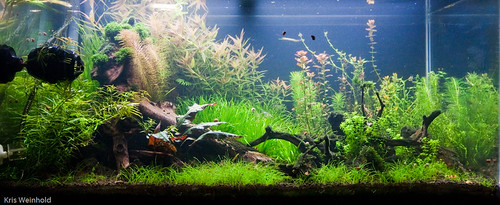
Today I did water-changes on my aquariums, and while looking at the 54G tank, I decided to actually try trimming back the hairgrass a little bit. I had talked about trimming it down for awhile, but various folks said they liked the long-wavy-look, so I put it off. I ended up deciding to just try it once and see how it goes.

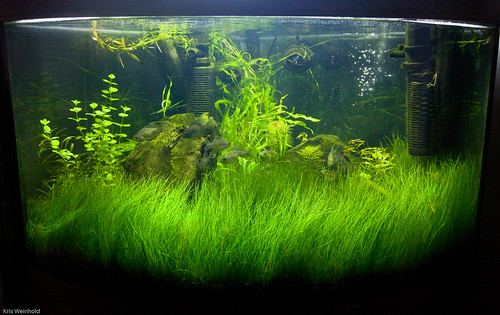
54G - After Hairgrass Cut

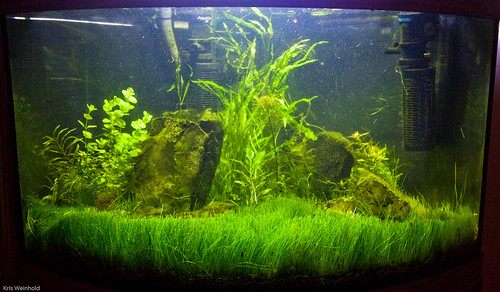
Above you can see the trimmed tank immediately after the water-change. Below is the tank, immediately prior to the trim and water change. Which do you like better? To me, I think the trimmed look brings out the hardscape a little bit more. I know that the rest of the plants are a bit of a mess right now. That’s my next problem to solve!

54G - August 26th, 2009

The good thing is that the plants are actually starting to grow quite well, and assuming I keep my dosing regimen and water-changes on schedule, I haven’t had near the issues with algae that I have had previously on this tank. The Potamogetons in this tank are doing wonderfully.

54G - August 26th, 2009

I did have a beautiful stand of Lindernia dubia in here, but I trimmed it very hard to send to a friend. I may have trimmed it too hard. Fortunately, I have more stashed away in my emersed setup. Overall, this tank is starting to come into its own. Please let me know if you like the haircut or not. Comments welcome!

Business Broker

GWAPA: Carnivorous Plants Nursery

August 24th, 2009

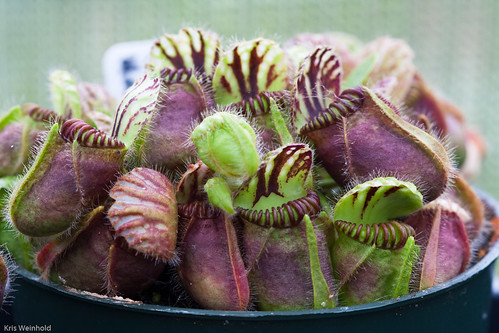
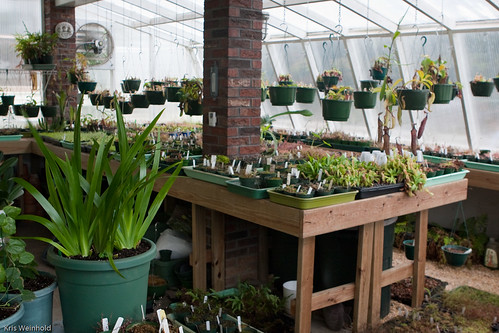
On Saturday, GWAPA’s meeting was hosted by Michael Szesze, the owner and operator of Carnivorous Plant Nusery, in Derwood, MD. Michael runs an impressive local and online business, exclusively selling bog plants, with a huge emphasis on carnivorous plants. He currently has two greenhouses, filled with healthy plants.

Greenhouse

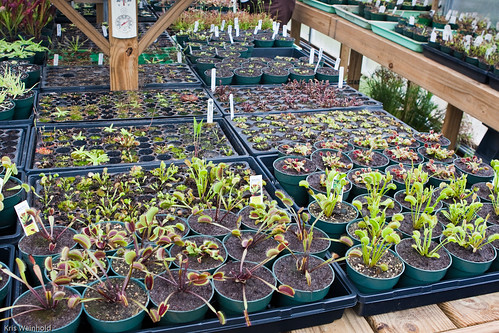
Walking through the nursery, it could have been easy to overlooked all kinds of interesting plants. The sheer number of pots was quite staggering. Michael explained to us that carnivorous plants are pretty easy to keep provided you follow a few strict rules. Provide a nutrient-free environment, water with nutrient-free water, and don’t overfeed.

Carnivorous Plants

He pots all of his plants in a near 50/50 mixture of peat and quartz sandbox sand. For some plants he may adjust the ratio slightly, but he says that if you start with a 50/50 mixture, you’ll be able to grow just about any carnivorous plant. He collects his own rainwater, linking all of his home’s downspouts to a subterranean series of cisterns to store the water.

Pitcher Plants

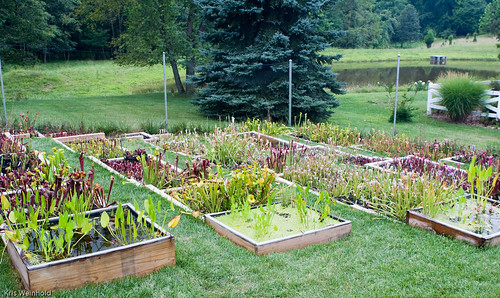
Outside of the greenhouses, Michael keeps several boxes of carnivorous plants. He is able to overwinter these plants in place, covering them and monitoring the temperature under the cover to ensure that it does not reach 22 degrees F. He explained that 22 degrees F is the bursting point for most vascular plants, so if you maintain the temperature above that, your plants will be fine.

Grow Boxes

Michael recommended against explicitly feeding carnivorous plants, as enough insects will find their way to the plants on their own. He leaves his greenhouses open during the summer to allow critters to come in and fall prey to his plants. He has also effectively used carnivorous plants as a fly and pest control method on his porch.

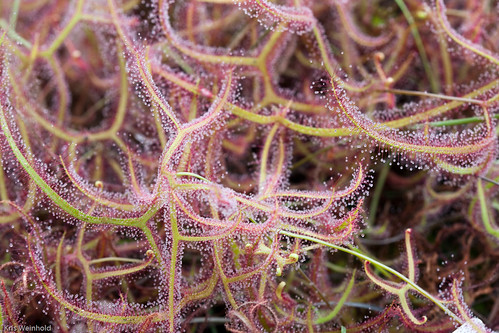
Sundew

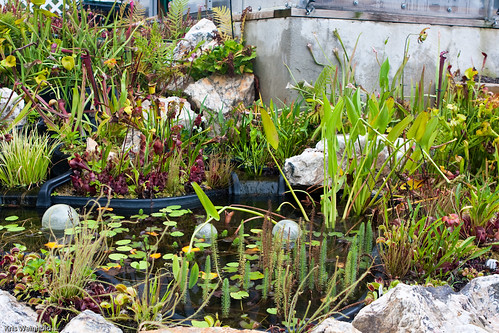
In addition to the grow houses and boxes, Michael has maintains an attractive bog/pond area in his backyard. Many of the plants in the pond are not specifically bog plants, but he has filled the surrounding areas with the peat/sand mixture, so various carnivorous plants line the pond’s border.

Pond

Despite being a steamy rainy day, I very much enjoyed visiting this Carnivorous Plant Nursery. In addition to perusing the greenhouses and grounds, we also held our regular GWAPA aquatic plant auction. There were some serious deals to be had on plants this month!

Sundew

Of course, the dangerous thing about going to places like this is that now it’s tempting to try and start a little bog to try and grow these plants. I was able to forestall that impulse at the meeting, but I could foresee a bog plant or two in my future. Comments welcome!

Business Broker

Connecticut Trip

August 18th, 2009

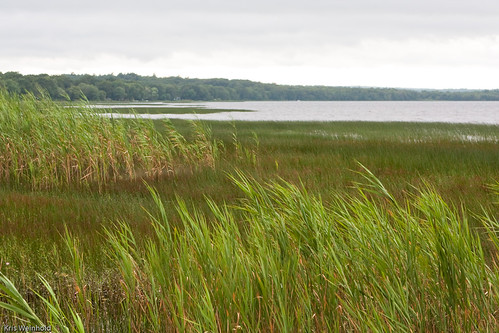
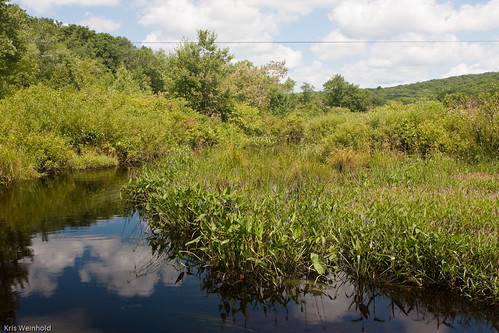
Last weekend, I was in the Connecticut area with a couple of friends, so we took the opportunity to check out a few of the local bodies of water in the area. Our first stop was actually not in Connecticut, but nearby in Rhode Island at Worden Pond. Worden Pond is a large pond with lots of campgrounds and houses surrounding it. There was a lot of marsh and floating debris, creating rather tannin colored water.

Worden Pond, RI

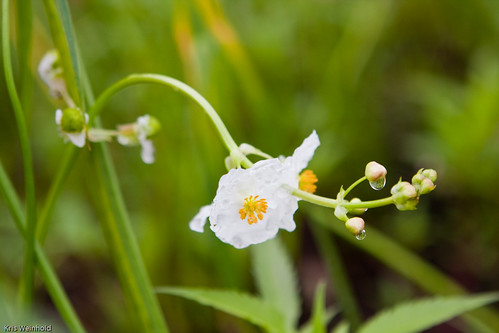
In with the rushes were quite a few large Sagittaria plants in flower. The flowers are an attractive white with yellow in the center, resting on a long stalk that protrudes from the water itself. A campground was kind enough to allow us to use their beach to take some pictures while we drove through.

Sagittaria Flower

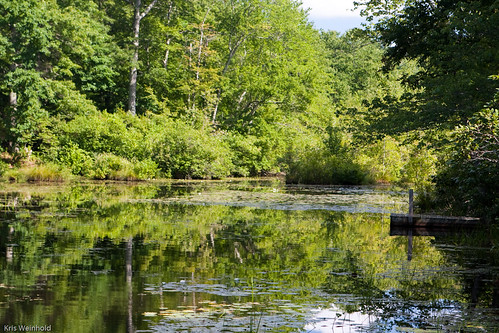
One of our other stops was Roger’s Lake in Old Lyme Connecticut. This is the town from which Lyme’s Disease is named, but fortunately, I didn’t encounter a single tick on this trip. We stopped at one of the public boat ramps to see what types of vegetation were present. It’s a very pretty lake with lilies growing in several places. It looks like the wonderful place to kayak for the day.

Roger's Lake, CT

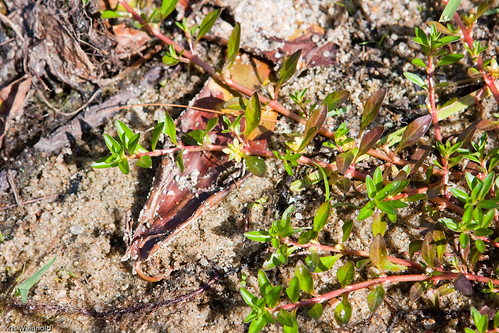
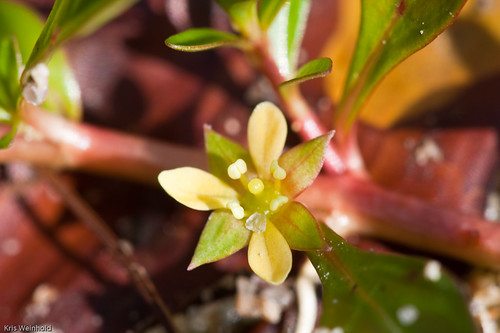
One of the interesting plants growing in this lake is an isolated population of Ludwigia x lacustris. This particular Ludwigia is a natural hybrid between Ludwigia palustris and Ludwigia brevipes. Below is a picture of the emersed form growing on the bank.

Ludwigia x lacustris

One of the ways to differentiate it between regular Ludwigia palustris and the hybrid, is that the hybrid’s flower contains petals, while L. palustris‘ flower does not. The flower is very typical looking compared to other Ludwigia species that I’ve seen.

Ludwigia x lacustris Flower

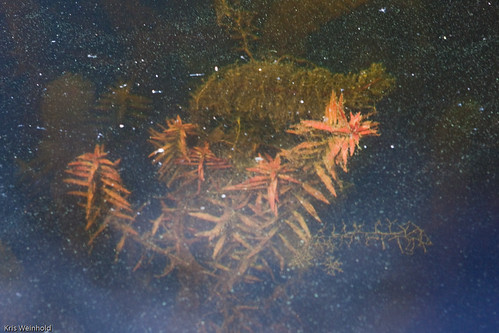
Submersed, Ludwigia x lacustris is a wonderful plant. I’ve kept some in my aquariums for a little while prior to this trip. Below is a picture of the submersed form in the lake. As you can see, the leaves are long and narrow like L. brevipes, but not quite as narrow, and exhibit a nice reddish orange color like L. palustris. It’s not too dissimilar from Ludwigia repens x arcuata, but it’s growing pattern is more upright, whereas, L. repens x arcuata grows more at a 45 degree angle.

Ludwigia x lacustris Submersed

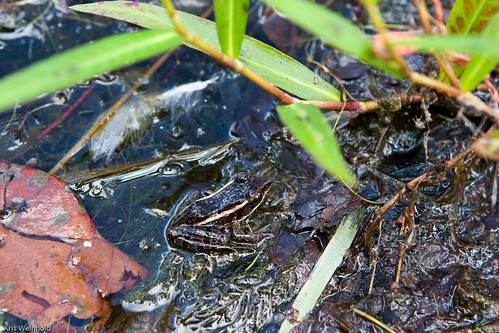
Of course, we weren’t there to just look at plants. We enjoyed seeing several species of waterfowl, and of course, several frogs and turtles were present. Looking at the picture below, I imagine that there were quite a few more frogs than we spotted due to their excellent ability to blend with their surroundings.

Frog

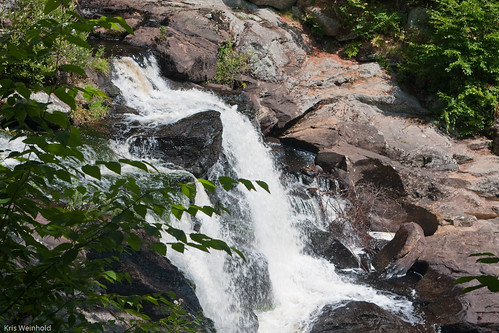
Another notable stop on our trip was Chapman Falls at Devil’s Hopyard State Park in East Haddam, CT. The falls are large series of cascading falls, which are only partially shown below. The full falls are probably 4-5 stories tall, and are quite impressive.

Chapman Falls, CT

The top of the falls are just as beautiful, being lush with plant life. There was a huge expanse of some Polygonum species growing up out of the water, as well as, some Schoenoplectus subterminalis bulrush flowing in the strong current.

Top of Chapman Falls

All in all, it was wonderful to be able to experience a few of Connecticut’s wonderful nature areas while traveling through the state. I would really like to get back up there to do some more hiking than I was able to do on this trip. I highly recommend checking out these parks to anyone in the area.

Business Broker

50G: Updated Picture + New Shrimp

August 14th, 2009

It’s been a few weeks since I replanted the 50G, and as you can see the plants have been growing quite well. The tank is definitely due for a trim right now, especially the Ludwigia brevipes on the left, and the Limnophila repens var. ‘Mini’ in the back left. I do have two notable additions to this aquascape. In the back-left, I added a number of Blyxa aubertii plants which were previously in my 75G aquarium.

50G

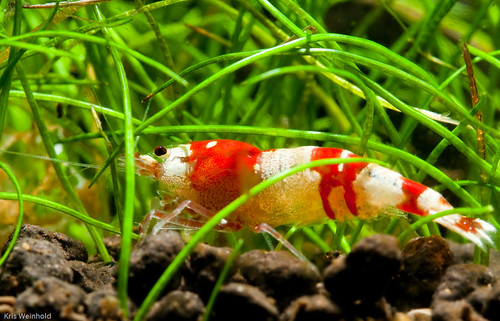
Also, I was fortunate to get in on a fantastic group buy that GWAPA conducted to add 15 crystal red shrimp, and 15 crystal black shrimp to this aquarium. Below is a picture of one of the red ones, which I believe is a “tiger-tooth” because the one red band looks like two teeth coming down. I don’t know very much about grading the shrimp, and really don’t care, as I just think they’re quite striking inhabitants in a planted aquarium regardless of the grade.

Crystal Red Shrimp

So, hopefully, these shrimp will start a little breeding population in my 50G! Elsewhere in the aquarium, the hairgrass is starting to spread in the corners where I transplanted a few plants, and I’m generally pleased with the direction that it’s headed. I’m waiting on the stems on the right side to grow out a bit more and multiply, so that I can really focus on trimming them into new compact bushes of plants. Comments/critiques welcome!

Business Broker

« Previous Entries   Next Entries »