
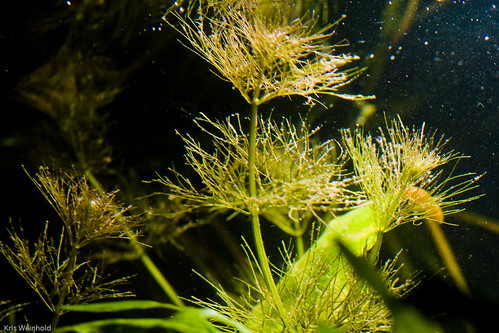
Limnophila sp. ‘Needle Leaf’

September 25th, 2008

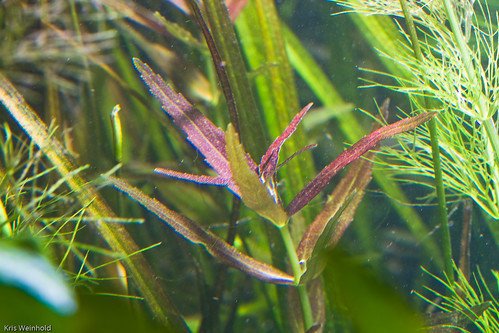
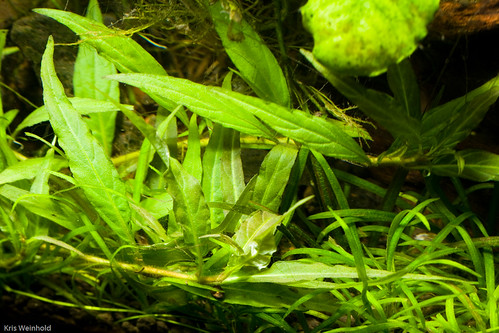
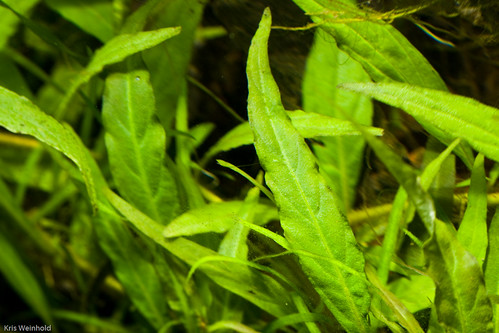
I wanted to share a picture of one of the new plants my wife brought back for me from AquaForest in San Francisco, CA. Sold as Limnophila sp. ‘Needle Leaf’, I would not be at all surprised to find out that this is a variant of Limnophila aquatica, as it grows equally as fast. The main difference is that while L. aquatica stays green, this particular species is a brownish/red color.

Limnophila sp. 'Needle Leaf'

As noted, the growth is extremely fast, and I suspect it’s forming strong root systems and runners in my rich earthworm castings based substrate. The plant readily branches by itself, but I’m not sure how good of an aquascaping plant this could be, as it’s just not that compact and shoots to the surface. Perhaps it could be used effectively as an accent plant, but frequent trimming will be required.


Business Broker

Dwarf Crayfish

September 22nd, 2008

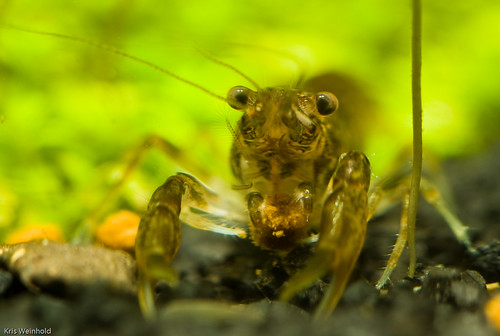
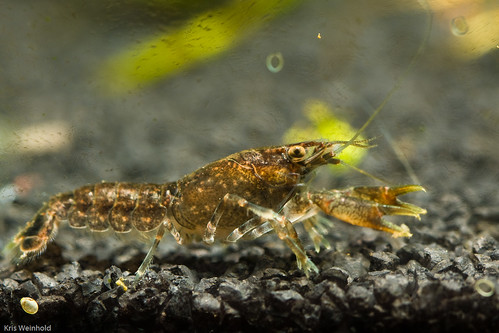
This weekend, I spent some time over at another GWAPA member’s house, Dave (ingg), and I wanted to share a couple pictures of his Dwarf Crayfish. I have kept this kind of crayfish before, and even had them breed for me, but I don’t have them any longer. They’re really neat invertebrates, and since they don’t get as large as normal crayfish, they can’t eat your fish.

Dwarf Crayfish

Dave’s got a fair number of crays in a 37G aquarium. I think they’ve started to breed for him, but I’m unsure as to whether or not any of the babies have survived to adulthood. As you can see below, they’re pretty much just smaller replicas of larger crayfish.

Dwarf Crayfish

I wonder if these guys would survive in my sunfish tank? They’ve all but annihilated any of the shrimp that I’ve put in that tank, but since the crayfish are generally a little bit more feisty, maybe they could defend themselves? If anyone has any experience keeping dwarf crays with shrimp-eating-fish, I’d love to hear your advice.

Business Broker

Limnophila sp. ‘Mini’

September 19th, 2008

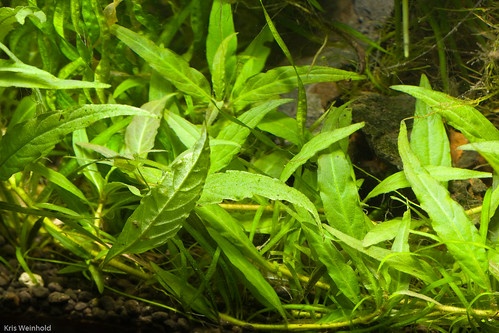
I got Limnophila sp. ‘Mini’ a couple months ago from another hobbyist. This is another plant that’s pretty new to the hobby. I’ve been a long time fan of Limnophila aromatica, and the ‘Mini’ variety shares some resemblances to that plant. They both have serrated edges on their leaves, and both turn a beautiful bronze to purple color, depending on the nitrates in the tank.

Limnophila sp. 'Mini'

I’ve kept Limnophila sp. ‘Mini’ in my 40G tank with the earthworm castings substrate. The growth has been slow, but steady, and the plant is absolutely gorgeous. It’s in the back of the tank, surrounded by other plants, so it was hard to get a good picture. I suspect that if I put it in a tank with daily fertilization, that it would grow much faster. There aren’t as many leaves per node as L. aromatica, and the leaves themselves are slightly smaller. I am really looking forward to having a sizable quantity of this plant, so that it can be a big part of a future aquascape. I think Limnophila sp. ‘Mini’ has quite a bit of aquascaping potential! Definitely try it, if you find it available.

Business Broker

Hygrophila sp. ‘Porto Vehlo’

September 17th, 2008

Hygrophila sp. ‘Porto Vehlo’ is one of the latest species entering the hobby. Unlike most Hygrophilas, Porto Vehlo creeps horizontally along the the substrate, rather that growing vertically toward the light. This make it appropriate as a foreground plant in larger tanks, and midground for smaller aquascapes.

Hygrophila sp. 'Porto Vehlo'

It will creep along, growing over some portions of your hardscape, which means that you will eventually have to trim it to keep it from turning into a monster. As it grows, it puts down roots into the substrate. The plant seems to be pretty hardy. I kept in my 75G aquarium, shaded and ignored for awhile, and although it didn’t look pretty, it hung on.

Hygrophila sp. 'Porto Vehlo'

In my earthworm castings tank, it has been growing quite prolifically. The leaves on Hygrophila sp. ‘Porto Vehlo’ are attractive, with a visible vain running throughout each leaf. They will bronze up a little bit under high light, but will not get too red.

Hygrophila sp. 'Porto Vehlo'

I generally avoid some of the Hygrophilas because they grow too fast and shade everything else out. I’m really enjoying Porto Vehlo, however, since it stays low to the ground. Like, Hygrophila sp. ‘Low Grow’, I wouldn’t be surprised if it’s not a Hygrophila at all. Whatever it is, I suggest you try it.


Business Broker

CCA – Dick Au on Discus Basics – Sept. 2008

September 15th, 2008

The Capital Cichlid Association was back after their summer break on Saturday with a huge meeting, featuring Dick Au, author and expert on discus. With many cichlid-o-philes from all

over the east coast region attending, there were at least 84 people in attendance. This month also had the largest auction I’ve ever seen at one of their meetings.

Dick Au gave a fantastic talk, dumbing down the basics of keeping Discus, so that I left that meeting feeling like they might not be as much trouble as their reputation suggests. He went through the entire lifecycle of how to choose your discus, who to buy them from, how to keep them, breed them, raise the fry, and so on. He stressed that the most important thing whenever keeping discus is to make sure you get quality discus from the start, otherwise, you’re just asking for trouble down the line. He suggested avoiding chain or general purpose pet stores, but fish stores who maintain significant stock of discus year-round should be okay because they need to know how to care for them to keep their stock healthy.
Even so, he suggests that you always ask the store owner to feed them in the store before buying, so that you can make sure they have a good apetite. Without that, there’s likely something wrong with them. Of course, breeders of discus who maintain quality strainsĀ  are great sources as well.

One of the things that he mentioned which surprised me was that he didn’t neccessarily recommend keeping them in planted tanks. Not that it can’t be done well, but he said it’s much harder to maintain proper water quality without being able to vacuum up uneaten food, like you can in a bare-bottom tank.

That said, Dick did mention that discus have been raised in captivity long enough that most are quite adaptable to a wide range of water conditions, contrary to their wild counterparts. As long as your water doesn’t have significantly high pH, he recommends using tap water for water changes, verses mixing your own RO water because he believes the water conditions stay more stable that way. Additionally, while temperatures between 80 and 84 degrees are ideal, most discus will do just fine in slightly lower or slight warmer temps. This is good if you do want to keep them with plants. He discused far many more topics, but most of them are covered in detail in his two books.

Overall, this was a fantastic meeting!
Business Broker

« Previous Entries   Next Entries »