Native Fish – Sunfish, Killies, Darters

August 14th, 2008

I managed to get a few pictures of the native fish that I recently collected from the Potomac River in Virginia. I’m really happy with these fish so far. When I first put them in the tank, they went straight into the plants, not to be seen.
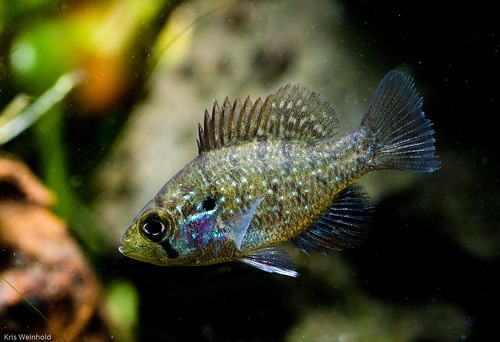
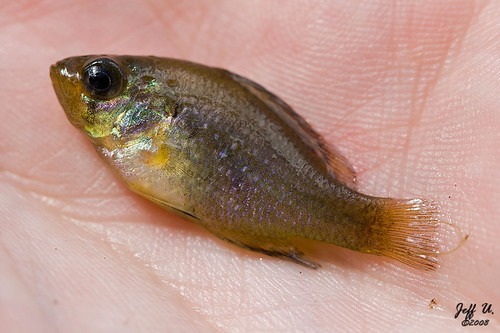
Blue Spotted Sunfish

Blue Spotted Sunfish - Enneacanthus gloriosus

Since then, I’ve been feeding them blackworms, and have spent a lot of time in front of the tank, which seems to be getting them used to my presence. The sunnies, in particular, were quite shy to begin with. Now, it’s not unusual to see several of them out and about at the same time.
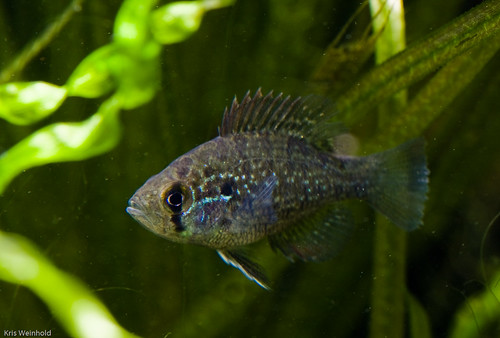
Blue Spotted Sunfish

Blue Spotted Sunfish - Enneacanthus gloriosus

Many of the sunfish have also colored up quite a bit. Some of the younger ones don’t yet have their blue spots, but the older fish are actually quite striking. The little teardrop, or black stripe, under their eye reminds me of Bolivian Rams, Mikrogeophagus altispinosus.
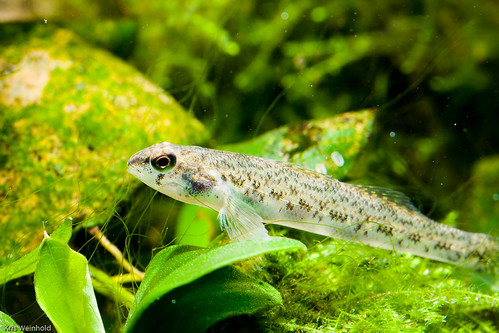
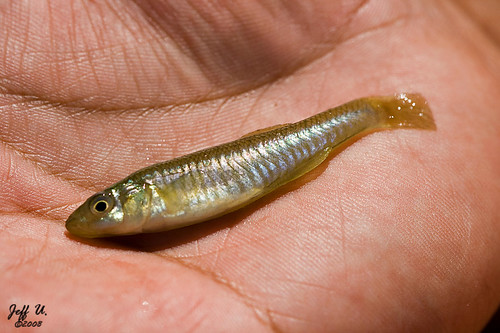
Tesselated Darter

Tessellated Darter - Etheostoma olmstedi

In general, I tend to really enjoy lazy bottom dwellers, and this Tessellated Darter, Etheostoma olmstedi, is exactly that. I love how darters prop themselves up on their front fins, and just sit there waiting for food to come along.
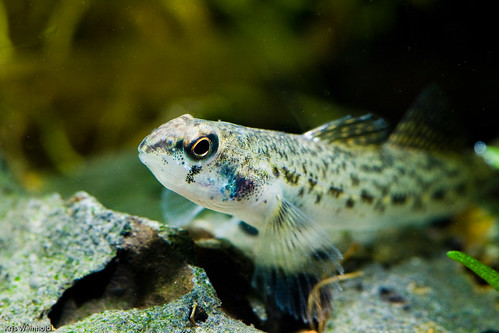
Tesselated Darter

Tessellated Darter - Etheostoma olmstedi

He’s readily accepting blackworms, but even though I’m adding a few pellets with my other feedings to try and get him on commercial food, so far he’s not interested. The Banded Killifish, Fundulus diaphanus, are another one of the fish that are slowly calming down in my tank.
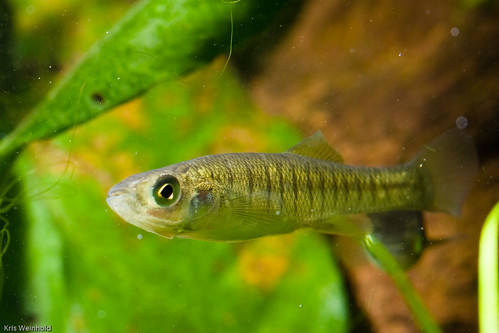
Banded Killifish

Banded Killifish - Fundulus diaphanus

When I first introduced them, they would often jump from the water when I approached the tank. Now, they’re still staying close to the plant cover, but they’re at least out in the open, while keeping a close eye on me.
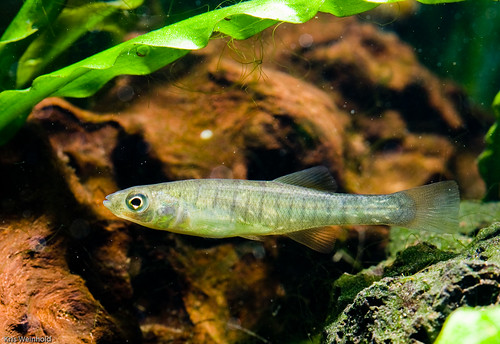
Banded Killifish

Banded Killifish - Fundulus diaphanus

I’ve noticed that they have an interesting mouth that tends to open and unfold a little bit differently than other fish I’ve kept. I presume this is designed to suck surface bugs into their mouths. If I’m ever able to get a picture of it up close, I’ll post it. Overall, I’m still quite pleased with my recent acquisitions. All of the fish appear to be healthy, and should be a nice addition to my tank for some time.
Business Broker

Swamp Lilly Flower!

August 12th, 2008

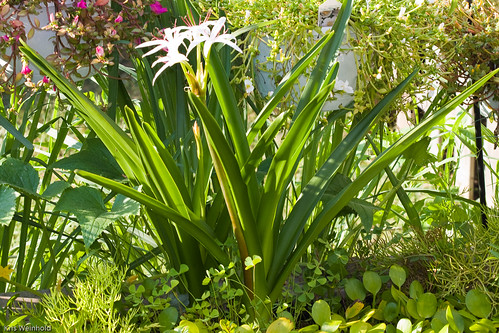
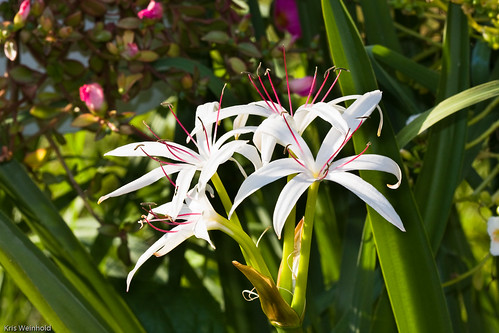
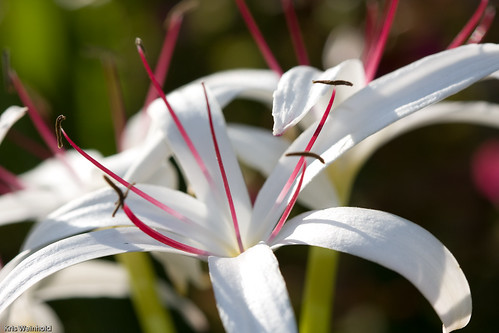
After waiting for some time to finally happen, this week my Swamp Lilly (Crinum americanum) sent up four beautiful white flowers. Very fragrant, the flowers have a pleasant smell that is something like a light woman’s perfume.

Crinum americanum flower

The white petals are accented by several bright pink stamen, jutting out from the center. I knew that I could expect a flower soon because my fellow GWAPA member from which I received these plants, said that they usually flower in the July/August timeframe.

Crinum americanum flower

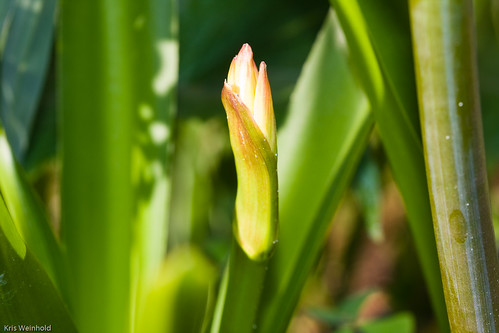
Right on cue, the flower stalk appeared last week. Originally, the flower stalk seems as if it would only contain a single flower, but over time, the tip of the stalk reveals four separate flower pods, which in turn contain several petals each.

Crinum americanum flower

I haven’t seen any bees visit the flowers yet, but since they’re all throughout my garden, I would expect them to find it soon enough. I’m curious to see whether I can obtain seeds, verses simply propagating the plant by division.

Crinum americanum flower

Between the lovely flower and attractive folage, I think Crinum americanum has found a permanent home in my backyard raised brick pond.

Business Broker

Collecting in the Potomac River

August 11th, 2008

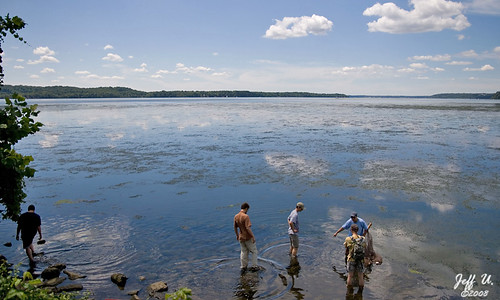
On Saturday, a few GWAPA members got together in Virginia along the Potomac River to see what fish we could pull out of the river. Armed with the necessary permits and a few experts in native fish, we started pulling seine nets through some areas near the shore. Most of the shoreline was completely consumed by Hydrilla, an incredibly invasive exotic weed from Asia.

Potomac River

Potomac River, Virginia

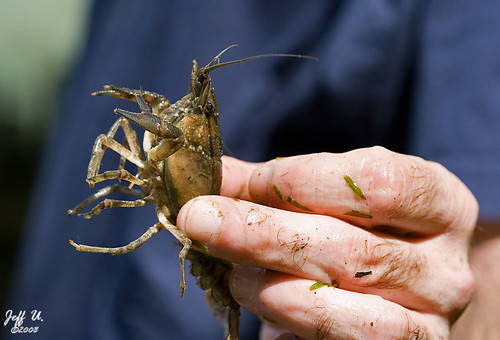
Initially, the Hydrilla was way to thick, and besides pulling a few crayfish from the water, we didn’t have a whole lot of luck. We eventually crossed the street, and found a better location a little bit upstream in a creek that feeds into the Potomac.

Crayfish

Large Crayfish

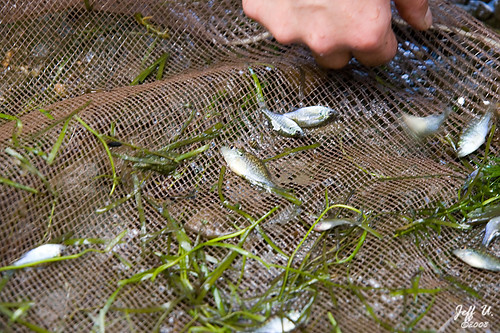
Once we did this, we started pulling out all kinds of fish and critters. By pulling the net through the Hydrilla we were able to target the fish we were interested in, while also doing the river a service by pulling much of the noxious weed from the water and onto the bank.

Fish in Seine Net

Fish in Net

The main fish I was interested in finding on this trip was the Blue Spotted Sunfish, Enneacanthus gloriosus, which is a beautiful native sunfish that only gets to 2-3 inches in length. This makes it a wonderful fish for the planted aquarium, as it should not rearrange the tank like some of the larger sunfish, and loves the cover that plants provide.

Blue Spotted Sunfish

Blue Spotted Sunfish

We were also hoping to find some snakeheads, not to keep for the aquarium because doing so is illegal, but to see how widespread they really were in the river. Although a bit disappointing to us, I suppose it’s a good thing that we didn’t actually pull any in our nets. Had we found any, legally, you have to euthanize them on the spot.

Banded Killifish

Banded Killifish

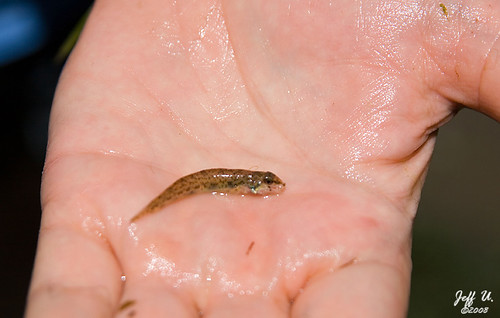
We did get a large number of Banded Killifish, Fundulus diaphanus, which are also good fish for the aquarium. They get to about 4 inches in length, but most of the ones we pulled in were smaller than that. In addition to the killies, we also found one or two darters, specifically, the Tessellated Darter, Etheostoma olmstedi, which are fascinating bottom dwelling fish. I really would have liked to find more of these guys.

Tessellated Darter

Tessellated Darter

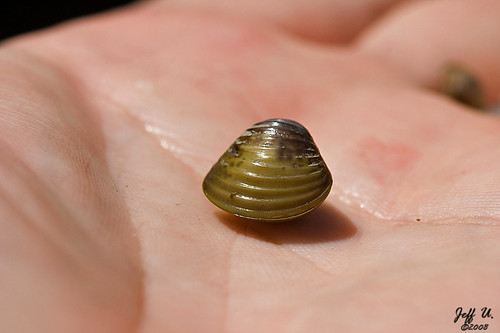
Besides the fish, we also pulled in a number of other aquatic creatures, including a countless number of nasty looking bugs, beetles, and dragonfly nymphs. In addition, we got some grass shrimp, Asiatic clams, and all sizes of crayfish.

Asiatic Clam

Asiatic Clam

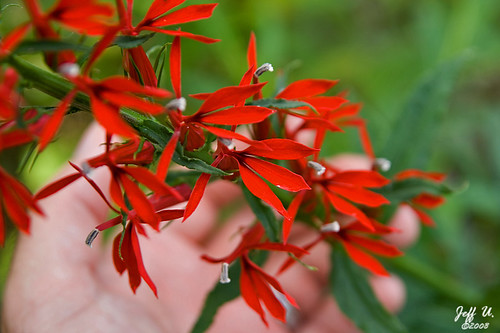
The area where we found all the fish had a number of aquatic plants including Heteranthera dubia, Vallisneria americana, Myrophyllum, Najas, and a beautifully flowering Lobelia cardinalis. While many aquarists keep the small form of Lobelia cardinalis, you can see that this would be a beautiful pond plant!

Lobelia cardinalis Flowers

Lobelia cardinalis Flowers

With great weather, and a good haul, we had a really great time at the Potomac River this weekend. Huge thanks go to Bob in GWAPA for organizing the trip, and to everyone else for participating. Finally, I want to thank Jeff U for taking fantastic pictures, and allowing me to use them on this website.


Business Broker

Raised Brick Pond Update

August 6th, 2008

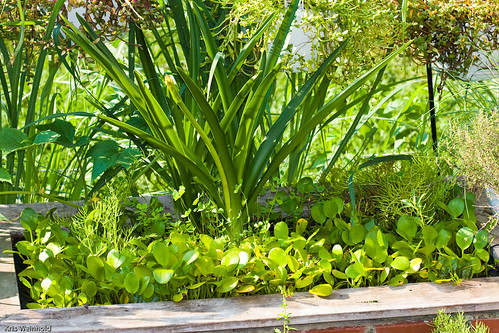
Earlier this week, I posted a photographic tour of my garden, but I purposely left out my raised brick pond. That’s not because it’s not doing well, but quite the contrary. The pond is currently overgrown with emersed aquarium plants so it warranted its own post.

Raised Brick Pond

Raised Brick Pond - 8/6/2008

The centerpiece plants are two large Crinum americanum plants, which should be flowering quite shortly. They are contained in a single plastic pot of ADA Aquasoil, and surrounding them, I put a smattering of other plants to provide groundcover.

Utricularia graminfolia

Utricularia graminfolia, Taiwan moss, Marsilea quadrifolia stems.

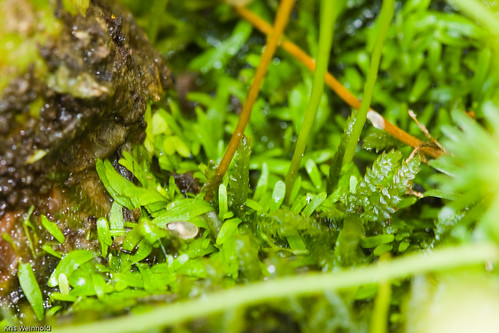
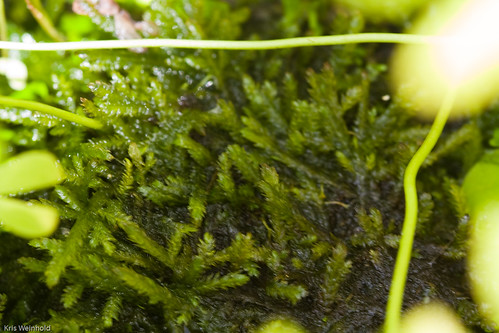
Utricularia graminfolia is growing emersed in that pot, along with quite a bit of Taiwan moss. I haven’t seen any flowers yet on the Utricularia, but I’m really hoping I get some before the summer is over.

Taiwan Moss

Taiwan Moss emersed

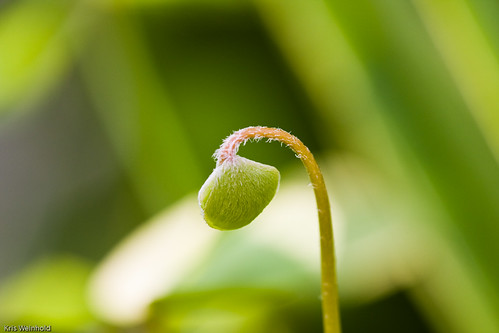
Marsilea quadrifolia is sending up new four-leaf-clovers all throughout the pot. Initially, the new leaves are all folded up in a single leaf, which then opens like origami into the clover.

Marsilea quadrifolia

Young Marsilea quadrifolia leaf

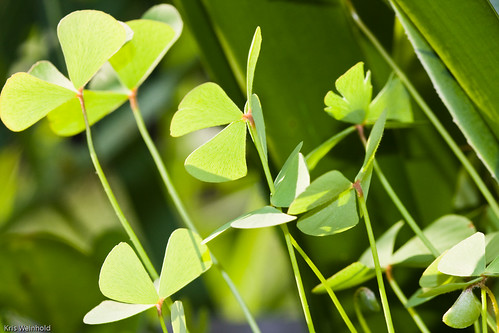
The Marsilea really provides a nice softening effect over the sharp leaves (not literally sharp) of the Crinum. They’re also starting to spread throughout the rest of pond, supported by the frogbite which is now ubiqutous.

Marsilea quadrifolia

Marsilea quadrifolia clover

Also, prevalent throughout the pond, Ludwigia arculata x repens is starting to flower, displaying tiny, but attractive, yellow flowers. Notice how the emersed growth of the Ludwigia has a red stem and green leaves, while submersed this plant usually has dark red leaves.

Ludwigia flower

Ludwigia arculata x repens with flower, over frogbite.

I also have Ludwigia peploides, a native plant to this area, growing in the pond. This Ludwigia doesn’t like to live underwater, as it tries to shoot to the surface when submersed. As such, it’s a perfect pond plant!

Ludwigia peploides

Ludwigia peploides

Finally, the water sprite is quite healthy and thriving throughout the pond. I’m a little bit scared to see how big the root system will be when I pull it out in the fall.

Water Sprite

Water sprite

When I do that, I’ll probably cram a 20L full of all of these floating plants, and see if I can get some threadfin rainbowfish to breed in the roots. Until then, I’m really enjoying the pond, as a wonderful complement to the rest of my garden.

Business Broker

A Walk Around the Garden

August 5th, 2008

Despite the sometimes scorching heat and suffocating humidity, this is one of the best times of the year as a gardener. All of the hard work and anticipation that we’ve put into a small plot of land out back, is finally starting to be rewarded. The backyard is green and overgrown, and in-between much of that growth are fresh vegetables, fruits, and herbs. Let me walk you through our garden…

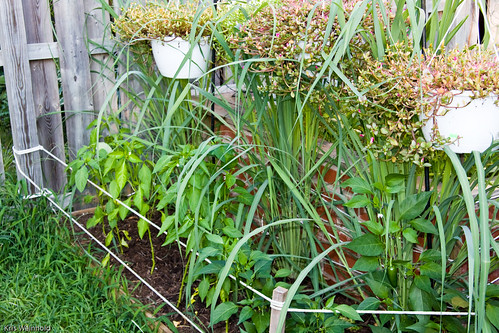
Peppers and Lemon Grass

Peppers and Lemongrass

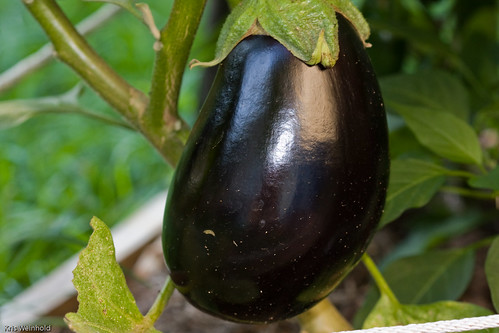
Around our raised brick pond, we have a small bed containing peppers (frying and jalapeno), and one monstrous eggplant. I have one cucumber vine that finally just started to take off after a battle with slugs.

Eggplant

Eggplant

The eggplant is finally ready for harvest, with so many more on the way that I’ll probably be sick of it after 2 months. This particular fruit is destined for Baigan Bhartha, a wonderful Indian dish.

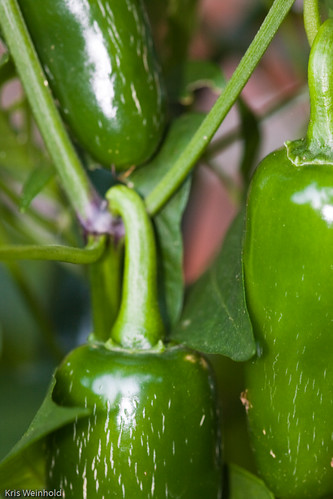
Frying Pepper

Cubanelle Peppers

Our peppers are doing quite well! The Cubanelle peppers are looking great and the Jalapenos are absolutely exploding! We will definitely not have to worry about the salmonella outbreak on peppers, as we have plenty ourselves!

Jalepenos

Jalapeno Peppers

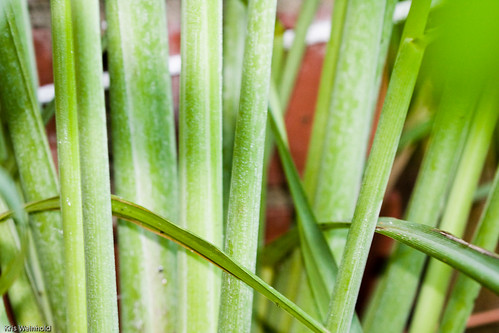
We planted lemongrass this year for the first time, mainly to create a nice backdrop for the pond, but I’m looking forward to using it in some Asian recipes.

Lemon Grass

Lemongrass

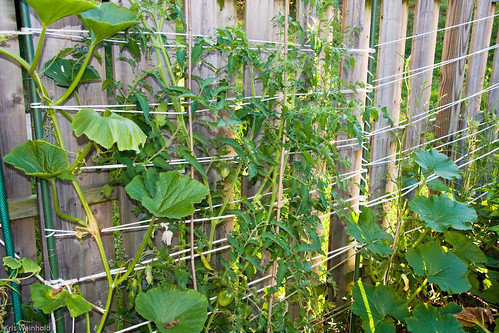
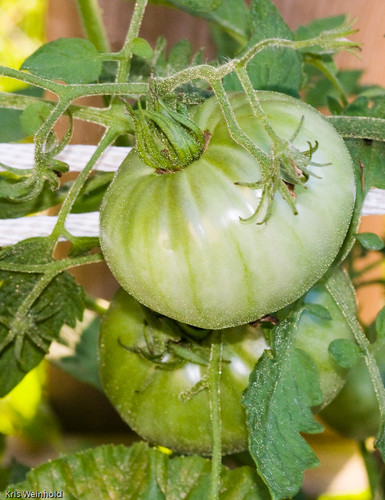
Our tomatoes are currently the biggest disappointment this year. They’re growing, but they seem to be about a month behind schedule for some reason. We support our tomatoes with clothesline, supported by multiple 6-foot poles. We manually feed the vines through the string. By fall, we’ll have a thick 6-7 foot wall of them.

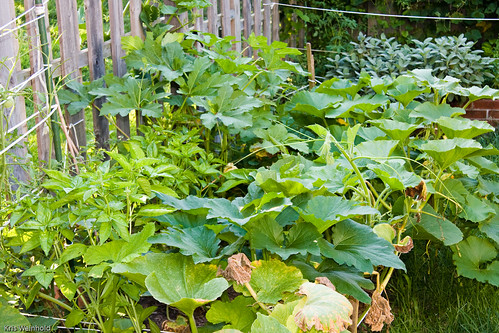
Tomatoes and Squash

Tomatoes with Amish Squash Creeping Up

While behind schedule, we still have a number of tomatoes forming, so hopefully they’ll come around eventually; horn worms not withstanding.

Tomatoes

Unripe tomato

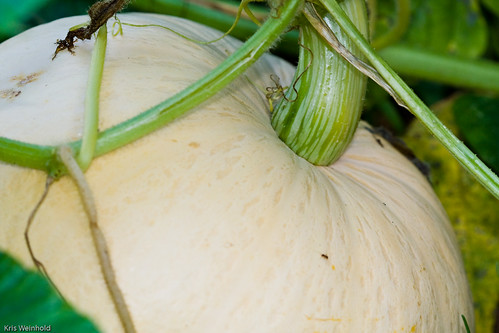
Next to and in front of the tomatoes, we planted three varieties of squash: Amish squash, yellow neck, and black beauty. Somehow, we missed the fact that the Amish variety is a winter squash, that can produce fruits up to 60-80 pounds.

Squash overrunning everything

Squash overtaking Okra and Pepper plants.

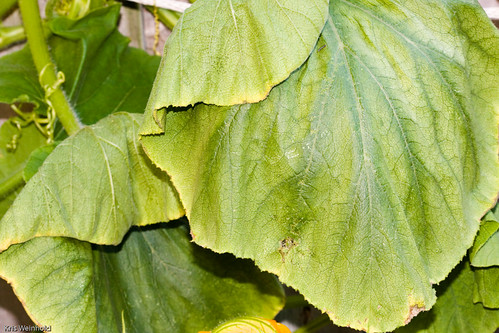
We’ve got a couple of these giants starting. I’m unsure whether they’ll ever actually ripen, however, as unfortunately, bacterial wilt seems to have afflicted much of the vine.

Amish Squash

Amish Squash

The vines, by the way, stretch about 15 feet long, with side shoots spanning the full 4 feet of the bed, and up the fence in some places. I’m not terribly upset that it’s dying back a little bit because it was strangling the rest of the plants in that bed. If anyone has any suggestions on how to prevent/combat bacterial wilt, I would be interested to learn, however.

Bacterial Wilt :-(

Squash leaves affected by bacterial wilt.

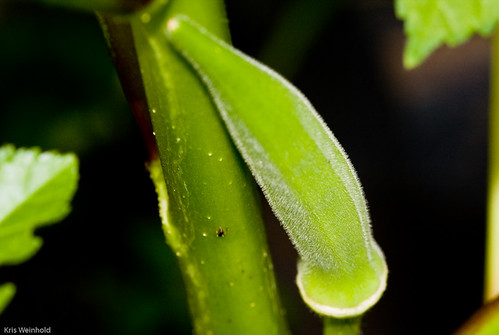
Coming into the hot weather, our Okra has started to take off. It’s beginning to shoot toward the sky, with our first pod shown below. While I never had Okra growing up, I really love the stuff now, even though it’s admittedly an acquired taste.

Okra Pod

Okra pod

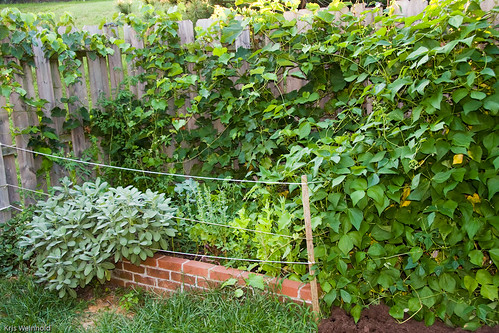
In our back raised bed, we have a number of thing going on. The grape and bean vines are clinging to the fence and tripods I’ve setup. We have our evergrowing sage bush in the front left, with some greens in the front right. Carrots, beets, and turnips are behind those things

Beans & Grapes Overrun

Back bed: Sage, greens, carrots, turnips, beets, beans, and grapes.

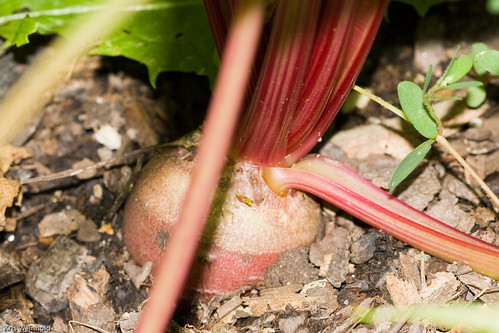
Our first group of beets are starting to pop out of the ground. I’m going to let them get a little bit bigger before picking, but I do want to get a second crop in the ground soon for late harvest.

Beets!

Beet

We have a number of other herbs growing in our garden, including basil, stevia, oregano, rosemary, thyme, catnip, mint, chamomile, and dill. I hope you’ve enjoyed this little tour of our garden. We definitely love this time of year!

Business Broker

« Previous Entries   Next Entries »