Quarantine Aquascape

July 7th, 2009

I got some new rocks from a friend in GWAPA, and wanted to try them out in a tank. Unfortunately, the only free aquarium at the moment was my 20L, which was used primarily as a quarantine tank and place to hold some extra low-light plants. My friend is lucky enough to have these rocks buried in his yard. They seem to be a composite of quartz and slate, with some having very attractive orange bands through them. Overall, they have a fair amount of character up close.

20L Quarantine Aquarium

20L - Click picture for larger view

The aquascape isn’t tremendous, but  I think it could have some potential if I paid much attention to it. This tank has previously been a major farm of cladophora algae, but after moving about 20 Amano Shrimp from my 40G into here, they’ve really done a tremendous job of getting it under control. If they can keep it that way, I may very well enjoy maintaining a small scape in this aquarium. I just have to make sure I can easily fish out any quarantine fish! Comments welcome.


Business Broker

Raised Brick Pond: Summer of the Flower

July 4th, 2009

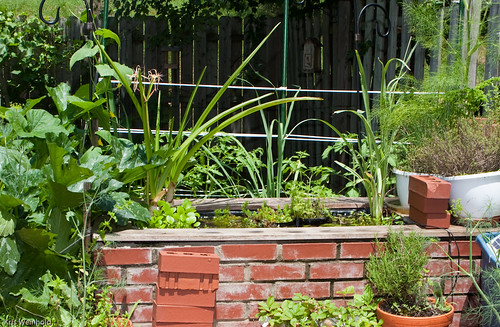
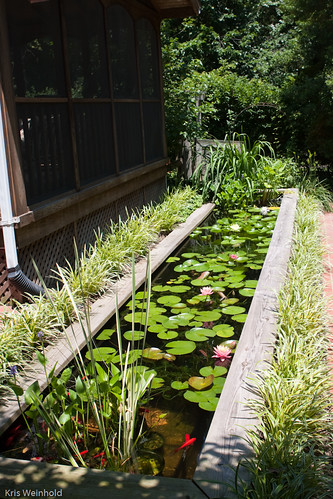
After hearing Sherry’s talk about her pond at the last GWAPA meeting, I decided it was time to post an update about how my raised brick pond is progressing this summer. I’m happy to say that things are going pretty well. I had a few plants come back after being frozen solid through the winter, particularly some Potamogeton and Ludwigia palustris. Neither is incredibly unexpected, however, as they’re both native plants.

Pond - July 4th, 2009

After a few seasons, I’ve had to replace the solar pump as the old one just wouldn’t turn anymore. I think detritus got into the motor, but unfortunately, it’s sealed tight, so I can’t get inside to service it. Fortunately, I had a spare, so that’s going right now. IMG_5819

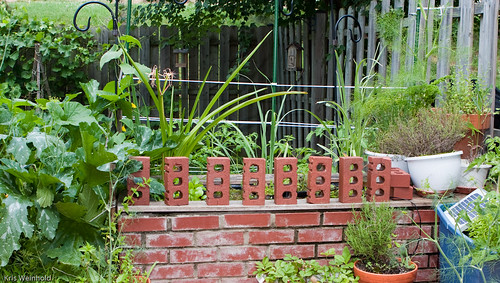
You’ll notice that I have several bricks lined up along the front edge of the pond. This is to keep a certain dog, Bella, from constantly trying to take a drink from the pond water. She’s got a huge bowl of water just up the steps in the house, but she loves the pond water for some reason. I guess it must have a more complex flavor, but nevertheless, I don’t need a sick dog on my hands, so hence, the barrior.

Pond - July 4th, 2009

Without the barrier, it looks like this. Notice the large zucchini plant to the left of the pond, which is producing lots of tasty fruit already. I also have a couple cucumber vines growing which I’m trying to train up, over, and along the pond. In back of the pond, you can just start to see the tomato plants, which should eventually form a solid wall of green as a backdrop.

Pond - July 4th, 2009

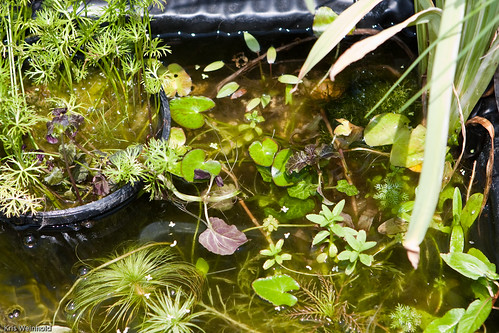
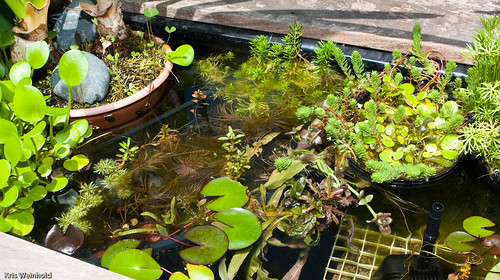
In the pond, this year, I’ve placed every species of plant I have that I don’t know the true scientific name. I have a good friend in GWAPA who does a lot of research into trying to figure out that Limnophila sp. ‘Mini’ is really Limnophila repens, and similar cases, but it’s nearly impossible to do that without seeing the flowers. So, I’m hoping that all of these plants will convert to emersed form and flower, so that I can help him identify these plants.

Pond - July 4th, 2009

To accomplish this, I’ve propped up a few pieces of eggcrate on bricks, and set some tubs of substrate just below the water surface. I already have a number of species converting to emersed form, but only my large Crinum americanum has flowered thus far. As for fish, I threw in a few zebra danios to control mosquitos earlier in the season. Big mistake! I’m going to end up pulling out tons of these fish if the number of fry present are any indication. I’ve also put a few Threadfin Rainbowfish out to hopefully breed. Comments welcome!

Business Broker

GWAPA: Ponds and Container Water Gardening

July 1st, 2009

Sherry Mitchell hosted GWAPA’s June meeting last weekend, where she took us around her beautifully landscape garden, which included a huge reflecting pool/pond. Appropriately, Sherry then described her various methods for successfully settings up a pond or container water garden.

Pond, Reflecting Pool

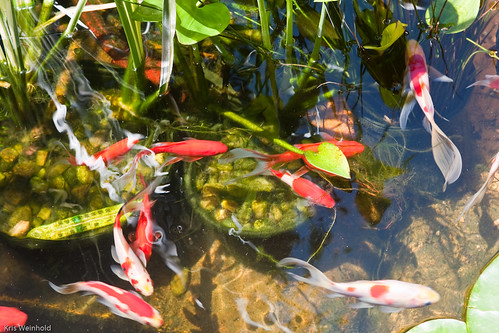
As you can see in the picture below, Sherry plants all of her pond plant in containers. Instead of using the overpriced pond-baskets, she recommends using plastic under-the-bed boxes which can be had for a dollar or two from any Target or similar store. She has a large colony of goldfish in her pond, many which she has rescued from situations that were not befitting of living creatures.

Goldfish

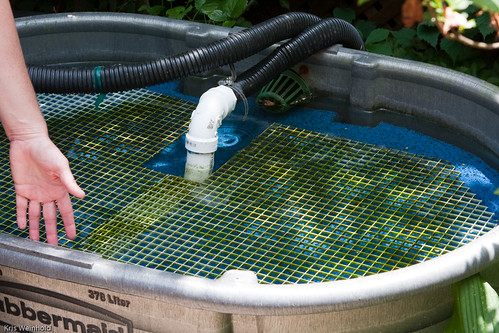
To filter the few thousands of gallons of water in her pond, Sherry uses a homemade “Skippy Filter,” which she built using designs from SkippyStuff.com. Essentially, water flows in the bottom, and is lifted through a series of filter pads before returning to the pond. The benefit of this system is that it’s comparatively low-priced, reasonable in terms of the maintenance required, and does a great job.

Skippy Filter

In addition to the filtration, she also believes in doing 50% water changes each month. The water does not go to waste, however, as she has a drain on the filter which automatically waters plants in the rest of her garden, using the nutrient-rich water from the pond.

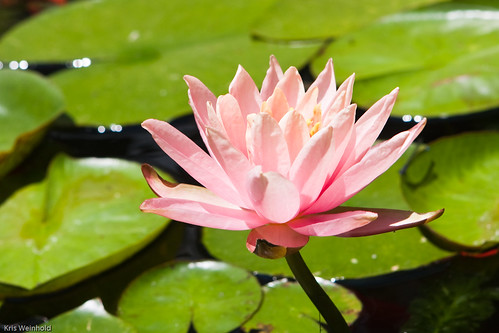
Lilli

There were a number of lillies blooming while we were at her pond. She has a well-proven system for potting her plant. Instead of using a standard aquatic plant mix, she uses a combination of Osmocote fertilizer with top soil, kitty litter (for clay), and pea-gravel to keep the other stuff down.

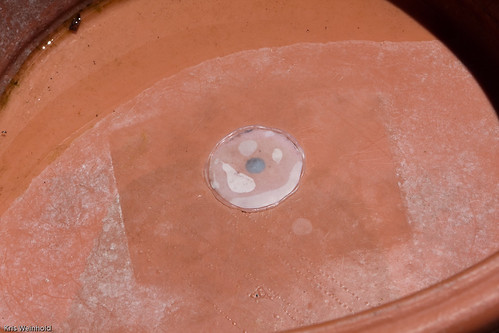
Sealed Planter for Water Container

She’ll use the same methods in smaller containers for growing out plants, or when setting up a container water garden. Sherry mentioned how it’s often difficult to find large containers that don’t have drainage holes. She seals those holes using margarine lids and aquarium cement on either side of the hole. From there, the container should be water tight, and ready for use!

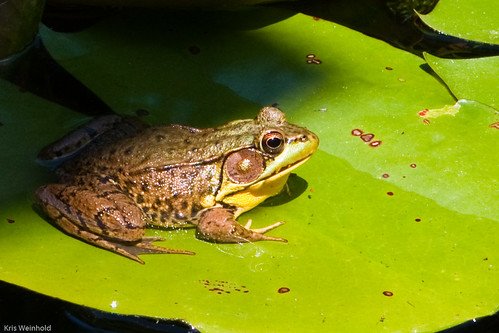
Frog on Lillipad

This was a wonderful meeting. In addition to the beautiful outdoor features that Sherry described to us in detail, she also had a nice fishroom inside. We had another large auction, and raffled off some pond and plant supplies. I’m going to have to apply many of the principles Sherry described to my raised brick pond when I get the chance.

Business Broker

Nymphaea micrantha – Plantlets

June 28th, 2009

Nymphaea micrantha is a very popular water-lily that I’ve kept for some time. It’s sometimes incorrectly sold as Nymphaea sp. ‘4-Color’ or as Four-Color Lotus plant. This is probably because the leaves are a smattering of colors, forming a beautiful mozaic on every leaf.

Nymphaea micrantha

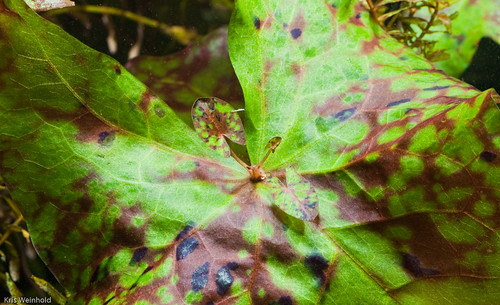
One of the other interesting qualities of this species is that plantlets often grow at the base of the leaf where the stem attaches. I noticed several of my leaves doing exactly this. The larger plantlets look like the picture below, with roots protuding from the underside of the leaf.

Nymphaea micrantha

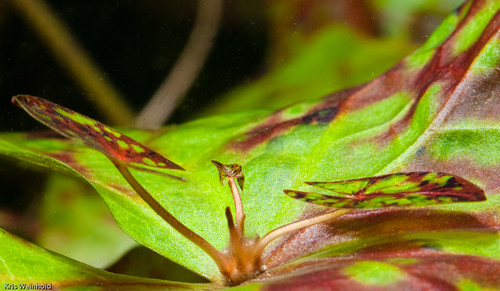
Initially, the plantlets start as a single stem emerging, which eventually has a leaf that unfolds. I’ve had this particular plant growing for almost a year, and it only started exhibiting plantlet growth within the past month.

Nymphaea micrantha

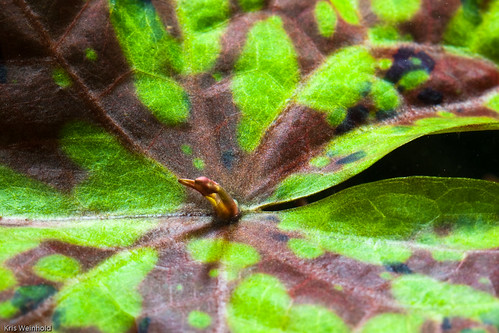
Even as very small stems, you can see below that minature leaves are present. (Yes, some algae too, darn!) Once plantlets develop to sufficient size, and have nice root structures, you should be able to clip them from the parent leaf, and plant them as their own plant.

Nymphaea micrantha

Growing Nymphaea micrantha is not terribly challenging. You just need to make sure to provide a rich substrate and a strong enough light. If you don’t have enough light, the plant will either melt away, or send all of its leaves toward the surface as floating lily-pads. Sometimes this happens anyways. Usually, if you’re diligent at trimming off these surface-loving-leaves, the plant will produce more compact, submersed leaves.

Business Broker

Adkins Arboretum

June 25th, 2009

I haven’t posted in a little while because I was taking a break while vacationing at the beach on Maryland’s Eastern Shore. On our way over to the beach, my wife and I stopped at Adkins Arboretum, a native-plants garden and preserve located right next door to Tuckahoe State Park, along the Tuckahoe Creek.
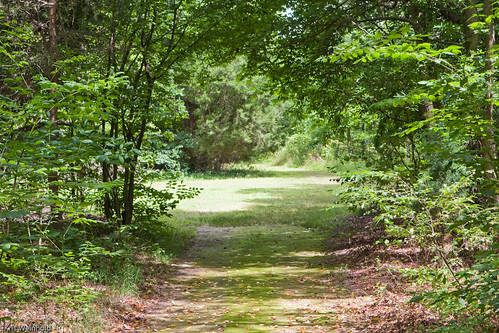
Trail at Adkins Arboretum

As soon as you get out of your car, you see a butterfly garden comprised entirely of native flowers. With bumblebees and butterflies actively buzzing through the garden, we snapped a few shots of the flowers there.
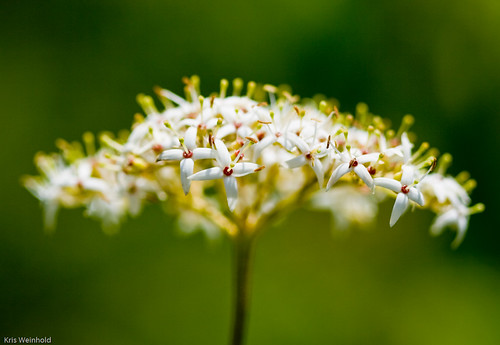
Flower

As we walked toward the visitor center, we had to cross a bridge over the Tuckahoe Creek. I was hoping to see more aquatic plants present, but most were marsh plants, instead of true aquatics. Nevertheless, it was still beautiful, and housed several species of dragonflies and frogs.
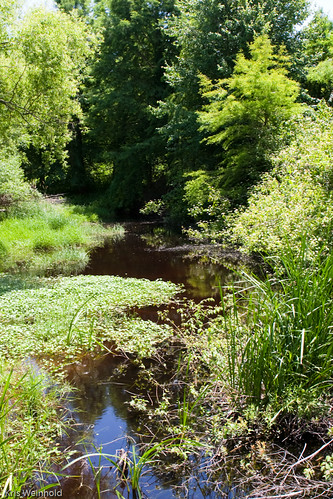
Adkins Arboretum

At the visitor center, they were selling a wide variety of plants native to Maryland. I was amazed at how many different plants were available. There’s really not much of a reason why you can’t put together a beautiful flower garden using plants from your area.
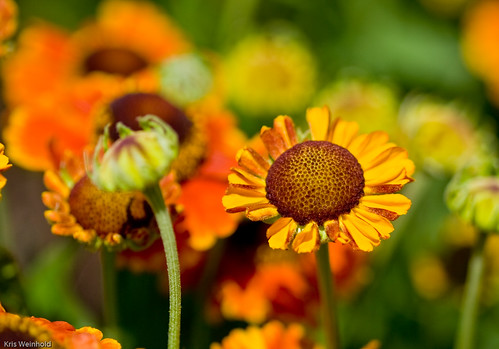
Flower

We perused through their library and gift shop, and then decided to head out on the trails. The trails are well-kept, and mulched in most areas. They’re certainly more accessible for kids and families then some of the walking paths next door at the state park. That said, there’s also an element of nature that’s lost because of this.
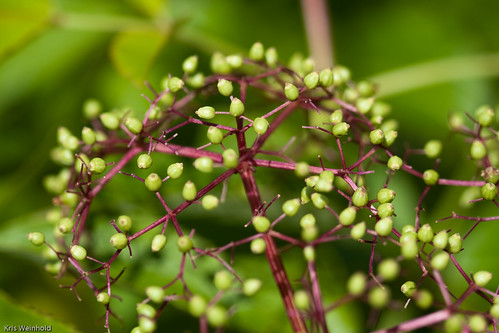
Flower

Along the trail, we spotted quite a few different mushrooms and fungi growing. I suspect that they’re loving the above average amount of rainfall that Maryland has been having so far this year.
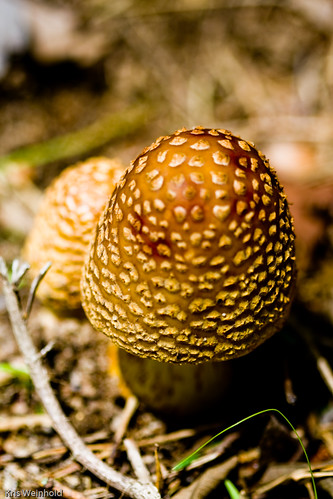
Mushroom

Even despite the well-manicured trails, we still ended up with several ticks crawling on us, but fortunately none had attached yet. As someone who’s witnessed the effects of tick-borne diseases in someone close to me, please make sure to wear proper attire, and take all precautions when hiking to avoid tick bites. Especially folks in the Mid-Atlantic region, where Lyme and other diseases are prevalent, should take extra care.
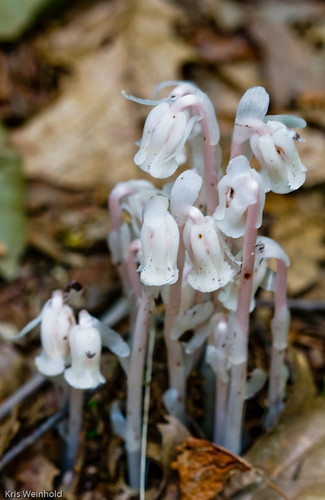
Fungi

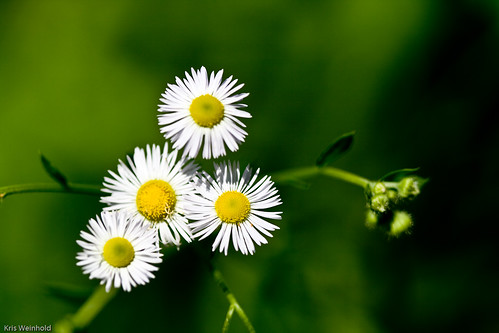
Finally, after our jaunt through the woods, we ended up back at the visitor center, where we took one more stroll through their flower garden. I would recommend stopping at Adkins Arboretum to anyone traveling to Maryland’s Eastern Shore. It’s just a short drive off of Route 50, the main passage to the shore from the Baltimore/Washington region.
Flower

For residents closer, the arboretum seems to run special events quite frequently, which look quite interesting. If you’re in the area, check it out!

Business Broker

« Previous Entries   Next Entries »