Planted Aquariums for Reefers
December 1st, 2008As part of my blogging exchange, I wrote an entry for The Reef Tank, inviting saltwater aquarists to try the freshwater planted side of the hobby. Please take a look over on their blog:
As part of my blogging exchange, I wrote an entry for The Reef Tank, inviting saltwater aquarists to try the freshwater planted side of the hobby. Please take a look over on their blog:
It’s been about 3 weeks since I first planted my new 50G aquarium. Since then, I got my 4x39W T5 lights from Catalina Aquarium, which are fantastic, and have tweaked a number of things in the tank. The biggest thing so far is that I removed a few pieces of the manzanita wood, which I decided were breaking up the flow of the aquascape from the left to right. As you can tell, the plants are all growing, but unfortunately, you can also see that I have a fair amount of algae. Part of the reason for this is that until this weekend, I didn’t have an extra timer to run the lights separately, so all four bulbs were going for 10 hours straight.
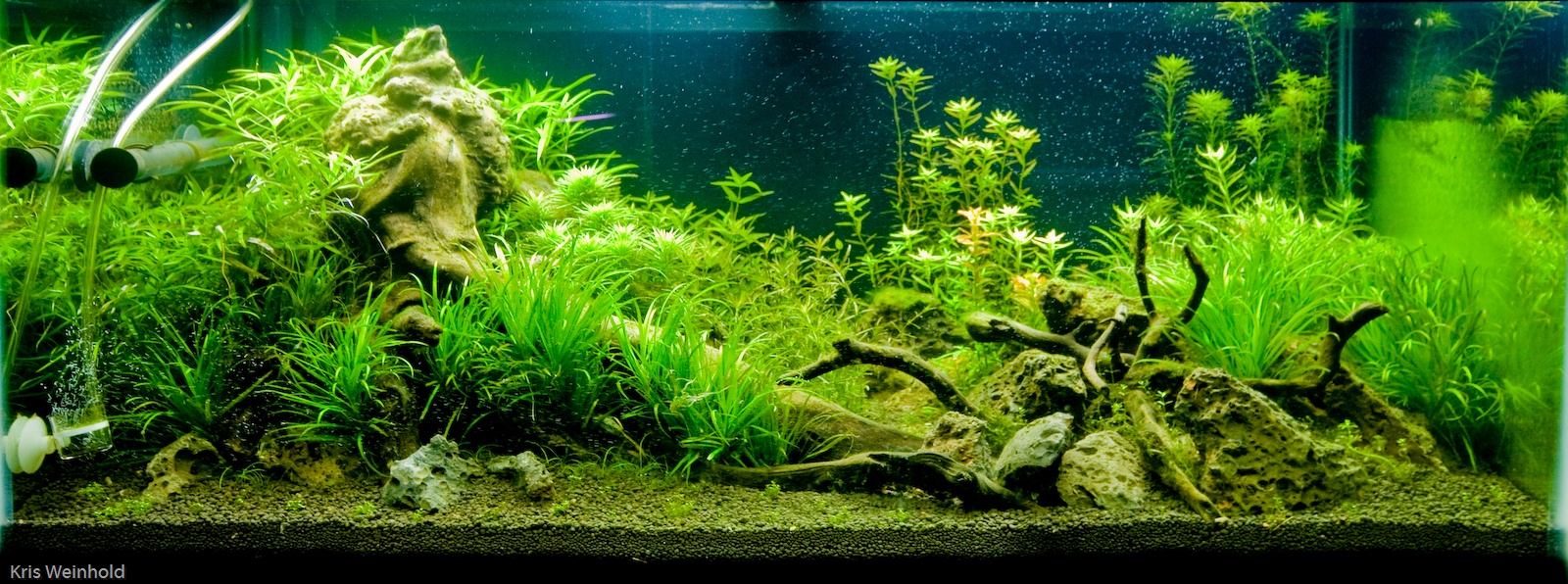
Now, only two are running, with the other two coming on for a mid-day burst of light. Hopefully that will clear things up after a bit. Despite the algae, the plants are growing well, and there’s lots of pearling going on. I changed up a few of the plants, taking out the Echinodorus sp. ‘Vesuvius’ , replacing it with Limnophila sp. ‘Mini’, and in the center mid-ground, I added Najas grass. All of the plants need a good trimming, but at this point, I’m still trying to propagate the stems a little bit more so that I can replant them. After that, I’ll start bushing them out via trimming.
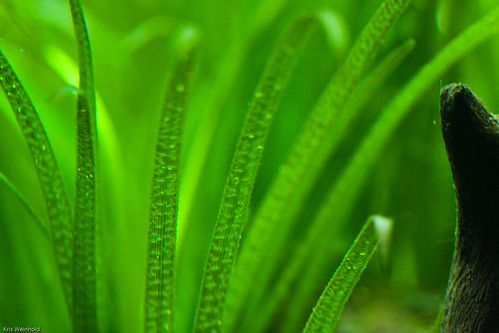
In addition to the plants, I also added a group of some fantastic Black Morpho Tetras, or Poecilocharax weitzmani. They’re still young, and quite skittish, so it’ll probably be awhile before I can get a decent picture of them, but there’s a fantastic photo of one on Aquahobby.com. They also seem to be growing, and I’m sure they love the acidic nature of the Aquasoil at this point, since they originate from blackwater streams. So, right now, it’s still just waiting game before I can really start fine runing the plants. Comments welcome!
Rotala verticillaris is one of the newer Rotala species entering the hobby from Asia, which coincidentally is also one of the prettiest plants coming in as of late. Believe it or not, but Rotala verticillaris is actually the reference species for the Rotala genus. It’s amazing how diverse this particular group of plants can be when compared to the more common Rotala rotundifolia or some of the other more delicate species. Rotala verticillaris has a thicker stem and branches very tightly, but unlike some others it grows nearly vertical, which make stands of the plant extremely orderly and well positioned.
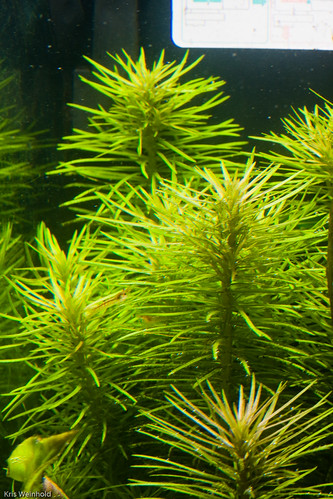
Also different about Rotala verticillaris is its flower, which resembles something more of a Pogostemon species, than some of the other Rotalas. The flower is, however, quite beautiful exhibiting a striking purple with featherly fronds coming off. Below is a picture of my friend Cavan’s flowering plant.
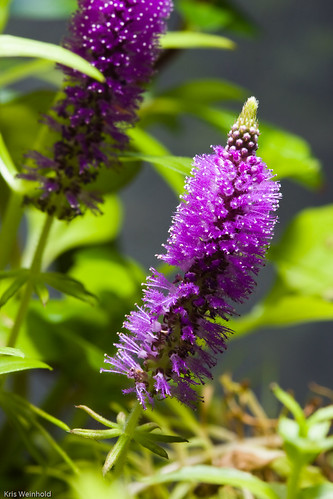
In the aquarium, Rotala verticillaris is not as undemanding as Rotala rotundifolia, as it should require medium/high light plus CO2 injection. Of course, like all plants, it will benefit greatly from a rich substrate and addition fertilization. It is also not as fast a grower as other Rotala species, which in my opinion is a positive thing. I highly recommend this plant for use in any style of aquascape, but it is more perfectly suited to aquascapes with fine leafed and well manicured background stem plants.
The 2008 Aquatic Gardener’s Association Convention started with a field trip to the Georgia Aquarium, which was conveniently just a few blocks away from the convention hotel. We all assembled in the lobby of the hotel, and created a mob of people filling the street toward the aquarium. It was a great way to meet up with folks that you haven’t seen since the last convention.
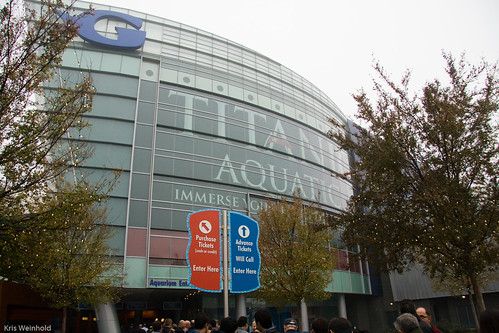
The aquarium is rather new in Georgia, and that shows through in the cleanliness and general niceness of the tanks and facilities. The building has a central cafe/atrium area with wings heading off in different directions. We were first guided into their river wing because they had the planted aquarium staff there to answer any questions we had about those tanks.
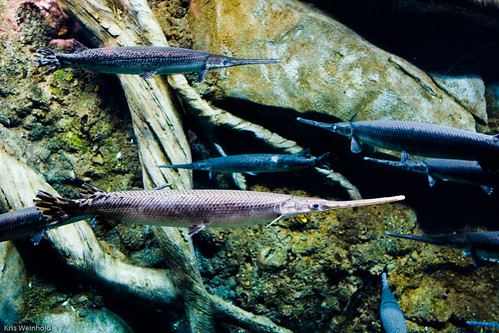
The planted tanks that they had were nice tanks. They wouldn’t place highly in an aquascaping contest, but they’re well designed, and accomplish feats that most of us don’t usually attempt. By that, I mean that some of these tanks must have been 5-6 feet tall, and yet they still managed to adequately light them to the floor.
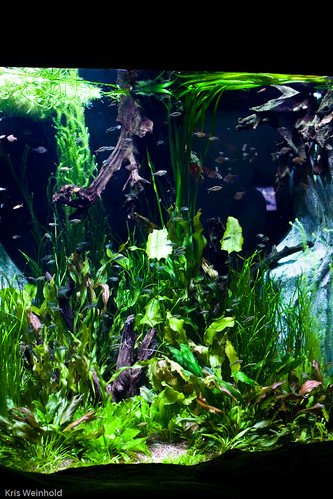
In addition, I asked one of the staff how they trimmed their plants in such a deep tank, and they said that they literally put on a wetsuit, and dive into the tank. If it was such a rigmarole for me to trim my tanks, I don’t think they’d ever get attention!
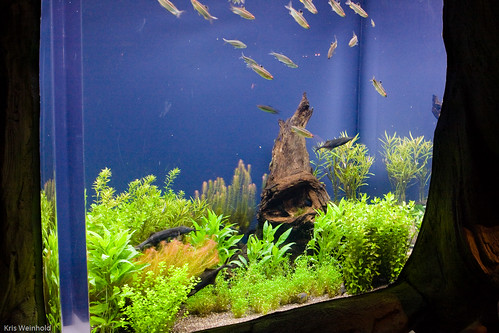
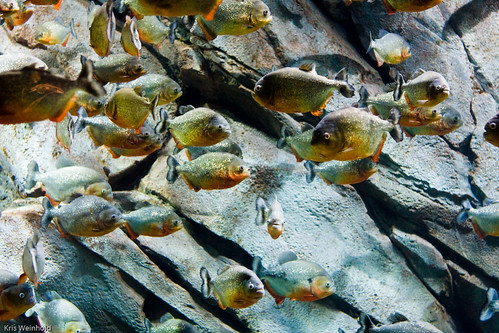
In addition to the planted tanks, they had a fair number of other freshwater tanks, including a large river tank with huge catfish, an African rift lake tank, a piranha tank, and several others. I would have liked to see more freshwater stuff at the aquarium, in comparison to the marine sections, but the things they had were nicely done.
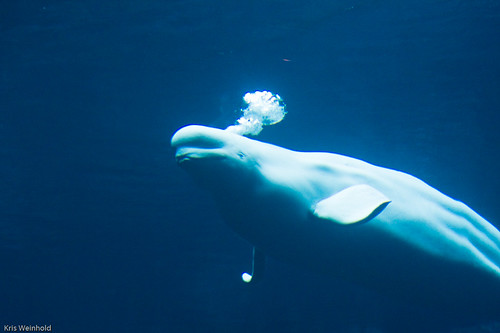
One of the cooler attractions at the aquarium was their beluga whale pool. I counted four whales playfully swimming back and forth, clearly recognizing the humans on the other side of the glass. It’s always amazing to watch humongous creatures maneuver so gracefully and with such ease underwater.
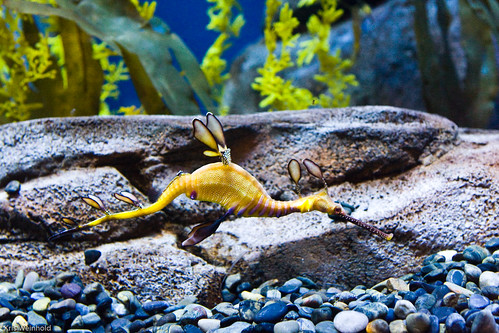
And of course, they had a sea dragon exhibit. These odd-ball creatures don’t seem to move around much, but they’re fun to watch just due to their unique appearance.
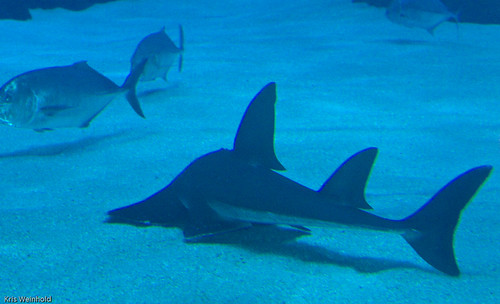
I would be completely negligent if I didn’t show a picture of a guitarfish (below), for which this blog is *not* named after, but a coincidence that was nice to discover. Although they kind of look like a shark, they’re actually in the ray family, and cruise along the bottom searching for small crustaceans to eat.
The most impressive display at the Georgia Aquarium is their huge tank, which I believe is the largest aquarium in the world. They had large informational cards that you could take listing most of the species in the aquarium, so that you could find and identify the various fish in the tank. I could have sat in front of this glass all day long.
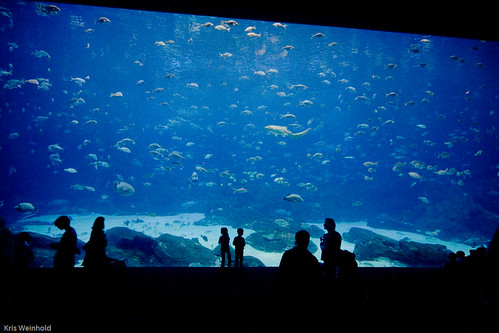
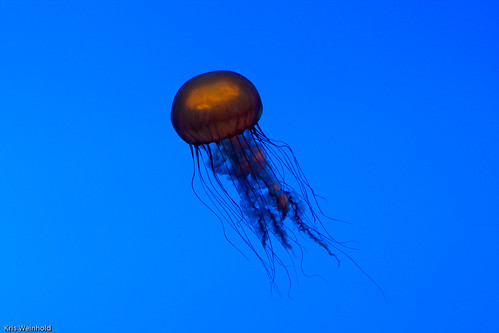
In fact, I believe that they several events in this room with the aquarium as a backdrop, and they even allow you to sleep over in some cases, where you can fall asleep watching the fishes. Obviously, there were countless other exhibits throughout the aquarium, but two of my favorites, which most public aquariums seem to have these days, were the eels/worms, and then the jellyfish below.
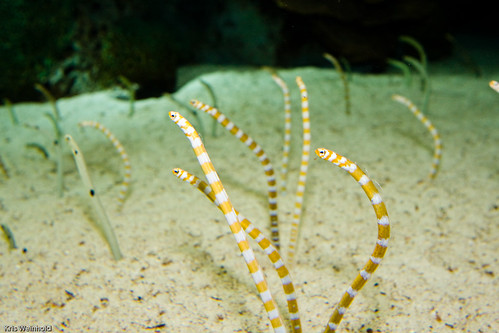
It’s just so neat to watch both of these creatures flow in the current, just waiting for food to come their way. The jellyfish, especially, are beautiful with the blue backdrop, and their orange and reddish colors.
I would recommend the Georgia Aquarium to anyone who’s in Atlanta and needs something to see. It’s definitely got a lot of offer, and is worth the price of admission. That huge tank is worth it by itself.
The informational part of 2008 Aquatic Gardener’s Association Convention wrapped up on Saturday evening with Karen Randall talking about her collecting trip to Thailand with aquatic plant author and expert, Christel Kasselman.
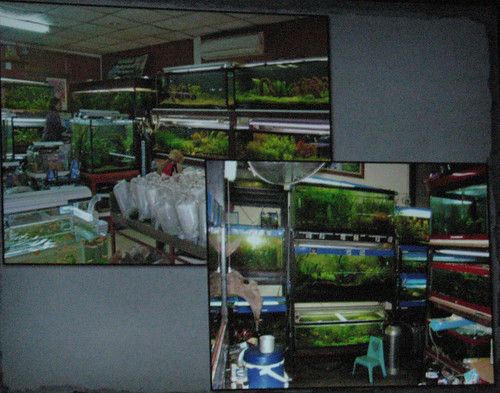
When they first got to Thailand, they wanted to experience the huge market in Bangkok. They had heard stories about the size and quality of the aquarium-related stands setup there. After much walking, they finally came to some of the dealers, finding rack after rack of aquariums filled with aquatic plants. Karen said that they could pretty much locate any aquarium plant known to the hobby in that market, in addition to some new ones.
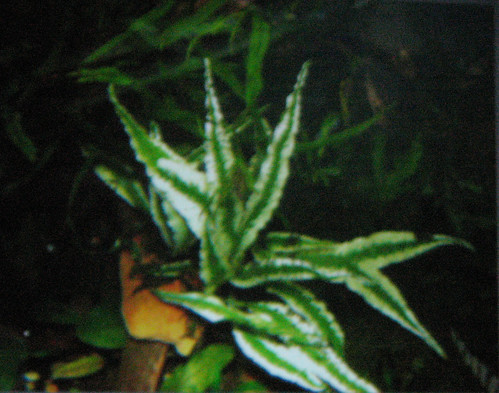
Take for example this variegated fern shown above, which was purportedly a form of Java Fern. Unfortunately, with several weeks ahead of them, they weren’t confident they any plants bought in the market would survive to make it back to their homes. In addition to the plants, the markets had an amazing selection of other materials including rocks, wood, equipment, and even an insane variety of gravel. (shown below)
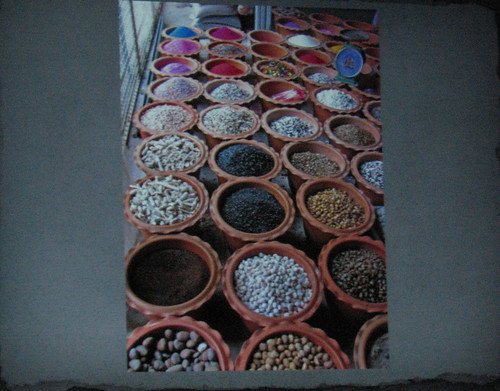
I can only imagine what it must be like to walk through so many shops who really get it in terms of aquatic plants. From there, Karen and Christel traveled throughout the country, collecting various crypts and other plants trying and find something new. They did find some interesting stuff, which she promised we’ll hear more about soon.
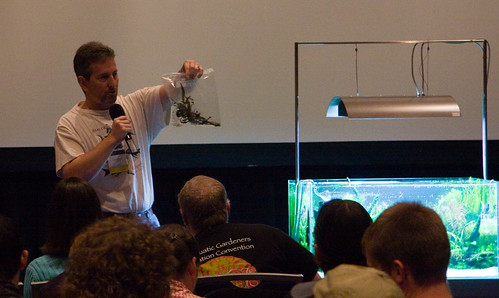
The next day, Sunday, was an all-day auction. I wouldn’t be surprised if there were a thousand bags of plants spread across 4-5 rows of tables. I took 30 bags of plants myself to sell, but only came home with four. There was pretty good variety present in the auction, and prices were all over the map. In the beginning, prices tend to be a little bit inflated, but as the day wore on, several folks got some really good deals. It’s interesting to see relatively well-known plants, such as Anubias barteri var. nana, go for high prices while lesser known new plants go for less than they’d sell for online. Every auction is different, however, and I had a great time chatting with folks, while occasionally placing a bid. After 4-5 hours, I was off to the airport, after enjoying a fantastic convention. I highly recommend that every aquatic plant enthusiast try to attend at least one of these conventions in the future.