50G Aquascape: 3 Weeks In

November 29th, 2008

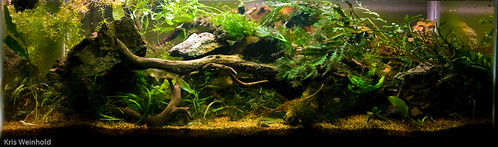
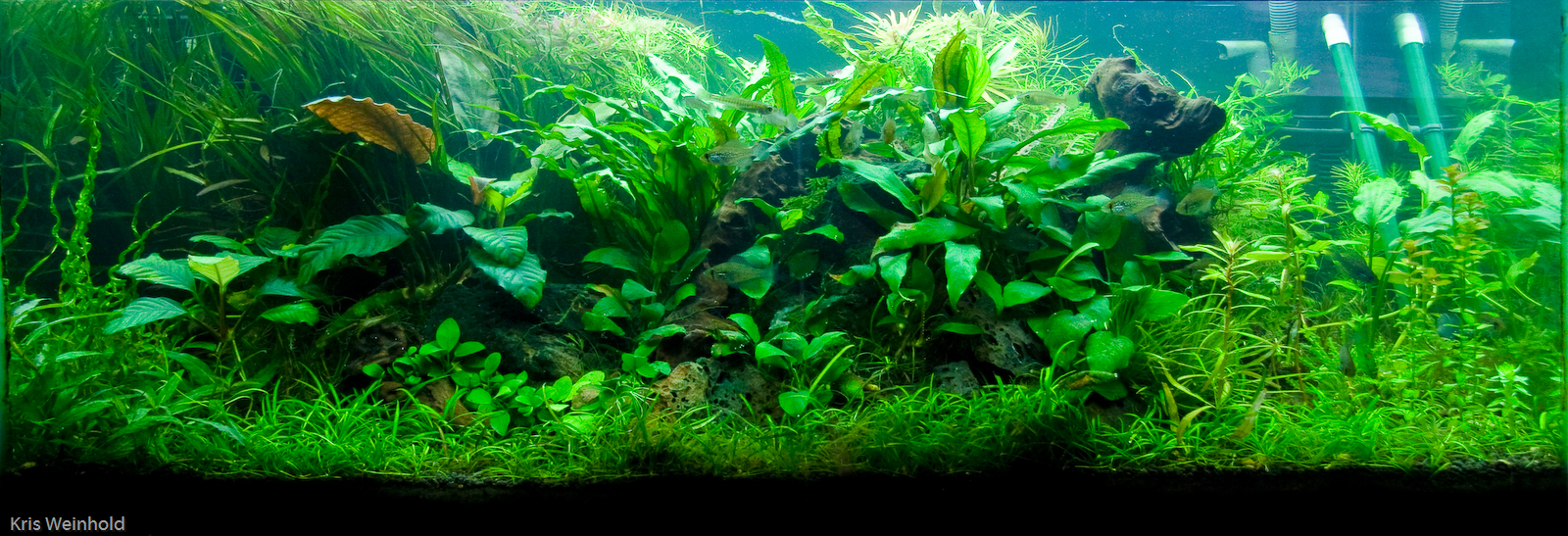
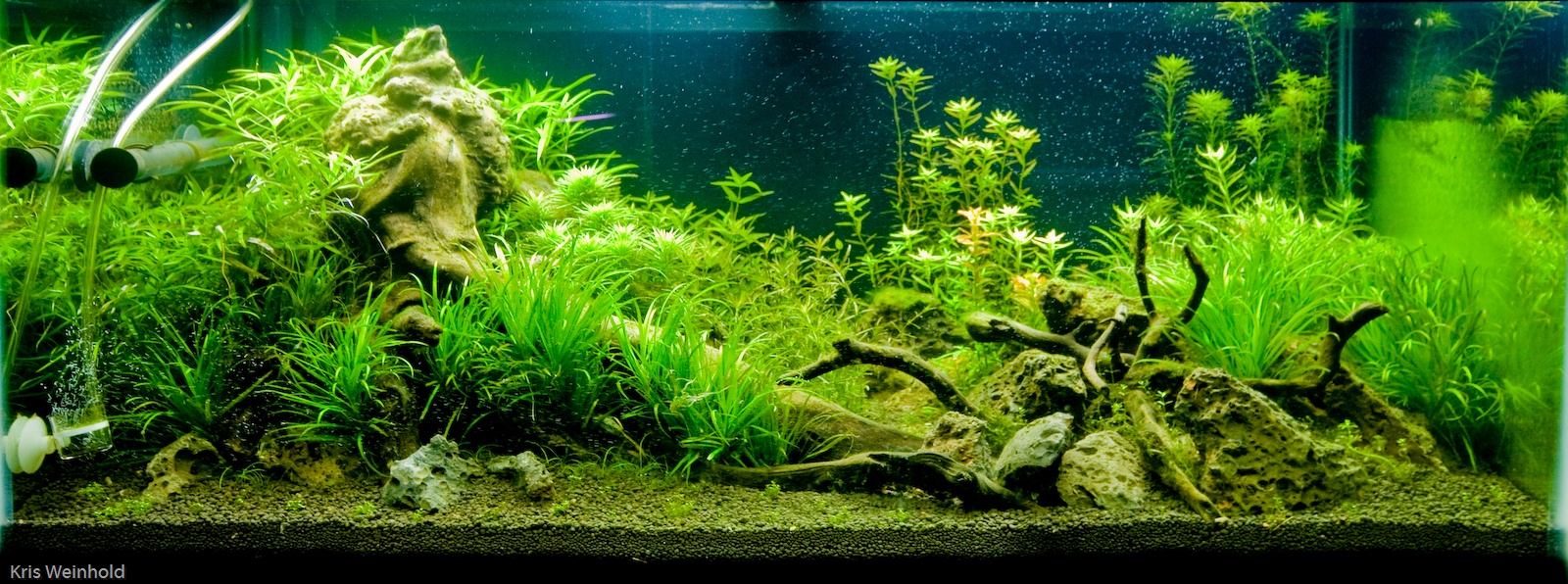
It’s been about 3 weeks since I first planted my new 50G aquarium. Since then, I got my 4x39W T5 lights from Catalina Aquarium, which are fantastic, and have tweaked a number of things in the tank. The biggest thing so far is that I removed a few pieces of the manzanita wood, which I decided were breaking up the flow of the aquascape from the left to right. As you can tell, the plants are all growing, but unfortunately, you can also see that I have a fair amount of algae. Part of the reason for this is that until this weekend, I didn’t have an extra timer to run the lights separately, so all four bulbs were going for 10 hours straight.
50G - 3 Weeks In

Now, only two are running, with the other two coming on for a mid-day burst of light. Hopefully that will clear things up after a bit. Despite the algae, the plants are growing well, and there’s lots of pearling going on. I changed up a few of the plants, taking out the Echinodorus sp. ‘Vesuvius’ , replacing it with Limnophila sp. ‘Mini’, and in the center mid-ground, I added Najas grass. All of the plants need a good trimming, but at this point, I’m still trying to propagate the stems a little bit more so that I can replant them. After that, I’ll start bushing them out via trimming.
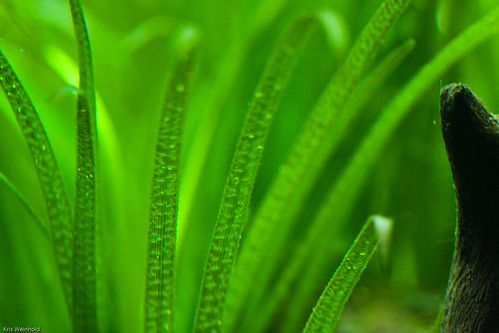
Blyxa japonica

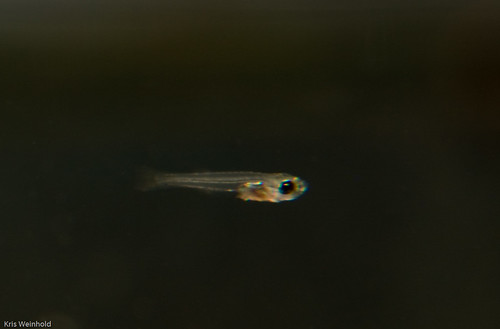
In addition to the plants, I also added a group of some fantastic Black Morpho Tetras, or Poecilocharax weitzmani. They’re still young, and quite skittish, so it’ll probably be awhile before I can get a decent picture of them, but there’s a fantastic photo of one on Aquahobby.com. They also seem to be growing, and I’m sure they love the acidic nature of the Aquasoil at this point, since they originate from blackwater streams. So, right now, it’s still just waiting game before I can really start fine runing the plants. Comments welcome!


Business Broker

50G – First Planting

November 11th, 2008

Even though I’m still waiting on my 4x39W T5 light fixture to arrive from Catalina Aquarium, I’ve managed to borrow lights from some other tanks so that I can get going on the planting. I hooked up the Eheim 2026 Canister Filter, Hydor In-Line Heater, and CO2 canister so I’m good to go on everything but the light. I also added a few more rocks to fill in the hardscape. As this is my first planting, everything is subject to change and refinement as it grows in.
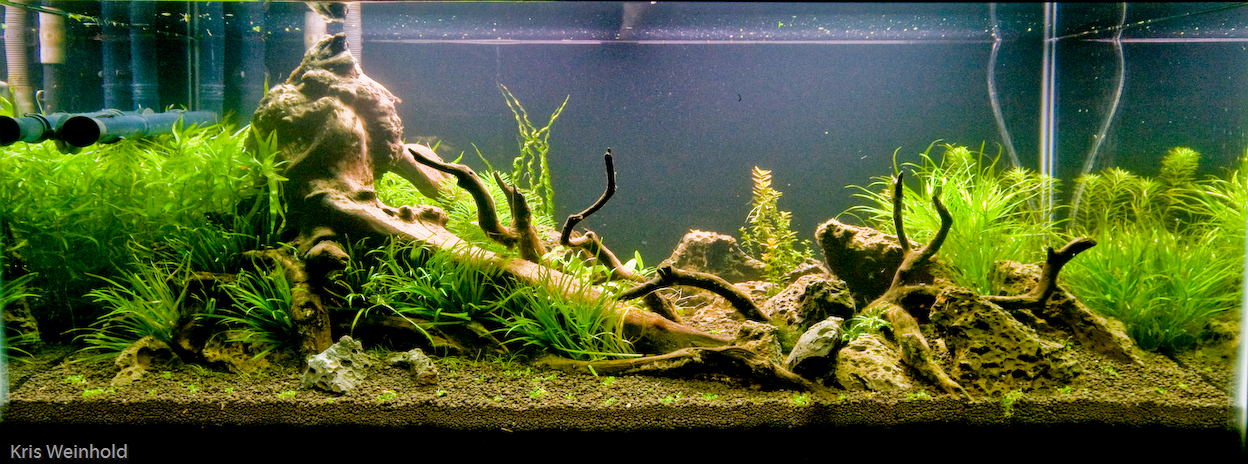
50G Aquascape

I’ve surrounded the large manzanita root ball with Stargrass, which I hope will provide a bright green backdrop to the wood. In front, I planted Hemianthus callitrichoides along with a little bit of hairgrass mixed in. This transitions up to some Blyxa japonica in the midground areas. In the back, I’ve planted five or six varieties of Rotala, which I’ll groom and cull once they’ve grown in a little bit. Unfortunately, I didn’t have full bushes of many of the stems, so they’ll all have to grow for a little while before I can truly scape with them. I still need to obtain a bunch of Fissidens fontanus moss to accent and soften the wood and rockwork. So, it’s definitely still a work in process… Comments welcome!

Business Broker

50G – New Tank & Hardscape

November 5th, 2008

I mentioned last week how I’ve been tearing down a few of my smaller tanks in order to consolidate them into a single larger aquarium. Well, I’ve begun setting up a new 50G breeder tank. The nice thing about a 50G aquarium is that it is as tall as it is deep, giving it very nice dimensions for creating an aquascape. I still don’t have a light fixture for this tank yet, so up to now, all I’ve been able to setup is the hardscape.

50G - Hardscape

Using a huge manzanita root ball on the left, my goal was to create the look of a log or tree that’s fallen into the water and has sat there for awhile. The limbs have settled in between rocks, and only the larger ones remain undecayed. That’s the premise so far. I’ve had a difficult time trying to decide what plants I’m going to use in this tank, and exactly where they’re going to go. I’ll likely use a bunch of smaller leaf’d plants, such as various rotalas, but I still haven’t figured out how they’re supposed to fit with this hardscape. I think my biggest stumbling block right now is more about where to position the negative space (unoccupied area), rather than cramming plants throughout the entire thing. I’d love to hear feedback on the hardscape itself, as well as, any ideas for planting.

Business Broker

Odd n Ends

October 29th, 2008

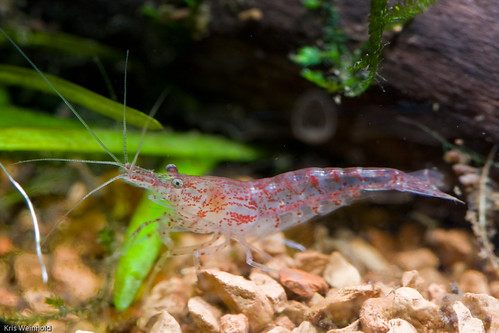
The GWAPA meeting that I hosted has come and gone, and the weather outside has turned downright chilly, so it was time for me to tear down the pond for the year. I brought the Crinum americana indoors, as well, as a number of the other plants that had spent the last few months basking in the open sun. I also managed to net out about 4 dozen cherry shrimp from the bottom of the pond.

Cherry Shrimp

In addition to some outside maintenance, I’ve also been working to break down a few of my smaller tanks in hope that I can replace them with a larger “farm tank” to grow out a number of exotic plants that I’ve been acquiring recently. To that end, with the Jewel cichlids off to a new home, my 20H is completely empty. I piled all of the wood/rocks from that tank into my 20L quarantine tank.

20L - Odds n Ends

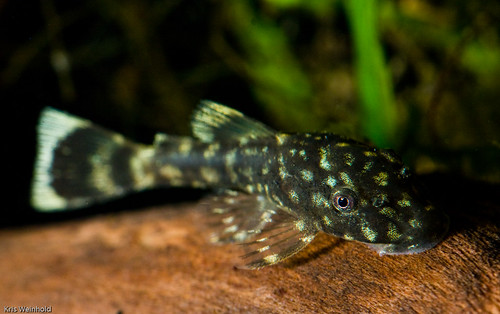
This suits me just fine because I had recently put 20 juevenille bristlenosed plecos from the Catfish Convention Auction into this tank. These plecos are adoring the algae-ridden wood that was in the 20H.

Bristlenosed Pleco

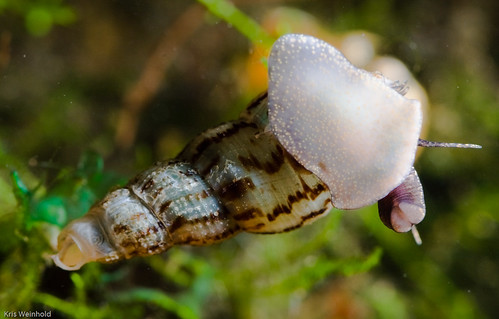
In addition to the plecos, that 20L now contains 3 I. werneri that I’ve been unable to fish out to move to my 75G, and a large number of trumpet snails that retreat to the substrate during the day, and emerge each evening.

Trumpet Snail

I’ve also torn down both of my 2.5G tanks that I had used for my first wormstrate/soil experiment. All that’s left is the 20L and two 10Gs, which I’ll need to consolidate at some point. I’m thinking of getting a 50 breeder, or similarly sized tank for my farm tank. Of course, we’ll see what deal comes along.

Business Broker

75G – Cleaned Up

October 22nd, 2008

As promised, here is a picture of my 75G after some trimming and cleaning up. I didn’t end up changing the aquascape very much, but that will hopefully come before too long. I have changed the fauna in this tank, however. I managed to fish out about 15 Corydoras paleatus, which I sold in the catfish convention auction.

75G - 10/22/2008

75G - Click picture for larger image.

I replaced them with about 60 Threadfin Rainbowfish (Iriatherina werneri) that I had kept in quarantine for the last few weeks. I also intend to fish out the Goo Obo Gudgeons from my 54G tank to turn this into more of an Australian/New Guinea themed tank. My hope is that the Gudgeons will breed without the Corydoras in there to disturb their eggs. We’ll see! Let me know if you have any suggestions for the aquascape.

Business Broker

CO2 Dump!

October 20th, 2008

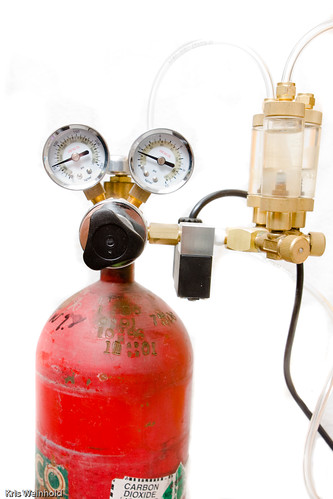
CO2 Canister & RegulatorAfter the catfish convention auction, I came home and started acclimating the new bristlenose plecos that I got. I putting them in a 20L quarantine tank, and when I turned around I noticed that none of the sunfish or killies that usually swarm the front of the tank were there. Eventually, I spotted a few of the sunnies dug into the Ranalisma rostrata, and a few others swimming awkwardly at the water surface.

Immediately, I knew what had happened; the CO2 tank ran out, and dumped a ton of CO2 into the aquarium all at once. Right away, I pulled out my Python hose, and did a 50% water change. I also borrowed an air pump from another tank, and threw an airstone into the 40G. At that point, all I could do is wait and hope that I wasn’t too late.

I’m happy to report that despite some really dire looking fish, nearly all of the fish survived as of today. I only have one sunfish confirmed dead, and all killies are accounted for. I was lucky.

So, now the question is what can I do to prevent this from happening again? Well, two things come to mind:

1. I could add a pH controller to control the solenoid on my CO2 tank. If the tank suddenly started dumping, the pH controller would shut off the flow of CO2 once the pH dropped below a certain level. Unfortunately, this is not the cheapest solution.

2. I could attach a low-pressure regulator to the regulator I currently have. This would detect the low pressure that causes a CO2 dump, and vent that gas to the room, instead of the aquarium. The downside to this is that I already have a 3-way manifold on my regulator, which is pretty heavy. I’m not confident that the low-pressure regulator could support that weight.

So, I’m not sure what I’m going to do. At this point, I should have at least 6 months to decide before this could happen again. It’s not even a guarantee that it will happen again. That said, I don’t want to take any chances. Does anyone else have any alternative suggestions for what I could do to prevent this from happening in the future?

Business Broker

75G – In Need of Attention

October 11th, 2008

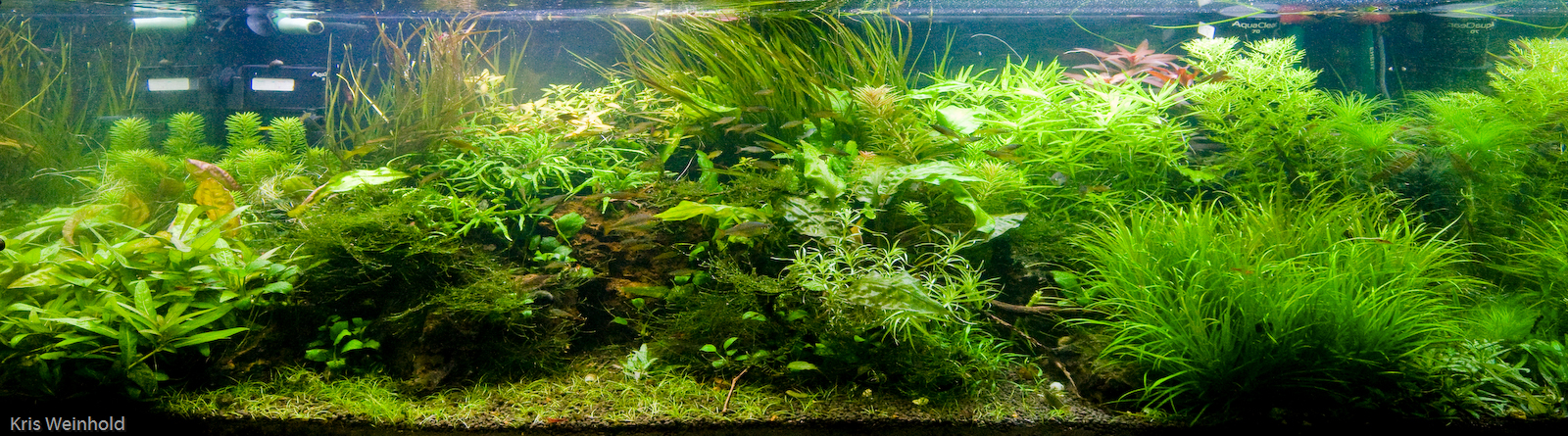
I’ve been quite busy this week with a number of non-aquarium related things going on, so it’s no surprise that I haven’t been able to post, or tend my aquariums as much as I would normally like to. I have continued to dose my 75G every morning, however, and when I do that, without much attention, it soon turns into this overgrown jungle.

75G - Needs a Trim!

Click for larger image

The Stargrass, in particular, in the back right/middle has completely taken over the area, shading out everything in front of it. Fortunately, all I have are a bunch of crypts, anubias, and other non-light-hungry plants there. I hope to be able to clean up this tank a bit this weekend, so that it’s back in tip-top shape in a week or two. If I’m really ambitious, I might change up the aquascape a little bit because I’ve been wanting to do that for awhile. We’ll see. I’ll post an updated picture once I have it back to a more presentable state.

Business Broker

40G – Wormstrate – After 3 Months

October 4th, 2008

It’s been almost three months since I tore down my 40G aquarium, and restarted it with a substrate based on earthworm castings produced from my kitchen scraps. From the beginning I experienced great growth, but I also had a huge outbreak of hair algae. I’m still not sure whether this was leftover algae that came in from the previous setup, or whether it was spurred along by the earthworm castings. Either way, it’s gone now, and the tank it doing great.

40G - 3 Months Since Setup

40G - Click picture for larger view.

The aquascape has changed a fair amount, as I’ve pulled out a significant amount of the hardscape I originally placed, largely to find room for a smattering of new plants that I needed to house. The Ranalisma rostrata has just about filled in the foreground. The right side of the tank is basically just a growing out space for various stems including Ludwigia sp. ‘Araguaia‘, Rotala sp.Araguaia’, Blyxa alternifolius, Rotala sp. ‘Mini Type I’, and a Limnophila species. Due to all of these plants, I don’t envision this tank ever becoming a cohesive aquascape unless I’m able to setup a farm tank to transfer some of these out. The main thing, is that I’m quite impressed by the substrate sustained growth, with zero dosing. Comments welcome!

Business Broker

Threadfin Rainbowfish (Adults and Fry)

September 8th, 2008

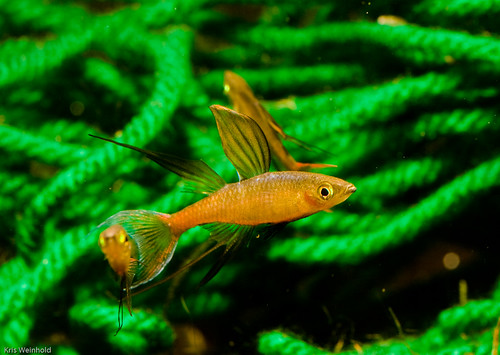
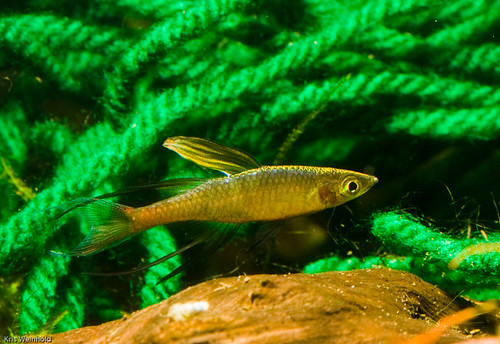
In a 20L aquarium, I have a small colony of Threadfin Rainbowfish, Iriatherina werneri, that I’m attempting to breed. These blue-eyes are beautiful fish that I’m hoping to eventually have a huge school for my 75G aquarium. The males are especially brilliant, displaying long fins, which they use constantly to prove their dominance to other males, and to impress females.

Threadfin Rainbowfish

The males also tend to get a striking headlamp, a bright yellow/orange stripe along the top of their head, when they’re courting females. The females are not pictures here, but they do not have the elongated fins that the males do. It’s quite easy to tell them apart due to the noticable difference in finage.

Threadfin Rainbowfish

As you can see from the backgrounds in these pictures, I’ve been using spawning mops made from acrylic yarn to try and harvest eggs. The goal is to float these mops, have the fish lay eggs, and then remove the mop and place it into a hatching/rearing tank. By cycling two mops between these tank every 10-14 days, I hope to constantly have new fry. So far, I’ve been successful, but only on a very small scale.

Threadfin Rainbowfish Fry

The fry are absolutely tiny when they first hatch; no more than a millimeter or two long. Right now, I have a couple that are 5-6mm long, but recently lost some to a Hydra infestation. I feed the newly hatched fry GP 5micron powder, which besides green water is just about the only thing that will fit in their tiny mouths. I’ve started feeding the larger fry some baby brine shrimp. Hopefully, they’ll grow up fast, and will be able to go in with the adults soon. If anyone’s successfully bred and raised these fish, I’d love to hear some advise.

Business Broker

2.5G – Suggestions Used + Photography

September 2nd, 2008

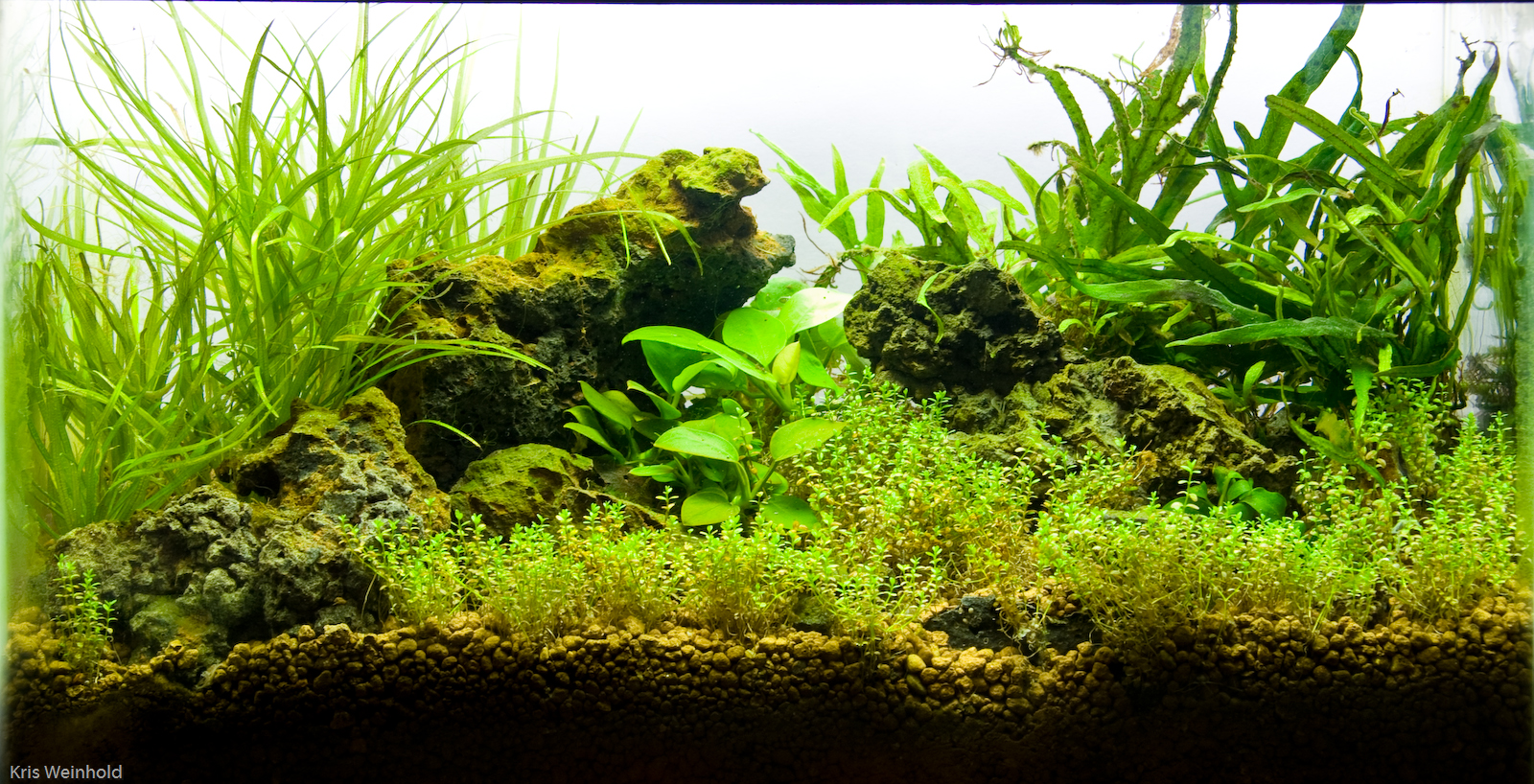
Two weeks ago, I posted a rather pathetic version of my 2.5G aquascape. I got some great comments from everyone, and have updated the scape in a few areas. It’s amazing the difference that the Blyxa japonica, in particular, makes in this scape in the back left. Otherwise, I added some Anubias barteri var. ‘nana’ and moved all of the Java Fern to the right side of the tank. What do you think?

2.5G - 08-31-2008

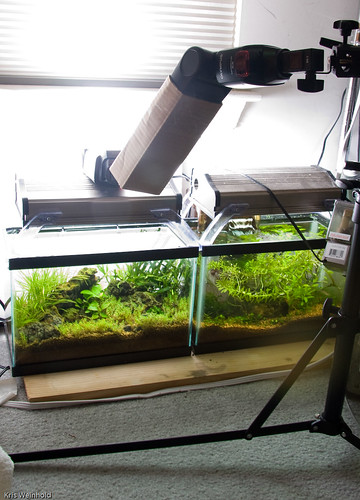
I also decided to practice some of my photography skills for this picture. With these smaller tanks, you really have the luxury of being able to flash the heck out of the whole tank evenly, using just a couple of strobes. You can see my setup below. I sat one flash on top of the light fixture pointing upward into a domed piece of computer paper. The dome reflects the flash down the back of the tank, illuminating the white paper background sitting about 3-4 inches behind the aquarium.

Photographing the 2.5G

Then, I have a second strobe suspended, using an improvised snoot to focus the light into the tank, which illuminates the front of the scape, which would normally be shaded by the rocks. Of course, the aquarium light itself provides pretty decent light as well, so these strobes are really just for a bit extra refinement. Any suggestions?

Business Broker

« Previous Entries   Next Entries »