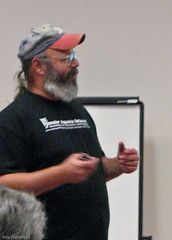
 The Capital Cichlid Association’s November meeting brought in Ken Davis from Atlanta, Georgia, to speak about his collecting experiences in Honduras with Rusty Wessel. Ken has been president of the Atlanta Area Aquarium Association, owned a retail fish store, wholesale distributor, and fish hatchery, so it was great to hear the adventures of an expert through the Central American country. The presentation was more or less a slide-show of various species of fish (and other critters) that he found during his trip. I’m going to share a few of the species that most interested me.
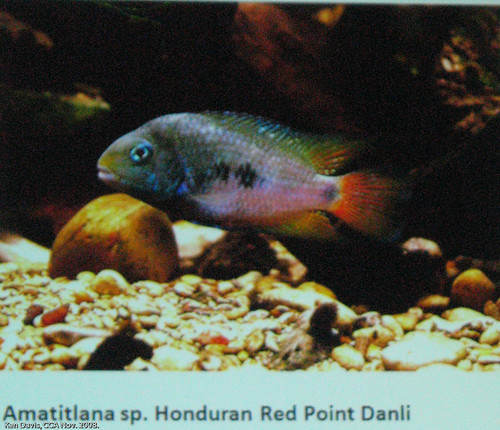
Of course, one of the most famous fish from Honduras that has recently spread throughout the hobby has been the Honduran Red Point. Interestingly enough, this fish has already been selectively bred to look very little like its native counterpart. Below is a picture of how the Red Points look in the wild; note the vivid coloration on the body. Apparently, many breeders have been trying to get a blue body on this fish, to the detriment of the other colors, even some of the red.
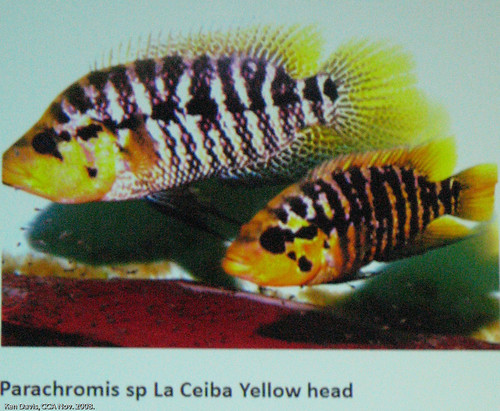
Ken told sad story about the beautiful undescribed Parachromis species of fish seen below. He was staying at a local hotel, and while waiting for all of his comrades to wake up, he and some others took a short hike to a small lagoon nearby just to see what was there. To their delight, they managed to catch one of these fish, which they have never found anywhere else in the country. They subsequently caught a total of 7 fish, and are currently breeding them. Unfortunately, on a later trip, they went back to the location, and all of the forest surrounding the lagoon had been cut down for new development, and the water itself was covered with an oil slick. Nothing living remained in the water, so it’s possible that the fish they previously pulled are the only surviving of the species. Let’s hope they can thrive in captivity.
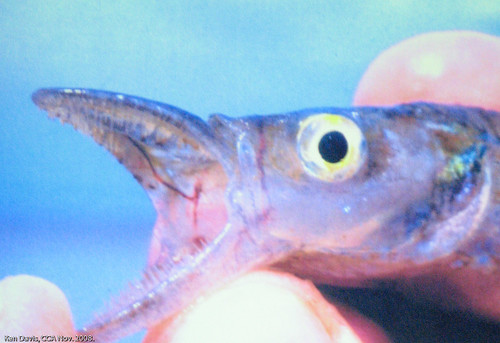
One of the things that I enjoyed about Ken’s talk is that he didn’t confine it solely to cichlids. While I love cichlids, I’m also interested in the complete ecosystem of any given place. In addition to several cichlids that fit this description, Honduras is home to one of the world nastiest livebearers, the Belonesox belizanus. Just look at the teeth of these guys. They can get up to about a foot long, and Ken says they’re great fish to have in your fishroom when you need to cull a group of fry.
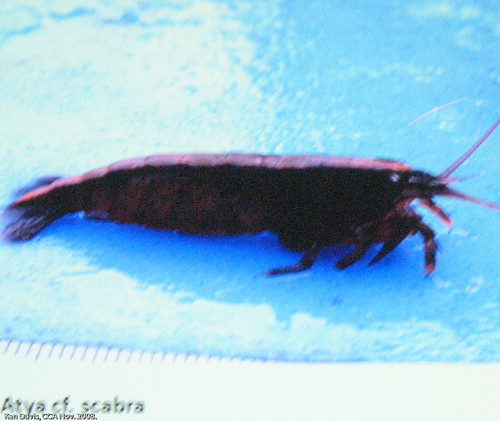
There are also a large number of invertebrates to be found in Honduras. Ken found (and feasted on) several freshwater crabs and prawns, but in amoungst the roots of creekside trees, he also came across these inch-long purple shrimp. He’s tried unsuccessfully to bring them back to the States, but he hopes to have success sometime in the future, as he sees a great place for them in the hobby. I agree!
Finally, I asked Ken what the habitat was like as far as aquatic plants go. He said that 99% of the places he collected were rocky bottomed streams or rivers that contained zero plant life. The only exception was a small section of private property that the owners invited him to that wasn’t fished commercially or otherwise. I’m sure that there are a number of interesting plants available, but I imagine they might be hard to come by. Overall, Ken highly recommends Honduras as a place to visit. He says the people are incredibly friendly, and the accomodations aren’t bad. Maybe someday I’ll be able to visit there.
Note: All pictures of species were taken during Ken Davis’ presentation, and belong completely to him.
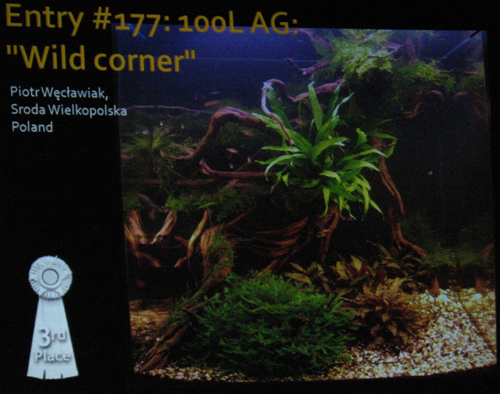
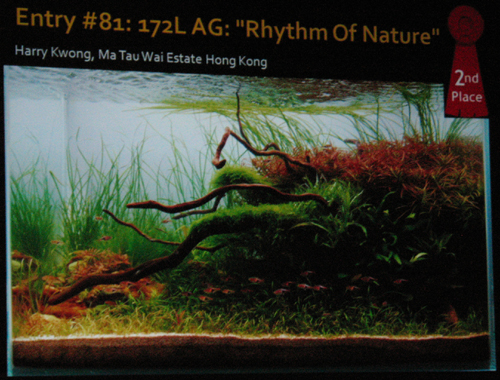

 , and CO2 canister so I’m good to go on everything but the light. I also added a few more rocks to fill in the hardscape. As this is my first planting, everything is subject to change and refinement as it grows in.