75G – 1.5 Months

January 19th, 2009

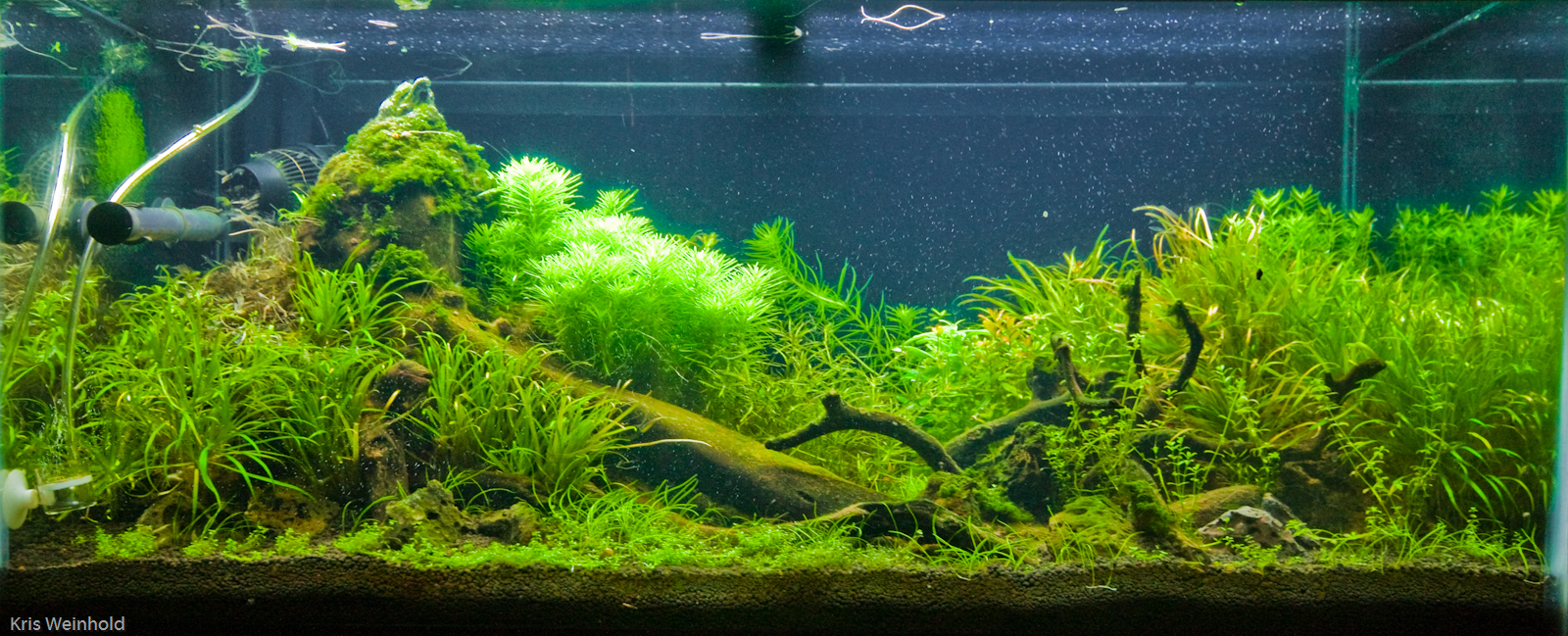
I last posted about the 75G aquarium about a month ago, when it was only setup for 2 weeks. I hadn’t yet decided which foreground plant I was going to go with. After a fair amount of indecisiveness, I was at my local fish store last week, and impulsively bought a pot of Glossostigma elatinoides.
75G - 1/19/2008

This certainly is not a maverick pick, but it’s been awhile since I actually did a tank with good ‘ol glosso, so I thought it would do well. You may notice that in addition to the foreground, I’ve also begrudgingly removed all of the Blyxa japonica from this aquascape. Where I had it previously was just over-powering the foreground a little bit.
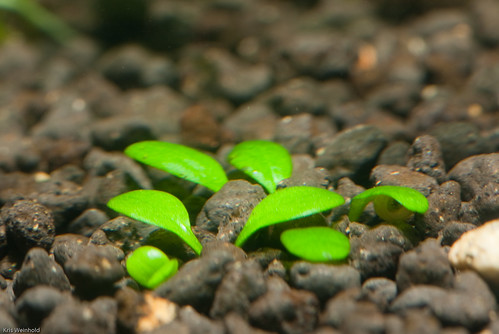
Glosso

I also got some Cryptocoryne parva, which I have planted on the edges of hardscape underneath the archway. I’m sure that eventually I’ll have to rescue it from the glosso, but I also added some slightly taller Cryptocoryne willisii, which should stick out.

75G Archway

I have a few other plants in this tank that I’ll likely need to remove to the benefit of aquascape once I have places for them in one of my other aquariums. Mostly, those plants are Lamiaceae sp. and Proserpinaca palustris on the right side of the tank.
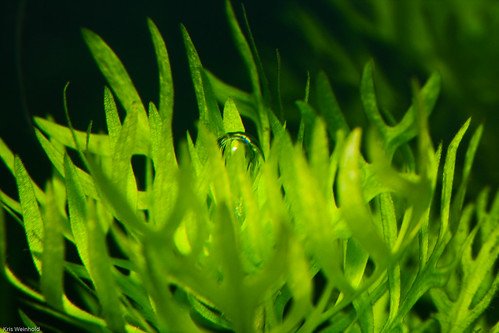
Hottonia palustris

The other plants in this tank are all doing quite well. You can see Hottonia palustris pearling in the photo above. Overall, I’m looking forward to finally having the foreground filled in, so that I can just tweak the rest of the plants into a finished aquascape. Comments/critiques welcome as always!

Business Broker

Cherry Shrimp Convention

January 13th, 2009

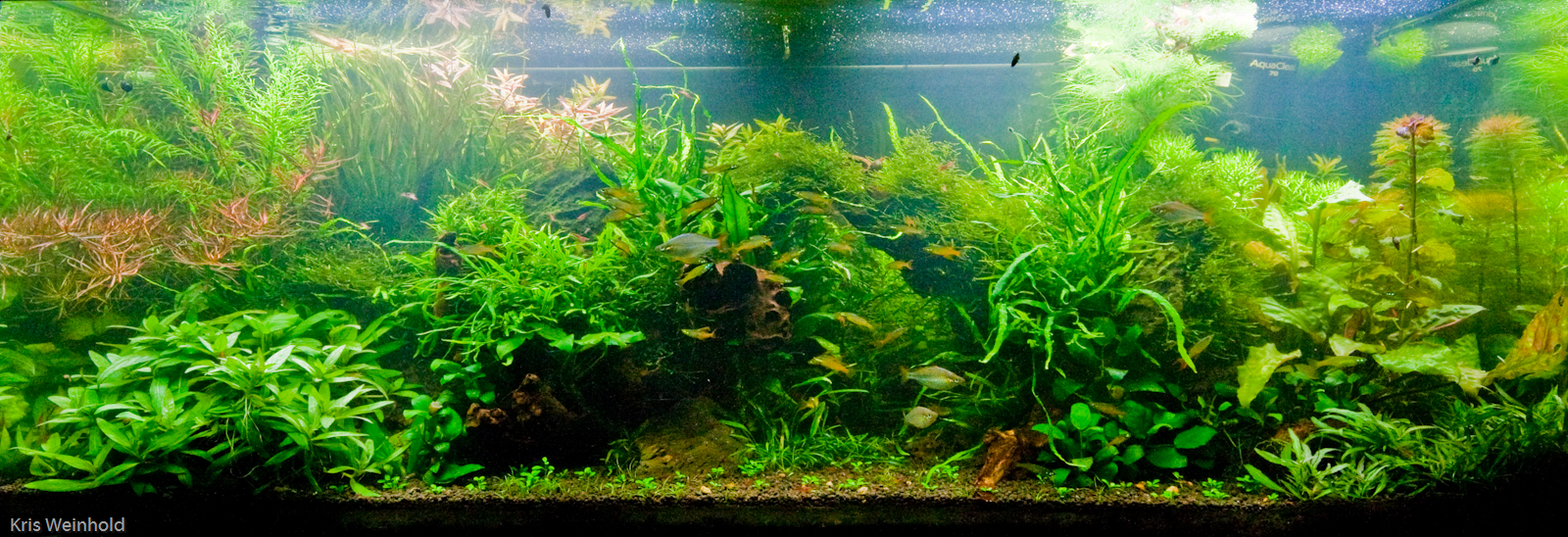
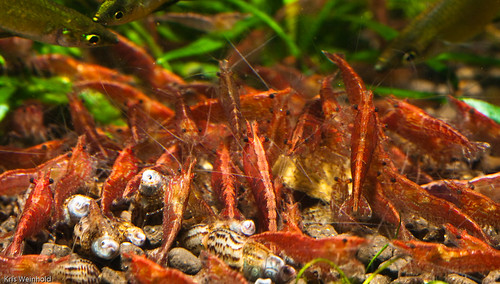
I was sitting across the room, watching some television, which I noticed a huge mass of cherry shrimp, all congregated in the front of my 75G aquarium. The 75G has been close to algae-free lately, so I have been feeding extra algae wafers for the plecos, but hadn’t really paid much attention after doing so. Apparently, the population of cherry shrimp was quite interested in the algae wafers, and called of their friends to join them in the feast.

Cherry Shrimp

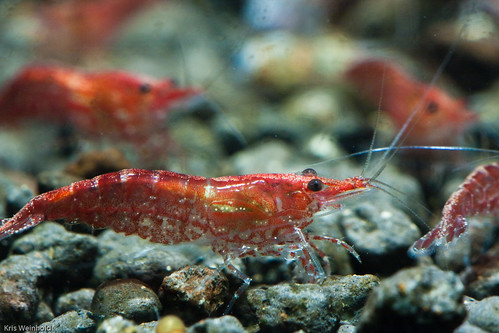
Of course, with that many shrimp in one place, all of the rainbowfish in the tank wanted to see what was so interesting. They dove in and out of the population of shrimp, but didn’t seem to bother the shrimp any by doing so.

Cherry Shrimp

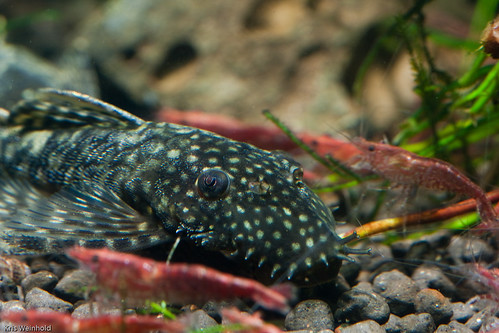
Finally, the Ancistrus sp. ‘L279’ bristle-nosed plecos realized that I dropped in algae wafers, and stormed into the middle of the shrimp. In some instances, they swam in fast enough to a send the shrimp flying out of the way.

Ancistrus sp. L279

All in all, it’s pretty entertaining to watch these critters interact with the rest of the tankmates. As you can tell, the cherry shrimp have had no problem breeding in my 75G aquarium!

Business Broker

CCA – Making Your Own Fish Food – January 2009

January 11th, 2009

The Capital Cichlid Association‘s January meeting kicked off the year with Kurt Johnston describing how he makes his own fish food. Kurt has been in the hobby for over 40 years and is currently the Public Relations Chair, BAP chair, and Swap Meet Chair of the Aquarium Club of Lancaster County. Having a diverse set of interests, he found that making his own food was far more economical, as well as, more nutritious for his fish than the commercial foods available.

He estimates that his recipe costs about 50% less per pound than the average commercial fish food, and even cheaper compared to the premium brands. In addition, there’s no filler ingredients or preservatives that just end up passing through the fish anyways.

IMG_6988-3

To develop his recipe, Kurt spent a lot of time researching the nutritional needs of fish. In general, he found that fish need a highly digestible protein, consisting of roughly 25%-50% of their diet, depending on the species of fish. Their diet should be low-fat, contain 2-5% fiber, and incorporate the full range of vitamins A, B, C, D, E, K, Omega 3&6, and amino acids. In addition, he found that the essential amino acids and long-chain fatty acids are only found in aquatic meats, such as fish meal, not in terrestrial meats like beef. Also, fish can’t digest grains, so it was important to not include them in the recipe.

After knowing what things his food would have to provide, he began looking at ingredients. Kurt uses all natural products, including a variety of vegetables: peas, broccoli, carrots, garlic, etc… For protein, shrimp and a white fish provide that. He also adds protein through a number of freeze-dried powders, such as shrimp powder, krill powder, etc. Then, the whole mess is stabilized with agar, and frozen in sheets that he can break off and feed as needed.

Even though this is a highly nutritious food, Kurt also believes that fish benefit from a varied diet, so he does feed them some premium commercial foods, as well as, live foods in rotation with his own recipe. All in all, I found Kurt’s talk fascinating, and can definitely see the benefits of making your own food.

Update: Kurt was kind enough to allow me to post his full recipe online here: fish food recipe.

Business Broker

Hygrophila sp. ‘Guinea’

January 7th, 2009

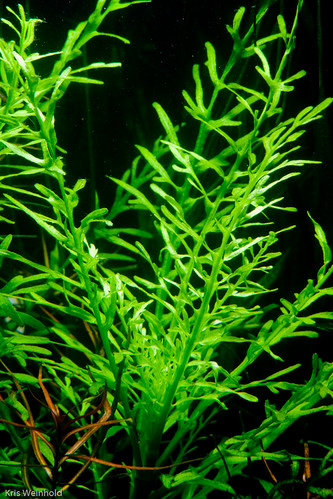
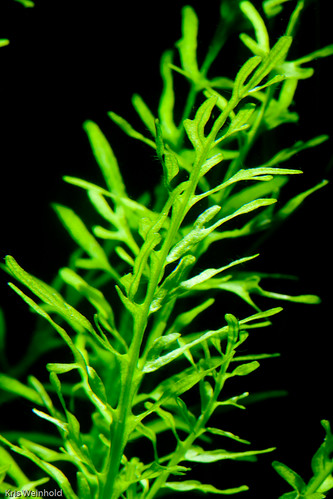
Hygrophila sp. ‘Guinea’ is a new plant to the hobby that I’m growing in my 75G aquarium. This particular species of Hygrophila is a larger sized plant, but the leaves are uniquely feathered, so I feel it can be used in spots where other similarly sized plants would be inappropriate. Thus, it should be a very nice plantĀ  to soften and break up the common leaf patterns used in many aquascapes.

Hygrophila sp. 'Guinea'

The plant remains a nice bright green color, even under high light and favorable dosing conditions. Hygrophila sp. ‘Guinea’ is a much slower grower than other plants in the Hygrophila genus, which is a good thing in my opinion. The stem is rather thick, and the leaves all appear to point upward from the stem toward the surface.

Hygrophila sp. 'Guinea'

Hygrophila sp. ‘Guinea’ is still quite rare in the U.S., but it is available occasionally through the hobbyist community. If you can find it, it’s a new plant that’s worth trying.

Business Broker

50G – 2 Months

January 4th, 2009

It’s been about two months since I first setup the aquascape in my 50G aquarium. The plants are growing in very well, and after many hydrogen peroxide treatments, the algae I was experiencing is finally starting to wane. Unfortunately, the H2O2 also took a toll on many of the fish I had in this tank. Otherwise, I’ve removed a few more rocks from the right foreground to allow for more focus on the woodwork there. Ideally, I’d like the wood to look like a fallen tree.

50G - 2 Months

The HC and hairgrass are both starting to take off, which I’ve been waiting awhile for. I’ll probably tweak a few more things, removing a couple plants from the scape, but more/less, I’m pretty pleased with how it’s progressing. As always, comments/critiques welcome!

Business Broker

« Previous Entries   Next Entries »