Aquafest 2007 – Speakers

October 23rd, 2007

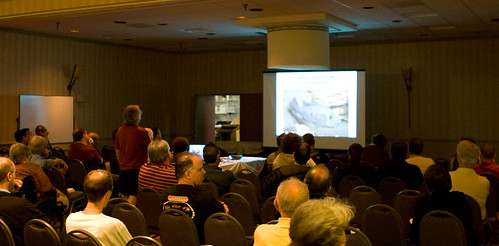
On Saturday, three local clubs, GWAPA, CCA, and PVAS put on a great aquarium festival. Over 100 hobbyists attended, and the fish show was stocked with the best fish of the area. Three key speakers were present, each giving very insightful presentations about their area of expertise.
IMG_1277

Tony Orso gave the first talk about West African Fish. Tony and his wife breed many exotic fish, and also had a vendor table setup with many for sale. During his talk, Tony rattled off facts about more West African fish than I could scribble notes about in my notebook. He ran through nearly all of the Hemichromis jewel cichlids, spent quite a bit of time on the Tilapia, and many other genera. As it turns out, he talked about Nanochromis nudiceps, which I ended up snagging in the auction on Sunday. Ultimately, I have a long list of species names that I need to start chugging into the web to learn more about after this presentation.
Rusty Wessel

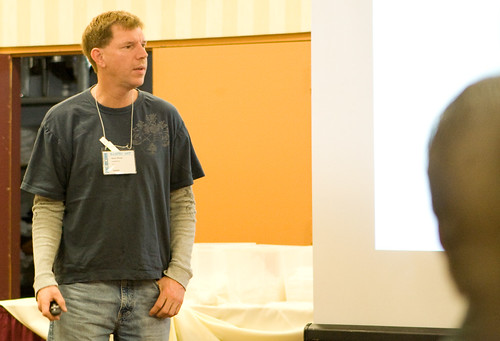
Next on the bill was Rusty Wessel to talk about experiences collecting in Honduras. Rusty has been to the country over 18 times, and noted many differences between his visits. He mentioned how much more accessible the rivers became after Dole corporation built paved roads all throughout the country to transport their produce from the fields to port. Unfortunately, deforestation by slash/burn, generally poor infrastructure and pollution throughout the country, and introduced Tilapia still threaten the native fish population.
Liberty Molly - Rusty Wessel

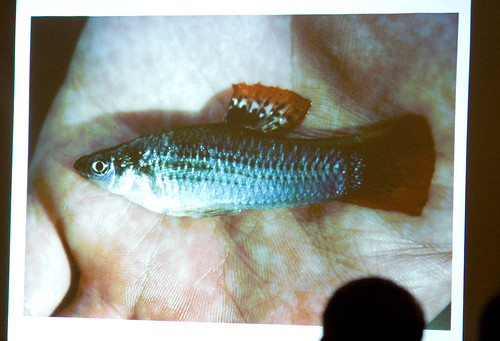
Above is a brand new fish discovered in Honduras called the Liberty Molly. Rusty was nice enough to bring a pair of these to auction on Sunday. He talked about many different river systems, including the Rio Choluteca that flows toward Nicaragua, and is home to many convict cichlids and a native anableps livebearer, shown below.
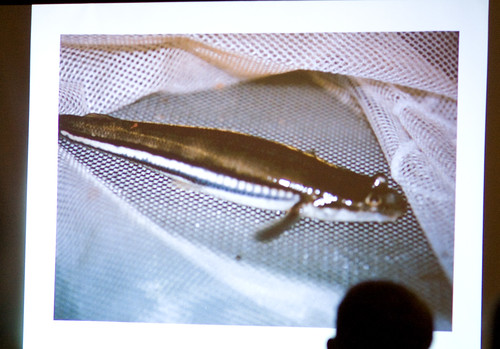
Anableps

The Honduran Red Point Convict Cichlid is another excellent fish from the country. It is easy to breed, producing up to 75 fry per spawn, and only grows to 3-4 inches in length. In addition, it’s not very agressive, and is pretty too, as you can see below. This species was just described about a week ago, and is distinguished from other convicts by the broken vertical line above the head.
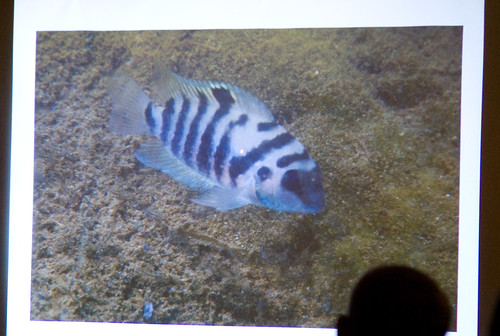
Honduran Red Point Convict Cichlid

Rusty went on to cover a number of other native fish such as the Rainbow cichlid, Black-belt cichlid, Jack Dempsey, cuteri, and many others.
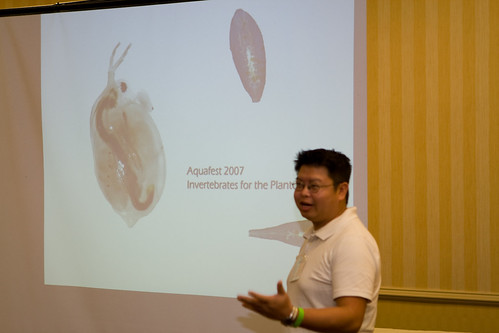
Eric Do at Aquafest 2007

Finally, GWAPA’s speaker, Eric Do gave his presentation about “Freshwater Invertebrates in Planted Aquariums.” I was fortunate enough to spend most of Friday with Eric and a few other GWAPA members as we gave him a brief tour of Washington D.C. Not only does Eric know his invertebrates and plants, but he’s a great guy. Eric gave an updated version of the same presentation I saw him give at the AGA last year. He went through a huge list of shrimp that we know in the hobby — Cherry Reds, Amanos, Snowball, Red Dragons, Tigers, Greens, etc…
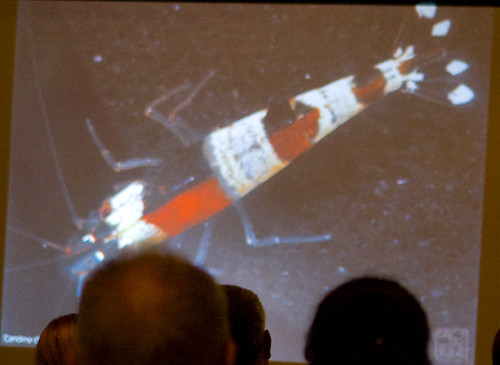
Crystal Red Color Morph

New to his talk were many pictures of some of the color morphs breeders are creating with the crystal red shrimp. Above is a very valuable anomaly of a crystal red where half of its body is red and the other half is black. He also noted that although uncommon, crystal reds and cherry shrimp can hybridize so they should be kept separately. In of tank of many females of one species, and only a few males from the other, nature will find a way.
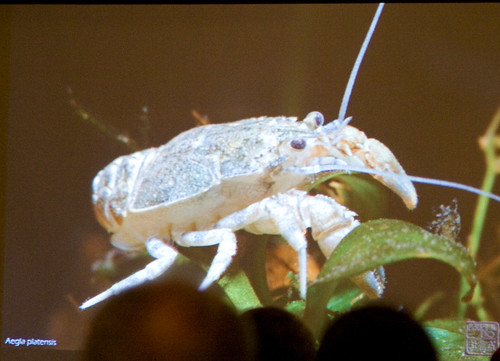
Aegla platensis

Finally, Eric introduced the Aegla platensis freshwater dwarf crab. It really looks more like a cross between a crayfish and a crab, but is a crab nonetheless. It only gets to 2″ in length. Neat!
Business Broker

2.5G – Final Picture

September 27th, 2007

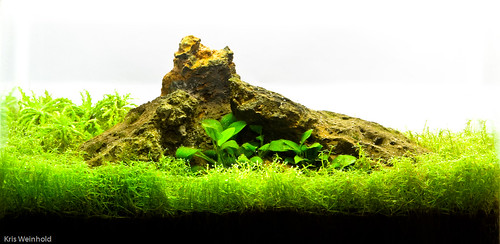
Well, here’s my final picture for GWAPA’s aquascaping contest. It’s pretty much the same as last time, except the anubias are slightly better positioned in front of the rock. I don’t know what other tanks I’m up against yet, so I’m not going to place any bets yet on its chances of winning.

2.5G Aquascape

After I tear down this aquascape, I think I might use this aquarium to start trying some of ADA’s other substrates. I have two small bags of their Malayan and Africana aquasoils. I can’t imagine that they’re too much different, but you never know. Comments welcome!

Business Broker

DIY Autodosing – GWAPA Sept 2007 Meeting

September 24th, 2007

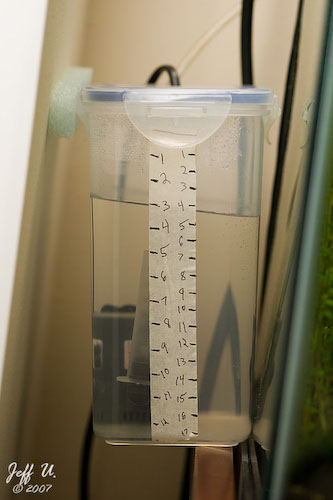
On Saturday, I attended the September GWAPA meeting at Jeff’s house in Ellicot City, MD. In addition to having some awesome sweet/sour meatballs and two gorgeous aquascapes, Jeff also demonstrated how to make the DIY autodoser that he’s been using on his tanks for some time. Made of easily attainable materials, this provides a great solution for the lazy, forgetful, and those looking for consistency in their dosing. I’ve been using an Eheim Liquidoser for awhile, but I think I might try to put together one of these since it holds far more solution than an Eheim does. You can read a short article on how to build one of these on the GWAPA website.

DIY Autodoser

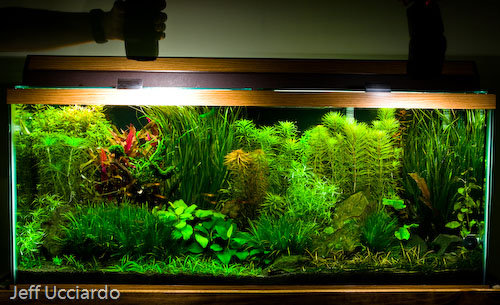
In addition to the meeting itself, Aaron and I stayed afterward to help Jeff get a good picture of his 55G tank. We’re all aspiring to improve our photography skills, so it was great to try a bunch of different techniques to ultimately come up with a nice looking shot. We used two external flashes aimed at some shadowed portions of the tank to try and even out the exposure across the whole picture. While it took us countless tries, we definitely ended up with a better picture than what we would have had without the extra experimentation.

Using flashes to add light to shaded areas

Business Broker

Suitland Bog Trip

September 1st, 2007

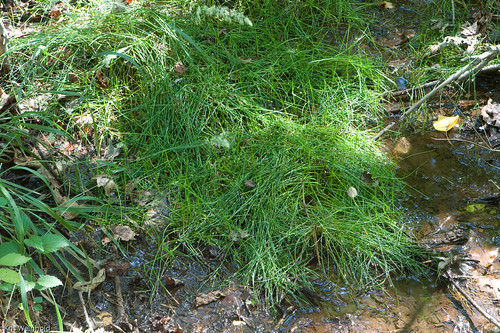
While some folks may be preparing for Labor Day BBQ’s, eight members of GWAPA went on a ranger-guided tour of the Suitland bog in Suitland, MD. The ranger explained how it is an active job maintaining the bog to preserve many of the native species from being crowded out. Honeysuckle is a huge invasive problem for them, over-coming many of the native forest plants such as the Lady Slipper orchid or Spotted Wintergreen, a variegated creeping plant.

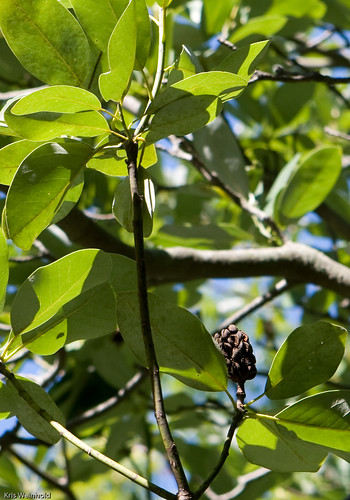
Magnolia

In the bog itself, magnolia trees are slowly starting to shade out some of the other native plants. The rangers work with volunteers to prevent too many magnolia and poison sumac trees from stealing light from the plants below. Even so, human development surrounding the bog is an ever-increasing issue that could impact the bog in the future, despite initial environmental studies that find little threat.

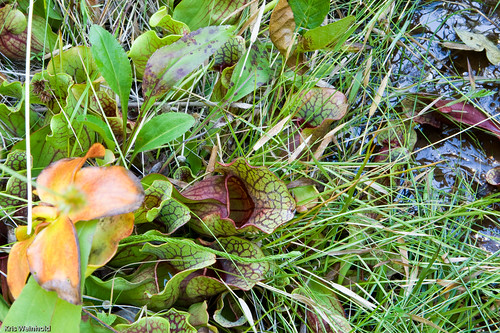
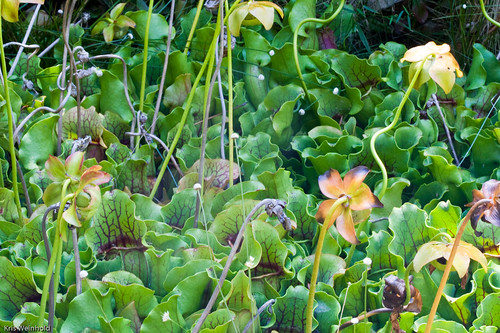
Pitcher Plants (Sarracenia purpurea)

With water sources for the bog being several hundred feet away, it’s not hard to see how someone putting down lime on their lawn, could eventually alter the pH of the bog water itself. If that happened, it would be a terrible shame, as the plants here are truly gorgeous.

Pitcher Plants (Sarracenia purpurea)

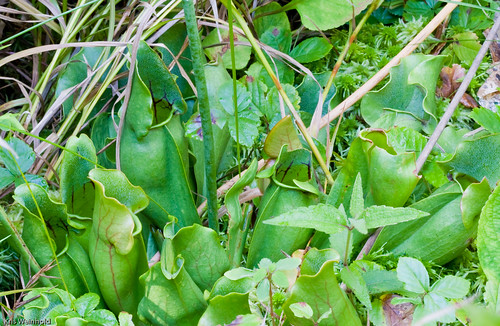
The Northern Pitcher-Plants (Sarracenia purpurea) vary quite significantly from plant-to-plant, in terms of their purple veining, but as you can see, they’re all quite nice. The green and orange stalks rising above the plants are its’ flowers.

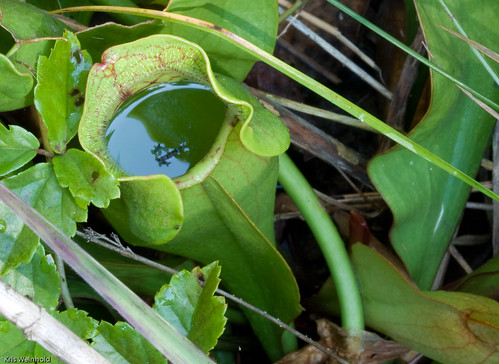
Pitcher Plant filled with water (Sarracenia purpurea)

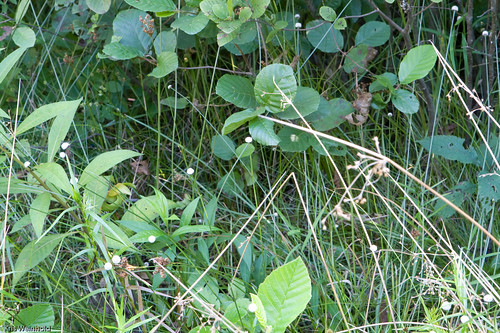
The pitchers themselves were mostly filled with water due to recent rains. As you can see above, this particular pitcher has successfully lured in its prey. There are many different species of plants growing in amongst the pitcher plants. Various reeds, including Ten-Angled Pipewort (Eriocaulon decangulare), which is another rare Maryland native.

Eriocaulon decangulare

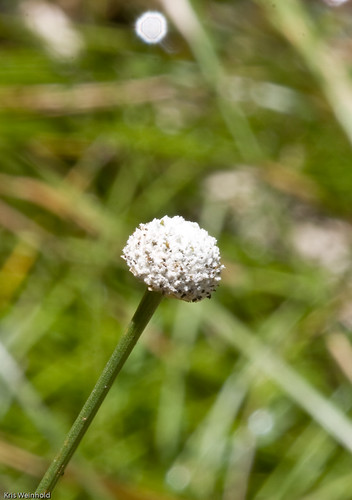
The seed nodules on this Eriocaulon’s flower are quite small, as you can see below. Since it flowers from July thru August, there were flower stalks to be found everywhere throughout the bog.

Eriocaulon decangulare flower

Another reed found in the bog is the Twisted Spikerush (Eleocharis tortilis), seen below. I suspect that this plant probably would grow in our aquariums, but would be much taller than the dwarf hairgrass we’re used to growing from the same genus. In any case, being a protected plant in Maryland, I suspect we’ll never get the change to try.

Twisted Spikerush - Eleocharis tortilis

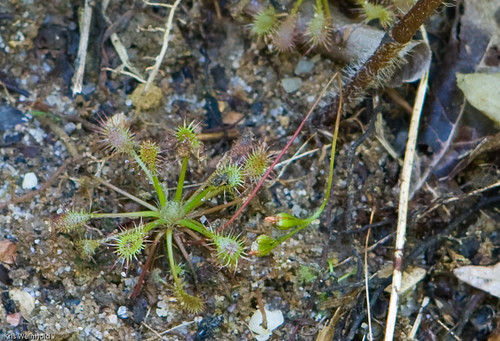
The pitcher plants were not the only carnivorous plant in this particular bog. There was also the Spatulate-leaved Sundew (Drosera intermedia) shown below which is a small sundew plant that lures and traps small insects with sticky dew found on each hairy leaf. Unfortunately, the water source feeding the part of the bog that these are found is slowly declining, so the future of this particular plant here is uncertain. Another type of sundew, the Thread-leaved Sundew (Drosera filiformis) was reportedly here as well, but there have been no recent sightings of this species.

Spatulate-leaved Sundew (Drosera intermedia)

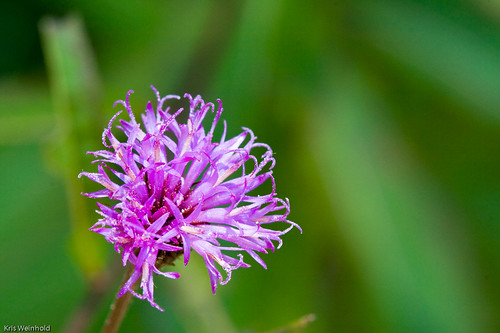
There are many other rare species of plants at the Suitland Bog. This Red Milkweed (Asclepias rubra) below is considered a very rare plant in Maryland. Nevertheless, it is a very beautiful plant that I hope endures. (Note: A commenter has mentioned that this picture below is not  Asclepias rubra. This plant is listed on the brochure for the bog, and was pointed out to us by our ranger. Perhaps I have the photo mixed up.)

Red Milkweed Flower (Asclepias rubra)
Finally, the ranger mentioned a number of other bogs throughout Maryland. He mentioned another one in College Park that is on Pepco land, and has recently been mowed right over, probably non-intensionally by a maintenance worker. In this regard, it’s important for more citizens to know what precious things are growing right in their backyards, and to realize the impact they can have in protecting them by treating their own land with proper care. Most state’s natural resource departments are under-funded, but that doesn’t mean that they don’t have tremendous sites to visit and appreciate. Additionally, they are always looking for volunteers to help pull out invasive species, and perform general maintenance on their sites. I hope you’ve enjoyed my account of our Suitland Bog tour.

Pitcher Plants (Sarracenia purpurea)

Business Broker

GWAPA Meeting – Multitank Systems

August 28th, 2007

On Saturday, GWAPA had its August 2007 meeting out in Braddock Heights, MD at Robert’s house. Robert maintains two circulating ranges in his fish room, which means that he has multiple tanks chained together creating a much larger shared water volume than if each tank were separate. The plumbing involved with this is very impressive, and a little chaotic, if you don’t know what you’re looking at. Robert did an excellent job dispelling some of the mystery during his talk. You can find a summary of his talk on GWAPA’s website.

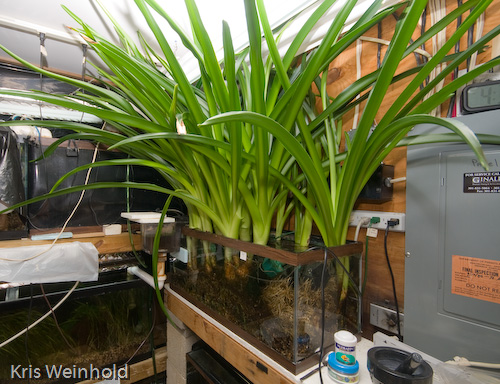
Part of Robert’s setup is a prominently displayed Crinum veggie-filter. The water is circulated through this tank, where huge Crinum root-balls suck up nitrate from the water. With so many siphons and pumps, it’s impossible to use CO2 injection, but nevertheless, Robert maintains some very nice low-tech tanks with anubias, val, java fern, etc… He also sports one of, if not, the oldest American colonies of Melanotaenia praecox dwarf neon rainbows, being one of the first purchasers of females in the United States from Germany.

Crinum Veggie Filter

And beyond that, our meeting had another great mini-auction, including many rare plants, and even a few aquarium setups this time. I was happy to be able to give away a few copies of The Aquatic Gardener (TAG), featuring my very first published cover image and article about GWAPA’s recent Florida collecting trip.

Business Broker

« Previous Entries   Next Entries »