Soil/Wormstrates – 9 Weeks

May 15th, 2008

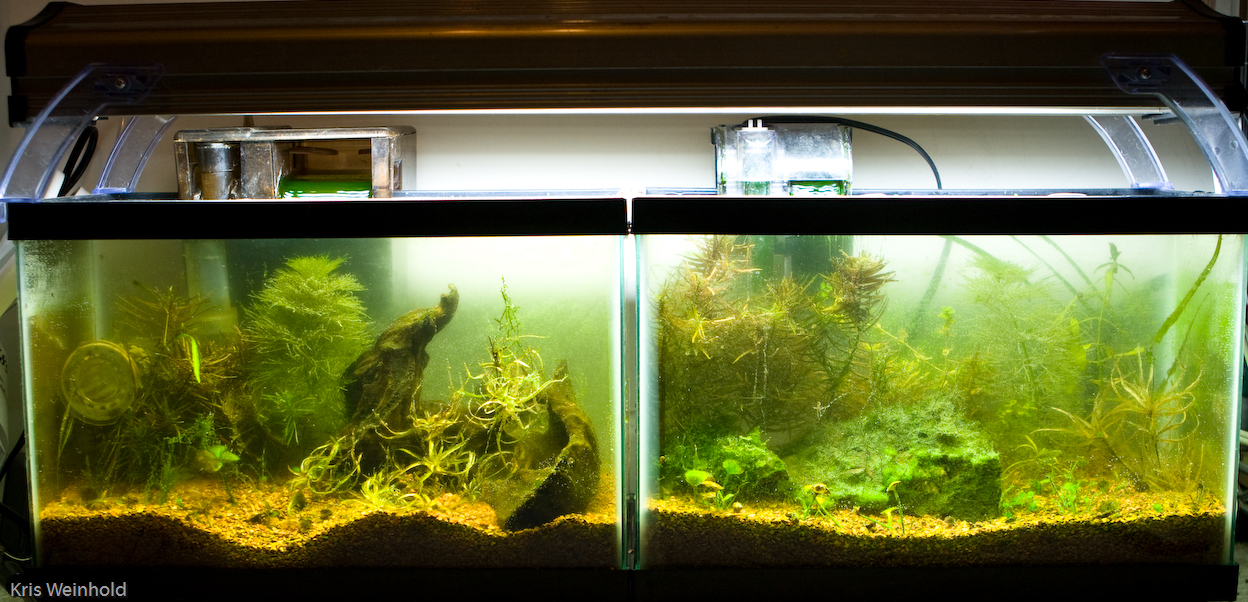
It’s been a little bit more than 2 months since I setup my side-by-side comparison of soil substrate (left) and worm casting substrate (right). Both are looking kind of pathetic, but the wormstrate appears to be doing a little bit less pathetic than the soil. Admittedly, I’m not convinced that these results have much to do with the substrate, however.
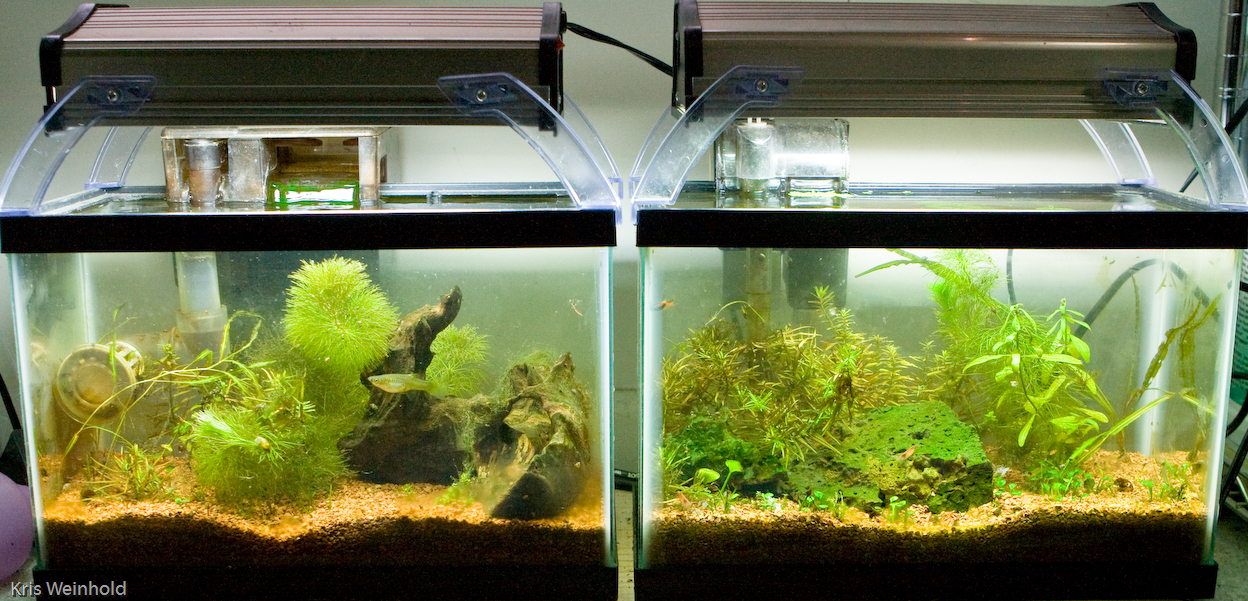
Soil/Worm Substrates - Update

I still need to split out my CO2 lines to feed CO2 directly into this tank. I just don’t think that Excel cuts it in this case, even though I’ve been slightly more consistent in my dosing than I was previously. Some plants are starting to grow, however, such as the Marsilea quadrifolia below.
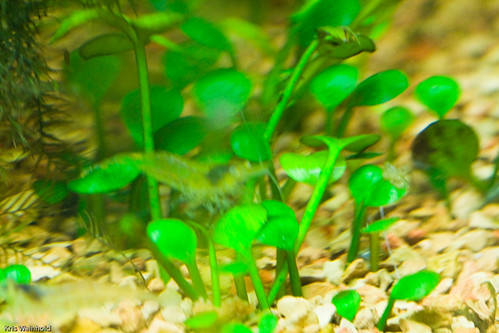
Marsilea quadrifolia

But, despite the growth, I think I may be missing some other vital nutrient. Many of the stem plants are starting to stunt on their new growth. Check out this pathetic looking Hygrophila polysperma from the wormstrate tank. Usually this plant grows moderately well in any conditions! It’s also possible that heat may be a factor as the 2x13W lights over each of these tanks put off a ton of warmth.
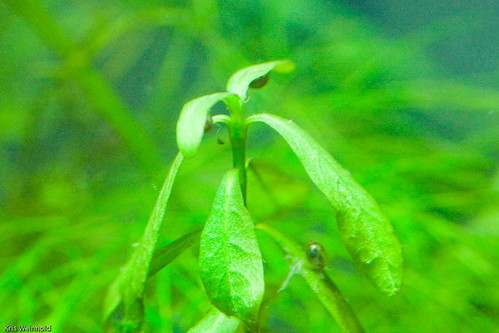
Deficient Hygrophila polysperma

The Didiplis diandre has all but died out of the soil tank, but I must say that the soil substrate is growing the fullest stem plant — Asian Ambulia. The compact growth of this stem looks almost healthy!
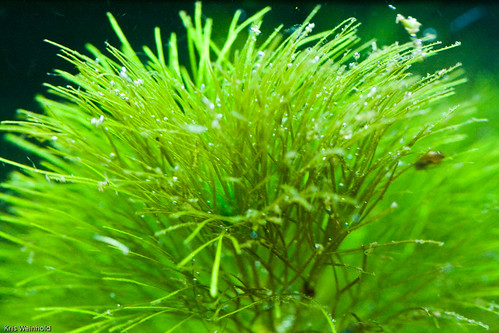
Asian Ambulia

It’s really interesting to see how specialized some of these plants are, where one can thrive in conditions that melt other plants. I’m not considering either of these tanks a bust (or a success) yet, but I’m definitely looking for suggestions on what I should be doing to turn them around.


Business Broker

Wormstrate/Soil – 4 Weeks

April 10th, 2008

About a month ago, I setup two side-by-side 2.5G tanks with the purpose of comparing  substrates based on mineralized top soil and worm castings.  After about a month, I must say that I’m a bit disappointed. I was hoping that at least one of the tanks would have taken off, but thus far they’re both kind of sad looking.

Wormstrate/Soil Experiment

I’m unsure whether this has more to do with inconsistencies on my behalf, or whether or not there’s something with the substrates themselves. On the left, the soil tank has the best growth in Limnophila aquatica, but the wormstrate tank has better growth from the Didiplis diandre. Both tanks are experiencing algae on the glass, probably due to a lack of water changes, and inconsistent dosing of Seachem Excel for a carbon source. The Eriocaulicae sp. ‘Type 2’ seems to be melting away in both tanks, which may indicate that it is not a heavy root feeding plant.

I’m going to keep the experiment going for a few more months. I know that both methods are proven methods, so I just need to be a bit more consistent with this experiment, and see if that makes any difference. I also added some extra cherry shrimp to the tanks, and so far they’ve survived — a good sign! More updates next month.

Business Broker

Wormstrate or Soil Substrate?

March 26th, 2008

About a week ago, I started a substrate experiment that I’ve been wanting to try for some time. Having always used commercial substrates, often at high expense, I’ve had a lot of success growing plants over the past few years in my aquarium. Of course, nearly all of these substrates, when used in a light-intensive+CO2 setup require supplemental dosing of fertilizers. Hence, my previous entry about automating the dosing of those fertilizers.

Wormstrate and Soil Substrate Experiment

I watched as both local GWAPA members and other enthusiasts around the world started growing beautiful aquascapes with nothing more than garden soil, and a few additives, at probably 1/10th of the cost of my ADA substrate. Not only that, but they aren’t required to dose additional fertilizers as the soil is sufficiently rich for at least a decade. In addition to these soil methods, I wanted to try something different as well — a wormstrate — that is, a substrate based on worm castings. With two empty 2.5G tanks sitting around, I decided to do a side-by-side experiment of the two natural substrate options.

For the soil substrate, I used a method designed and perfected by a local GWAPA member, consisting of mineralized topsoil, potash, dolomite, pottery clay, and an inert top layer. As mentioned, a number of GWAPA members have successfully run high-tech tanks using this method, with the only downside often being an green water outbreak at the beginning of the process.

For the wormstrate, I used Vladimir Simoes Method, which was used successfully by a number of AGA contestant tanks from Brazil. This is essentially just worm castings, mixed with sand, and topped with an inert top layer. The most appealing thing about this method is that I could use my own worm castings, produced from my kitchen scraps, creating a full cycle of food to waste to worms to aquarium to plants to compost. Can anyone else say that they made their substrate from their kitchen scraps? Nerdy, I know, but cool!

So, I setup both 2.5G aquariums within a few days of each other, fit a 24″ 55W light over top of them, outfitted each with a hang-on-the-back filter, and planted each with roughly the same number and type of plants from my other tanks. I started the tanks using water from the same established 20L aquarium, which I believe has helped me avoid the green-water cycle often experienced. The only thing I have been dosing has been Seachem Excel, since I don’t have two extra CO2 diffusers.

Over about a week and a half, I’ve seen some modest growth, zero algae, and clear water. I’m hoping that the growth will pick up, as the plants adjust to feeding from the roots instead of the water column. I’ll be sure to continue providing updates on this experiment as it progresses. My hope is to have one of these two methods convince me to redo one of my larger tanks with a natural-based substrate, so that I can further lessen my fertilizer use. Comments/suggestions welcome!

Business Broker

  Next Entries »