Melanotaenia praecox Photos

March 13th, 2008

I just wanted to share a few shots of my Dwarf Neon Rainbowfish, or Melanotaenia praecox. I have a school of 13 fish in my 40G tank right now, and they’re great for photography, as they tend to hover in place against the current. The school I have right now is mostly females, and I haven’t had any fry survive, probably due to the Apistogramma that are also in the tank.

Melanotaenia praecox

Here’s a close-up of one of the males in the tank. These fish are still relatively young, and haven’t fully developed the steep forehead that’s common among adult rainbowfish. The males seem to develop a slightly more pronounced arc than the females do.

Melanotaenia praecox

Below is one of the females, identified by the yellow in her fins, whereas the males fins have a reddish hue. The iridescent blue tint of their scales are even more intense and shiny in person, than in these photos. If you haven’t kept these fish, they’re perfect for planted aquariums, and wonderful community fish — just make sure to keep them happy by having schools of 6 or more.

Melanotaenia praecox


Business Broker

Pitbull Pleco – Parotocinclus jumbo

March 11th, 2008

A few weeks ago, I stopped by my local fish store on the way home from work, looking for some regular Otocinclus to help eat some algae in my 40G tank. Unfortunately, the store was out of Otos, but the owner recommended a curious little fish called the Pitbull Pleco, or Parotocinclus jumbo.

Pitbull Pleco

Of course, with the reputation that pitbulls have, I wanted to be sure that this little fish would not be a mean killing machine if let loose in my aquarium. So, the owner kindly helped me lookup more information on the fish, and as it turns out, the name is a bit of a misnomer. The fish was originally named after a pitbull due to the fact that its eyes are more on the top of it’s head, rather than on the sides, similar to the canine.

Pitbull Pleco

Satisfied, I promptly bought a half dozen of them, and brought them home. Once accustomed to my heavily planted 40G aquarium, these plecos are really quite attractive fish. They’re roughly the same size as an Otocinclus, and according to many sites only, they will not grow too much larger. In fact, they really look like a different colored Otocinclus, especially when hoisted on the glass, as seen below.

Pitbull Pleco

So, the next important question was whether they would actually eat any algae. Fortunately, it didn’t take me long to find the answer to this question, as they went straight to work, clearing the glass, rocks, and leaves of any of the spot, dust, diatom, or similar algae. They seem to leave alone the hair and fuzz algae, but that’s what I have Amano and cherry red shrimp for.

Pitbull Pleco

All in all, I would recommend the Pitbull Pleco to anyone looking for a similarly sized, but different algae eater, than the Otocinclus. They’re attractive, peaceful fish, that seem to group together, and do a fine job keeping the glass and hardscape clear. They seem to tolerate similar water parameters as most corydoras, making them ideal for 90% of the aquariums out there. Highly recommended!

Business Broker

40G Aquascape – Updated Picture

March 5th, 2008

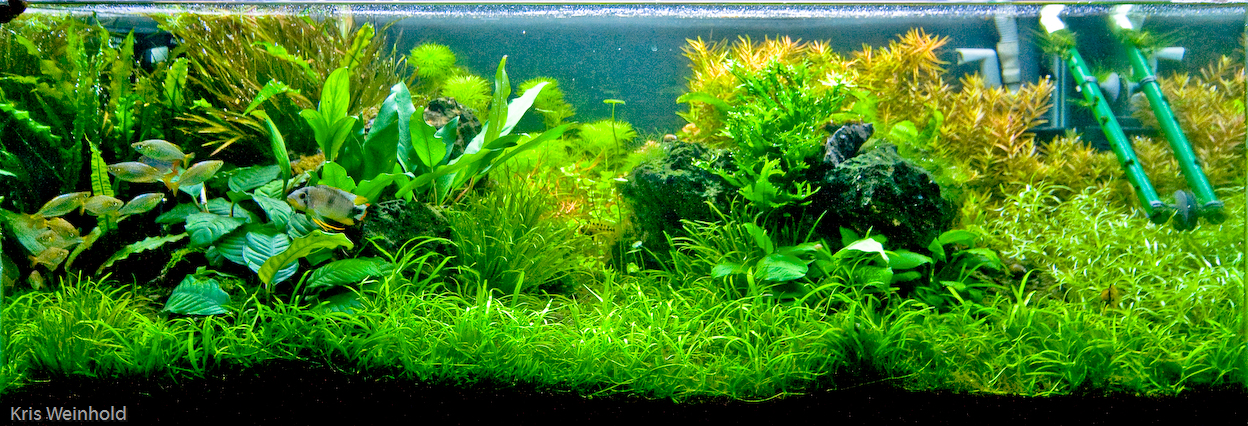
Here’s an updated picture (click picture for larger view) of my 40G aquarium. If you remember what it previously looked like, you’ll notice a profound change in the plants present. For starters, I removed most of the Micranthemum umbrosum, replacing it with the Limnophila aquatica, and just a hint of red with some stems of Ludwigia arculata.

40G Aquascape - March 5, 2008

Additionally, the Didiplis diandra and Rotala rotundifolia in the back-right are much more pronounced, while I’ve significantly hacked back the Eriocaulon sp. ‘Type 2’ in the right midground to better transition from the grassy foreground to the plants in the back. I’ve also cured most of an algae outbreak that I had in this tank, after finally putting into practice some of the tips I mentioned in my algae presentiation.

Blyxa aubertii

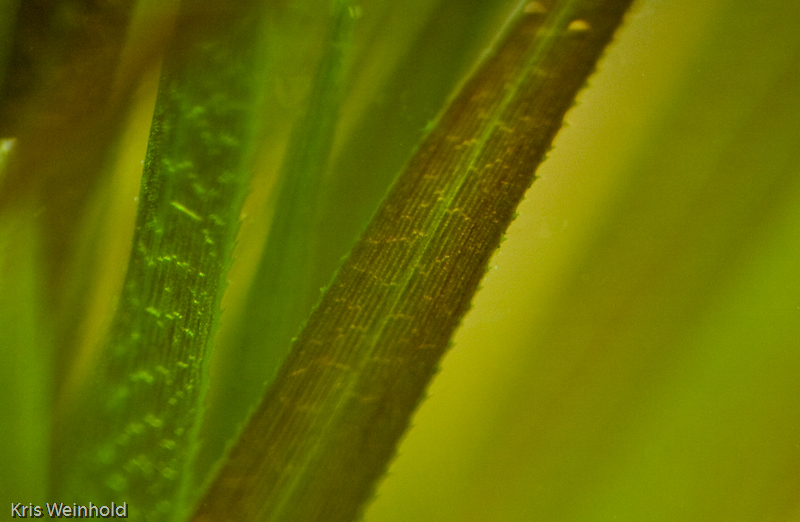
Once I did that, the Blyxa aubertii lost many of the hair-algae strands attached to its leaves. One of my favorite things about the various Blyxa plants is the cellular pattern on each leaf, as you can see above. Overall, I’m pretty happy with how the 40G aquascape is coming along, but I’d love to hear any of your comments or suggestions.

Business Broker

Limnophila aquatica – Ambulia

March 4th, 2008

At the last GWAPA meeting, a couple of bags of Limnophila aquatica were up for auction, and at one point, I think it reached market saturation, as no one was bidding on it. I decided to grab it for a $1.00, despite not really wanting it, but I’m glad I did.

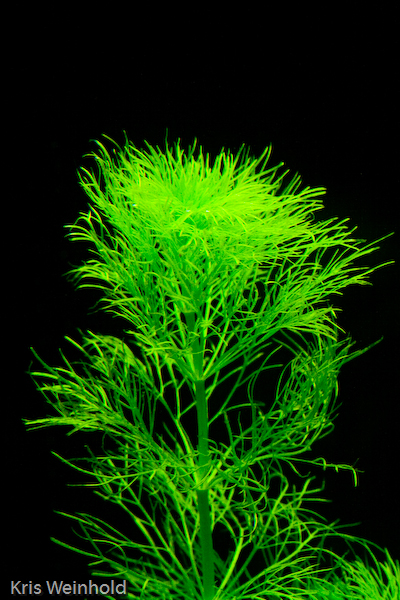
Limnophila aquaticaLimnophila aquatica, or Asian Ambulia as it is commonly known, has been in the hobby for a number of years. Its fine, feathery, leaves add a much softer texture to the tank that other, more solid bodied, plants cannot.

The plant is a bright green stem plant that is likely to be the brightest plant in your aquarium. Originally from Southeast Asia, Ambulia requires moderate high to have nice bushy growth. It can also grow very quickly with proper fertilization and CO2, and will reportedly grow out of the water with small blue flowers. I hope to see those flowers at some point!

Asian Ambulia can be propagated like any other stem plant, by cuttings or through side-shoots. So far for me, it’s been a rather fast grower.

Despite not originally having plans to add Limnophila aquatica to my 40G aquarium, it has really added a nice focal point for my aquascape. I’ll post updated pictures of the 40G, once the new plants grow in a little bit more.

Business Broker

Rotala macrandra ‘Green’ Confusion

March 3rd, 2008

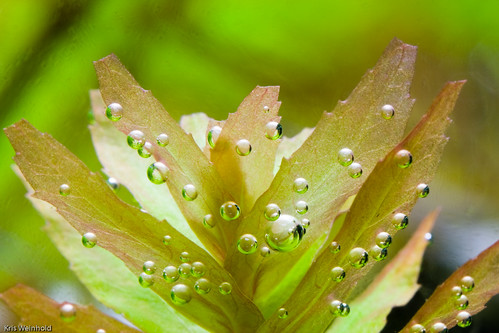
You may remember this picture that I took of Rotala macrandra var. ‘Green’ last year at my friend Aaron’s house. He had it growing beautifully in his ADA 90P aquarium. Notice how the leaves are slight, with some hooked edges, and somewhat transparent.
Rotala macrandra var. 'Green'

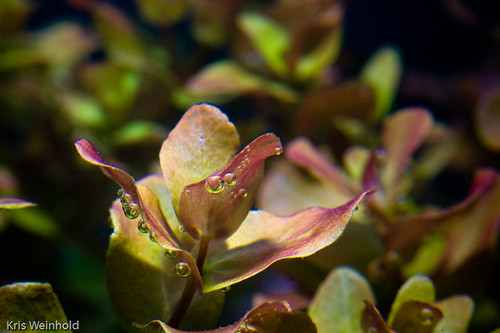
Now, take a look at the picture below. This is the same plant in my 40G tank. The leaves are rounder, thicker, and lacking the spiked edges. Why the difference? Well, about 2 months ago, I got lazy, and didn’t trim this tank, allowing the R. macrandra var. ‘Green’ to grow emersed from the water. Then, I finally performed a water change, raised the water levels, and replanted the tops of the stems, submersing them.

Rotala macrandra var. 'Green' submersed

This also coincided with a significant increase of light when I upgraded to the AHSupply 2x96W kit. Since then, the emersed growth form of the Rotala has continued, even though it has been persistantly submersed. I would have figured that the lesser CO2 levels of the water verses the atmosphere would have triggered the plant to convert to its’ submersed form, but apparently not.

I’m still deciding which form I like best. Has anyone else experienced this phenomenon before?

Business Broker

« Previous Entries   Next Entries »