Raleigh Aquarium Society Workshop

February 22nd, 2012

This past weekend, I spoke at the Raleigh Aquarium Society’s annual workshop and auction, along with a lineup of several other fantastic speakers. We had a little bit of everything with talks about Barbs, planted aquariums, West-African fish, collecting in Cameroon, large-scale fish farms, Central American cichlids, and even labyrinth fish. Many of the speakers were the same folks you read in the popular aquarium magazines, so it was a treat to be able to learn from other experts in the hobby.

I was also treated to some great activities in Raleigh by local members. Neil Frank invited me over to see his fish room, which consists of three wonderful planted aquariums. Neil is a long-time planted aquarist, and has lots of interesting things going on in his tanks.
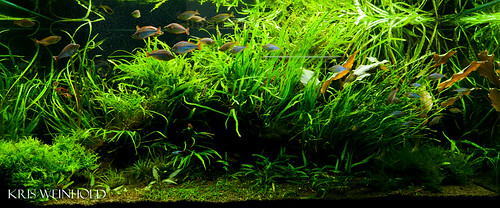
Neil's Aquarium

In the tank above, he has a breeding colony of Melanotaenia praecox rainbowfish, that were buzzing all throughout the tank. I was blown away by the red sword plant in the 90G aquarium below. This old narrow-leaf sword was a single plant, but took up a foot in circumference. The contrast against the greenery surrounding it was even better in person.
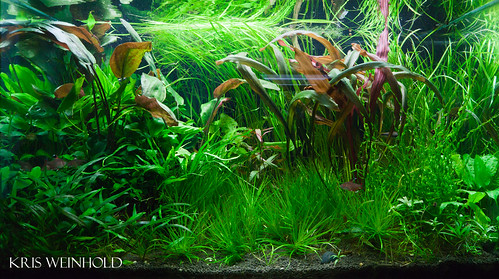
Neil's Aquarium

He had another 90G next to this one (shown below) that had an oddball cultivar of Java Fern where every leaf was complemented by two smaller leaves at it’s base, making it look like the fleur de lis.
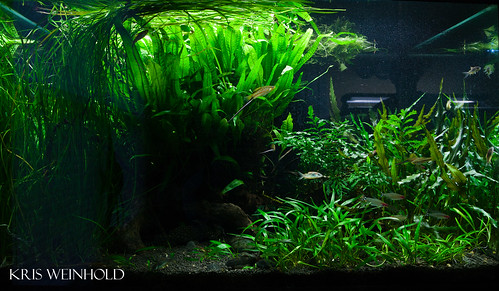
Neil's Aquarium

All of Neil’s aquariums had sumps, which allowed him to hide most of his equipment, aside from the built-in overflow boxes. I’m seriously considering a sump for my rimless tank now, as I didn’t realize that sumps allow you to keep a constant water level in the tank. Rimless tanks are a pain to refill water lost to evaporation through the week otherwise.
Gar

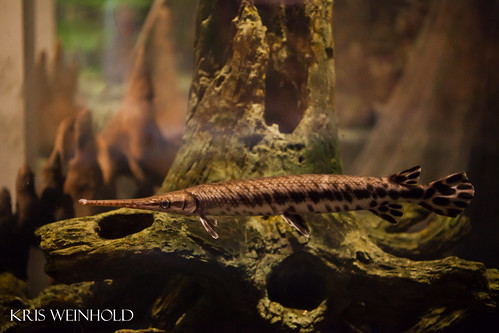
Outside of the conference, I also got an invitation to tour the North Carolina Museum of Natural Sciences. Many of the exhibits at this museum feature fish and other fauna that are native to North Carolina. My absolute favorite exhibit was one featuring Blackbanded Sunfish, which are one of the most striking native fish you’ll find.
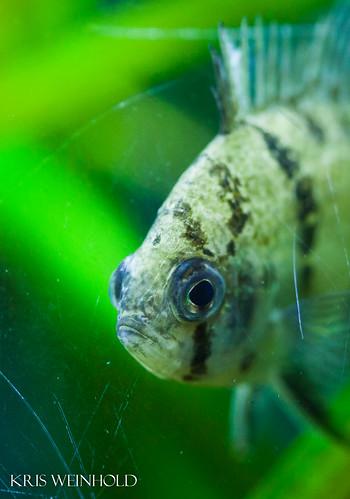
Black-Banded Sunfish

A close second-favorite exhibit was one featuring native Kanawha darters and Redlip Shiner. The shiner were incredibly active, zooming around the tank, while the darters pretty much hung out on the logs.
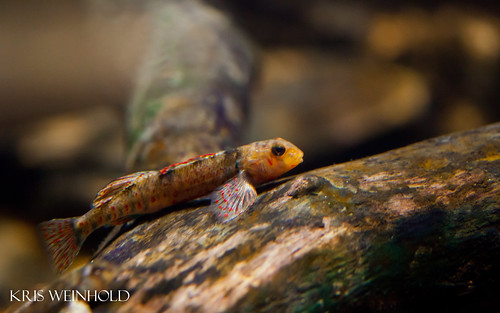
Kanawha Darter

This tank was in a wide-open area, so I bet these fish weren’t displaying their top coloration. I’d love to see how red the shiner would get in a nicely planted aquarium after feeding some quality food for several weeks.

Redlip Shiner

After a great time at the workshop on Saturday, Sunday was an all-day auction. I wasn’t able to stay for most of the auction, but there were at least 500-600 items for sale on 10+ tables. They did a fantastic job of dividing up the auction items into categories like south american cichlids and plants so that you could target a specific table for items that you might want to bid on later. All-in-all, it was a great weekend! Thank you to the Raleigh Aquarium Society for inviting me down to such a wonderful event. I had a truly wonderful time meeting and hanging out with everyone, and highly recommend the event to any aquarist.

Business Broker

Mini-S Update

February 13th, 2012

I snapped a photo of my Mini-S nano aquarium this morning. The Hemianthus callitrichoides is growing in well, however, I’m scratching my head a little bit regarding the difference in appearance of the HC on the right side verses the left side of the tank. The left side looks fantastic, with lush, green growth. The right side is growing, but many of the leaves are brown or even decaying. There’s definitely more flow on the right side of the tank, but usually that’s a good thing.

Mini-S Update

The stuff on the right side probably doesn’t have as much substrate to root itself into as on the left, so I’ve added a little bit of powder-type ADA Amazonia on the right. We’ll see if that helps improve the help. Otherwise, comments welcome!

Business Broker

GWAPA’s January Visit to Amazonia Exhibit

February 7th, 2012

At the end of January, GWAPA members were treated with a behind-the-scenes tour of the Amazonia Exhibit at the National Zoo. Below are pictures from that tour:

Business Broker

New Mini-S Aquascape

January 19th, 2012

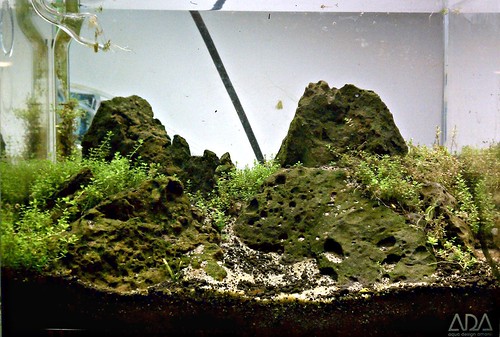
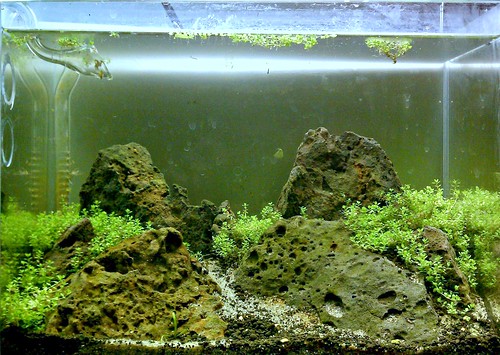
Over the holidays, I decided to fill my Mini-S aquarium back up, and implement a new aquascape. It had been sitting dry for several months, as the room it once resided in got renovated, and I didn’t want to fiddle with the tank elsewhere during those renovations. This time, I decided to do a simplistic iwagumi-style aquascape with HC as the only plant. It took me about a week of tinkering to find the right collection of rocks, and to position them as seen below. I ordered 4 pots of Hemianthus callitrichoides from Green Leaf Aquariums, and planted it a few days later.

Mini-s Iwagumi

I snapped this picture a few minutes ago while feeding the fish in the rest of my aquariums. This is about 2-3 weeks after planting, and the only thing I’ve been dosing is Seachem Excel for a carbon source. Otherwise, I’m currently relying on the nutrients in new ADA Aquasoil (regular Amazonia and powder forms). I’d love to hear some feedback on the hardscape arrangement as it stands now.

Business Broker

Yosemite: Mariposa Grove

December 11th, 2011

Earlier this fall, we went on a family trip to Yosemite National Park in eastern California. We took a ton of photos while there, but I just haven’t had the time to process them until now. Since Yosemite is such a vast park, I hope to post these up separated by the area of the park from which I shot them.
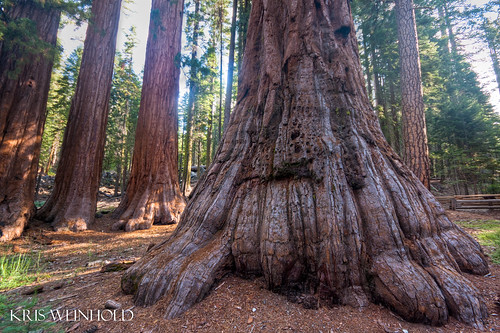
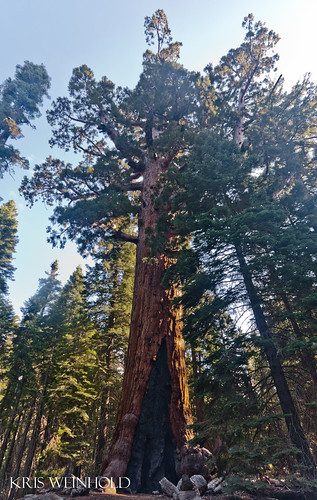
Giant Sequoia at Mariposa Grove

We stayed in the south, so one of the closest sections of the park to our lodge was Mariposa Grove. Mariposa Grove is the section of the forest that features Giant Sequoias, as seen above. The Sequoias dwarf the surrounding redwoods and other evergreens.

Giant Sequoia at Mariposa Grove

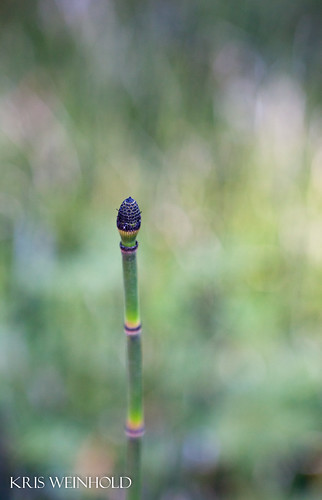
The true size of these mammoth trees cannot be appreciated until you’re standing right beside one. Some of the swampy areas throughout the forest are full of horsetail (Equisetum sp.), sometimes fields of it.

Horsetail at Mariposa Grove

Wildlife could be witnessed throughout the forest, particularly several species of rodent seen scurrying through the underbrush carrying the cones of the evergreens towering above. Below, the chipmunk-sized Golden-Mantled Ground Squirrel stopped to enjoy a treat among the pine needles.

Golden-Mantled Ground Squirrel

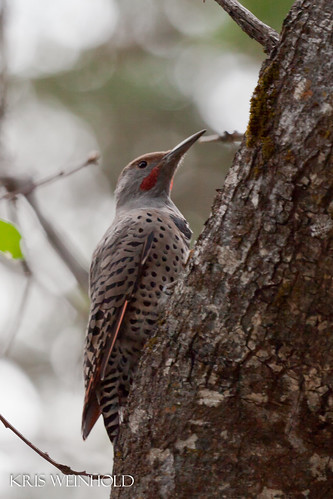
Above our heads, birds hopped from tree to tree, and frequently we’d hear the hammering of woodpeckers on bark. Most stayed too far up in the trees for me to get good pictures of, but I was able to sneak up on a Northern Flicker (Red-shafted) Woodpecker and enjoyed watching him scavenge for food.

Northern Flicker (Red-shafted) Woodpecker

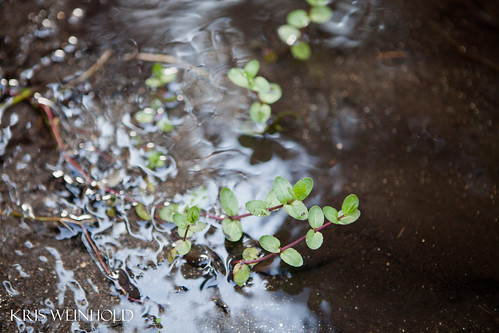
Several mountain streams trickled throughout the forest, leaving many damp areas for marsh plants to grow. Of course, the shade provided by the tree wouldn’t allow lush undergrowth, but I did spot this plant growing in several places. I have no idea if it is an aquatic or not.

Plant Growing from Stream at Mariposa Grove

The trails at Mariposa Grove are not very extensive, but we very much enjoyed exploring the area. I found many of the normal attractions (hollowed out tree tunnels in particular) a little kitschy, but once we got away from those, the pleasant evergreen aroma, scurrying animals, and dwarfing sequoias made for an extremely tranquil walk in the woods.

Many more pictures from Marioposa Grove are below:

Business Broker

« Previous Entries   Next Entries »