Fertilization
March 9th, 2009Starting a planted aquarium can seem like a daunting task. Most hobbyists start out small, gradually learning by trial and error what works and what doesn’t, and piece together information from books and websites until they finally either succeed or get frustrated and leave the hobby forever. In this series of posts, I’m going to attempt to outline the most important aspects of setting up a planted aquarium. Hopefully this will become a valuable resource to anyone new to the hobby, or experienced fish-keepers who are looking to setup a planted aquarium.
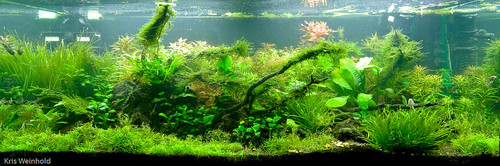
All plants need nutrients in order to grow. This may seem like an obvious statement, however, many aquarists overlook the importance of feeding the plants in their aquarium. If you focus on making sure that your plants eat well, you will be going a long way to minimize algae and keep your fish and plants healthy.
Macro and Micro Nutrients
There are two main groups of nutrients that plants need in order to survive. The first are macro nutrients, often known as NPK, because they consist of the elements nitrogen, phosphorus, and potassium. The other is micro-nutrients, which pretty much sum up all of the other nutrients that plants need in smaller quantities in order to survive. These are sometimes referred to as trace nutrients.
There are two main ways to fertilize your aquarium: enriching the substrate and dosing fertilizers directly into the water column.
Substrate Fertilization
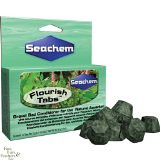 The type of substrate greatly impacts what type of fertilization method should be used throughout the life of your planted aquarium. Soil-based substrates are rich in nutrients, and do not require regular supplementation of fertilizers. All currently available commercial substrates do require fertilization within a few months of setup.
In most soil substrates the bulk of the nutrients are stored in the soil. Commonly, the main exception is potassium, which can be added as needed using potassium sulfate (K2SO4), or other commercially available liquid fertilizers. Sometimes, certain trace elements can also go missing, in which case a good micro-fertilizer, such as Seachem Flourish Comprehensive, can be used.
There are times, however, with plants that are heavy root feeders where the nutrition present in the substrate is diminished. At these times, you can use pellets/tabs to add the nutrients back into your substrate. There are several products on the market that can accomplish this. I have used Seachem Flourish Tabs in the past with good success. I have also heard that many aquarists use smaller portions of Jobe’s Fertilizer Spikes with great success. With all of these things, less is more, so start with a little, and gradually increase your fertilization until the proper levels are reached.
Water Column Dosing
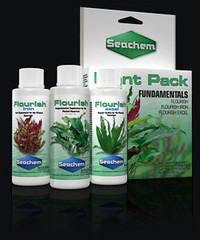 Outside of the soil substrate folks, most of us are left having to regularly dose our aquariums with fertilizers. Many plants do better in nutrient-rich water, rewarding you for the extra effort involved with maintaining a dosing schedule. There are many liquid fertilizers available on the market, of which, I have regularly used Seachem’s Flourish line of products. In addition, I dose dry fertilizers KNO3, for nitrate, and KH2PO4, for phosphate directly to avoid the hassle of mixing them into liquid solutions and save money.
There are a couple of systems out there that can help regiment your dosing schedule. The most popular ones are Estimative Index (EI) and Perpetual Preservation System (PPS Pro). Describing these methodoligies in depth goes beyond the scope of this article, but they are essentially at opposite ends of the spectrum. The thinking behind EI is to overload your water column with nutrients so that a shortage never occurs. This allows plants to grow extremely quickly, but requires weekly water changes to avoid nutrient levels from becoming too high. The Perpetual Preservation System is more about maintaining the proper ratios of nutrients over the long term, which may lead to more frequent testing to ensure those ratios stay in check, and may require a slightly more meticulous regimen that EI. Both are proven systems that are worth experimenting with in order to find something that works for you.
What I Do
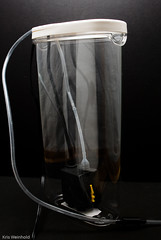 My method falls somewhere in-between EI and PPS Pro. I use a fraction of the nutrient levels recommended by EI, and am mindful of certain ratios for my nutrients, but I don’t test frequently. I do maintain bi-weekly water changes to help reset my tank periodically, clear the water of tannins, and top off evaporated water. On Mon/Weds/Fri I dose macro-nutrients (nitrate and phosphate), and on Tues/Thurs I dose micros (flourish and iron). Generally speaking, I watch my tank to let it tell me what to do.
Nutrient Imbalance
Nutrient deficiencies or excesses often manifest themselves through clear-cut symptoms, so by keeping an eye on your aquarium, you can adjust your dosing regimen as needed. For example, if you have green spot algae on the glass, your tank needs more phosphate. If you have hair algae, your nitrate levels are likely out of balance with phosphate. Black brush algae often indicates low nitrates or CO2, as does blue-green algae. If your plants are pale or yellowish, they are likely suffering from iron deficiencies. Extremely red or even purple plants often mean your nitrate levels are low. Pinholes in your leaves indicate a pottasium deficiency. While, there is often some overlap between these symptoms and other factor can be at play, getting a feel for these kinds of things make you more adept at adverting tragedy if let to progress.
Driving Factors
When developing your dosing routine, it is very important to realize the other driving forces involved in plant growth. The more intense your lighting, the more your plants are going to photosynthesize. The addition of CO2 becomes necessary to provide the carbon needed to sustain photosynthesis. At this point, the plants will use up more and more nutrients, which is when fertilizers are required. The main lesson to take from this, is that if your plants are growing too fast or if you’re unable to keep your nutrients in balance, the best thing you can do is to reduce the amount of light over your aquarium. This should help you to reduce any algae that’s crept up, and keep a handle on your dosing routine.
Summary
Fertilization is an extremely important piece of maintaining a healthy planted aquarium. It is also often regarded as one of the least desirable aspects of the hobby. Planning ahead, and thinking realistically about the level of commitment you’re willing to make to dosing, will ultimately lead to success. Don’t be intimated by the chemical names and ratios. I recommend starting with a commercial line of fertilizers, and as you get more comfortable, start using the dry nutrients for macros. Good luck!
Further Reading