Amazon Trip: The Bugs

August 20th, 2007

The Amazon plays hosts to a multitude of insects. While we were there, we saw new bugs everyday, especially when we did night hikes through the rainforest. At night, bugs come out from their cover of leaves and sunlight, and are a macro-photographer’s dream. They’ll often just sit there, through multiple flashes. Please don’t expect any expertise on these guys, but I hope you enjoy the pictures.
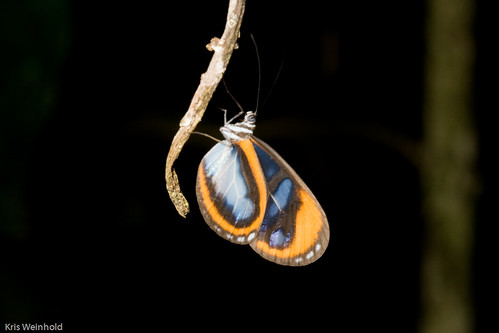
Amazon Moth

There are some absolutely jaw-dropping beautiful moths and butterflies constantly flying around the forest. Pretty much every color of the spectrum is represented, but unfortunately, getting pictures of any of these specimens is a test of will, as they rarely stop moving. Above is a moth, resting at night. Of course, all of these moths/butterflies have to come from somewhere, and so there is also a large variety of caterpillars munching away at the foliage.
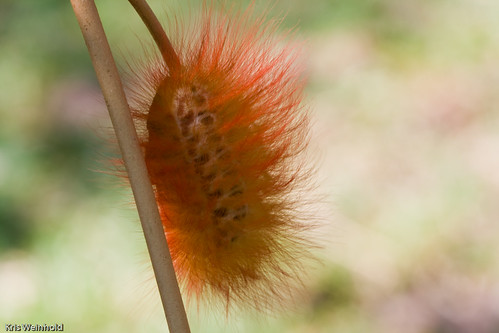
Catapiller

It’s near impossible to know for sure which species these caterpillars are without fully allowing them to complete their life cycle. These two guys below wouldn’t sit still much at all. They were constantly munching on leaves as you can see in the picture.
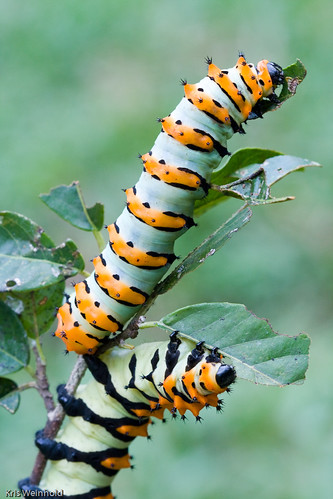
Amazon Catapiller

I was told that the caterpillar below can leave a nasty sting if you handle his spines. Nevertheless, I thought the little guy to be quite pretty.
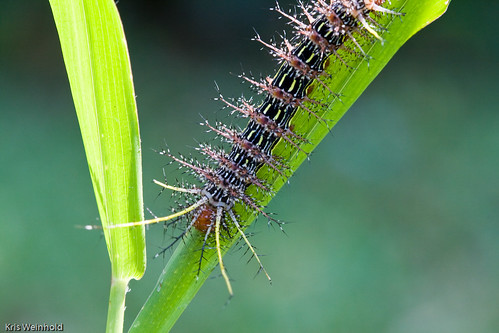
Amazon Catapiller - Poisoneous

If there’s anything that never stops in the forest, it’s the leaf cutter ants. These guys will march right over your foot if you put it in their path. When you find a trail, it seems like it goes on forever. These ants truly are magnificent workers.
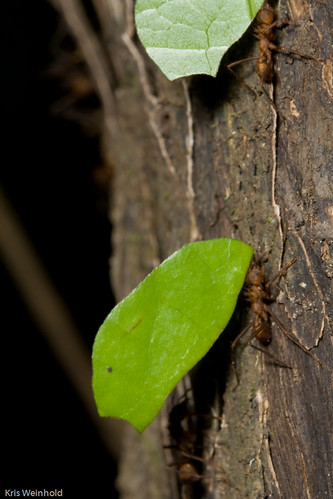
Amazon Leaf Cutter Ants

Not exactly a bug, I know, but we saw a few examples of snails in the forest, so I wanted to fit them in somewhere. Nothing too exotic, but pretty neat.
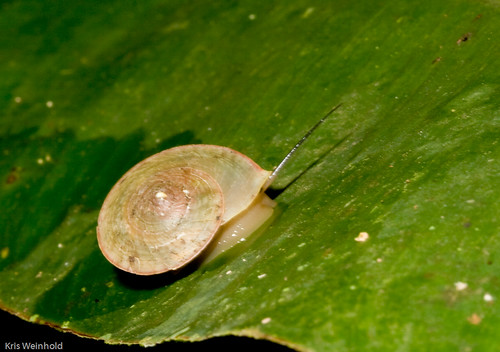
Amazon Snail

Spiders, spiders, spiders. There are so many different types of types in the forest. Wolf spiders, tarantulas, tons of different spiders in webs. Fortunately, they make great pictures!
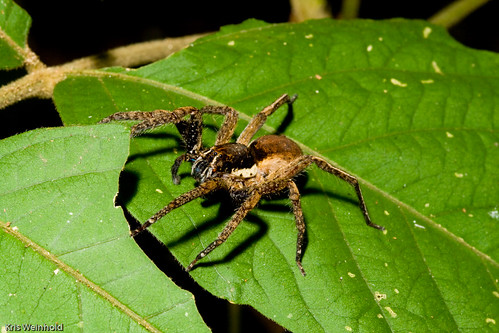
Spider

I like the yellow on this guy’s legs. Probably means he’s dangerous or something.
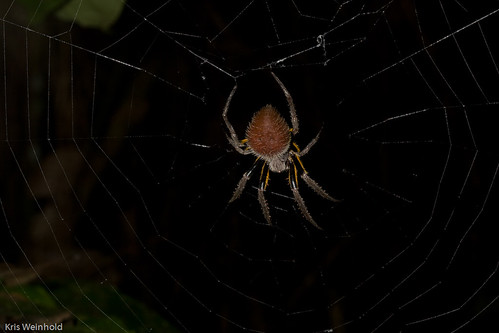
Spider on Web

This is a really interesting catydid below. The white feathers on its back end are made of a waxy substance that turns to dust if you touch it. It’s used as a defense mechanism, much like how a lizards’ tail disconnects, allowing it time to get away from a predator.

Catydid with Waxy Tail

There are quite a few odd shaped bugs in the forest.
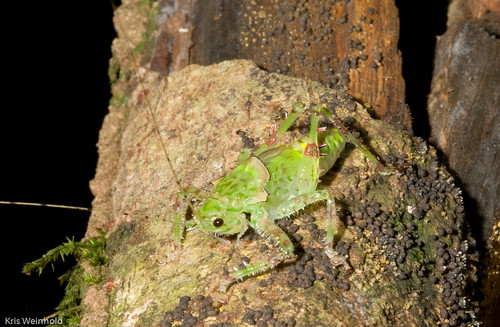
Amazon Bug

Here’s another odd-shaped one. He blends in nicely with the tree though.
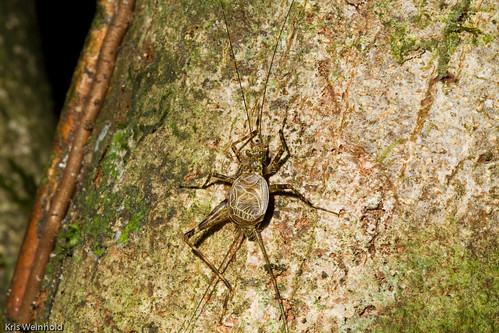
Amazon Bug

Then there’s a whole smattering of leaf-camouflaged bugs out there. Here’s one catydid. That notch at the top is not a bite or injury. It’s naturally like that so that they blend in better with the other broken leaves on the ground.
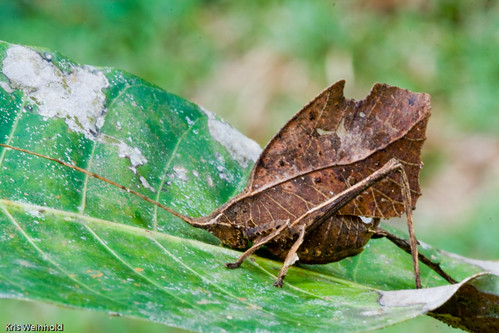
Lead Camo'd Catydid

This is another camouflaged grasshopper. This is one of my favorite shots that I got — even his eye is camouflaged!
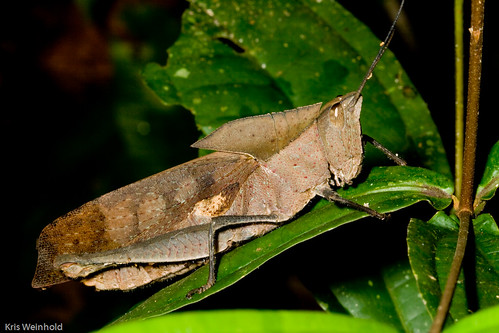
Camo Grasshopper

Then there are more brightly colored catydid, such as the one below with a bright yellow line down its back. I often had to cut out their long antennae from the photos because they were so long.
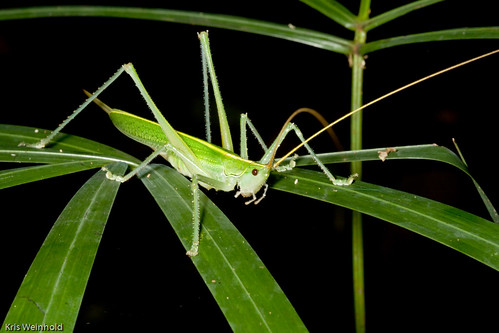
Catydid

Another catydid that I thought was very pretty.

Catydid

Of course, there is a darker side of the rainforest. Where damp environments are, so are fungi, and parasitic nasties. This particular grasshopper had the unfortunate luck of getting infected by a parasitic fungus. It slowly grows inside its host, and eventually breaks through the skin, killing its subject and feeding on its remains. Fun, huh?
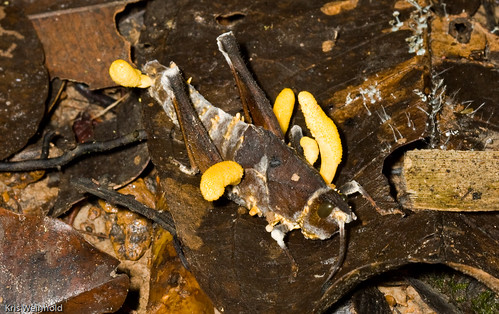
Grasshopper with Parasites

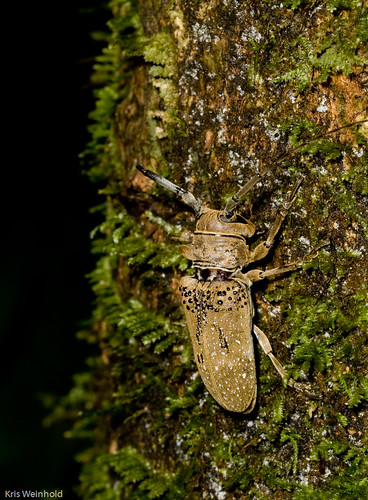
Here’s some sort of beetle that I found interesting. All of the mosses on the trees provide ample habitat of a wide variety of bugs.
Amazon Bug

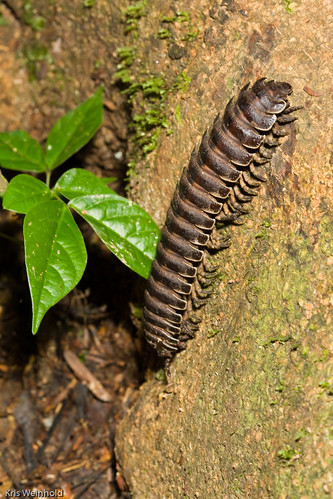
These millipedes were all over the trails in various places. If you startle them, they will ball up into a tight little ball, protecting their soft underside with their hard armored exoskeleton.
Millipede

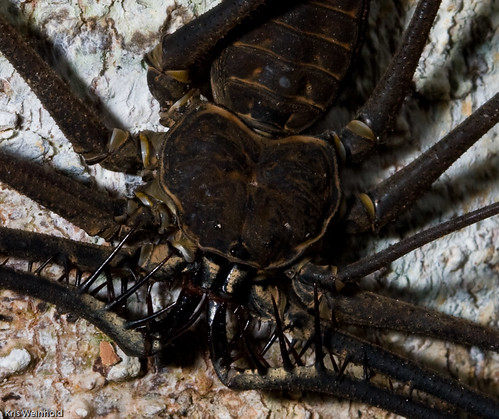
This nasty looking thing is called a whiptail scorpion. While looking quite terrifying, it’s actually completely harmless to humans. Infact, we took turns putting this guy on each other’s faces to get that “make mom scream” photo for the trip. We basically considered them really ugly daddy long-legs.
Whiptail Scorpion

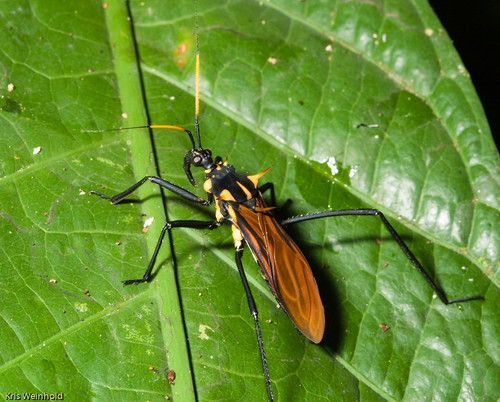
And of course, the Amazon has wasps just like any other place.
Amazon Wasp

I hope you enjoyed my bug pictures. Please don’t use any of them without my permission first. Thank you!
Business Broker

Amazon Trip: The Birds

August 19th, 2007

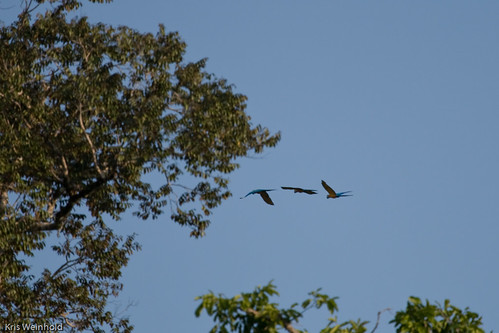
The Amazon is a bird watcher’s paradise. You wouldn’t be in the Amazon if you didn’t hear the loud squawking of mccaw parrots as they flew overhead. It’s really amazing to see these colorful birds out in the wild, as opposed to in a pet store cage. As loud as the mccaws are, the green parrots are even noisier, particularly when you’re trying to sleep!

Amazon Mccaw Parrots

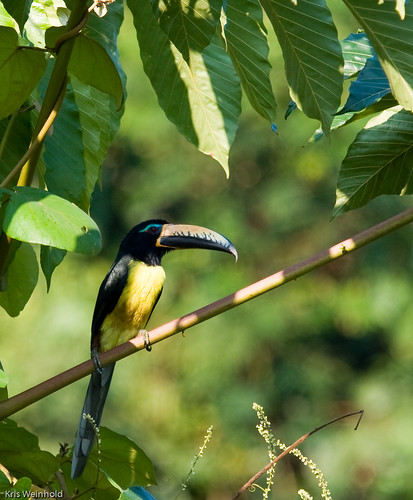
Besides parrots, I think the toucan is the quintessential Amazon bird that everyone knows. This may be in large part due to Fruit Loops marketing campaign, but nevertheless, there’s no wonder as to why people admire these birds. This particular bird below flew up to this tree, about 50 feet away from the platform I was standing on, about 5 stories from the forest floor. It then proceeded to fly overhead to a different tree where 2 other toucans squabbled with each other before all 3 took off. What colorful animals!

Amazon Toucan

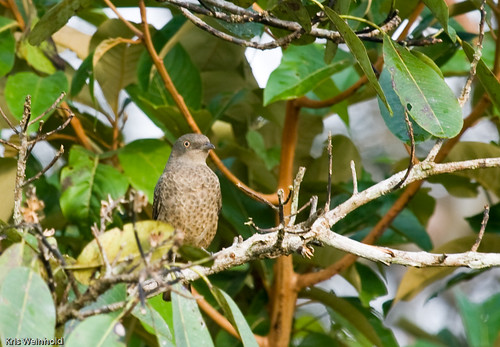
There are numerous birds on the water that prey on fish or other critters that become vulnerable on the water’s edge. I haven’t a clue what this bird is below, but we saw a fair number of this type around.

Amazon Bird

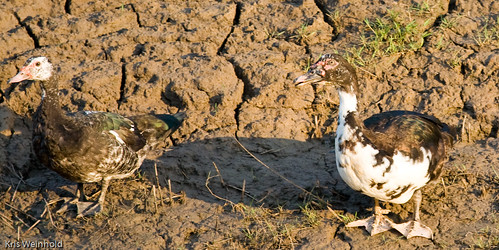
Even the Amazon has a common duck. While these ducks are slightly different than the common ducks all over North America, their general behavior is the same.

Amazon Ducks

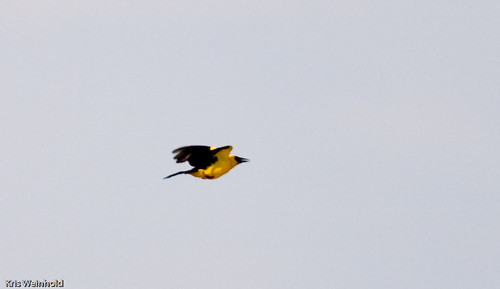
These yellow-bodied birds can be seen all over the Amazon. We saw especially large numbers of them when we were on the boat, making the trip down the Amazon river to the Rio Orosa.

Amazon Bird

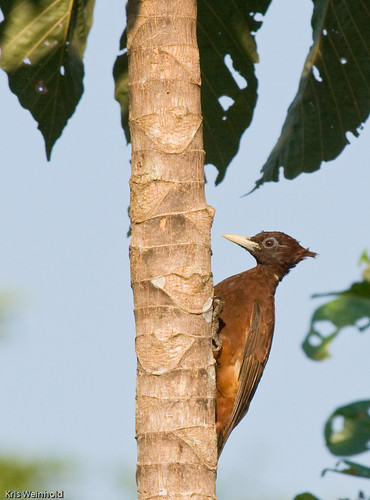
With all of the insects in the Amazon, it goes to figure that there would be plenty of woodpeckers around.

Amazon Woodpecker

Business Broker

Amazon Trip: The Rainforest

August 18th, 2007

As I mentioned, we just got back from the Amazon Rainforest, about 10 hours by boat from Iquitos, Peru, on the Rio Orosa. The river and forest here is beyond breathtaking. The biodiversity of trees and plants is probably impossible to catalog. There are plants growing on plants, which are covered in lichens, and attached to trees. Our tour operator told us that they recently invited a Ph.d. student down to complete their thesis work, and with approximately 650 trees surveyed, over 500 species of trees were identified, including one tree, “Lonely Jorge,” which is the only known living tree of its kind in the world. They don’t know how it got there, or if anymore of the species exist. Amazing stuff.

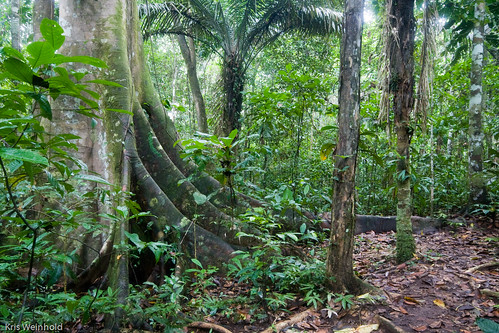
Two Trees come Together

The preserve where we stayed has caretakers, who maintain a number of trails through the forest, putting in log stairs such as the ones below. Most of the trails, however, are not are nicely established as these, which is probably a good thing to get a more authentic feel.

Stepped Path in the Amazon Rainforest

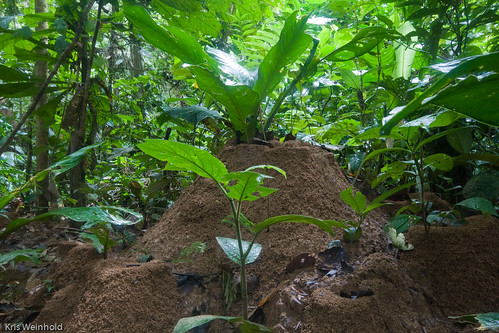
Sometimes, our trails would take us right over top one of these huge ant hills. Some of the larger anthills that we saw would be several feet high, and could fill a large living room in your standard American home. Fortunately, walking over these mounds did not seem to invite any punishment from the ants. Maybe we just got lucky, finding the “friendly ants?”

Huge Anthills in the Amazon Rainforest

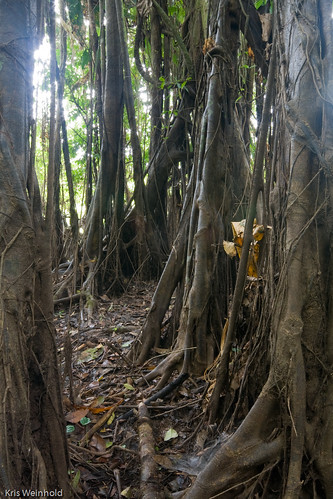
Down the Rio Orosa a little ways, there is a small tributary where huge stands of banyan trees stand. We were not able to reach the largest of these due to low water, but our guides told us that there exists a single banyan tree that stretches over an entire acre of land by itself.

Banyan Trees in the Amazon Rainforest

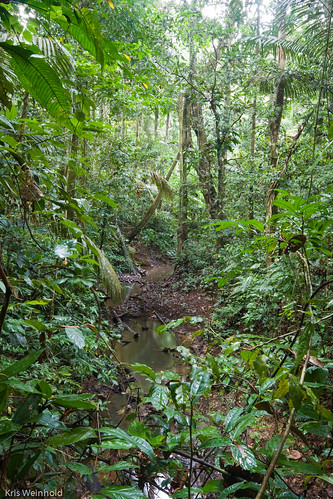
All throughout the rainforest, little creeks and streams flow toward the larger rivers. I didn’t get a chance to survey to many of these for fish, but I believe our guide pulled out a few killies from one creek similar to this.

Stream in the Amazon Rainforest

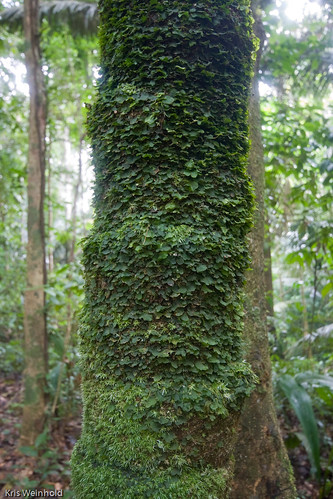
As I mentioned before, nothing exists by itself in the forest. Every tree trunk shares itself with any number of plants or lichens. There’s at least two species growing on this trunk below.

More Lichens on Trees

Below is just another example of the ferns/mosses that grow on these trees.

Lichens all over the trees

I just liked this picture because it shows a number of different trees, all growing within close proximity to one another. I don’t remember if this was in one of the “devil’s gardens” or not, but it’s quite possible since there does not appear to be much undergrowth. A “devil’s garden” is created when a certain kind of ant decides to take up home among a particular group of trees. These ants produce and inject citric acid into every “unwanted” plant that comes into their garden, thus killing it. Tasting an ant, they taste like lemons — I wonder why?

Amazon Rainforest

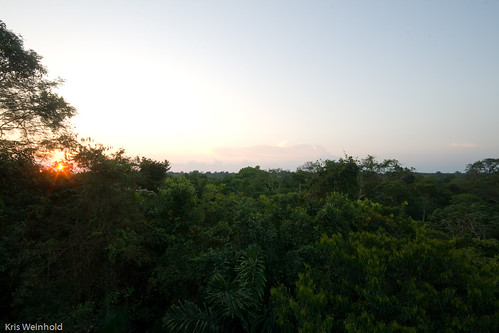
The sun comes and goes very quickly near the equator. I watched the sunset in a tower overlooking the canopy of the trees.

Sunset in the Amazon

Business Broker

1952 Aquariums Weren’t So Primitive

August 13th, 2007

After coming home from an often-frequented thrift shop, my wife announced that she had bought me an aquarium book. Immediately, when looking at the cover, it’s obvious that the book was dated, but with plants on the cover, I figure it’s at least worth a look.

Indeed, published in 1952, the author describes how to build a tank from scratch using plywood, glass, and various “cements.” Then, he describes heating your tank using gas and oils, and describes setting the proper flame height to establish the proper temperature. Wow, and I thought I had it hard with my equipment!

Despite this, I continue reading, and to my surprise, there’s a whole chapter on aquatic plants. Plants reproduce by photosynthesis, true. Builders sand is not a good substrate because it compacts, true. Light is important, true. Fertilization will be taken care of by the fish, okay not entirely false, but still reading. Then I come to a section listing possible plants for an aquarium.

As you would expect, they were growing Cabomba caroliniana, but they also grew Cryptocoryne cordata, C. griffithii, Riccia Fluitans, and Utricularia, among others.

Then, the chapter continues on to describe how to layout an aquarium, using rocks and plants to form a aesthetically pleasing look. Use rocks that are well weathered, and avoid different types of rocks in the same aquarium, as it will not look natural. Don’t position the rock in the center of the aquarium, instead offset the rock a little bit to the right or left. Then, use plants to form an nice background around the rocks.

It seems that we’re not as advanced as we think we are in the aquarium hobby today. Sure, we might have the luxury of flow-controlled canister filters, fine tuned in-line electric heaters, and an assortment of manufactured substrates, but at the end of the day, we’re still in the business of making a tank that looks nice using a variety of plants and hardscape materials. Our plant selection may be larger than our grandparents’, but it seems appropriate that the art form of aquarium keeping are continuing from generation to generation.

Business Broker

Florida Trip – Around Miami (Day 4)

June 17th, 2007

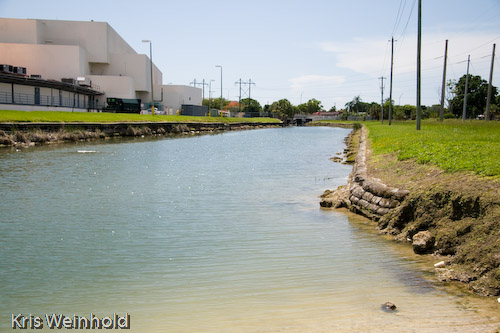
We woke up Sunday, ready for a full day of collecting around the Miami around. In Miami, canals crisscross the entire area, allowing us plenty of accessible collecting spots via public boat ramps. In addition, due to the large population density, many non-native fishes have made their way (unfortunately for the habitat, fortunately for us) into the waterways. At our first stop, we found a boat ramp behind a fairly large shopping complex. Walking down the canal banks, we didn’t see a any signs of life outside of a few clumps of Hygrophila polysperma and Cabomba. There were more office chairs and discarded garbage in the canal then we saw fish.

Canal in Miami

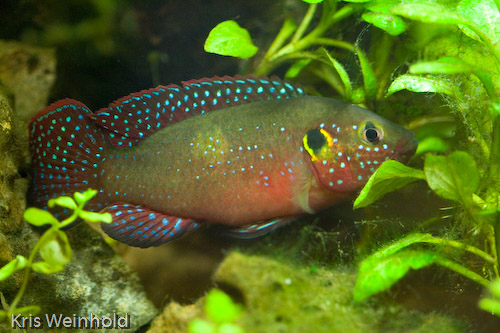
We decided to cast our nets into the polysperma anyways, and to our surprise, we found 4-5 small cichlids! There seemed to be two types present, 1 type with vertical bars that are probably juvenile Mayan cichlids, and the other, a much more colorful Jewel cichlid (shown below.) What was originally a very bleak looking habitat suddenly came to life. As we continually pull more of these cichlids from the water, we start to see some larger fish take interest in our activities. Peacock bass start coming in to feast as we startled the smaller fish from their protective plant mats. We continue netting fish for several hours, before deciding to grab some lunch and move on to our next location.

Jewel Cichlid

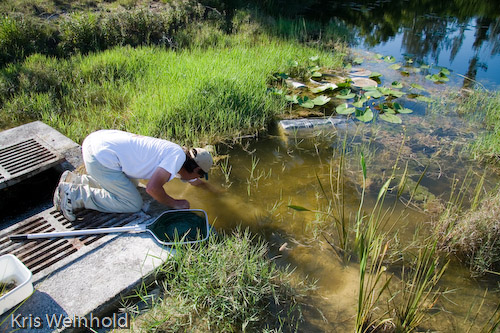
A few miles away, we located another canal system with public access to the waterways. Unfortunately, this dock was much more frequented by jet skis and motor boats, so we decided to investigate a more seclusive pond right next to the canal. A few of us are looking down in the pool, seeing the usual batch of mosquito fish swimming around, when a couple of plants take our eye. First, floating on the surface is a very frilly plant, that upon closer investigation is a carnivorous badderwort. Well, I have to try that one out, and while I’m gathering a few small fronds of that, I notice another plant with elongated brown and yellowish leaves. Immediately, I get excited that I had found a bed of crypts! So, I pull a couple out, and take them to Ghazanfar. “Nope, they’re not crypts,” he says, but instead appear to be some sort of an Aponogeton. In this pool, none of the Aponogeton are taller than7-8 inches. I’m really hoping that they intend to stay that height because every other species that I’ve tried tends to grow multiple feet in length.

Investigating a pool

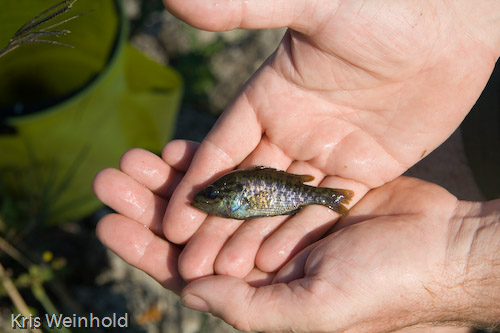
Meanwhile, a few other folks had started dipping their nets in the canal, now free of jet skiers. More great fish start showing up in our nets, including a very pretty variety of sunfish (shown below), some shiners/minnows with really nice red on their tails, two varieties of darters, and a new color strain of Jewel cichlids. The Jewels in this canal are much redder in coloration, while in the first canal, they were more turquoise. After being out under the sun for a number of hours, we all decided that it was time to cool off back at the hotel.

Sunfish in hand

Business Broker

« Previous Entries   Next Entries »