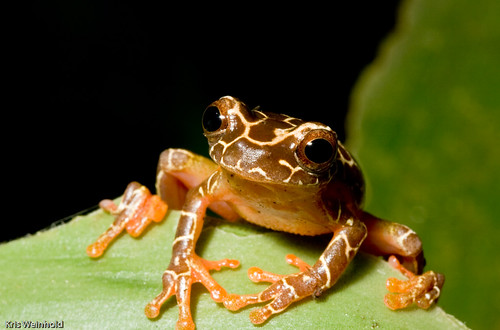
Croatan National Forest

October 15th, 2007

This week, my wife and I visited her sister in North Carolina, who lives near Croatan National Forest. This national park is a huge plot of 160,000 acres of pine forest, saltwater estuaries, bogs, and pocosins. I have posted previously about visiting a beach on the Neuse River, which was also in the park. This time, we decided to hike part of the Neusiok Trail, which is a 20 mile long trail from the beach into the forest; we only did a small portion of the trail.
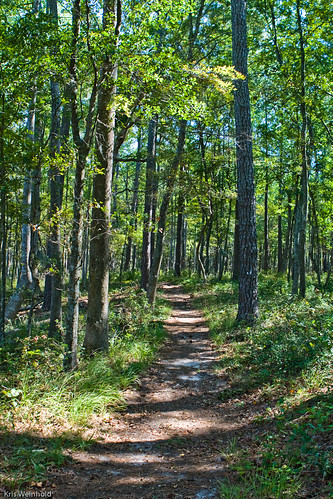
Croatan National Forest

I had come hoping to get lots of photos of Venus flytraps, pitchers plants, and sundews, but as often happens, I came away with a different experience altogether. Instead of pitcher plants, we came across a really nice grove of palm ferns near the coast. Whether they’re native or not, I haven’t a clue, but they remind me a lot of some places in Hawaii.
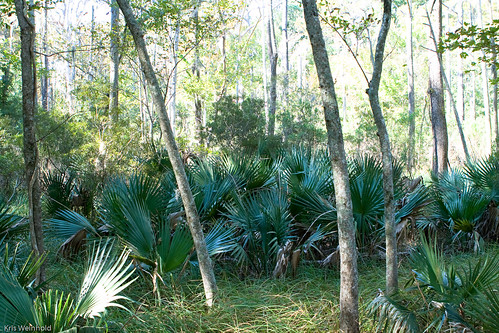
Croatan National Forest

Further in on the trail, we found what should have the perfect bog habitat for carnivorous plants. Pine needles lined the tannin stained water bottom, and only a few grasses were throughout the area. Still, even between the grasses, I didn’t find the plants I was looking for. I’ve read a bit on the Internet about how poaching is a huge problem for this area, where collectors or resellers illegally dig up entire stands of carnivorous plants for their collections. I can only assume that any public trails that once had any rare plants are now probably devoid of them.
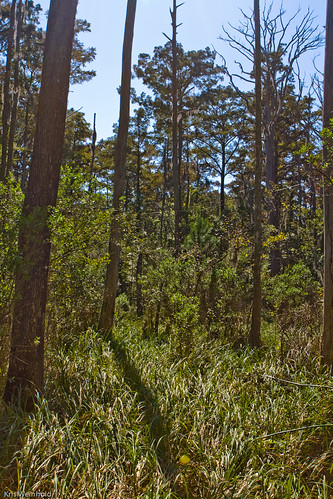
Croatan National Forest

There were many old trails present along the main trail. Below you can see how an entire path was blazed through the trees, only to be abandoned allowing small brush to take over.
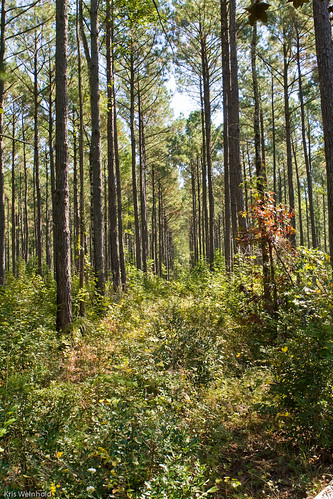
Croatan National Forest

Fortunately, even though we didn’t find any carnivorous plants, we did find some interesting carnivorous creatures. I nearly walked face-first into this spider and web. Fortunately, I didn’t disrupt his web, and was able to get a picture. We also saw a number of small lizards scurrying along many fallen logs.
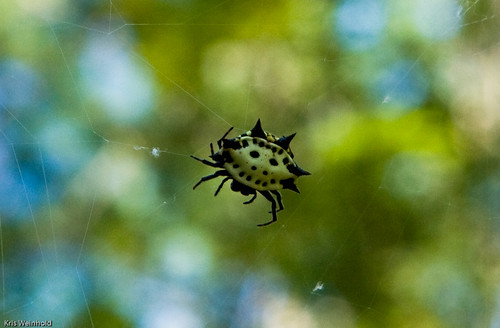
Spider at Croatan National Forest

Accepting defeat on our carnivorous plant search, we decide to head back toward the Neuse River beach, and enjoy the pleasant sea breeze. The beach itself was fantastic with plenty of Cyprus trees growing right up to the water, with their tangled roots exposed.
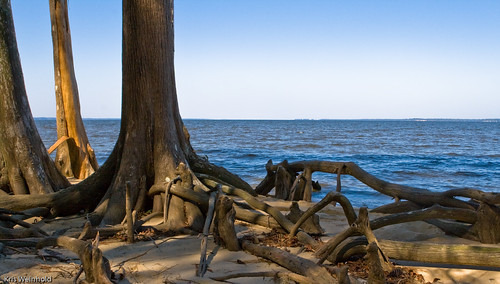
Neuse River

As we were walking along the beach, we noticed some activity out in the water. Apparently, during this time of year, the sality of the Neuse River increases, and ocean creatures venture upstream. We witnessed proof of this when a whole family of dolphins was jumping and splashing through the water. As many times as I’ve seen dolphins, I still am fascinated every time!
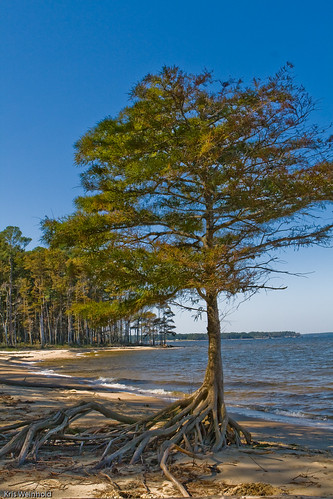
Nuese River

That wasn’t the only activity of the day. Multiple types of birds were patrolling the skies, looking down at the water for signs of their next fishy meal. We witness this crane make repeated attempts toward fish.
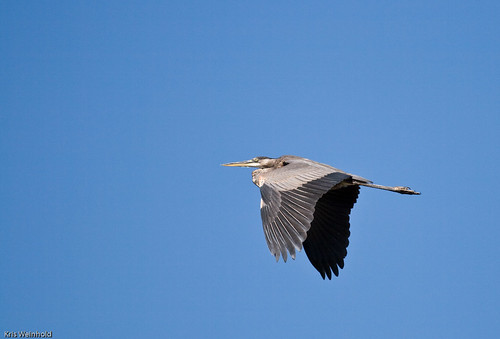
Crane at Neuse River

Our most impressive bird of the day had to be this Bald Eagle. This amazing bird was also diving into the water for fish, and then retreating back to top of some of the Cyprus trees to enjoy their meal. I wish it would have be closer for me to get a better shot.
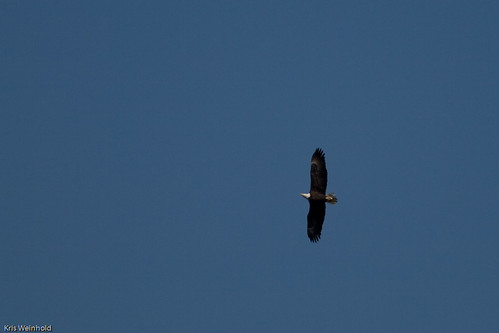
Bald Eagle over Neuse River

I highly recommend visiting this national park if you’re in the area. I still haven’t covered 1/10th of what they have to offer. Next time I go down, I’m going to be sure to contact a ranger first in hope pothat they might be able to guide me toward the carnivorous plants I’m seeking. Until then…


Business Broker

HC and Rotala Macro Shots

September 29th, 2007

Last night I went over to my friend Aaron’s house to help him get a good photograph of his aquascape for the Aquatic Gardener Association’s aquascaping contest due in a few days. I promised him that I wouldn’t post any pictures of his actual aquascape until after the contest is over, but these are some individual plant shots I took.

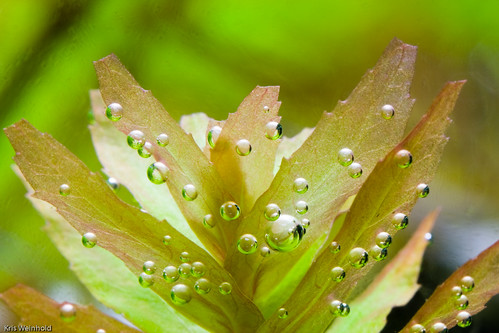
Hemianthus callitrichoides Glass bubble

The first shows HC, Hemianthus callitrichoides, pearling with a nice fat oxygen bubble on its’ leaf tip. If you look closely you can see some of the downoi reflected in the bubble. Below is a picture of a very healthy looking Rotala macrandra var. ‘Green,’ also pearling away. I’m going to have to go back and take more pictures because Aaron’s got some really awesome plants growing in his tanks. Good luck in the contest Aaron!

Rotala macrandra var. 'Green'

Business Broker

Amazon Trip: The Lizards (and other reptiles)

August 23rd, 2007

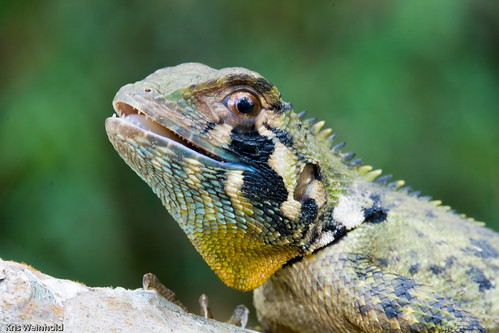
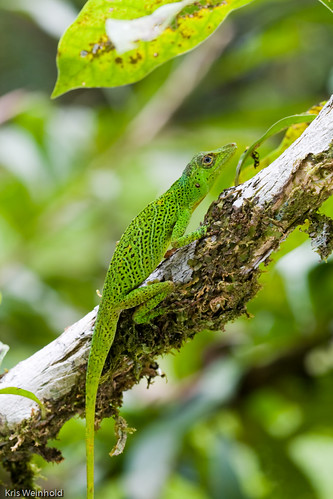
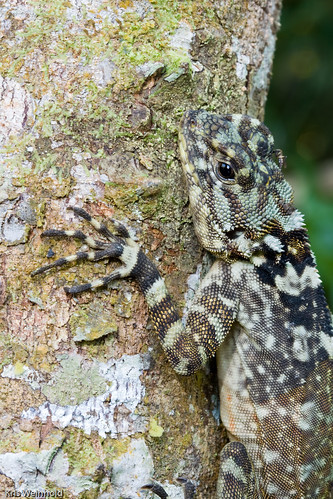
Around our camp in the Amazon, all sorts of lizards could be seen scurrying about. Often times, all you’d see is the flash of a tail, and then it would be gone. This pretty little lizard below was in our tent, and all around the camp.

Amazon Lizard

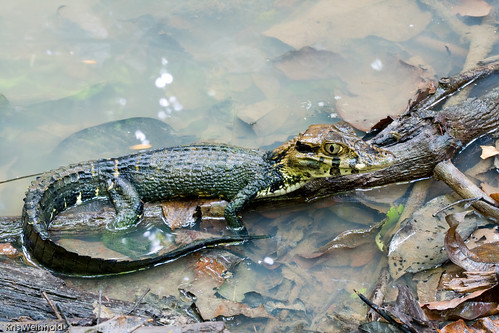
And of course, besides your harmless little lizards, there were also black caymans around. This particular guy was brought to us by some of the local villagers nearby. It’s really amazing how long these creatures will stay in a single pose. I suppose they’re in defensive mode or something, but once they get set, they’ll barely flinch a muscle for 10 minutes straight. That’s great for long exposures in dim light!

Amazon Black Cayman

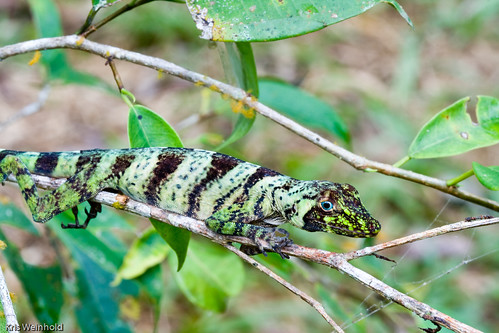
Look at the claws on this guy below. Can you tell that he’s found in the trees? It may not be as apparent in this picture, but look to the next.

Amazon Lizard
Pretty well camouflaged, isn’t he?

Amazon Lizard
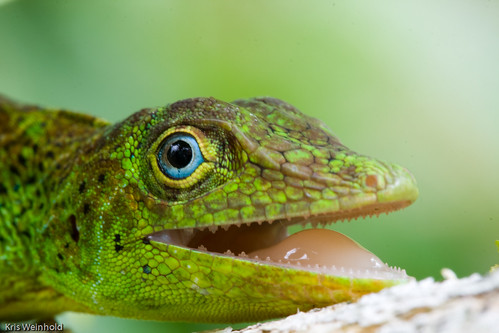
This was my wife’s favorite guy. He has a very beautiful blue ring around the inside of his mouth, and didn’t seem ashamed to show it. I think he’s actually a little iguana, but then again, what do I know?

Amazon Lizard
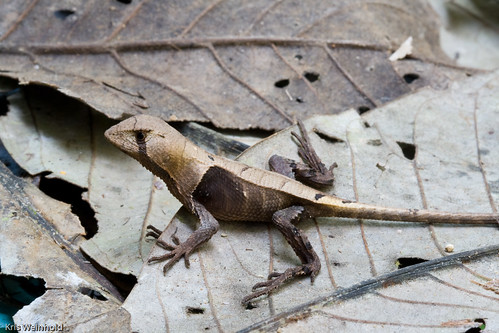
And, just like the various insects, there are lizards that look like leaves down in the jungle. This lizard is about 6-8″ inches long, and if you weren’t looking closely, you’d likely miss him on the forest floor.

Amazon Lizard

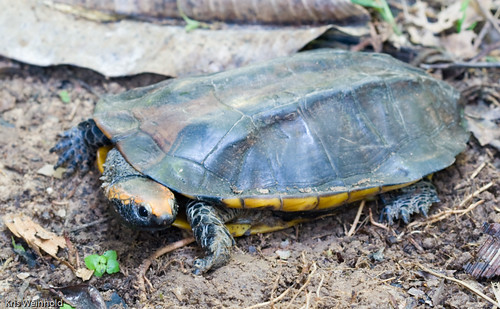
Here’s a semi-aquatic, semi-terrestrial turtle that was brought to us. He doesn’t look much different from a lot of the turtles we see in the United States, but still very cool. And unlike some of the turtles around me, this guy would not stay put in his shell. I had more trouble getting him to sit still then I think I’ve ever had with a turtle. Aren’t they supposed to be slow?

Amazon Turtle

Finally, we were fortunately to locate both a male and female of the same species below. Of course, I don’t remember which is which, but you can see how the patterns on their back are entirely different.

Amazon Lizard

I think I prefer the spotted pattern of the one below, to the barred one above, but they’re both pretty darn fun to look at. And check out their eyes!

Amazon Lizard
Oh, and their teeth! This might be my favorite shot from the trip. I hope you like it.

Amazon Lizard

Besides a few odds and ends that I might throw in, I think this is the last set of nature pictures I’m going to post from our trip. If you’d like to see more general descriptions of our travels, you can read about them on my wife’s blog.

Business Broker

Amazon Trip: The Snakes

August 22nd, 2007

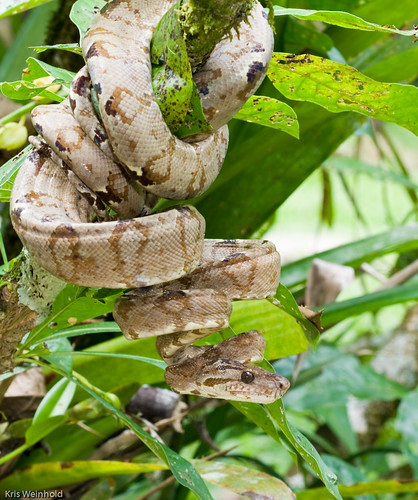
Before I went to the Amazon, I was always one of those people who said they were afraid of snakes. Growing up, the worst we had to worry about were copperheads, but I think the fear that something so tiny could put you in a world of hurt was scary. Right before the trip, I had to help my mom remove a harmless black snake from their deck. Just handling that snake, you could feel the strength that they have. In the Amazon, I witnessed far more deadly snakes than the copperhead, but also saw even more strength in the boas, and more beauty in the coloration of some of these creatures. I hope you enjoy my snake photos.

Amazon Boa
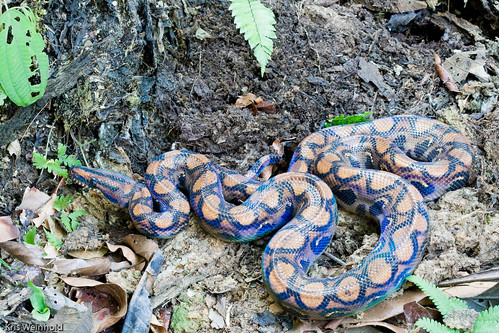
The snake above is a standard tree boa constrictor. These snakes are so strong, and really coil up around a tree in an instant. Below is its much prettier cousin, the rainbow boa. One of the other photographers happened across this beautiful snake during one of his afternoon walks. With every movement, the iridescent blue shimmered one its skin.
Amazon Rainbow Boa

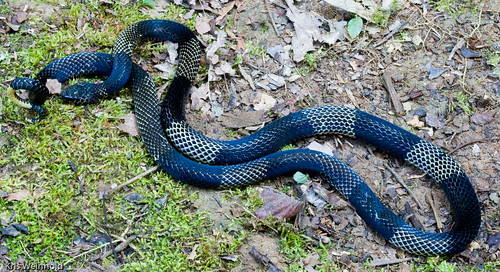
Micrurus putumayensis, below, was quite drab looking in the shade. In the sunlight, blue undertones started shining from its dark patches. A really nice looking snake.

Amazon Snake

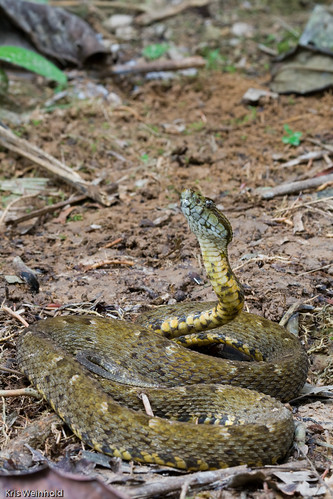
Next is the famous fer-de-lance. This snake is very lethal, and is not afraid to strike. While our guides were handling this snake, it struck multiple times at the handling tools, causing venom to drip down the metal surface. They told us about one unfortunate previous guest who accidentally stepped on one of these, got bit, and needed over four months to finally get back to normal. He nearly didn’t make the first day. Scary stuff, but definitely a snake to respect.

Amazon Fer-de-Lance

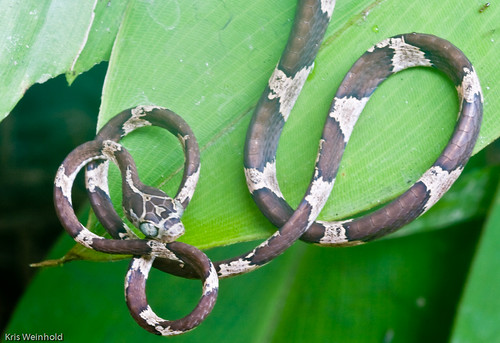
Here is a vine snake that we found on one of our night walks. I kind of like how his head is disproportionate to his body.

Amazon Vine Snake

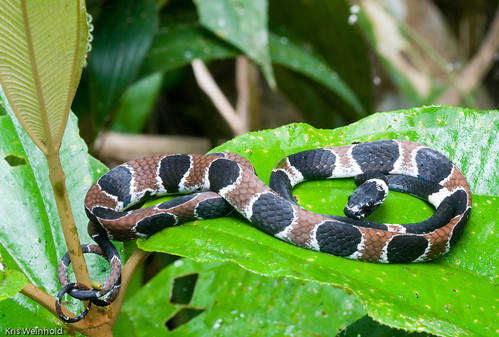
Another pretty snake. Unfortunately, I don’t remember whether this one, the next, or both are vine snakes, or varieties of coral snakes. If anyone has any insight, please comment and set me straight.

Amazon Snake

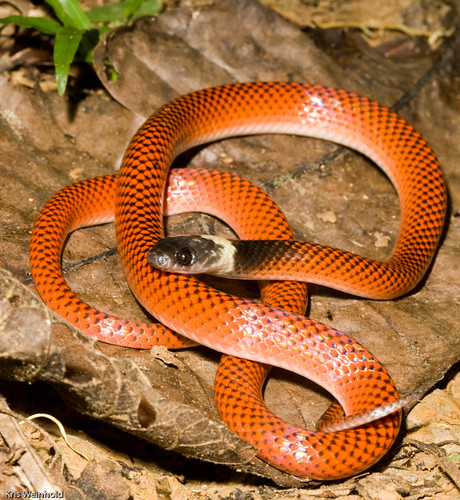
Again, not sure what kind of snake this is, but isn’t it pretty with the orange and black checkerboard pattern?

Amazon Snake

Business Broker

Amazon Trip: The Frogs

August 21st, 2007

While in the Amazon in Peru, we saw (and heard) a huge variety of frogs in the rain forest and at the river’s edge. If you looked close, you could see huge frogs on the river banks. Their eyes would shine as large globes in the night when you flashed your light at the bank. Reeds growing from the river would be home to multiple color forms of a single species of frog. In the forest itself, frogs would inhabit trees and undergrowth alike. At nighttime, you would hear bird calls that were really frog sounds, and vice versa. Since frogs have always been one of my favorite subjects to photograph, and just marvel at, I had a blast taking these pictures. I hope you enjoy them as well.

IMG_6928

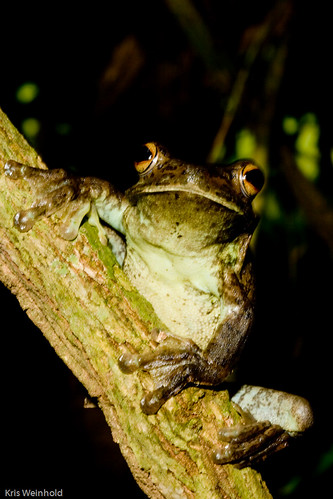
Above is one of the large frogs that we found sitting on a riverbank. He was not one to stick around for long. He got up into this tree, and this was the only shot I was able to get of him before he scurried up the tree out of sight. It’s hard to tell how big this frog is from the picture, but he’s probably a good 8-10″ from head to foot, with a bit of heft to him.

IMG_7342

This frog above and the one below were both found in reeds by the river’s edge. If my notes are correct, they are both the same species of frog, but are obviously slightly different color morphs. Both are sitting on water hyacinth as is their natural habitat.

IMG_7329

This tiny frog was sitting on this log during one of our afternoon forest walks. Not much larger than a half dollar, I wouldn’t have spotted him if it wasn’t for our guide’s sharp eyes.

IMG_6579

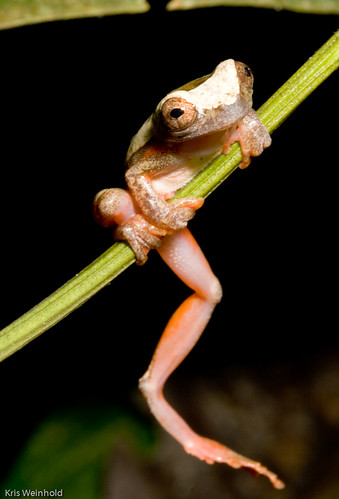
Below, we were trying to adjust one of this frog’s legs up on the reed, when it slipped off. I liked the pose, and he held it, so I got this picture.

IMG_6940

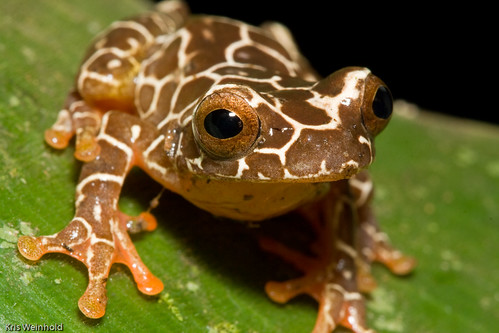
And finally, the next two are of my favorite frog on the trip. We were out collecting specimens at night, and stopped at a local village’s pond, full of grasses (and cichlids and even a coral snake). One of our guides spotted this little guy. For the pattern on his back, they call him a Giraffe Frog.

IMG_6967

Could he be any more cooperative with the camera? I mean really, how awesome is this frog?

IMG_6993

Business Broker

« Previous Entries   Next Entries »