GWAPA – Fertilizers 101 by Jeff Ucciardo

August 25th, 2008

Jeff Ucciardo gave a wonderful overview of fertilizers at GWAPA‘s August meeting this month. Jeff is a former tank-of-the-month winner on Aquatic Plant Central and is known within the club as having one of the most algae-free and well maintained set of planted aquariums in the club. Much of this is due to his grasp of how to use fertilizers to maintain the proper balance of nutrients in the aquarium. He put together a fantastic presentation, going over Estimative Index (EI) and Perpetual Preservation System (PPS) methods of dosing. Then, he described how he does something in-between those two methodologies while using an auto-doser to maintain consistency.
Ferts 101

We also had another huge auction this month. I came away with the biggest anubias I have ever seen. This monster plant is well over 2 feet tall, and more than a foot wide. It looks like Anubias barteri in some places, but in others like a totally different species. I stuck it in the back corner of my 54G aquarium to give a little bit more height to that scape. Otherwise, I came away with Lobelia cardinalis var. ‘small form’ and some pond plants. All-in-all, another great club meeting!


Business Broker

GWAPA – June 2008 – Bob Bock – Sunfish

June 28th, 2008

GWAPAAt GWAPA’s June 2008 meeting, we invited Bob Bock, past president of the North American Native Fishes Association, to speak about native sunfish. While this doesn’t sound much like a “plant topic,” we asked Bob to be sure to let us know which fish throughout his presentation would be suitable for a nicely aquascaped tank. Otherwise, since many American aquarists are unfamiliar with fishes in their backyard waterways, we felt it was a beneficial topic regardless.

Bob Bock

The theme of Bob’s presentation consisted of comparing how sunfish, though unrelated to cichlids, exhibit rather similar behaviors. They are both intelligent fishes, care for their young, feed by sight, and are widely distributed throughout their areas. Conversely, sunfish have far fewer species, are solely predatory in diet, and don’t exist below some portions of Mexico. Bob then proceeded to discuss in detail many of the species within the Lepomis genus of sunfish.

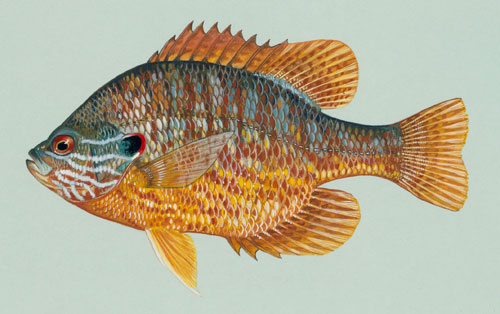
Pumpkinseed - Lepomis gibbosus

One of the species that I had been looking forward to hear about was the Pumpkinseed sunfish, or Lepomis gibbosus. A beautiful fish (shown above), it is unfortunately not very well suited for a planted aquarium because it grows a tad bit too large, and uproots plants to nest. It can also be quite agressive, and thus would require much larger tank sizes.

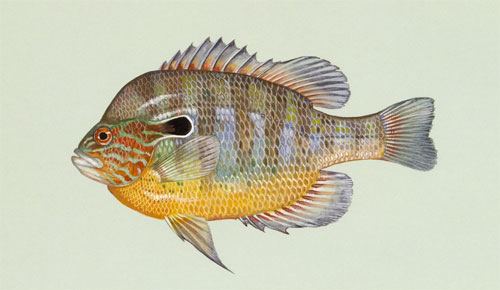
Longear sunfish - Lepomis megalotis

A better suggestion might be the Longear sunfish (above), which is a medium-sized sunfish, just as beautiful, and can be kept more managebly in aquariums. Bob also mentioned how Longear males develop a lump on their heads with age similar to the flowerhorn cichlid.

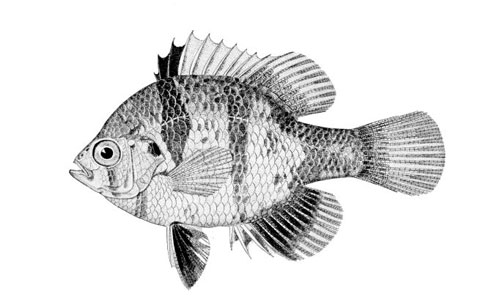
Blackbanded Sunfish - Enneacanthus chaetodon

Bob also mentioned another nice aquarium dwarf sunfish called the Blackbanded Sunfish, or Enneacanthus chaetodon, which he keeps several. Unfortunately for me, these are protected fish, and Bob had to obtain a permit to collect and breed them. Nevertheless, I very much enjoyed the presentation today, and hope to sometime collect and keep a few species of native fishes.

Business Broker

GWAPA – May 2008 Meeting

May 24th, 2008

GWAPANancy Rybicki of the US Geological Survey spoke at GWAPA’s May 2008 meeting in Silver Spring, MD. Being the first club meeting held at a meeting hall, rather than a member’s home, we had a pretty good turn out with 27 members showing up. Nancy gave an excellent presentation detailing the current state of submerged aquatic vegetation (SAV) in the Potomac River system, which flows into the Chesapeake Bay.

At first, she described why SAV is so important to the ecosystem. In tests, they have determined that in rivers that are lush with aquatic plant life, 10-60% of all nitrate in the waters are absorbed by the plants. This prevents these extra nutrients from eventually ending up in the Bay. So, her team worked to find out what the ideal conditions for SAV to survive are, and they found that ultimately, light is an important factor. The amount of light (13% needed by freshwater SAV) that reaches the plants is dependent on a number of factors. Water clarity is vital, but can be disturbed by algae blooms, wind storms, or high water flow that stirs up and introduces silt into the water.

Fortunately, since the 1980’s, many areas are experiencing a period of increased SAV. Improved sewage treatment methods have reduced that amount of nitrate that’s introduced directly into the Potomac. Even when faced with threats from exotic plants, such as Hydrilla or water lettuce, beds of Wild Celery (Val. americana) continue to do well in many parts of the river. This can largely be attributed to the fact that Val’s tubers provide energy stores that let them establish themselves in the riverbeds earlier in the season than the exotic plants can. Of course, environmental conditions vary yearly, and the state of the Val./Hydrilla competition does likewise.

I was interested to find out that one of the local native plants Nancy referred to was Stargrass. In the aquarium hobby, this is of course, Heteranthera zosterifolia, but to the local scientific community, they are referring to Heteranthera dubia. In addition, Nancy has helped on many efforts to introduce native plants back into parts of the Anacostia River to ensure a diversified selection of SAV in the river. By ensuring multiple native plants, they are increasing the likelihood that one of them will outcompete the exotic plants, and increase the health of the water ways.

Also, Nancy wanted to stress to all hobbyists that they continue to enjoy the aquatic plant hobby, but properly dispose of their plant trimmings. This means, throwing them in the trash or compost bin, instead of flushing them down the toilet, or dumping them into a local stream or river. Even better, use more native plants in your tanks. All in all, a very interesting talk about the plants/habitat in our own backyard.

Business Broker

GWAPA – March 2008 Meeting

March 30th, 2008

Yesterday, GWAPA conducted its March 2008 meeting at Don’s house in Catonsville, MD. In what is becoming a great trend, we had a couple of new members show up, and a record number of current members attend. Don has a 125G aquarium, with a really nice looking fake-rock background built inside. Normally, I don’t care for these kinds of backgrounds much, but this one was one of the most realistic-looking ones I’ve seen.

125G Aquascape

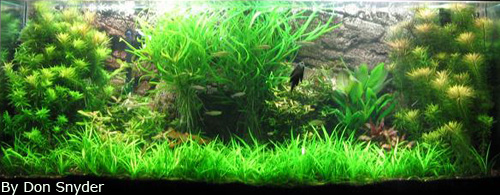
Ghazanfar gave a fantastic, in depth, presentation about the things to consider when setting up an aquascape. He described three types of layouts: concave, mounded, and sloped, with the one below being an example of a sloped layout. Ghazanfar really does have a wealth of knowledge about aquascaping, and I definitely learned a few things from his presentation.

Sloped Aquascape

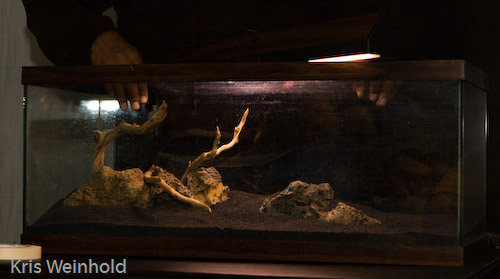
Afterwards, we brought a few 2.5G aquariums and allowed anyone who wanted to, to try their hand at using Ghazanfar’s aquascaping principles to design a hardscape, and get immediate feedback. It’s fun watching others use similar materials, and come out with hardscape designs that I wouldn’t have thought of myself.

We finished the meeting with a huge auction, containing over 150 items for sale. I came away with another pair of Goo Obo Gudgeons, Cryptocoryne usteriana, Ludwigia peploides, and  Rotala verticillaris. Another fantastic meeting!

Business Broker

Beautiful Manzanita

March 18th, 2008

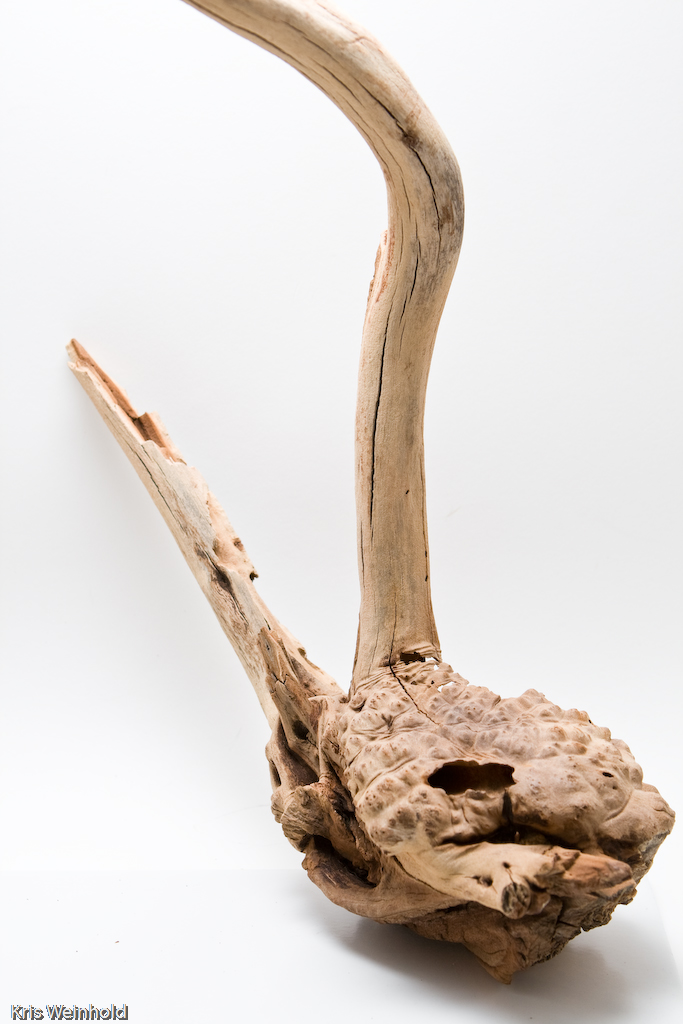
Manzanita WoodGWAPA recently ordered a large box of manzanita wood from manzanita.com to divide up and auction at our next couple meetings. While there are many fantastic driftwood choices available to aquarists, manzanita is one of the most interesting because there is such a variety of different looking pieces, all from the same tree.

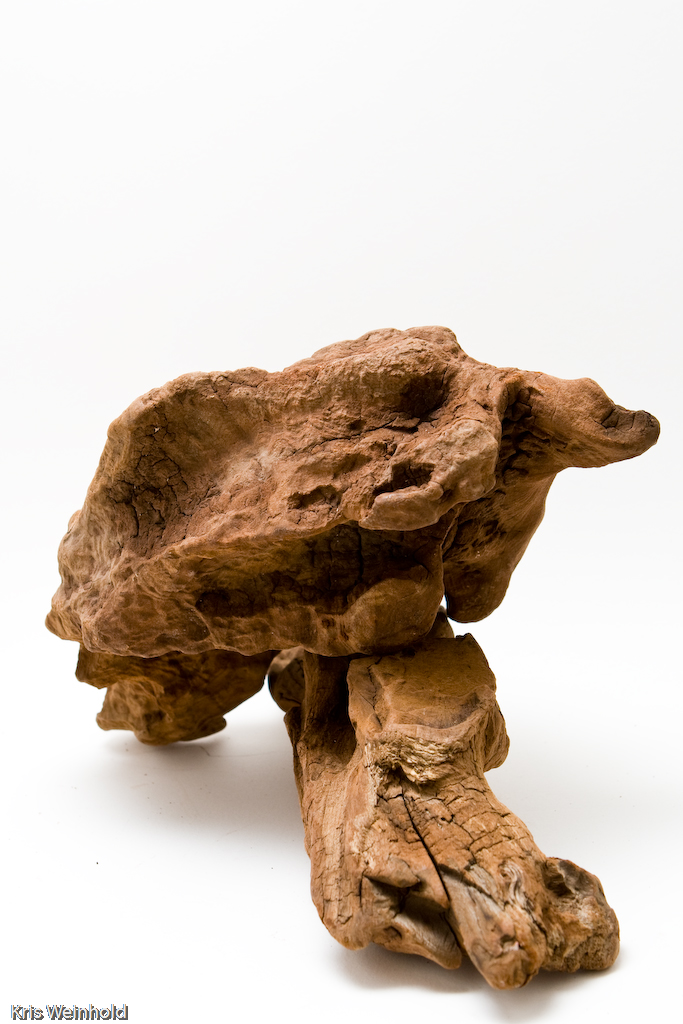
Depending on the part of the tree used, the color of the wood can vary from a light tan to a light orange or dark brown color. Native to the coastal regions along the west coast, manzanita is a fast growing evergreen that is a renewable resource in that region. Sometimes more like a bush than a tree, one of the strengths of this wood is that there are usually many uniquely branching pieces available. In addition, the thicker branches are usually gnarled and twisted, providing plenty of natural character to use in your aquascape.

The branchy pieces are perfect for tying moss to, effectively softening them, or nice to invert, creating the effect of a tree limb hanging low over and into the water.

Manzanita Wood

There are a few things you need to know before putting manzanita into your tank. First, you definitely need to soak it, as it does release a fair number of tannins initially, and will float before becoming water logged. Most branches will sink after a few days of soaking, but some are stubborn, and may take weeks to fully water log. Also, when purchasing or collecting manzanita, make sure that you have the bark removed, preferably sandblasted. If you follow these simple rules, manzanita is beautiful and versatile wood to use in a multitude of aquascape styles.

Manzanita Wood

Business Broker

« Previous Entries   Next Entries »