75G – February 2008 Update

February 5th, 2008

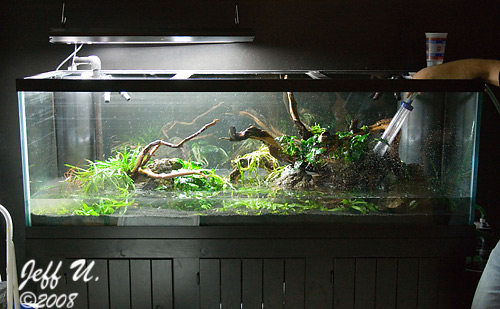
It’s been about a month since my last update on this tank. I recently pulled out a large number of plants for the GWAPA auction, harvesting plenty of Utricularia graminfolia in particular. I’m pleased that the tank is growing well, despite measuring 0ppm nitrates yesterday (prior to dosing more), but some parts are growing out of my favor. Largely, the Anubias heterophylla on the right side is getting a bit unwieldy.
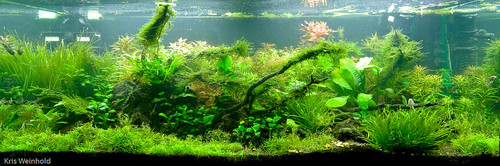
75G - 02/04/2008

Also, the Pogostemon stellatus in the back right has gone in and out of looking great to looking like crap. So, I got some Ludwigia inclinata var. verticillata ‘Cuba’ and Eriocaulon sp. ‘Type 3’ at the last GWAPA auction that will hopefully replace the P. stellatus in the back right. My problem is that I haven’t found the best transition plant for the right mid ground. On the left, I have the Utricularia graminfolia in front, with Hygrophila sp. ‘Low Grow’ and Crypt. affinis behind that, stepping up to Blyxa aubertii. That’s a nice transition. On the right, it’s the Utricularia to Crypt. willisii to the stems. Unfortunately, the stems usually look like crap after a trim, messing up the transition. I’ve thought about moving some Eriocaulon sp. ‘Type 2’ over there, but that plant may then be repeated too closely together.

Maybe I’m thinking too much?


Business Broker

Apistogramma sp. ‘Rotpunkt’ Pictures

February 3rd, 2008

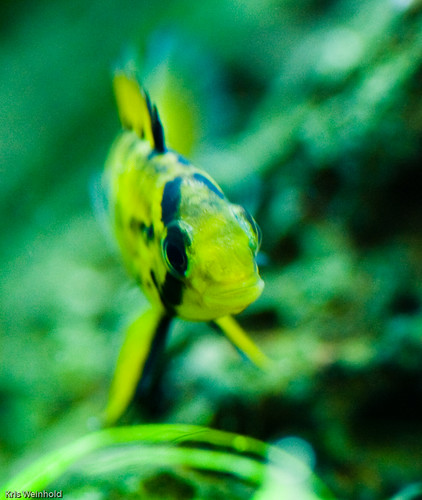
I noticed some increased fin flashing activity in my 40G tank, and decided to try and capture a few good shots of my Apistogramma sp. ‘Rotpunkt.’ Some of the shots are better than others, but there’s no doubt that these are some pretty fish, whose colors especially pop under the new 2x96W lights!

Apistogramma sp. 'Rotpunkt'
Apistogramma sp. ‘Rotpunkt’ Male Flashing Fins

Apistogramma sp. 'Rotpunkt'
A. sp. ‘Rotpunkt’ Male Front On

Apistogramma sp. 'Rotpunkt'
A. sp. ‘Rotpunkt’ Female in Spawning Colors

Apistogramma sp. 'Rotpunkt'
A. sp. ‘Rotpunkt’ Male Close Up. Notice how brilliant the blue on the face is.

Apistogramma sp. 'Rotpunkt'
A. sp. ‘Rotpunkt’ Non-Dominant Male. Not nearly as impressive, huh?
Apistogramma sp. 'Rotpunkt'
A. sp. ‘Rotpunkt’ Male Coming at You.

I should have used a flash above the tank to shoot at a better quality ISO, but I always end up spooking the fish in order to set that up.

Thanks for looking! Any comment/critiques are welcome, as always!

Business Broker

Jewel Cichlids – All Grown Up

January 31st, 2008

Remember back in the summer when I brought home the wild Jewel cichlids from Florida, and they immediately spawned? The fry were so tiny back then.
Jewel Cichlid Male with Fry

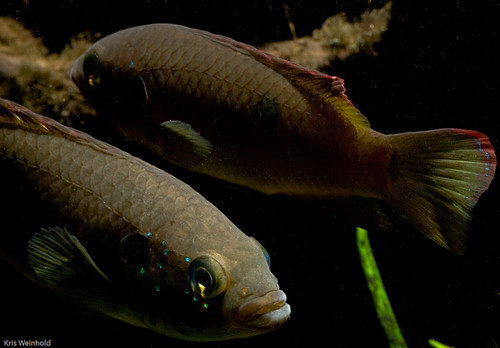
Now, only about 6-7 months later, the then fry, are now nearly as large as the adults. What may be even more amazing is that the two parents are living peacefully with their 2 remaining children in a 20H. I gave the other fry away when they were only an inch or two.

Jewel Cichlid

While not quite as large or colorful as their parents, they are starting to look fairly decent. The “jewels” are becoming more visible and intense on their face, and their body is staying a nice dark cobalt color.

Jewel Cichlid

I imagine that they won’t ever look as good as their dominant parents until they move on to a tank of their own. I’m trying to maintain the peace by regularly feeding them large meals of blackworms, spectrum, or the occasional feeder guppy. They’re voracious eaters, but don’t seem to fight each other for food.

Jewel Cichlid

When we went on our short weekend trip for four days, I didn’t line up a special feeding regimen, however, and they didn’t beat each other up, so I must assume that they’ve worked out a living arrangement amongst themselves. Hopefully that’ll last for a long time. I imagine that if they ever spawn again, trouble might result. Until then, they’re a fun, and personable group of fish that seem to recognize me, and watch me from the right corner of the tank, whenever I’m in the room.

Business Broker

Ranalisma rostrata – In a Different Light

January 29th, 2008

I’ve been growing Ranalisma rostrata in my 40G tank as the foreground for some time. When I originally setup my 20H, I decided to also plant it in there. As the 20H progressed, I realized that I had too much light, too little CO2, and too little desire to maintain the tank as I really wanted. Therefore, I removed the 55W PC light from overtop, and replaced it with an ordinary 15W fluorescent light strip. Over the past few months, besides being considerably darker than it was before, I’d noticed a huge change in the form of the Ranalisma rostrata in that tank.

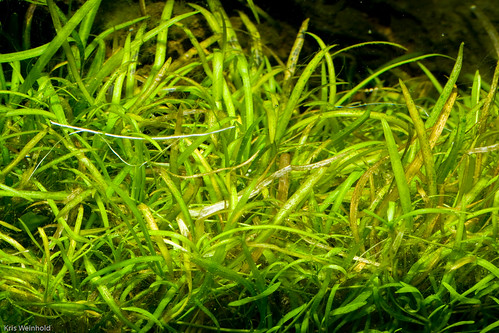
Witness how the grassy plant looks in my 40G. Compact growth, overlapping each other, where each blade is thin and relatively uniform.

Ranalisma rostrata - High Light

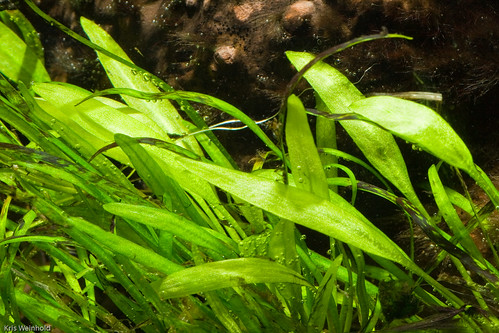
In my 20H, the growth is quite different (below), with blades more resembling a sword plant, than grass. The blades are longer and the growth is much slower. I suspect that the plant is sending out broader leaves to try and soak up more light since less is available. The color is also slightly different, with the broader leaves being a bit more pale, with a yellowish tint, where the regular form is a bright green.

Ranalisma rostrata - Low Light

I’m sure that this same phenomenon is present in a wide variety of plants, which is why it’s difficult to say exactly how a plant will grow in another person’s tank. I’m often asked at GWAPA meetings whether a plant is high light or not. In general, I can usually only respond that I’ve only ever grown it in high light, but that they should try it out, and see if it survives in their tank. Now, I can’t even guarantee that it’ll look the same!

Business Broker

GWAPA – January 2008 Meeting

January 27th, 2008

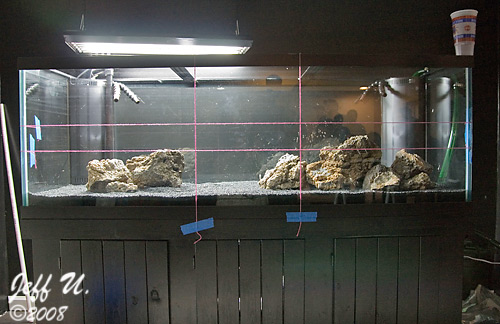
On Saturday, GWAPA kicked off 2008 with its first meeting of the year. Dave had been working for months on getting his basement ready for us to aquascape his newly installed 180G aquarium. Dave is doing a soil-based substrate, using mineralized topsoil with a few added nutrients, as his base. It’s capped with a layer of 3M Color Quartz pebbles.

Dave's 180G aquarium

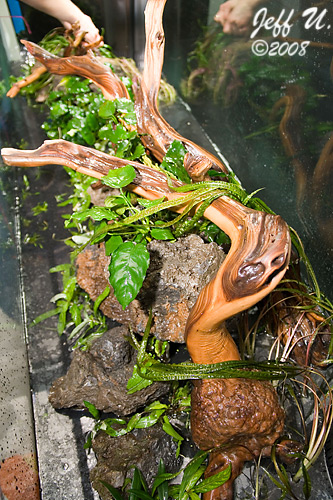
Of course, the hardscape is made up of our porous mossy rock and manzanita, both from California. Being such a large tank, he’s trying to keep it manageable by using lower maintenance plants, such as crypts, anubias, and java fern. There are some other exotics, such as Pogostemon stellatus and Hygrophilia sp. ‘Low Grow’ as well.

Golden Ratio Demonstration

Prior to scaping, Dave gave a nice presentation about the Golden Ratio, using yarn, strewn across the front of his tank to demonstrate the principle. As you can see, he’s applied the rule of thirds when setting up his hardscape, as well as, using asymmetry in terms of the size and numbers of rocks in each grouping to make the hardscape appealing to the eye.

The hardscape partially planted

We had a huge auction at our meeting this month, as well. I brought the most plants I think I’ve ever brought to a meeting. That’s what happens when there’s almost 2 months in between meetings! My tanks are looking a bit bare right now as a result.

Thanks to Jeff U for the meeting pictures!

Business Broker

Shenandoah Valley Hike

January 24th, 2008

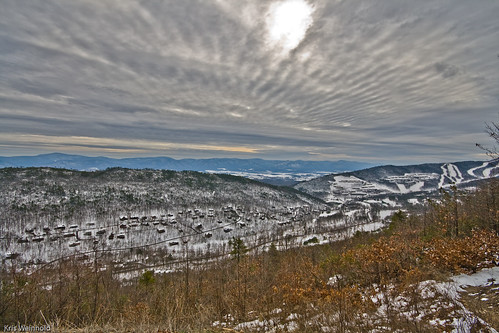
Last weekend, my family spent the long weekend down in the Shenandoah Valley. Instead of skiing, we decided to hike up the mountain, and follow a trail along the mountain ridge. The view from up there was incredible, allowing us to take in the whole resort all at once.

Shenandoah Valley

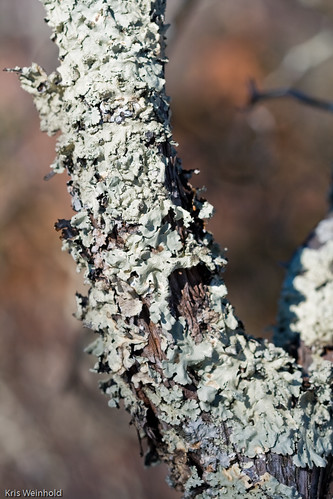
In addition to a beautiful view, the mountain elements there were very interesting as well. We got to see the winter versions of many of the summertime plants and growths. The trees were covered with mosses and lichens, but instead of maintaining their usual color, they were pale, matching the surrounding snow and winter sky.

Winter Lichens

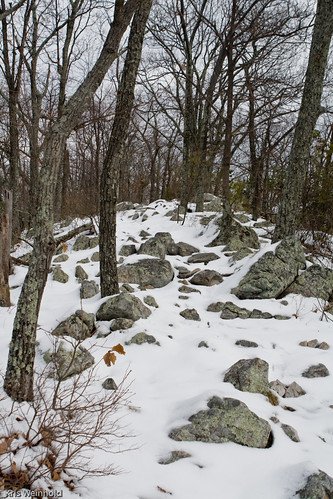
The trail was completely rock laden, necessitating that we watch our step through the snow to avoid slipping on any hidden rocks below.

Shenandoah Valley

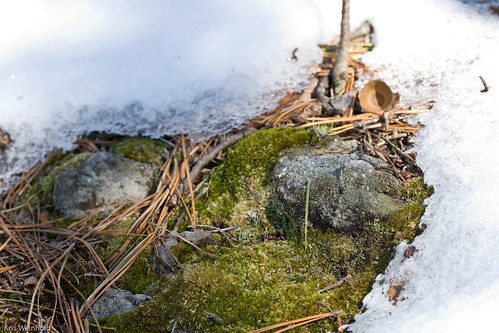
Some greenery managed to show through the ubiquitous snow cover, such as the moss below. There was also some green mountain grass frozen in the snow.

Mossy Snow Rock

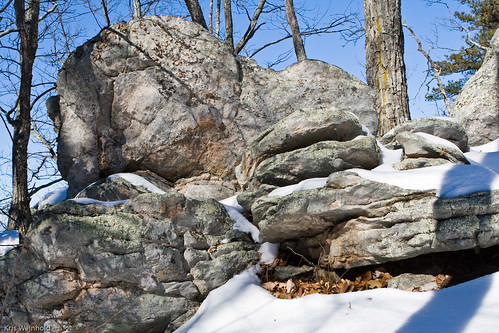
As usual, there were many scenes that could easily be inspiration for an aquascape. The rock formations would make a lovely African cichlid rockscape. Can’t you just see the gaps being filled in with anubias, java fern, and bolbitus in the rocks below?

Shenandoah Valley

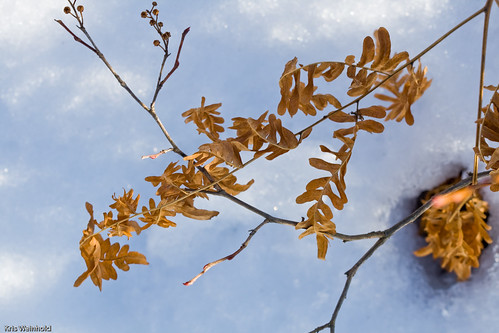
Speaking of ferns, I’ve always loved finding patches of forest that are covered with wild ferns. We saw a few places like that up on the mountain ridge, but unfortunately, they were all busy weathering the cold. I hope to get back to this trail sometime in warmer weather to see the ferns in their full glory.

Wintery Fern

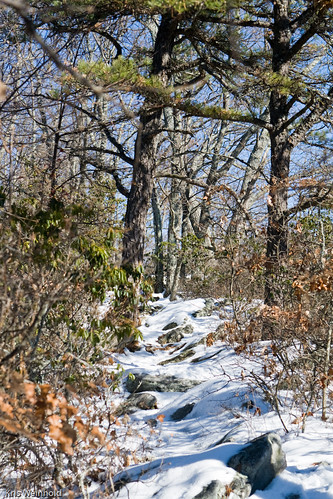
There were also huge patches of mountain laurel in amongst some sparse pine trees. In combination with the rocks and snow, there were some really nice photo opportunities.

Shenandoah Valley

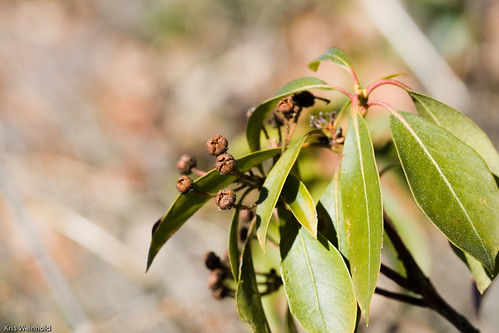
The mountain laurel still had the remains from some late flower buds or berries. The leaves were still green, and formed nice bushes along the path.

Mountain Berries

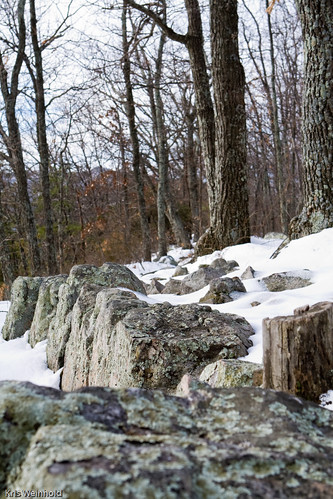
The rocks were usually set in relatively straight lines, as if something had slid over top of them in a uniform direction. I’m not sure if this is the case or not, but I suspect that this is exactly what happened with glaciers.

Shenandoah Valley

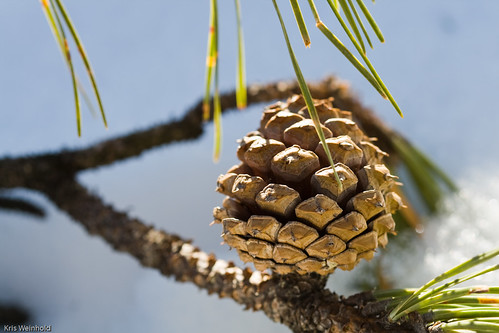
Finally, some pine cones were still on the trees, which I enjoyed taking pictures of.

Pine Cone

I hope you enjoyed my pictures and tale of our mountain hike. It was quite cold (16F degrees), but we were heavily bundled up, and had a fantastic time.


Business Broker

Luray Caverns Virginia

January 23rd, 2008

We took advantage of the long MLK weekend to venture down to the Shenandoah Valley. On our trip down we stopped at Luray Caverns.

Luray Caverns

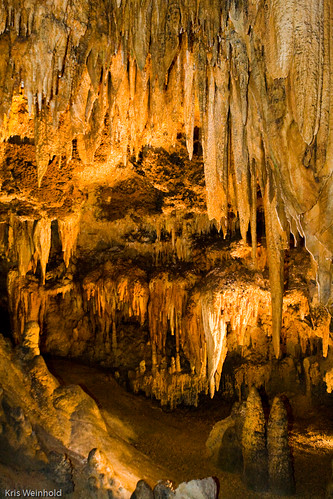
Luray Caverns is the largest caverns on the East Coast. It has been privately owned and operated by the same family since its discovery, and used to be a travelers’ destination and railway stop, frequented by visitors all over the globe. Unfortunately, due to private ownership, and a lack of proper preservation methods in place during the early days, the caverns are not completely intact.

Luray Caverns

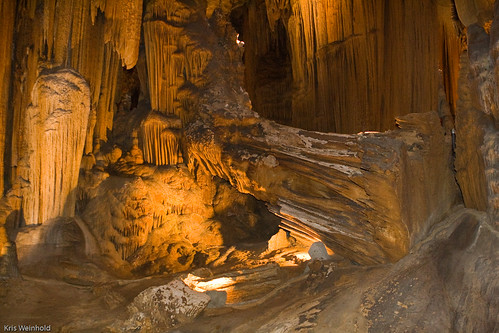
They used to encourage visitors to break off stalactites to take home as souvenirs. As a result, many of the structures along the corridors are broken off. And then, of course, nature also broke off some huge pieces, such as the multi-ton piece shown above.

Luray Caverns

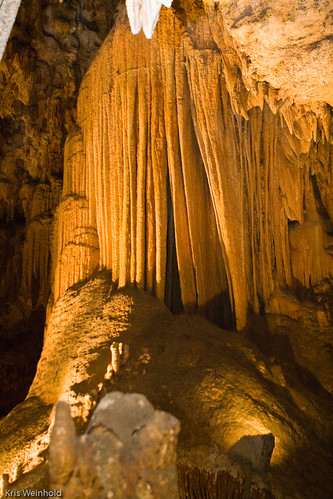
There are all sorts of structures that formed naturally in the cave. Many of the formations look as if they were handcrafted from plastic, but they reassured us that they with the work of mother nature.

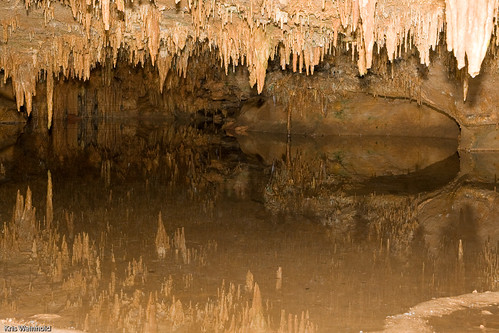
Luray Caverns - Reflecting Pool

Throughout the caverns, many reflecting pools reflect the ceiling, making for some very unique looking illusions, such as the one above. Again, it looks like something from another world.

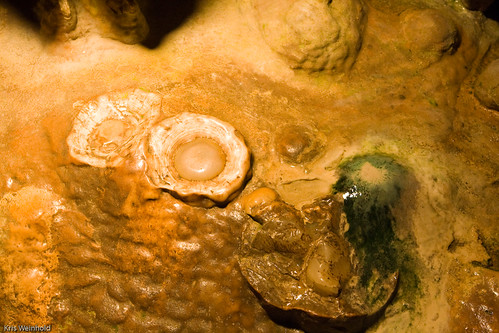
Luray Caverns - Eggs

One of the things I remembered from the caverns when I visited them as a child was the sunny-side-up eggs. This is another case where they broke off a structure, and the resulting inner core looked like a fried egg, so they added it to their tour.

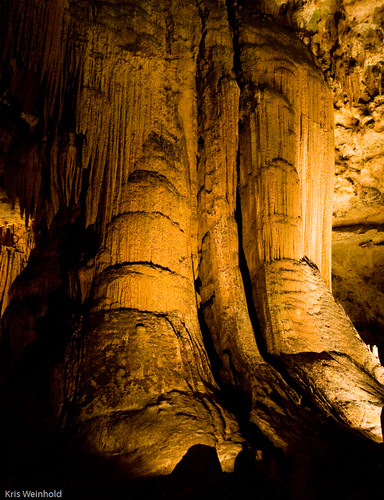
Luray Caverns - Tower

There are some huge structures underground, such as this enormous tower above. I estimate that it’s probably 5 stories tall, and a very impressive feature of an even larger room.

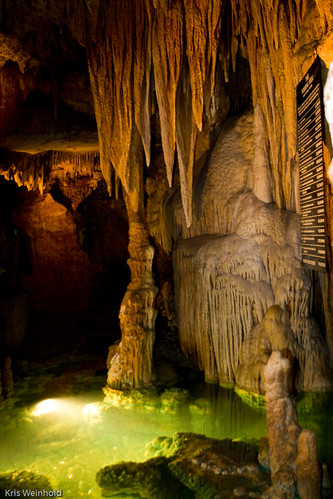
Luray Caverns - Wishing Pool

Toward the end of the tour, they encourage visitors to toss coinage into their wishing pool. Yes, the pool is green from all of the copper coins. They say that they clean out the pool every year and donate it to charity. Despite painting a somewhat negative view of the Luray Caverns company, I really did enjoy our visit. The shear enormity of the caverns, as well as, the unique structures within make the trip worth it.

Business Broker

Hydrocotle sp.

January 21st, 2008

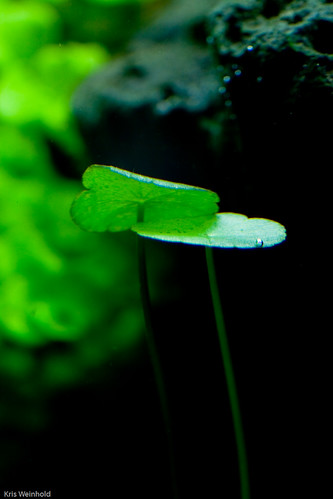
Back in June 2007, a few GWAPA members went down to Florida to see what kinds of plants/fish we could find for our aquariums. One plant that was absolutely everywhere was a Hydrocotle species that mixed into the grass of people’s lawns, and existed in virtually every roadside ditch we visited. I grabbed a small amount, expecting it to completely take over my tank.

Hydrocotle sp.

I couldn’t have been more wrong. This small plant has been living in my 40G tank for over 6 months, while only throwing up a single new stem. Recently, I upgraded my lighting to a 2x96W setup from AHSupply and I’ve noticed that the Hydrocotle sp. has started to grow, sending up a new stem and leaf in just the last week. Right now, the stems are approximately 6 inches tall, which is slightly taller than I’d prefer them. I’ll be sure to post if it evens out, and becomes a nice accent plant in my aquascape.

Business Broker

Snowy Day

January 18th, 2008

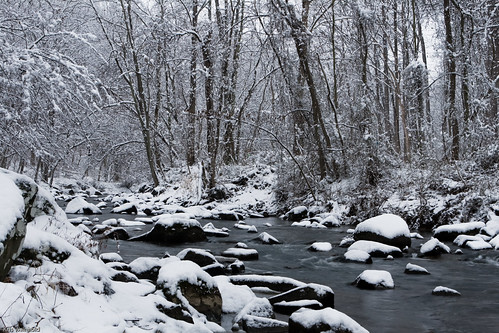
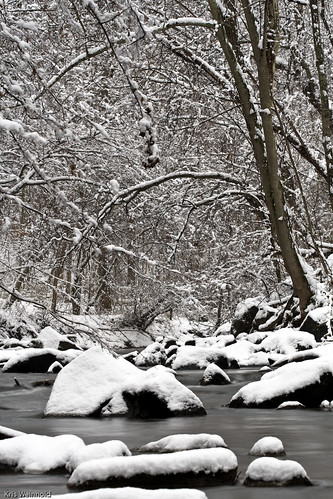
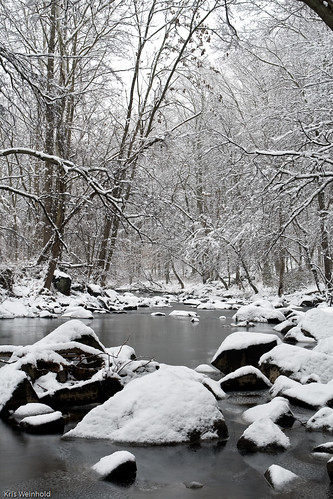
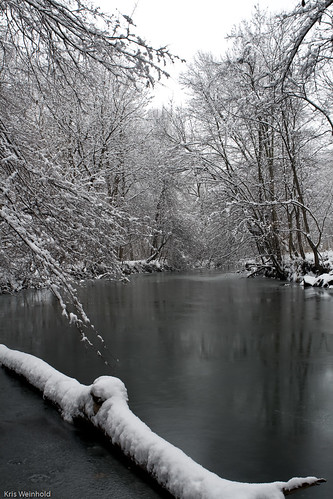
Our area finally got some snow yesterday for only the second time this winter. The temperature barely stayed below freezing, but it allowed for 2-4″ of snow. I got home from work with just enough daylight to spend about 45 minutes photographing spots along the Little Patuxent River near my home.

Snowy Little Patuxent River

I’ve been waiting all season for a good snowfall so that I could come out and take pictures of the river with snow-covered banks, rocks, and vegetation. I figured that I’d be the only one out on the trails, as it was sleeting when I was out there, but surprisingly, I saw joggers, dog walkers, and even a cross-country skier.

Snowy Little Patuxent River

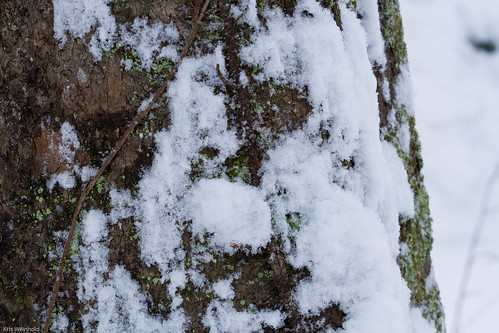
This was a very wet snow, so it stuck to anything and everything. Tree trunks were painted quite nicely with snow like the one below.

Snowy Tree Trunk

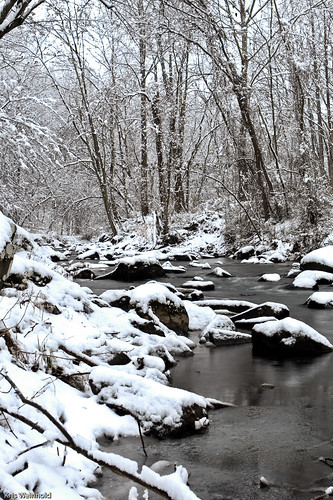
When first looking through these pictures, I was taken by how they look like black+white prints. I really didn’t desaturate any of them. The lack of green from the seasonal leaf drop, combined with the contrast of the bright snow to the darker tree limbs yields little color.

Snowy Little Patuxent River

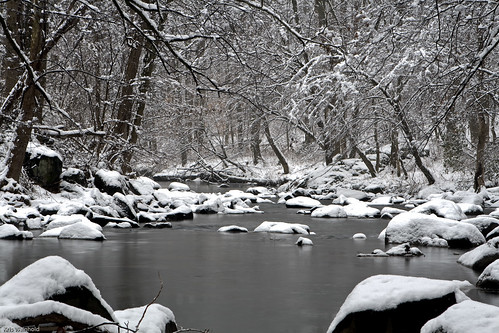
In many places the water seemed to be moving slower than usual, even though it wasn’t frozen hard. I’d like to say that it was like a moving slurpy, but I’d be lying. It’s more like a glass lake.

Snowy Little Patuxent River

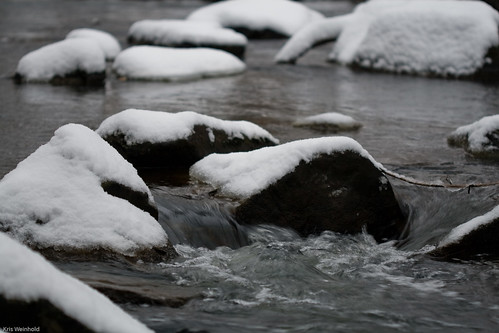
That said, some parts still kept their usual ripples and rapids. But, of course, the white precipitation made them even prettier than usual.

Snowy Little Patuxent River

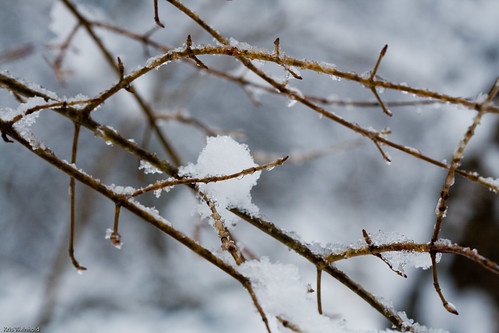
I’ve always enjoyed the first few hours after a good snow because the tree branches are completely coated with white. Then, as squirrels and wind breaks through the limbs, the original luster is lost.

Snowy Branch

I imagine this snow won’t stick around very long, as it’s supposed to get a bit above freezing this weekend. It’s the snow covered rocks in this picture that I really like.

Snowy Little Patuxent River

Here’s a zoomed in shot from the same vantage point. I think I like this one better.

Snowy Little Patuxent River

I hope you enjoyed these pictures, and hopefully if you got snow yesterday, you were able to enjoy it like I did, instead of being frustrated by the inconveniences it can cause.


Business Broker

Patapsco Valley State Park – Winter Quiet

January 16th, 2008

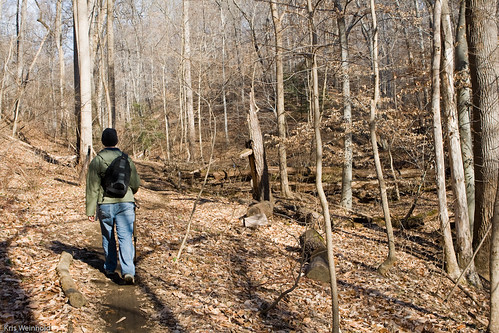
This weekend, my wife and I made went hiking in Patapsco Valley State Park. We’ve been to the park before to see some small waterfalls, but this time that part of the park was closed, so we took to the forest trails. All of the leaves have now fallen, but this allows you to see the landscape better, and for longer distances.

Off into the Wilderness

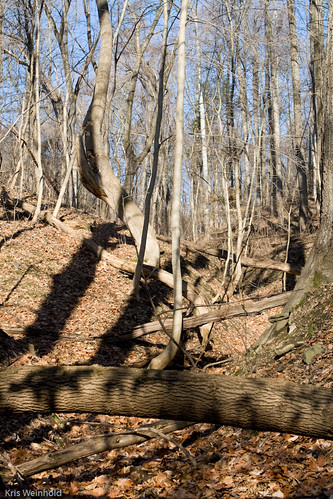
From a distance, fallen trees in small valleys could easily be inspiration for aquatic hardscape. Even scenes that aren’t very interesting, still have appeal, if just for some awkward bending tree trunks like the ones below. On the trail, besides the occasional mountain biker, it was pretty quiet. We saw a few squirrels, and the occasional woodpecker searching for a hidden meal, but for the most part it was a nice quiet walk through the forest.

Patapsco Valley State Park

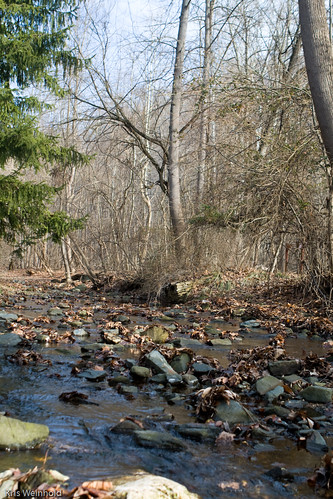
After a few miles, we finally came back around to find a cold stream flowing over river rocks. We took a minute to listen to the trickling of the water, and enjoyed the green of the evergreen beside it. I spend a good deal of time trying to create a beautiful underwater landscape to enjoy, that it’s easy to forget that free ones are all around you outside.

Patapsco Valley State Park

We’ve had some unseasonably warm weather in our region recently, but gradually the weather has been turning cooler this week. I know many folks enjoy year-round warm weather, but for me, I enjoy the cold winters, the seasonal change, and the landscape that changes with it.


Business Broker

« Previous Entries   Next Entries »