AHSupply 2x96Watt Canopy Upgrade

January 14th, 2008

On Saturday, I decided to install a new AHSupply 2x96W kit into the canopy over my 40G aquarium. I used to have ODNO lighting on this tank, but I wasn’t comfortable with the amount of energy being wasted to squeeze out a little bit more light from the 36″ 30W bulbs. Below is what that configuration looked like: 4 bulbs driven by 4 ballasts, over cheap shop-light reflectors.

After I removed the existing equipment, I was pretty happy with the condition of the wood. When I built this canopy, I put extra coats of finish to prevent moisture damage. It held up to the moisture and heat pretty well!

I chose to go with AHSupply’s 96W kit because they have fantastic aluminum reflectors, and the 96W bulb fits a 3′ tank perfectly. I know that T5 lighting is all of the rage these days, but I’d prefer to stick with a consistent power compact lineup so that I can buy replacement bulbs in bulk for all of my tanks.

The kit comes with a set of very detailed instructions for installing into a canopy, or building a DIY strip-light enclosure. Everything you need for either configuration is included. To start, I installed the reflectors and bulb clips into the canopy.
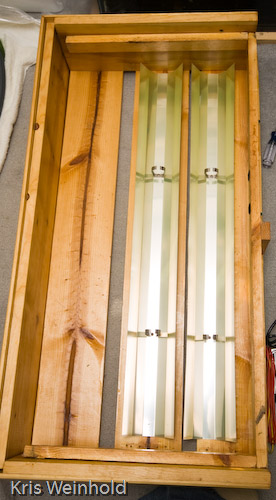
The reflectors come with a yellow plastic film over top of them to avoid scratches during installation. They’re a fantastic parabolic reflector that really focuses most of the light output from the bulb down into the tank. They claim that their reflectors make their setup produce 2.5X as much light as a store-bought solution.

Wiring up the ballast was very straight-forward thanks to the included wiring diagram. The hardest part was trimming the wires to length, and stripping them to use the wire nuts. After screwing down the 2 ballasts, and installing the bulbs, I was all done.

Time to fire them up — Man are they bright! It seems like they’re 10X brighter than my old ODNO lights, using equal or less the wattage. By mid-afternoon, the entire tank was pearling more than I’ve seen it pearl in years. This continued for 3 straight days, so I’ve increased my CO2 injection, and dosing amount to compensate. The fish really pop under these lights as well. I’d recommend AHSupply products to anyone looking for a DIY lighting solution.
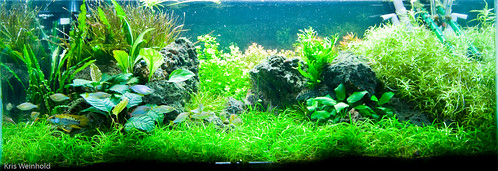

40G - 1/14/2008


Business Broker

CCA – FryBabies Julie – January 2008

January 12th, 2008

Capital Cichlid AssociationThe Capital Cichlid Association opened the year by bringing in Julie from FryBabies.com to talk about keeping, and breeding, Tropheus cichlids from Lake Tanganyika.

Tropheus are a mouth-brooding cichlid that are fairly common among African cichlid keepers. I, myself, have never kept them, so I found Julie’s talk quite interesting. She imports a lot of fish, making it unpractical to slowly acclimate new imports to her water. So, presuming the pH of the two waters is not terribly different, she simply nets them from the bag, and puts them in her tank. While this may sound alarming, she indicates that she has had zero deaths resulting for this treatment, which is not true for when she slowly acclimated them.

Once in the tank, she withholds feeding them for 3 days to allow their gut to clear of any previous food. Then, watching for some trouble signs (stringy feces), she gradually increases the amount of food she gives them — mostly vegetable-based foods.

Her tanks are generally 50-75G, and she sets them up using rocks/wood to obscure long lines of sight. This helps to lower the aggression level of the males to one another. In addition, she usually stocks at least 20 fish per tank so that no one male beats up on the other fish. The idea is that with that many fish, the aggression will be spread out evenly, resulting in few if any deaths.

When the Tropheus breed, she usually doesn’t strip the eggs from the mouths of the female. In most cases, she allows the parents to raise the fry themselves until the fry are about 1/2″-3/4″ in length. However, if Julie does end up extracting the eggs, she usually waits about 2 weeks until heads and tails are developed and visible in the egg. She has observed that if she does it before this time, the number of fry surviving the move to their own tank decreases. To extract the eggs, she fills an airline tube with water, inserts it into the female’s mouth, and holding the fish upside down, blows on the opposite end of the tube to force water into the female’s mouth. The female usually releases the eggs, but 2-3 tries may be needed to get all of them. A CCA member noted that it’s also possible to just move the female to a small tank of her own, and she’ll usually get stressed, dropping the eggs.

Julie rarely feeds any live foods to her Tropheus, but if she does, she’s sure to follow that feeding with a heavy veggie meal to help push the meat through the fish’s gut. Failure to do this can cause fatal problems with Tropheus due to the length of their intestines, so it’s probably best to stick to a vegetarian diet. Multiple species of Tropheus can be kept in the same tank, but make sure they are different color forms. Even so, if you plan on selling the fry, it’s best to keep each species in their own aquarium. You can, however, keep other types of fish, such as Petrochromis, catfish, and gobies with Tropheus, as long as you ensure that the habitat of the aquarium is appropriate for all species involved.

All-in-all an interesting talk from someone who’s bred her fair share of Tropheus!

Business Broker

Bolbitis sp.

January 9th, 2008

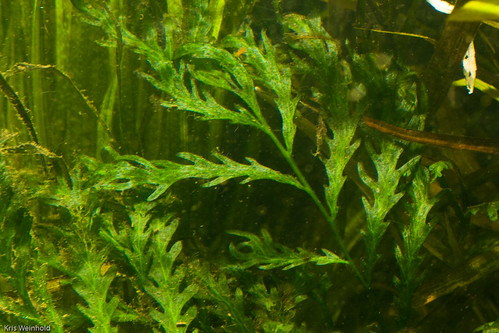
Bolbitis species have long been regarded as a low-light, undemanding plant, that survives in most aquariums. It’s a nice looking fern, adds a deep green to the tank, and can be attached to driftwood, or other hardscape materials. A couple months ago, a species of Bolbitis showed up at a GWAPA meeting that our club hadn’t seen before. This is what I’m calling Bolbitis sp., since I don’t know the proper name.

Bolbitis sp.

At first, we suspected that it was a terrestrial fern, but due to the quantity brought to auction, it was clear that it grow just fine underwater. It was sent to the club by a rainbowfish breeder and collector, who happened to order it from an order source. The leaf form has many more indentations than the usual type. I’ve been keeping it in my 75G aquarium, and growth has been quite slow, but it is growing nevertheless. If anyone can identify the species of this bolbitis, please leave a comment.

Business Broker

Rotala macrandra

January 7th, 2008

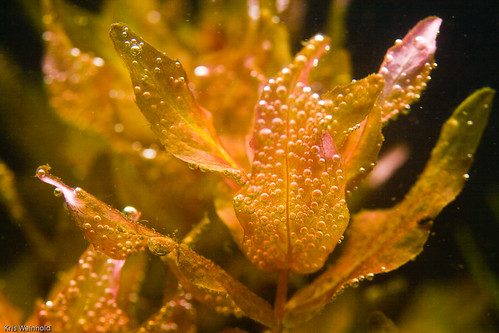
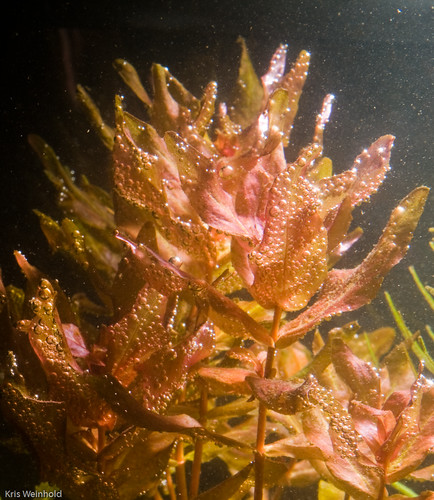
My new favorite accent in the 75G aquarium is Rotala macrandra, a beautiful, but delicate red stem plant. Notorious for being a more difficult plant to grow, I can understand its’ reputation. The plant doesn’t seem to have much of a problem growing, but if I go too long without a water change, I start to notice little holes in the leaves.

Rotala macrandra

Additionally, leaves that reach the surface, appear to easily get holes, or fall apart, instead of converting to emersed growth. That may also be due to the heat from the light as they get rather close to them. Nevertheless, it is a gorgeous plant, with striking orange and red tones. I started with a single stem, and in just a month or two, I’ve now got a decent sized bush of R. macrandra. I’m hoping to grow it out even further, as I need more red in my 75G to offset the large number of green plants in there.

Rotala macrandra

Fortunately, R. macrandra has been in the hobby for some time, so it often shows up in some of the more ambitious fish shops. It you have the chance to buy it, do. However, make sure that you have adequate lighting, CO2, and fertilizers, or the plant won’t stand a chance.

Business Broker

Icy Cold River

January 5th, 2008

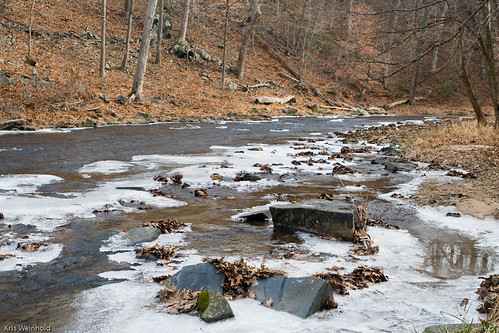
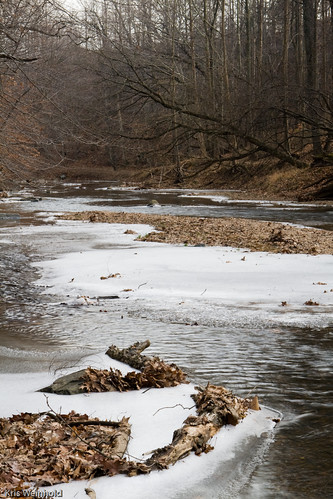
Today we took a walk near our house to some trails along the Middle and Little Patuxent Rivers. Even though we’ve had some of the coldest days of the season recently, I wasn’t expecting there to be a lot of ice on the river, as today it was well above freezing. To my delight, I was wrong; there were ice crystals everywhere along the banks and rocks.

Icy Little Patuxent River

It’s amazing how beautiful the ice can be, forming in so many different configurations. My favorite ones are the long, spiky, crystals like the ones below. Many of the rocks that are normally visible were completely consumed by ice. That said, the ice itself wasn’t really all that thick, full of air pockets, and requiring little force to be broken.

Ice Crystals

Some of the ice was a bit mushier like this below. I imagine that all of the asiatic clams normally found in this area are deep into the riverbed, trying to keep warm. Obviously, the small amount of the aquatic plant-life found in this river has long since melted away.

Ice Crystals

My favorite set of ice crystals from our walk were the ones shown below. It appeared that after the ice formed, the river and sun worked from above and below to create holes, making the unique pattern seen below.

Ice Crystals

At a distance, some of the ice formations looked more like snow banks along the river. Very pretty, creating a serene feeling in the winter forest. Despite lacking the lush green growth, and animal calls normally heard in warmer weather, the forest maintains its beauty year round.

Icy Little Patuxent River

Business Broker

Hygrophila sp. ‘Low grow’

January 1st, 2008

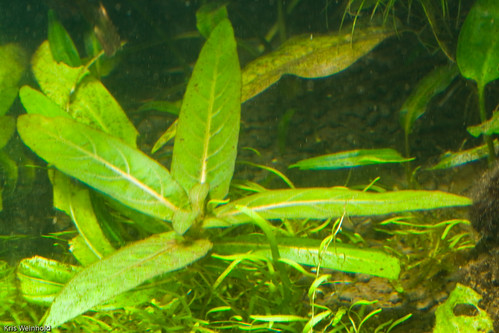
A couple of weeks ago, I got some shrimp from another GWAPA member, and in the bag, he sent along a nice new species of Hygrophila for me to try out. We don’t know the exact species name, but it’s being referred to as Hygrophila sp. ‘Low grow’, due to the way that it grows compared to some other Hygro’s.

Hygrophila sp. 'Low grow'

The plant seems to creep along the substrate, even in more high light conditions. I’ve grown the common Hygrophila polysperma in this same fashion before, but it requires constant trimming to maintain it low to the ground. This ‘Low grow’ does not appear to need the same. In addition, I’ve found it to be a much slower grower than other species of Hygrophilia which can be outright weeds if left unchecked. The leaves are larger than that of H. polysperma, and contain more pronounced (prettier) vains.

Due to the leave size, I may not use it in many of my aquascapes, but it might be perfect for some larger scapes. I’m going to wait to to let it further grow out before I fully decide that, however.

Business Broker

  Next Entries »