October 12th, 2010
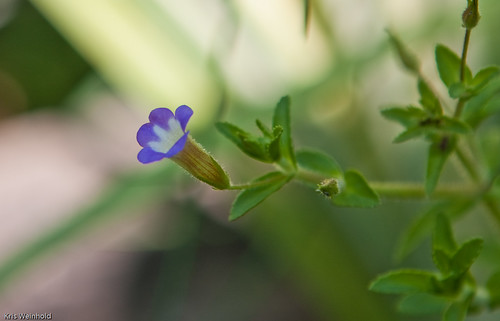
I was very excited this weekend to discover that a plant out in my pond was flowering! This particular plant was collected down in Texas in 2009, and a few of us have been growing it in our aquariums ever since, not knowing what its identity was.
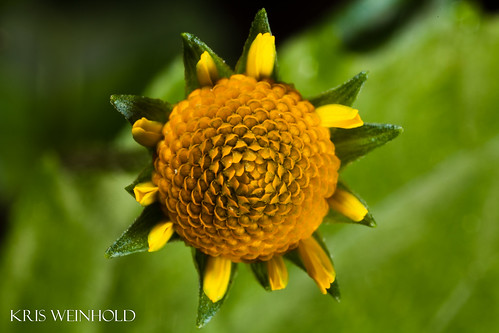
We didn’t actually know we collected it until we got home, sorted through some other plants, and found a single stem in with everything else. In fact, I wasn’t even sure if it was an aquatic plant at first, but sure enough, it grew, albeit slowly.
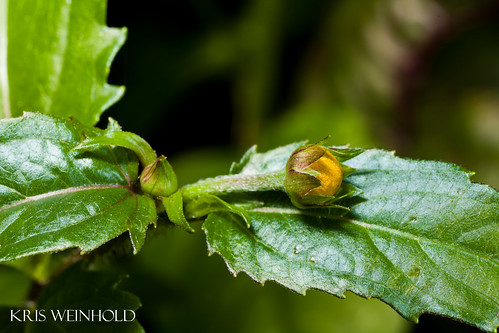
With the flower, we now believe the identity of this plant is likely Acmella americana, which has also been known as Spilanthes americana and Acmella oppositifolia over the years.
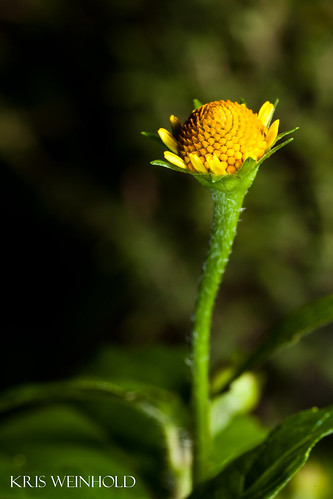
Submerged, Acmella americana grows a lot like Hyptis lorentzianai, except that it stays lime green in coloration. The growth rate and pattern is similar to Hyptis, in that the leaves stay much smaller under water, relative to their terrestrial size.
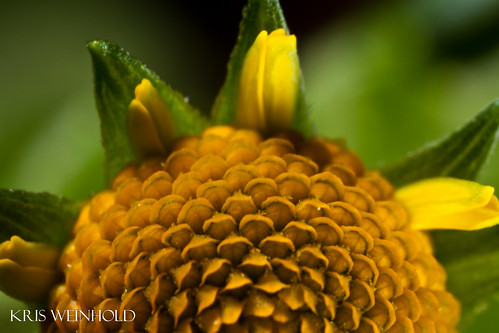
Additionally, emersed the stems tend to creep horizontally, but in the aquarium they are much more upright, with longer distance between the nodes. Due to that distance, use in aquascaping would require several stems growing together like you would grow purple bamboo or the true Rotala indica.
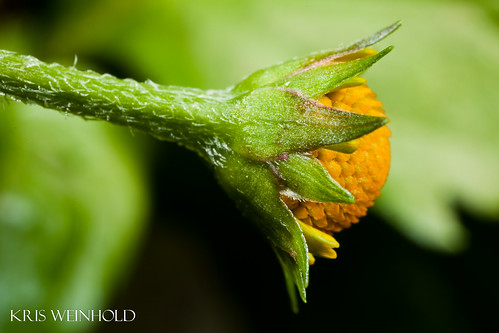
I’m very happy to finally get a lead on a plant ID after finding this plant 18 months ago. Now that we have a likely ID, I’m going to try to grow it out, and have some others try using it in their aquascapes to truly find out whether or not it’s a viable plant for the aquascaping hobby. Apparently, Acmella americana has been available in the pond hobby for some time, so it should be readily available to anyone looking to try it out. Comments welcome!
Posted in Plant Profiles, Raised Brick Pond | 2 Comments »
August 12th, 2010
The pond is doing fanastic this year. I finally deviated from my previous use of a solar powered pump in favor of a Mag pump and pond filter. The circulation is much improved, and the plants have gone crazy. Back in May, I have a single Penthorum sedoides survive the winter and sprout from one of my containers. Now, nearly all of the green mass of plant matter is the bush that the single plant has become.
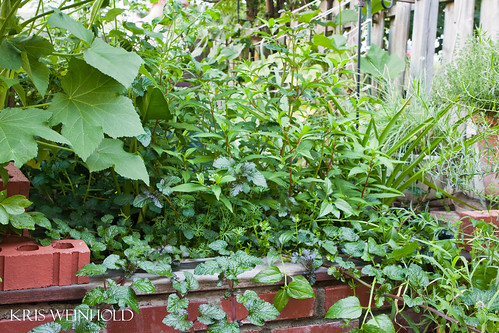
The only other plant that may be even more prolific is the Hyptis lorentziana. This is a beast of a plant that has spread in every direction from its original planting, creeping horizontally, reaching for sunlight vertically, and everything in-between. Fortunately, the purplish green leaves are very attractive.
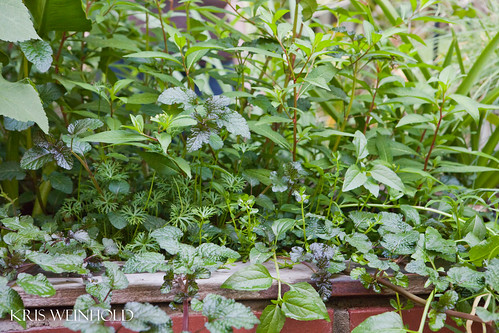
Left to compete for sunlight and space are a Ranunculus species, Bacopa monnieri, Limnophila sp. ‘Sulawesi’, Hygrophila odora, some frogbite, and Salvinia. Of course the Crinum americana plants are still doing well, but they seemed dwarfed by the other plants this year.
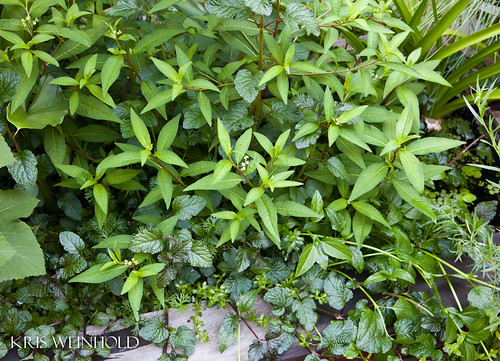
My regular garden plants are also creeping into the pond’s normal space. A huge stand of okra is beginning to block a lot of light to the pond (it’s about 7 feet tall now and growing), and my thyme and tarragon are invading from the other side. I kind of like the jungle look, however, as do our frogs, which we rarely see anymore as they are taking cover in the jungle. Comments welcome!
Posted in Raised Brick Pond | 5 Comments »
June 27th, 2010
I was very happy to see our Crinum americanum flowering outside in our pond this weekend. I’ve been growing this North American native lily for several years in my pond, bringing it indoors every fall to overwinter in a 5-gallon bucket in my office. The flowers are some of the most fragrant flowers I’ve ever grown, very much resembling a woman’s perfume.

The flowers themselves are very delicate, lasting only a few days (or until the next rain), but they are nevertheless quite striking with purple/pink stamens. The stalks themselves run a couple feet tall, towering above the rest of the plant. The flower stalk begins like shoot from the base of the plant, and eventually, opens on the end exposing three separate flower pods like below.
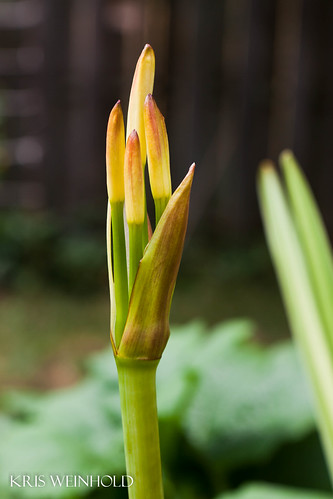
Those, of course, open into the flowers. Interestingly enough, the flower pods themselves are not really fragrant at all until after they open. (This may not surprise you, but if you’ve ever smelled how intense these flowers can be, you’d expect the scent to diffuse through the walls of the flower pod.) All in all, these Crinums provide a lovely backdrop for the rest of my pond. Comments welcome!
Posted in Raised Brick Pond | 2 Comments »
February 7th, 2010
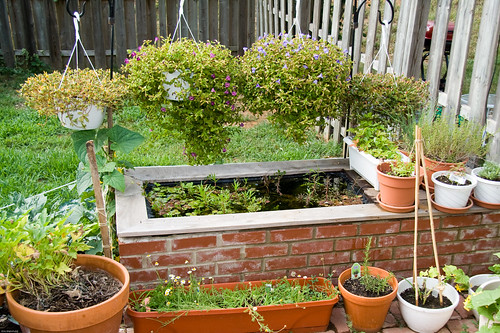
I live in the Mid-Atlantic region of the U.S., which was just hit with record snowfall. I figured it would be fun to provide a little perspective for those not from the area. Normally, during the spring, my raised brick pond in the backyard looks something like this:
This morning, I took a quick picture with my phone. Where’s the pond? For a frame of reference, the fence is a six foot fence. Keep in mind that I did shovel a little bit of snow onto that area to make a designated “doggie bathroom” area in the yard, since even our labs aren’t tall enough to wade through 3 feet of snow, but still, it’s incredible.
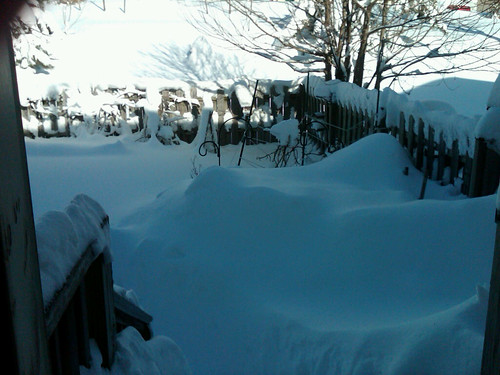
Nevertheless, I’ve spent a good deal of time this weekend shoveling snow. I’m incredibly thankful that we have not yet lost power (knock on wood), as some other local hobbyists have and are very worried about the temperature of their aquariums falling far enough to threaten the lives of their inhabitants. Now that we’ve beat the modern snowfall record, I’m ready for spring, and gardening, and all the other niceties that come with warm weather!
Posted in Raised Brick Pond | Comments Off on Where’s My Pond?
October 4th, 2009
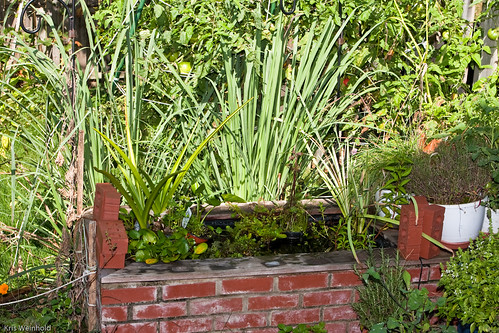
Yesterday, I spent a large part of the afternoon preparing my raised brick pond for winter. Below is a picture of what it looked like right before I began. To prepare the pond for winter, I sorted through all of the plants, composting the extras, and bringing a few inside to overwinter in an emersed setup. I also had to drain the water down to about 2 inches in order to fish out all of the zebra danios, which would definitely not survive the declining temperatures.
In the spring I added a dozen danios, and yesterday I pulled out about 4 dozen fish of all sizes from fry to adult. They’re going to overwinter in a terrarium setup inside, which they should love due to the waterfall current I have in there. Hopefully they won’t continue to breed in there because I really was only hoping to use them as mosquito control — not as a fish I really wanted to keep in large numbers.

Hyptis sp. Growing Emersed
One of the goals I had at the beginning of the summer was to flower as many plants as I could outside. In that respect, I had a number of successes including: Ludwigia repens x arcuata, Bacopa sp. ‘Araguaia’, Rotala sp. ‘Sunset’, Staurogyne sp. ‘Bihar’, Bacopa monnieri, Limnophila sp. ‘Wavy’, and a few others I’m sure I’m forgetting. There were a few that I wasn’t able to flower, but hopefully they’ll send up flowers in the emersed setup over the winter.
Limnophila sp. 'Wavy' Flower
Finally, I closed the season with four frogs making my pond their home. They weren’t happy about me draining the pond, but hopefully they still have a few weeks to go down the street to the runoff pond where they can overwinter in the mud. My pond is almost entirely above ground, so if they stayed in there, they would surely freeze solid, which wouldn’t be good. Next time I build a pond, I’ll definitely dig deep down to keep a refuge place for fish so that I can keep some natives out there year round.
Posted in Raised Brick Pond | 3 Comments »