Sulawesi Shrimp – Six Banded Black Bees

September 11th, 2008

I haven’t talked about the Sulawesi shrimp that I got for awhile. Mostly, that’s because I only have two left, and am still waiting to get some replacements for the huge loses that I incurred from shipping. What I have left are Six Banded Black Bee Shrimp.
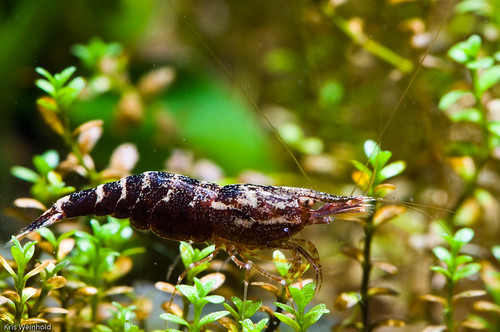
Six Banded Black Bee Shrimp

They’re aptly named this because of their black bodies with roughly six white bands across their back. The thing I like the most about them are their eyes, which are quite striking and intense. Due to the Hydras in their last tank, I finally moved them to a tank with more plants, which allows me to see them more.
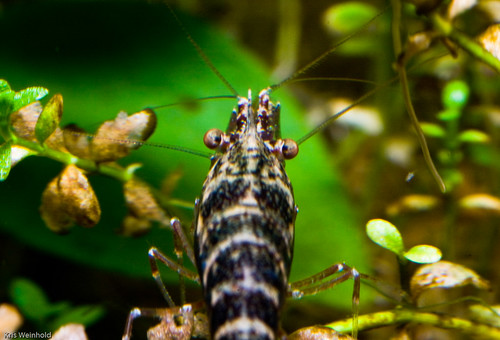
Six Banded Black Bee Shrimp

The previous tank had black sand as a substrate, so they were quite difficult to spot. They’re a little bit smaller than full adult cherry shrimp, but still big enough to be seen. Unfortunately, the ones I have are all the same sex, which means I’m still in a holding pattern in terms of breeding these fellas.

Six Banded Black Bee Shrimp

The ones that survived the shipping seem to be pretty tolerant of my water conditions, as I haven’t had a death in a few months. I really hope that all of these Sulawesi shrimp are starting to be commercially bred so that we can start having easy access (both in accessibility and price) to more of them.
Business Broker

Threadfin Rainbowfish (Adults and Fry)

September 8th, 2008

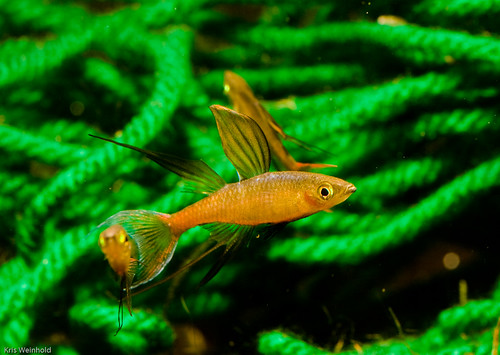
In a 20L aquarium, I have a small colony of Threadfin Rainbowfish, Iriatherina werneri, that I’m attempting to breed. These blue-eyes are beautiful fish that I’m hoping to eventually have a huge school for my 75G aquarium. The males are especially brilliant, displaying long fins, which they use constantly to prove their dominance to other males, and to impress females.

Threadfin Rainbowfish

The males also tend to get a striking headlamp, a bright yellow/orange stripe along the top of their head, when they’re courting females. The females are not pictures here, but they do not have the elongated fins that the males do. It’s quite easy to tell them apart due to the noticable difference in finage.

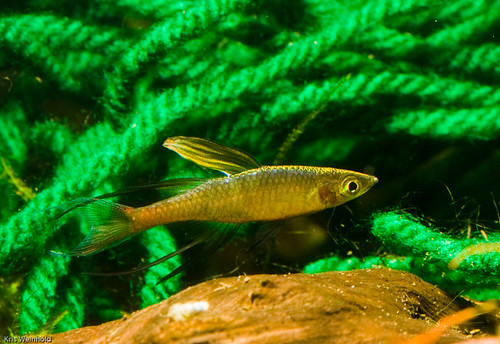
Threadfin Rainbowfish

As you can see from the backgrounds in these pictures, I’ve been using spawning mops made from acrylic yarn to try and harvest eggs. The goal is to float these mops, have the fish lay eggs, and then remove the mop and place it into a hatching/rearing tank. By cycling two mops between these tank every 10-14 days, I hope to constantly have new fry. So far, I’ve been successful, but only on a very small scale.

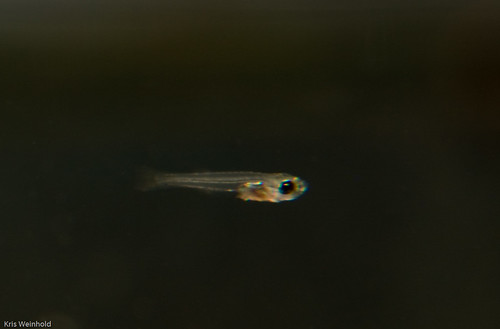
Threadfin Rainbowfish Fry

The fry are absolutely tiny when they first hatch; no more than a millimeter or two long. Right now, I have a couple that are 5-6mm long, but recently lost some to a Hydra infestation. I feed the newly hatched fry GP 5micron powder, which besides green water is just about the only thing that will fit in their tiny mouths. I’ve started feeding the larger fry some baby brine shrimp. Hopefully, they’ll grow up fast, and will be able to go in with the adults soon. If anyone’s successfully bred and raised these fish, I’d love to hear some advise.

Business Broker

Attack of the Hydra!

September 6th, 2008

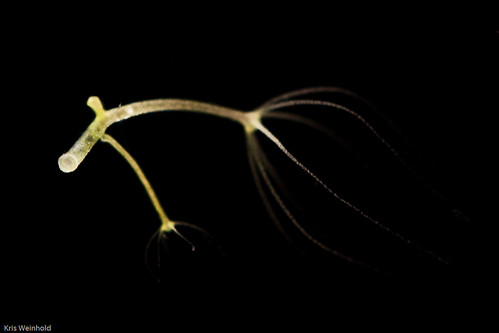
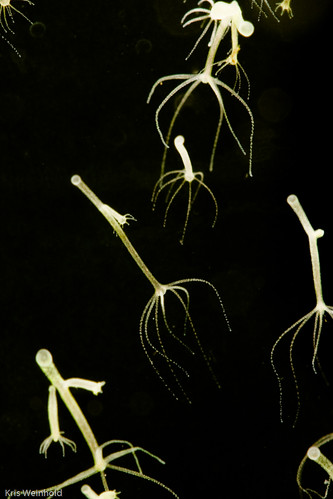
Today, I had the misfortune to discover a new creature in one of my fry tanks. Quite a few Hydra are present in this tank, presumably introduced by feeding incredibly small fry foods, such as newly hatched brine shrimp. It’s also possible that they’ve been present all along, but couldn’t survive until I provided high-quality micron-sized protein powder for them (and the fry) to feed on.

Hydra

Hydra are bad to have because just like their marine cousins (jellyfish, corals, and sea anemones), they feed off of small organisms, capturing them using their stingers. If they just stuck to water fleas or infusoria, I wouldn’t mind, but they will also attack newly hatched fry. That’s unacceptable. Now, I have shrimp in this tank, which some folks report will keep them under control, but nevertheless the Hydras are still present. Supposedly, they can be killed by using Fluke tabs, raising the temperature significantly, or by breaking down the whole tank, and sterilizing it.

Hydras

I’m not going to break down the whole tank because feeding fry will just continue to promote their presence in the future. For the next couple of hours, I’m just going to watch them, since they really are neat looking creatures. But, then, I’ll start my assault on their lives. Suggestions welcome!

Business Broker

Horned Sun Snail & Tiger Snail

September 4th, 2008

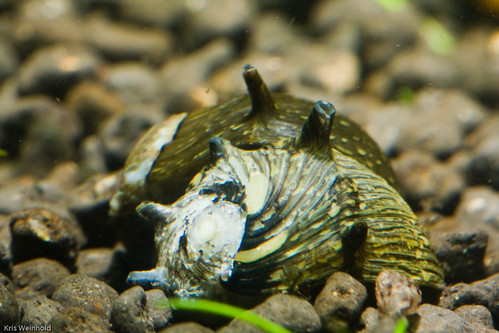
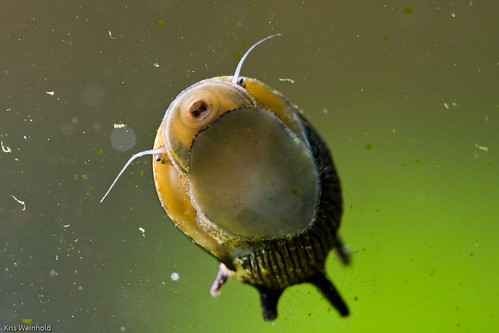
Yesterday, I got two new types of snails for my aquariums. The first is one that I’ve been looking at for a little while, but only recently had the opportunity to obtain. The Sun Snail has little horns or spikes spiraling off of the their shells.

Sun Snail

The bag that I got them in was actually punctured by the spikes. From what I’ve read, these snails should be similar to the Olive Nerite Snails in terms of their algae eating ability. In addition, I don’t think that they will reproduce in fresh water.

Sun Snail

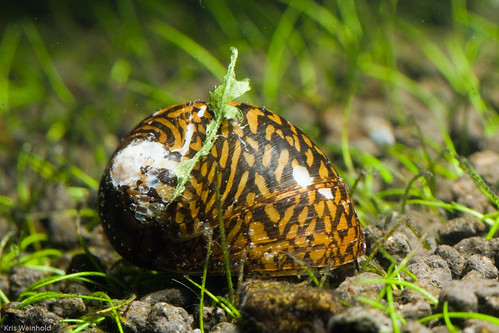
The other type of snail that I got was the Tiger Snail, named for the orange and black pattern on their shells. These seem to be larger than the Olive Nerite, and much larger than the Sun Snails.

Tiger Snail

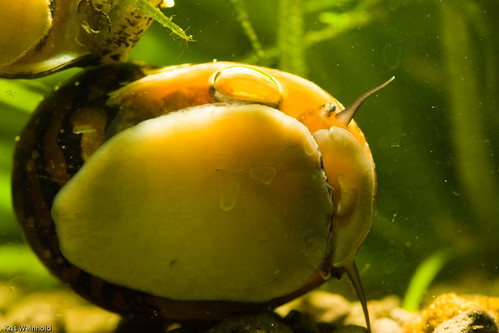
As such, they have a larger foot, and can really propel themselves across the substrate. I’ve also found two of them outside of my tank, thus far, hanging out on the light fixture above the tank, and on the rim of the tank. I suppose that means that they’re still adjusting to the water in my tank.

Tiger Snail

While these snails really just serve the same purpose as their Olive Nerite cousins, they add a little bit of variety to the options we have for snails in our tanks.


Business Broker

2.5G – Suggestions Used + Photography

September 2nd, 2008

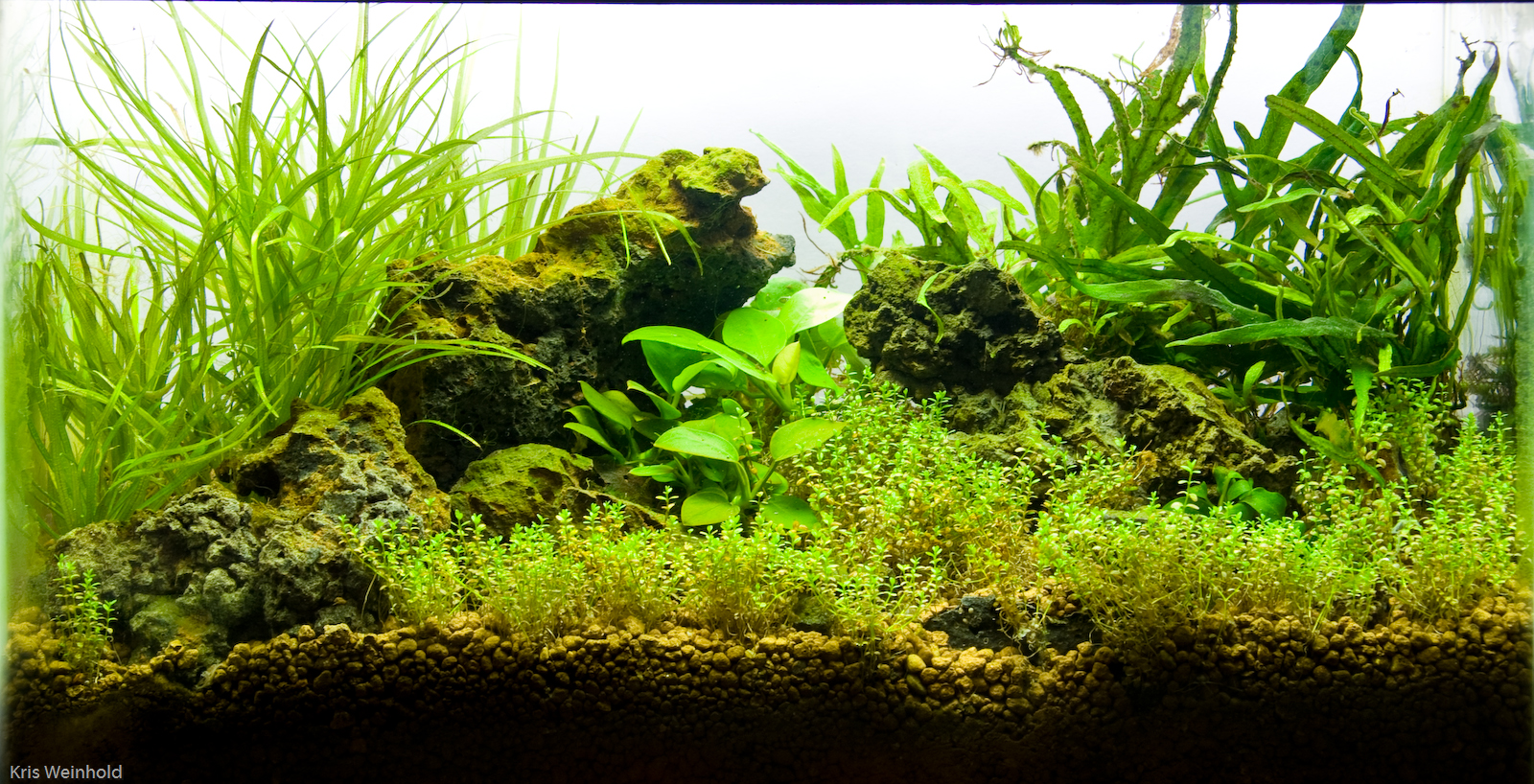
Two weeks ago, I posted a rather pathetic version of my 2.5G aquascape. I got some great comments from everyone, and have updated the scape in a few areas. It’s amazing the difference that the Blyxa japonica, in particular, makes in this scape in the back left. Otherwise, I added some Anubias barteri var. ‘nana’ and moved all of the Java Fern to the right side of the tank. What do you think?

2.5G - 08-31-2008

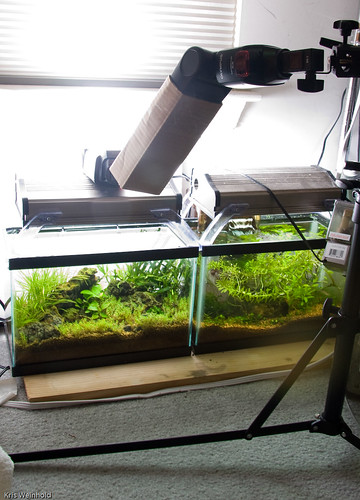
I also decided to practice some of my photography skills for this picture. With these smaller tanks, you really have the luxury of being able to flash the heck out of the whole tank evenly, using just a couple of strobes. You can see my setup below. I sat one flash on top of the light fixture pointing upward into a domed piece of computer paper. The dome reflects the flash down the back of the tank, illuminating the white paper background sitting about 3-4 inches behind the aquarium.

Photographing the 2.5G

Then, I have a second strobe suspended, using an improvised snoot to focus the light into the tank, which illuminates the front of the scape, which would normally be shaded by the rocks. Of course, the aquarium light itself provides pretty decent light as well, so these strobes are really just for a bit extra refinement. Any suggestions?

Business Broker

Plants from San Francisco

August 31st, 2008

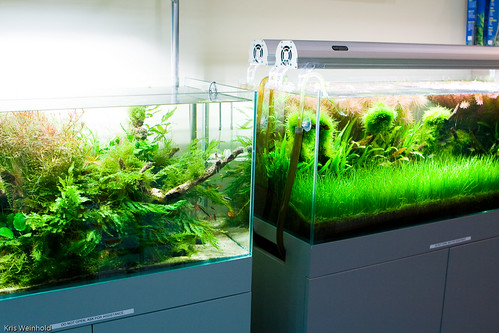
My wife recently got back from a work-related conference in San Francisco, CA. While she was there, she quite awesomely went to one of the premiere planted aquarium stores in the United States to check out their plant selection and take some pictures.

Aqua Forest Aquarium

After spending nearly 30 minutes on the phone with me, reading off (and butchering quite humorously) countless Latin plant names, I finally had a list for her of the ones I wanted. Basically, I was looking for any plant that I either haven’t heard of, or wasn’t entirely sure if could be a variation a plant I’ve seen.

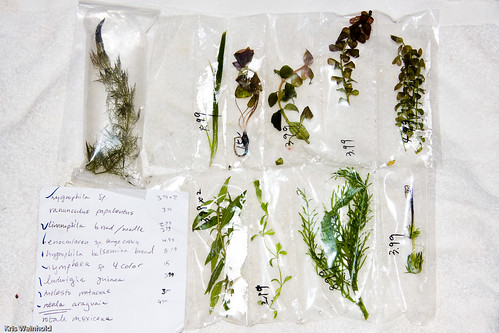
Plants from Aqua Forest Aquarium

We ended up with the following:

  • Hygrophila sp. (Looks like ‘Porto Vehlo’ to me.)
  • Ranunculus paplentus (Looks like ‘R. inundatus’ to me.)
  • Limnophila sp. “Broad Leaf”
  • Limnophila sp. “Needle Leaf”
  • Eriocaulaceae sp. “Large Crown”  (Looks like ‘Type 3’ to me.)
  • Hygrophila balsamica var. ‘Broad Leaf’
  • Nymphea sp. “Four Color”
  • Melastomataceae sp. ‘Sao francisco’
  • Rotala sp. ‘Araguaia’

I’ve got all of these planted now, and hope to grow them out. I can’t imagine being able to go into your local LFS and having the selection of plants that San Franciscan’s have. Truly incredible!

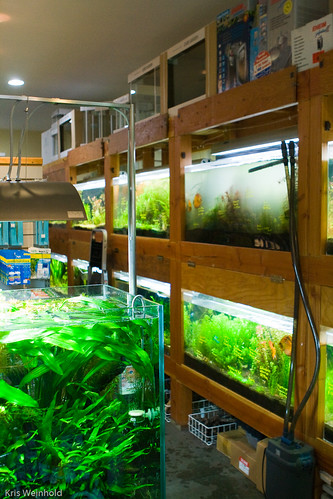
Aqua Forest Aquarium

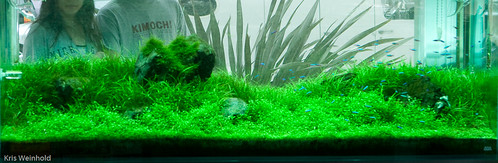
Otherwise, you can tell that this store knows how to grow and sell plants. Looks how every tank is packed with plants, many of them rare. Their display tanks are phenomenal, appropriately exhibiting an Amanoesque Nature Aquarium style.

Aqua Forest Aquarium

Even down to the fish choice of neon tetras, ADA tanks, and glassware. My wife said that they carried the whole line of ADA aquascaping tools, but didn’t get a price on them. (I probably don’t want to know.)

Aqua Forest Aquarium

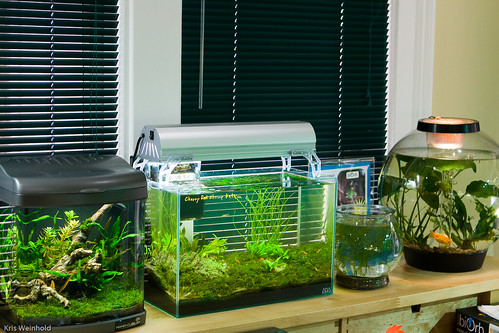
In addition, she said that they had made planted tanks out of several non-conventional containers, be it standard fish bowls, vases, etc… They also had a whole selection of shrimp, which from her description sound very much like the new ones from Sulawesi.

Aqua Forest Aquarium

All in all, I’m jealous that I wasn’t able to go myself, but am incredibly thankful that my wife took the time to stop in and take these pictures, and grab the plants for me. I’m a lucky man!

Business Broker

75G – August Update!

August 28th, 2008

I’ve changed a few things around in my 75G since my previous update last month. Most noticeably, I have thinned out a ton of the Blyxa japonica that was in the front right. Overall, I think this gives the right side a little bit more definition because it allows a small amount of foreground all the way across the front of the tank. I’ve been continuing my extra attention to this tank, ensuring weekly water changes, consistent CO2 output, and regular dosing. The payoff has been increased growth and a small reduction of the black brush algae that seems to love the rocks, wood, and Anubias leaves in this tank.

75G

75G - August 27, 2008. Click for larger image.

As you can tell, however, I still probably need to dose more fertilizers, nitrates in particular. That is evident in the bright pink color of the Limnophila aromatica and Ludwigia glandulosa on the right side of the tank. In addition, I probably have too many species of plants in this tank. I’ve recently added Vallisneria americana var. ‘natans’ to the right side of the tank, which is supposed to be a shorter and thinner version of the otherwise monster grassy plant that is Vallisneria americana. I also planted Hygrophila sp. ‘Porto Velho in the front-right of the foreground, and have a number of other species of plants jammed in, particularly on the right side. All of this said, I’m pretty happy with the direction that this aquascape is going in. I wish the Eleocharis sp. ‘Japan’ hairgrass would pick up it’s growth rate, and actually create a lush lawn in the foreground, but I suppose it’s just a matter of time for that. Comments welcome!

Business Broker

GWAPA – Fertilizers 101 by Jeff Ucciardo

August 25th, 2008

Jeff Ucciardo gave a wonderful overview of fertilizers at GWAPA‘s August meeting this month. Jeff is a former tank-of-the-month winner on Aquatic Plant Central and is known within the club as having one of the most algae-free and well maintained set of planted aquariums in the club. Much of this is due to his grasp of how to use fertilizers to maintain the proper balance of nutrients in the aquarium. He put together a fantastic presentation, going over Estimative Index (EI) and Perpetual Preservation System (PPS) methods of dosing. Then, he described how he does something in-between those two methodologies while using an auto-doser to maintain consistency.
Ferts 101

We also had another huge auction this month. I came away with the biggest anubias I have ever seen. This monster plant is well over 2 feet tall, and more than a foot wide. It looks like Anubias barteri in some places, but in others like a totally different species. I stuck it in the back corner of my 54G aquarium to give a little bit more height to that scape. Otherwise, I came away with Lobelia cardinalis var. ‘small form’ and some pond plants. All-in-all, another great club meeting!

Business Broker

2.5G – Not Quite There

August 21st, 2008

I last posted about my 2.5G tank about a month ago. Since then, the HC has really taken off, but it’s getting kind of out of hand, actually. The one thing I don’t like about HC is that, unlike Glossostigma elatinoides, it doesn’t trail the substrate as tightly, growing upwards a bit more instead. Of course the benefit is that HC has much smaller leaves than glosso.

2.5G

2.5G - Click for larger image

It’s pretty obvious to me that the Malayan aquasoil has run out of umph. This isn’t entirely unexpected because the tank has been setup for almost 2 months now. That means that I’ve had to start dosing some Seachem fertilizers to keep things going. From the algae on the glass, you can tell that I haven’t been as consistent as I should be in this respect. The downoi has all but melted for me — again. This plant dogs me for some reason every time I try it in a nano. I suspect it’s the inconsistent dosing, or possibly the higher temperatures that the light produces in this tank. Overall, I’m kind of underwhelmed by this scape. Hopefully I’ll be able to spruce it up a little bit before October 1st when the photo is due. I love to hear suggestions for what to put on the left side.

Business Broker

40G – Wormstrate – 1 Month In

August 18th, 2008

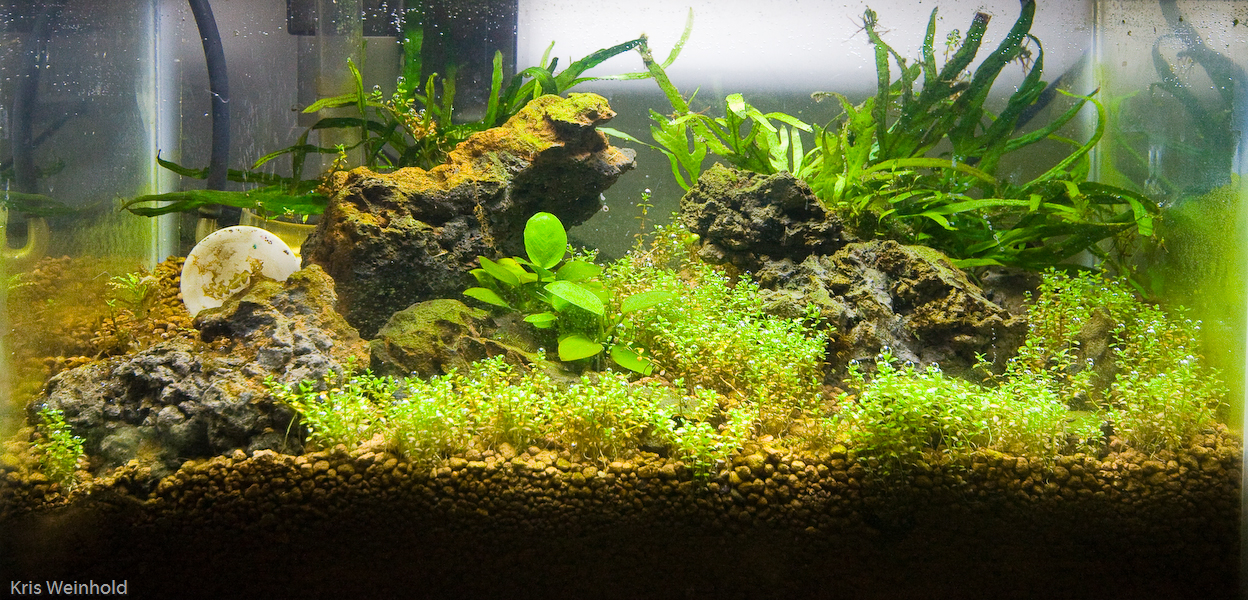
About a month ago, I tore down my 40G aquarium’s aquascape, and redid the entire thing using earthworm castings as a base substrate, with previously used ADA Amazonia as the top layer. Below, you can see how the tank has progressed over the period of 1 month.

40G - 1 Month Later

40G - Setup for about 1 month using earthworm castings.

Since setting it up, I have been doing weekly water changes, removing about 30-40% of the water during each change. I have been doing this because the tank has been having a terrible bout with hair algae. In addition, over the last week, I’ve been treating the tank with hydrogen perioxide, both to combat the algae, and as a preventative measure in case any of the fish I recently collected have any parasites. I’ve noticed a significant reduction in algae, although the problem continues. Despite the algae, I have witnessed fantastic plant growth over the last month. In particular, Ludwigia inclinata var. verticillata ‘Cuba’ has been particularly prolific. I trimmed right before this picture, otherwise it would be occupying the entire back right of the photo. Additionally, the Hygrophila sp. ‘Porto Velho’ and Ranalisma rostrata has been starting to fill across the foreground. I think I’m going to remove the Blyxa japonica from the right front entirely, as it looks out of place. Comments welcome!

Business Broker

« Previous Entries   Next Entries »